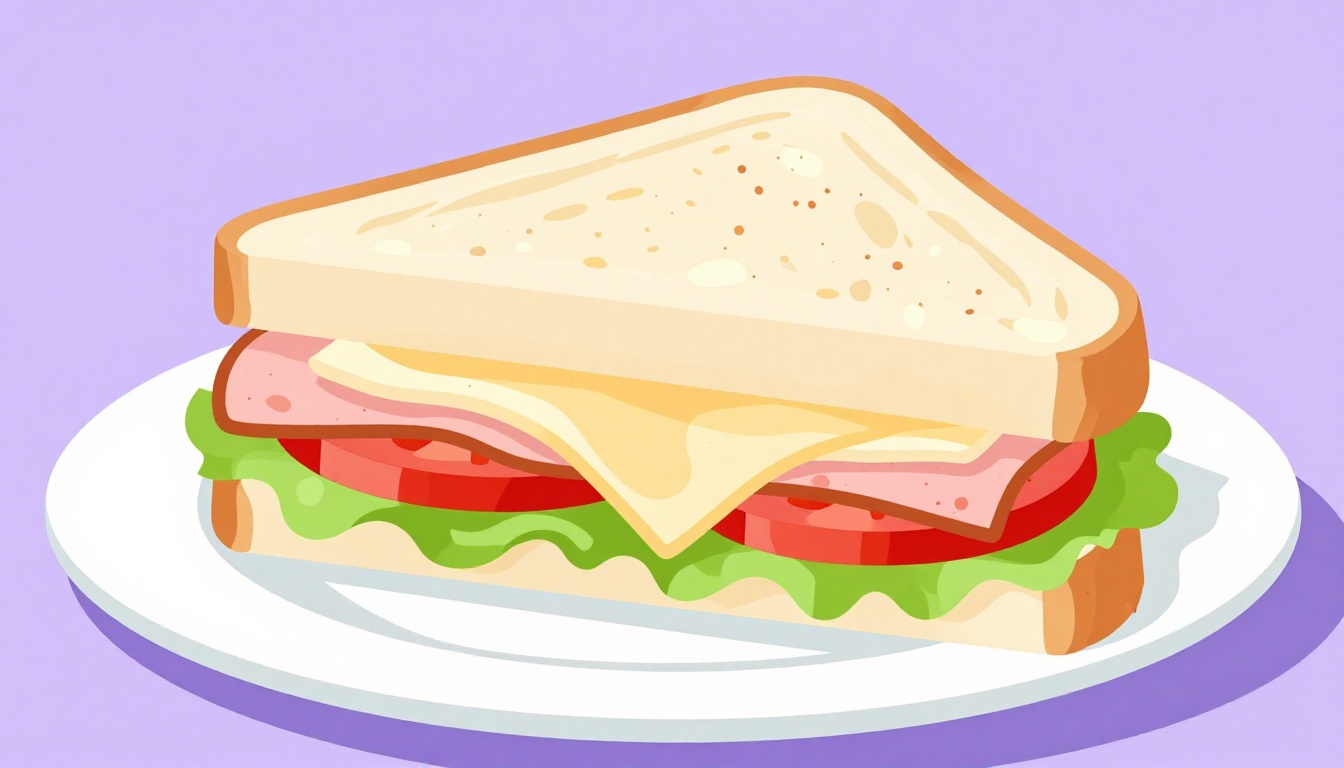
Sandwich in Portuguese is "sanduíche" (sahn-doo-EE-shee). That's the word on Brazilian menus, and it's understood in Portugal too. In Portugal, though, people usually say "sandes" instead. And if a Brazilian friend calls a big, loaded, delicious one a "sanduba," that's slang, not a mistake. Three words. One lunch.
That's the short answer. The rest of this guide is everything a learner actually needs around it: how to say each word so people understand you, why the word has an accent mark, whether it's masculine or feminine, which version to use in which country, the sandwiches locals really eat, and the exact phrases to order one without freezing at the counter. If you want the wider vocabulary around eating, our complete guide to food in Portuguese covers the rest of the table.
Reading a word is easy. Getting it out of your mouth at a busy counter is the hard part, and Comigo is a speak-first language app built for exactly that, where you learn by talking out loud instead of tapping answers in silence. Keep it in mind as you read. Every table below is meant to be said, not just looked at.
Sandwich in Portuguese: The Quick Answer
You'll meet five words for "sandwich" or "sandwich-ish" in the wild. Here they are side by side. Both the Cambridge English-Portuguese entry for sandwich and the PONS translation page are handy places to double-check a translation later.
| Word | Where you hear it | Register | Note |
|---|---|---|---|
| sanduíche | Brazil, and understood everywhere | Standard, safe in any situation | The default word. Write it with the accent on the í. |
| sandes | Portugal | Standard, everyday | A shortened form of "sanduíche." Feminine, and it doesn't change in the plural. |
| sande | Rare, listed as a variant | Dictionary variant | You'll see it in dictionaries more than in real life. |
| sanduba | Brazil | Slang, casual | Feels like a big, loaded, tasty sandwich. Save it for friends. |
| lanche | Brazil (and Portugal, for a snack) | Everyday | Really means "snack," but in some places it's used for a sandwich too. |
The Wiktionary entry for "sanduíche" and Priberam's dictionary entry both back this up. For a third opinion, there's also the Michaelis entry, another Brazilian dictionary listing.
My advice? Start with "sanduíche." Nobody will blink. Once you're in Portugal, switch to "sandes" and you'll sound like you've been there a while.
How to Pronounce "Sanduíche" and "Sandes"
Let's slow this word down. "Sanduíche" has four syllables: san-du-í-che. The stress lands on the third one, the "í." That's why the accent mark sits there.
Why the accent? Because "u" and "í" sit next to each other, and Portuguese needs a way to say "these are two separate sounds." Without the mark, a reader might smush "ui" into one blurry sound, the way English speakers do with "suit." With it, you say "doo-EE," two beats. The accent keeps the two vowels apart and tells you where to push. If you want to go deeper on how accents and letters work when you say a word out loud, our guide on how to spell in Portuguese covers it.
Here's a simple respelling for both countries. Read the capital letters as the loud part.
| Word | Brazil | Portugal | What to watch |
|---|---|---|---|
| sanduíche | sahn-doo-EE-shee | sahn-DWEESH | The "ch" says "sh." The final "e" sounds like "ee" in Brazil and almost vanishes in Portugal. |
| sandes | rarely used, "sanduíche" is the norm | SAHN-dsh | In Portugal the "e" is nearly silent and the "s" sounds like "sh." |
| sanduba | sahn-DOO-bah | rarely used | Three short syllables. Casual. |
| lanche | LAHN-shee | LAHNSH | Same "ch" as in "sanduíche." |
Three things trip people up.
First, "ch" is "sh." Never "ch" like in "cheese." Say "sahn-doo-EE-shee," not "sahn-doo-EE-chee."
Second, the "n" in "san" isn't a full "n." It nasalizes the vowel before it, a bit like the "an" in the English word "want" said through your nose. If you've ever practiced words like "não," you already know the feeling. Our list of basic words in Portuguese has plenty of these to warm up on.
Third, the final "e." In much of Brazil, an "e" at the end of a word turns into an "ee" sound, so "sanduíche" ends like "shee." In Portugal, that final vowel gets squeezed almost to nothing. You hear "sahn-DWEESH" with barely a whisper after the "sh." Same spelling, very different ending. The Wiktionary page lists both pronunciations in phonetic symbols if you like reading them.
The 2004 "sanduíche-iche" Meme
There's one more reason Brazilians smile when you say this word. In 2004, a nutritionist named Ruth Lemos stuttered the word on Brazilian TV, saying something like "sanduíche-iche-iche." It became a huge internet meme, and it's still around. Wikipedia has a page on "Sanduíche-iche" if you want the full story.
So if a Brazilian grins when you order one, you haven't done anything wrong. You've just said one of the most quoted words in Brazilian internet history. Take the smile. Say it again.
Gender and Plural: "O Sanduíche" or "A Sanduíche"?
This is where the two countries split in a way that surprises people. According to Priberam, "sanduíche" is masculine in Brazil and feminine in Portugal. And "sandes," the Portugal word, is feminine, with a plural that doesn't change. The Wiktionary entry for "sandes" says the same thing: a reduction of "sanduíche," feminine, invariable plural, used mainly in European Portuguese.
If "grammatical gender" is a new idea for you, Wikipedia's page on grammatical gender explains why languages give nouns a gender at all. In Portuguese, every noun has one, and the little words in front of it have to match.
| English | Brazil (masculine) | Portugal (feminine) |
|---|---|---|
| a sandwich | um sanduíche | uma sanduíche / uma sandes |
| the sandwich | o sanduíche | a sanduíche / a sandes |
| two sandwiches | dois sanduíches | duas sanduíches / duas sandes |
| the sandwiches | os sanduíches | as sanduíches / as sandes |
| a big sandwich | um sanduíche grande | uma sandes grande |
| this sandwich | este sanduíche | esta sandes |
A few things to lock in.
The plural of "sanduíche" is "sanduíches." You just add an "s." Easy.
"Sandes" ends in "s" already, so it stays the same: "uma sandes, duas sandes." The article tells you the number. "A sandes" is one, "as sandes" is more than one.
And here's a practical tip. Pick the country you're in and stick to it. In Brazil, say "um sanduíche." In Portugal, say "uma sandes." That's one habit, and it covers nearly every situation.
Small mix-ups here are common, even for advanced learners. Nobody will misunderstand you if you say "o sanduíche" in Portugal. They'll just hear a Brazilian pattern. Fixing it takes a few spoken repetitions, not more study.
Brazil vs Portugal: Which Word Should You Use?
Portuguese is one language with two everyday faces. The sandwich shows it clearly.
| Question | Brazil | Portugal |
|---|---|---|
| Everyday word | sanduíche | sandes |
| Gender | masculine: o sanduíche | feminine: a sandes |
| Slang | sanduba | no common equivalent to teach beginners |
| Toasted ham and cheese | misto-quente | tosta mista |
| Where you buy one | lanchonete, padaria | café, pastelaria |
| Polite request | Eu queria um sanduíche de... | Queria uma sandes de..., se faz favor |
| Relaxed request | Me vê um sanduíche de... | Uma sandes de..., por favor |
There's one more regional twist. According to Portuguese Wikipedia's page on the sandwich, Angola uses "chandula" too, and the same page lists "sandes," "sanduba," and "lanche" among the regional terms. Portuguese is spoken on several continents, so don't be shocked if a word from a friend in Luanda doesn't match one from São Paulo or Lisbon.
About "sanduba." It carries the feel of a big, loaded, delicious sandwich, the kind with too many layers to hold with one hand. Brazilians use it constantly with friends. But if you're a tourist, stay with "sanduíche" first. You can borrow "sanduba" later, once you've heard it used around you and know it fits. If you're planning a trip and want to see how Brazilians talk when you're actually there, our piece on learning Brazilian Portuguese in Brazil is worth a read.
Sandwich Vocabulary: Bread, Fillings, and Tools
Time to build the sandwich. Start with the bread. If bread itself is your next word, our guide to bread in Portuguese covers the loaf and the famous "pão" pronunciation trap.
| Portuguese | English | Usage note |
|---|---|---|
| pão | bread | The general word. Plural is "pães." |
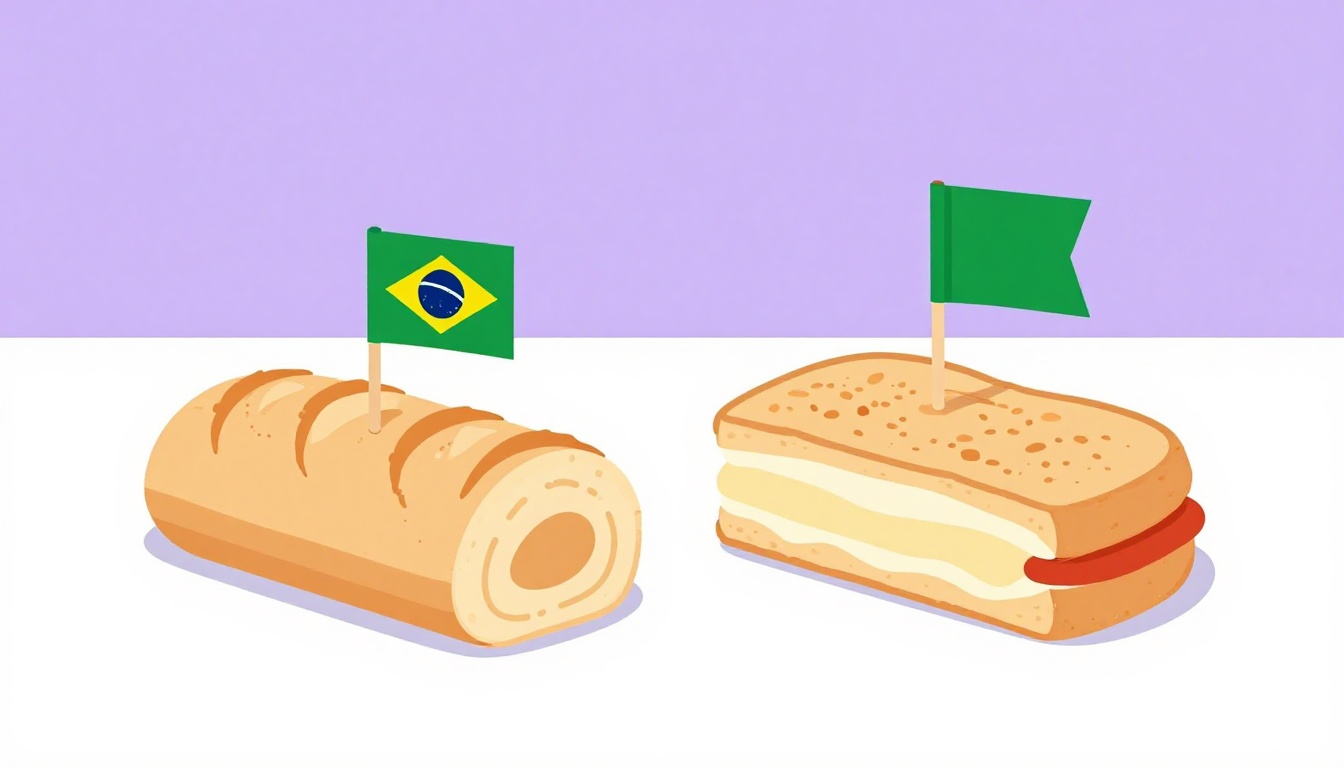
| pão francês | French roll | Brazil's everyday crusty roll. See the Wikipedia page on pão francês for how it became the base of so many sandwiches. |
| pão de forma | sliced sandwich bread | The soft, boxy loaf. Used in both countries. |
| fatia | slice | "Duas fatias de pão" means two slices of bread. |
| recheio | filling | What goes inside. "O recheio é de frango" means the filling is chicken. |
| presunto | ham | Used in both countries. In Portugal it can also mean cured ham. |
| queijo | cheese | "Queijo prato" and "queijo mussarela" are common in Brazil. |
| mortadela | mortadella | The famous São Paulo sandwich meat. |
| peito de peru | turkey breast | Sliced deli-style. |
| frango desfiado | shredded chicken | A very common Brazilian filling. |
| atum | tuna | Often mixed with mayonnaise. |
| ovo | egg | Fried ("frito") or boiled ("cozido"). |
| alface | lettuce | Also used in "sanduíche natural." |
| tomate | tomato | "Rodelas de tomate" means tomato slices. |
| cebola | onion | "Sem cebola" means without onion. |
| pepino | cucumber | Sometimes pickled ("picles") in warm sandwiches. |
| maionese | mayonnaise | Very common in Brazilian sandwiches. |
| mostarda | mustard | Usually the yellow kind. If you want to learn colors as well, try our guide to colors in Portuguese. |
| manteiga | butter | Spread on the bread, especially when toasting. |
| requeijão | cream cheese spread | A soft, creamy Brazilian spread. |
| bacon | bacon | Same word, with Portuguese vowels. |
| salsicha | sausage, hot dog sausage | Used in "cachorro-quente." |
| abacate | avocado | Found in lighter, fresher sandwiches. |
| azeitona | olive | Sometimes chopped into fillings. |
If you want more words like these, the bakery is where many of them live. Our guide to bakery in Portuguese covers the "padaria" vocabulary that comes with the bread.
Next, the verbs and tools. These are the words for making a sandwich, not just eating one.
| Portuguese | English | Example |
|---|---|---|
| fazer um sanduíche | to make a sandwich | Vou fazer um sanduíche. (I'm going to make a sandwich.) |
| montar | to assemble | Monte o sanduíche com calma. (Build the sandwich carefully.) |
| prensar | to press | Prensa o pão na chapa. (Press the bread on the griddle.) |
| torrar | to toast | Vou torrar o pão. (I'll toast the bread.) |
| cortar ao meio | to cut in half | Corta ao meio, por favor. (Cut it in half, please.) |
| sanduicheira | sandwich maker | A small press that toasts and seals a sandwich. |
| torradeira | toaster | For bread slices, not for pressed sandwiches. |
| sanduichar | to sandwich (figurative) | Squeeze something between two others. More on this below. |
"Sanduicheira" and "sanduichar" both appear on the Wiktionary page for "sanduíche" as related terms.
Describing a Sandwich
Ordering is one skill. Talking about what you're eating is another, and it's what makes small talk possible. These adjectives work with both "sanduíche" and "sandes," but remember to match the ending to the gender: "um sanduíche gostoso" in Brazil, "uma sandes gostosa" in Portugal.
| Portuguese | English | Example (Brazil) |
|---|---|---|
| gostoso / gostosa | tasty | Esse sanduíche está gostoso. (This sandwich is tasty.) |
| saboroso / saborosa | flavorful | O recheio é bem saboroso. (The filling is very flavorful.) |
| quente | hot | Prefiro o sanduíche quente. (I prefer the sandwich hot.) |
| frio / fria | cold | O natural é servido frio. (The natural one is served cold.) |
| grande | big | Um sanduíche grande, por favor. (A big sandwich, please.) |
| pequeno / pequena | small | Só um sanduíche pequeno. (Just a small sandwich.) |
| bem recheado | well stuffed, loaded | Esse sanduba é bem recheado. (This sanduba is loaded.) |
| crocante | crunchy | O pão está crocante. (The bread is crunchy.) |
| seco / seca | dry | O pão está seco. (The bread is dry.) |
| fresquinho | nice and fresh | O pão está fresquinho. (The bread is nice and fresh.) |
Notice "bem recheado." It's the phrase that captures the "sanduba" feeling: a sandwich that's stuffed so full it barely closes. If someone hands you one and says "olha esse recheio," they're proud of it. Say "que delícia" and you've made a friend.
Sandwiches also have moments. In Brazil, the snack around the middle of the afternoon is a classic time for a "lanche," often at the padaria. In Portugal, a sandes at the café counter is a quick, cheap-feeling lunch that people grab on the way somewhere else. Neither is a rule. Both are habits you'll notice within a few days of being there.
Famous Brazilian Sandwiches
Brazil takes its sandwiches seriously. Some have a proper history, an origin story, and a fan club. Here's a quick map before we go through a few of them.
| Name | What's in it | Where it's from or where you'll find it |
|---|---|---|
| misto-quente | Ham and cheese, pressed hot | Everywhere in Brazil, especially padarias and lanchonetes |
| bauru | French bread, roast beef, tomato, pickles, melted cheese | São Paulo |
| beirute | Pita-style bread, roast beef, ham, cheese, egg | São Paulo, with Lebanese roots |
| sanduíche de mortadela | Mortadella piled on pão francês | São Paulo, the Mercadão |
| x-salada, x-burger, x-tudo | Burger-style sandwiches with different toppings | Lanchonetes across Brazil |
| x-caboquinho | Tucumã, queijo coalho, fried plantain, buttered roll | Manaus |
| cachorro-quente | Hot dog with corn, potato sticks, sauce | Everywhere, especially street carts |
| hambúrguer | Burger | Everywhere |
| sanduíche natural | Light, cold sandwich with fresh fillings | Lanchonetes and cafés |
| pão na chapa | Bread pressed and buttered on a hot griddle | Padarias |
Misto-quente
The "misto-quente" is the simplest one. It's ham and cheese, pressed hot. The Wiktionary entry for "misto-quente" defines it, and you'll find it on almost every snack-bar menu in the country. If you only learn one Brazilian sandwich order, make it this one. "Um misto-quente, por favor." Done.
Bauru
The "bauru" has the best story. It was created at Ponto Chic in São Paulo by a law student named Casimiro Pinto Neto, who was nicknamed "Bauru" after his hometown. The original recipe is French bread, roast beef, tomato, pickles, and melted cheese. Sources disagree on the year: English Wikipedia says 1934, while Portuguese Wikipedia's page on the bauru says 1937, and some accounts say 1939. Portuguese Wikipedia also mentions that the city recognized an official recipe by law in 1998, and that the sandwich was declared intangible cultural heritage of São Paulo State in December 2018.
If you want to read more about how it happened, the Bauru city tourism page tells the story of how the sandwich was born. Viva a Cidade News and Mega Curioso each tell the story a little differently, which is part of the fun.
Beirute
The "beirute" came from Lebanese immigrants, and it shows. It's built on pita-style bread, filled with roast beef, ham, cheese, and egg. According to Wikipedia's page on the beirute, it was created in 1951 by Farer Sader, a Lebanese immigrant in São Paulo. The bread is closely related to pita, which is a good excuse to notice how immigration shapes food words in Brazil.
Sanduíche de mortadela
Picture a roll stuffed so high with sliced mortadella that you can barely bite it. That's the mortadella sandwich, a landmark of the Mercadão in São Paulo. Wikipedia's page on the mortadella sandwich mentions the Mercadão and Bar do Mané, which claims to have pioneered it, since 1933. It's served on "pão francês," the same roll we covered above.
The "X" Sandwiches
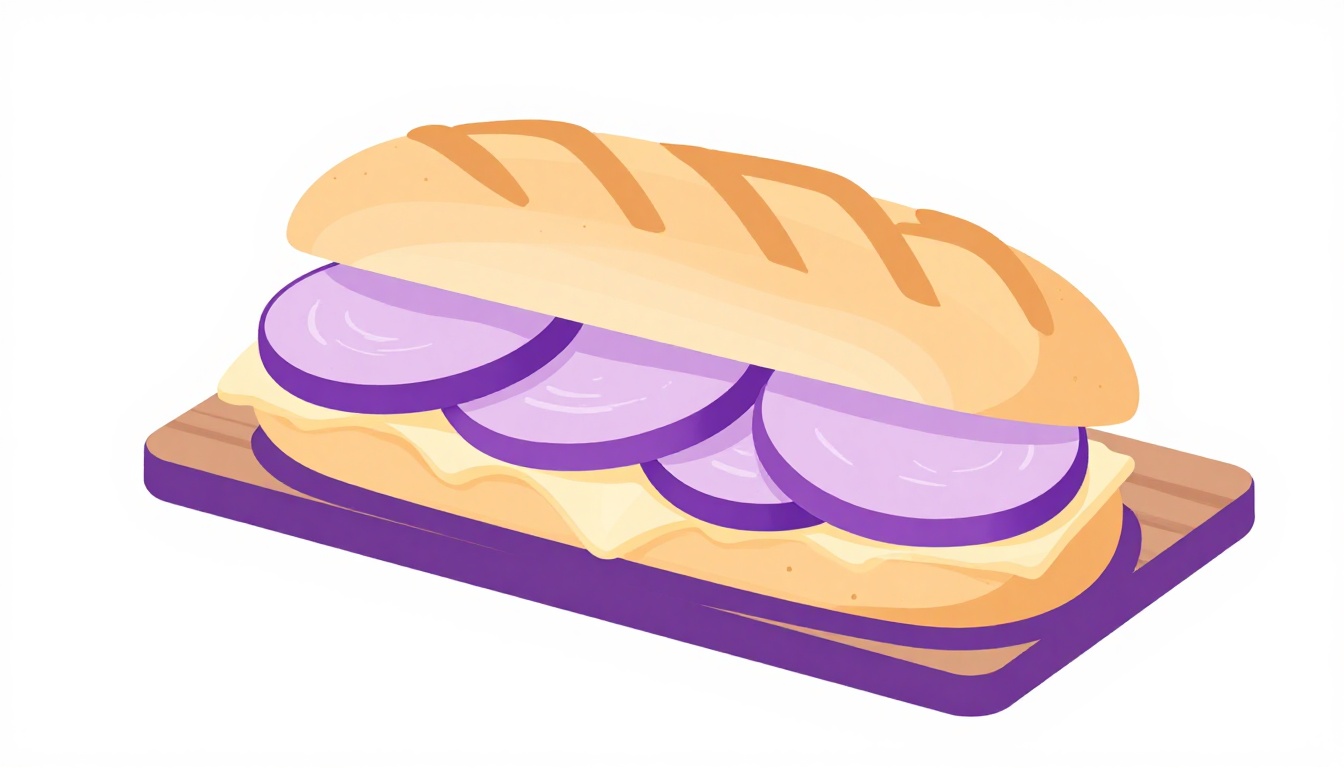
Walk into any lanchonete and you'll see names like "x-salada," "x-burger," and "x-tudo." The "X" is a common naming pattern in Brazilian snack bars, and people often connect it to the sound of the English word "cheese." Just remember the pattern: "x-" means a burger-style sandwich, and whatever comes after tells you what's on it. "X-salada" means with salad. "X-tudo" means with everything.
The most interesting one is the "x-caboquinho" from Manaus, built with tucumã, queijo coalho, fried plantain, and a buttered "pão francês." Wikipedia has a page on x-caboquinho with the details. It's a nice reminder that Brazilian sandwiches reflect local ingredients, not just São Paulo habits.
Cachorro-Quente, Hambúrguer, and More
The Brazilian hot dog is "cachorro-quente," literally "hot dog." It's a good one to learn, because it's the same idea as English, but the toppings are wilder. According to Garden in the Kitchen and Brazilian Kitchen Abroad, Brazilian hot dogs are loaded with things like corn, sauce, and "batata palha," those thin fried potato sticks. If you want the general background, there's Wikipedia's page on the hot dog and the Wiktionary entries for cachorro-quente and hambúrguer.
A "sanduíche natural" is a lighter, cold sandwich, usually on soft bread, often with fillings like shredded chicken and salad. And "pão na chapa" is a slice or roll of bread pressed on a hot griddle with butter. It's not exactly a sandwich, but it lives in the same places.
There's also the "joelho," a baked ham-and-cheese bread snack from Rio. It's not a classic sandwich, but it's sold in the same shops. Here's the Wikipedia page on the joelho. Its name means "knee," which is an odd thing to name a snack, but there you go.
For a broader look at everything Brazil eats, the Wikipedia list of Brazilian dishes and the page on Brazilian cuisine are good places to wander.
Famous Portuguese Sandwiches
Portugal's sandwich culture is different. Fewer toppings, more attention to one perfect thing: the pork, the steak, the sausage, the sauce. For a general picture, Wikipedia's page on Portuguese cuisine is a useful backdrop.
| Name | What it is | Note |
|---|---|---|
| bifana | Thin pork, marinated in garlic and wine, in a roll | The name means "small steak." |
| prego no pão | Steak sandwich | The classic order. Sometimes served on bolo do caco in Madeira. |
| prego no prato | Steak on a plate | The trap. It's the steak without the bread. |
| francesinha | Layered sandwich smothered in beer and tomato sauce | Porto. "Little French girl." |
| tosta mista | Toasted ham and cheese | Portugal's misto-quente. |
| sandes de leitão | Roast suckling pig sandwich | A festive, rich one. |
| sandes de presunto | Cured ham sandwich | Often with Serra da Estrela cheese. |
| sandes de pernil | Roast pork sandwich | Famous at Casa Guedes in Porto. |
| pão com chouriço | Bread with chouriço sausage | Simple and satisfying. |
| sandes de chouriço | Chouriço sandwich | Similar, in sandwich form. |
Bifana
The "bifana" is Portugal's everyday sandwich. Thin slices of pork are marinated in garlic and wine, cooked until they're tender, and tucked into a roll. The name means roughly "small steak." According to Wikipedia's page on the bifana, one possible origin is Vendas Novas. Recipes and sauces vary by region, and the north and south each defend their own version.
Prego: The Ordering Trap
Here's the one to remember. "Prego" means "nail," and it's also a steak. If you ask for "um prego," you might get a plated steak, not a sandwich. That's the trap. To get the sandwich, say "um prego no pão." To get the steak on a plate, say "um prego no prato." Wikipedia's page on the prego explains the sandwich, and the Wikipedia page on bolo do caco shows the Madeira bread that sometimes holds it.
This is the kind of thing that makes people love learning a language by speaking it. A single small word, and a totally different lunch.
Francesinha
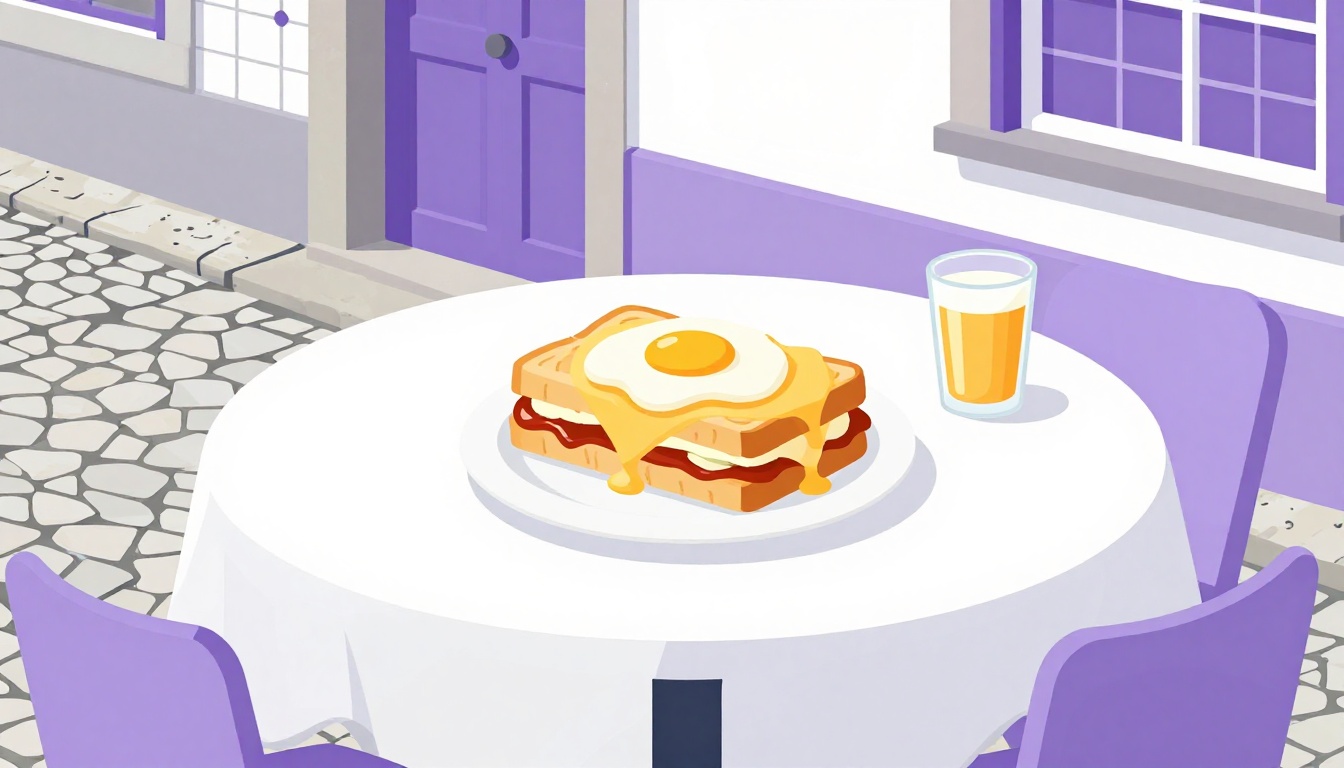
Now for the big one. The "francesinha" means "little French girl," and it's not little. It comes from Porto. According to Wikipedia, it was created in 1953 by Daniel David da Silva at A Regaleira, inspired by the French croque monsieur. It's a layered sandwich covered in melted cheese and a sauce made with beer and tomato. Add a fried egg on top and you get the "francesinha especial." Fries usually come on the side.
Yes, people drink beer with it, and if you're curious about how to order one, our guide to beer in Portuguese covers the words you need.
Tosta Mista, Sandes de Leitão, Presunto, and Pernil
The "tosta mista" is a toasted ham and cheese sandwich. The word "tosta" means toast, and the Wiktionary page on tosta explains it. It's Portugal's answer to the Brazilian "misto-quente."
The "sandes de leitão" is made with roast suckling pig. The "sandes de presunto" often comes with Serra da Estrela cheese. And the "sandes de pernil" is a roast pork sandwich, made famous at Casa Guedes in Porto. Sausage fans have "pão com chouriço" and "sandes de chouriço" too.
These are covered nicely by Eating Europe's guide to Porto sandwiches and Walks Devour's guide to Portuguese sandwiches, which also mentions the "nail" meaning of "prego." Travel Awaits has another list of sandwiches to try in Portugal.
Seafood is also big in Portugal. If you're tempted by something from the sea instead, our page on clams in Portuguese is a fun detour.
"Lanche," "Lanchonete," and Where Sandwiches Live in Brazil
Here's a word that confuses beginners: "lanche." It means "snack." A "lanche" can be a sandwich, but it's a wider word. It can also be a pastry, a juice, a little something you have around four in the afternoon. The verb is "lanchar," which means to have a snack.
| Portuguese | English | Note |
|---|---|---|
| lanche | snack | Can include a sandwich, but not always. |
| lanchar | to have a snack | "Vamos lanchar?" means "Shall we have a snack?" |
| lanchonete | snack bar | A casual place selling sandwiches, juice, and snacks. |
| padaria | bakery | Also sells sandwiches and coffee. |
| balcão | counter | Where you order in many Brazilian snack bars. |
| sanduíche | sandwich | A specific thing with bread and filling. |
| almoço | lunch | A proper meal. Not the same as a "lanche." |
The difference is simple. "Sanduíche" names a specific food. "Lanche" names an occasion or a category. You can have "um lanche" that's a sandwich, or a pastry, or fruit. But you wouldn't say "um lanche" if you wanted to be exact about a ham and cheese. For more details, Rio and Learn's guide to "lanche" explains the word well, and the Wiktionary pages for lanche and lanchonete show how each one is used.
The "padaria" in Brazil isn't just a bakery. It's a place to stand at the counter, order a coffee, and eat a hot sandwich. The full story of that habit is in our guide to bakery in Portuguese. The afternoon is also when you'll hear the greeting we cover in good afternoon in Portuguese, and yes, a cold treat afterward is very normal. If you're curious about the sweet side, ice cream in Portuguese is next.
In Portugal, you'll find sandwiches in a "café" or a "pastelaria," which is a pastry shop that also serves coffee and simple food. Those are general terms, and they cover most of what you'll see.

How to Order a Sandwich in Portuguese
Now the useful part. Here are the exact phrases for ordering, first in Brazil.
| Portuguese (Brazil) | English | When to use it |
|---|---|---|
| Eu queria um sanduíche de queijo, por favor. | I'd like a cheese sandwich, please. | Polite and safe everywhere. |
| Me vê um sanduíche de mortadela. | Give me a mortadella sandwich. | Relaxed and common at lanchonetes and padarias. |
| Pode me trazer um misto-quente? | Can you bring me a ham and cheese? | Sitting at a table. |
| Vou querer o x-salada. | I'll have the x-salada. | Ordering from a menu. |
| Para levar. | To go. | You're taking it with you. |
| Para comer aqui. | To eat here. | You're staying. |
| Sem cebola, por favor. | Without onion, please. | Removing an ingredient. |
| Com tudo? | With everything? | The server asking at a hot dog cart or snack bar. |
| Quero um misto-quente na chapa. | I want a ham and cheese, pressed. | You want it grilled. |
| Quanto é? | How much is it? | Asking the price. |
| A conta, por favor. | The check, please. | Ready to pay. |
Street Smart Brazil describes "me vê" and "me veja" as relaxed and common at snack bars and bakeries, with "queria" softening the request. That's exactly how it works. If you're not sure, start with "Eu queria," and you'll never be rude. Also, don't forget the magic word. We break it down in please in Portuguese, and the reply, "obrigado" or "obrigada," is covered in how to say thank you in Portuguese.
If the server says "Com tudo?" you can answer "Sim" or "Pode ser." Our guide to saying yes in Portuguese lists more ways to answer, from casual to formal.
Here's the same idea in Portugal.
| Portuguese (Portugal) | English | When to use it |
|---|---|---|
| Queria uma sandes de queijo, se faz favor. | I'd like a cheese sandwich, please. | Polite and standard. |
| Uma bifana e uma imperial, por favor. | A bifana and a small draught beer, please. | Classic combination. |
| Queria uma tosta mista. | I'd like a toasted ham and cheese. | Ordering the local version. |
| Para levar. | To go. | Taking it with you. |
| Para comer aqui. | To eat here. | Staying. |
| Pode ser com queijo? | Can it be with cheese? | Asking for a small change. |
| A conta, se faz favor. | The check, please. | Ready to pay. |
The word "imperial" is the small draught beer in Portugal, and if you want more on drinks, wine in Portuguese and water in Portuguese are useful next stops. Prices get said fast, so it helps to know your numbers in Portuguese before you stand at the register.
Let's put it together. Here's a short role-play you could have at a Brazilian snack bar.
| Você | Atendente |
|---|---|
| Boa tarde. Eu queria um misto-quente, por favor. | Boa tarde! Na chapa? |
| Sim, na chapa. | Vai querer mais alguma coisa? |
| Uma água, por favor. | Para comer aqui ou para levar? |
| Para comer aqui. | Certo. É só isso? |
| Só isso, obrigado. Quanto é? | Pode pagar no caixa. |
Practice it out loud. Say both parts. Say them fast, then slow. Words only feel like yours after they've left your mouth a few times. If you want a place to rehearse before you're standing at a real counter, Comigo has spoken lessons where you answer into the mic and see which words you said right, so the phrase "Eu queria um misto-quente" isn't something you meet for the first time at a busy lanchonete.
If you get stuck, two lifesavers help. One is "com licença," which we explain in excuse me in Portuguese. The other is knowing how to say what you can't do. Our page on I don't speak Portuguese in Portuguese covers that, and do you speak Portuguese in Portuguese covers asking whether the person speaks English. For more restaurant help, Rio and Learn's ordering food guide, Migaku's restaurant phrases, and Kaiwa's ordering guide have extra phrases to try.

Dietary and Allergy Phrases
Sandwiches hide surprises. Cheese, butter, mayonnaise, and bread all carry allergens. Here's how to ask.
| Portuguese | English | When to use it |
|---|---|---|
| sem glúten | gluten-free | Asking for bread without gluten. |
| sem lactose | lactose-free | Avoiding milk products. |
| vegetariano / vegetariana | vegetarian | Describing your diet. |
| vegano / vegana | vegan | No animal products at all. |
| alergia a amendoim | peanut allergy | Serious. Say it clearly. |
| Tem algum sanduíche vegetariano? | Do you have a vegetarian sandwich? | Asking about the menu. |
| O que leva? | What's in it? | Asking about ingredients. |
| Sou alérgico a... / Sou alérgica a... | I'm allergic to... | Said by a man / a woman. |
| Pode tirar o queijo? | Can you take out the cheese? | Making a simple change. |
| Isso tem glúten? | Does this have gluten? | Checking before you order. |
The words "alérgico" and "alérgica" change with the speaker, just like "obrigado" and "obrigada." One more quick tip: if you have a serious allergy, say it slowly and say it twice. Speaking out loud matters here, because a misheard word isn't a small mistake.
Sandwich in Sentences: 24 Everyday Examples
Words are useful. Whole sentences are better. Here's a big set you can steal. Where Brazil and Portugal differ, both are shown.
| English | Brazil | Portugal |
|---|---|---|
| I want a sandwich. | Eu quero um sanduíche. | Quero uma sandes. |
| I'd like a ham and cheese sandwich. | Eu queria um misto-quente. | Queria uma tosta mista. |
| This sandwich is delicious. | Esse sanduíche está delicioso. | Esta sandes está deliciosa. |
| Can you cut it in half? | Pode cortar ao meio? | Pode cortar ao meio? |
| Without onion, please. | Sem cebola, por favor. | Sem cebola, se faz favor. |
| I'm making a sandwich. | Estou fazendo um sanduíche. | Estou a fazer uma sandes. |
| Shall we have a snack? | Vamos lanchar? | Vamos lanchar? |
| What's in it? | O que leva? | O que leva? |
| Does it come with fries? | Vem com batata frita? | Vem com batatas fritas? |
| A sandwich to go. | Um sanduíche para levar. | Uma sandes para levar. |
| I'm hungry. | Estou com fome. | Estou com fome. |
| My friend ate two sandwiches. | Meu amigo comeu dois sanduíches. | O meu amigo comeu duas sandes. |
| Can you heat it up? | Pode esquentar? | Pode aquecer? |
| Where can I buy a sandwich? | Onde posso comprar um sanduíche? | Onde posso comprar uma sandes? |
| I don't eat meat. | Não como carne. | Não como carne. |
| The sandwich is on the table. | O sanduíche está na mesa. | A sandes está na mesa. |
| I forgot my sandwich. | Esqueci meu sanduíche. | Esqueci-me da minha sandes. |
| Which sandwich do you recommend? | Qual sanduíche você recomenda? | Qual sandes recomenda? |
| On Sundays we eat sandwiches. | Aos domingos, a gente come sanduíche. | Aos domingos comemos sandes. |
| That was the best sandwich of my life. | Foi o melhor sanduíche da minha vida. | Foi a melhor sandes da minha vida. |
| One more sandwich, please. | Mais um sanduíche, por favor. | Mais uma sandes, se faz favor. |
| I made a sandwich for you. | Fiz um sanduíche para você. | Fiz-te uma sandes. |
| It's a really big sanduba! | É um sanduba enorme! | Not common in Portugal. |
| Goodbye, thanks for the sandwich! | Tchau, obrigado pelo sanduíche! | Adeus, obrigado pela sandes! |
The friend sentence works well with friend in Portuguese, the Sunday line pairs nicely with the days of the week in Portuguese, and the last row leans on both goodbye in Portuguese and the greeting from how are you in Portuguese. You can turn any of these into a two-line chat with a friend.
When "Sanduíche" Isn't About Lunch
Portuguese, like English, stretches this word. According to the Wiktionary entry, "sanduíche" can be slang for a situation where too many people or things are squeezed together. Picture a crowded bus. You're the filling.
There's also the verb "sanduichar," which means to squeeze something between two other things. Same idea: something in the middle, pressed from both sides.
The most interesting figurative use is in universities. In Brazil, a "doutorado sanduíche" is a PhD where the student spends part of it abroad. The metaphor is neat: the time abroad is the filling, and the home university is the two slices of bread on either side. The CAPES program for this, PDSE, grants scholarships of 4 to 9 months abroad, according to the official program page. If a Brazilian researcher tells you she's doing a "doutorado sanduíche," she isn't eating lunch. She's going overseas.
Where the Word Comes From
The word is English. "Sandwich" comes from John Montagu, the 4th Earl of Sandwich. His Wikipedia page has his life story, and History.com's article on the sandwich inventor explains the link between him and the food. The first known written use is in a diary entry by Edward Gibbon on November 24, 1762, according to History.com and the PBS food article on the history of the sandwich. A Frenchman named Grosley wrote a book that tied the name to the Earl. The popular story, told in accounts like Tori Avey's history of the sandwich, is that he wanted to eat while playing cards without getting his fingers greasy.
Wikipedia's general page on the sandwich covers how it spread, and the list of sandwiches shows how many versions exist now. Portuguese borrowed the word and adapted the spelling to fit its own sounds. That's how "sandwich" became "sanduíche." And "sandes" is a shortened form of it, as the Wiktionary entry for "sandes" says.

Common Mistakes English Speakers Make
Everybody trips on something. Here are the usual suspects.
| Mistake | What happens | Fix |
|---|---|---|
| Saying "sand-witch" | People may take a second to work out what you mean | Say "sahn-doo-EE-shee." |
| Forgetting the accent when writing | It looks like a typo, and you lose the stress on the "í" | Write "sanduíche," with the accent on the í. |
| Using "sanduba" in a formal setting | It sounds too casual, like calling a meal "grub" | Use "sanduíche" until you know it fits. |
| Saying "um prego" alone in Portugal | You may get a plated steak, not a sandwich | Say "um prego no pão." |
| Mixing up gender | You sound like the other country | Brazil: "o sanduíche." Portugal: "a sandes." |
| Confusing "lanche" with "almoço" | You may expect a full meal and get a snack | "Almoço" is lunch. "Lanche" is a snack. |
| Saying "sanduíche" in Portugal instead of "sandes" | You're still understood, but you sound Brazilian | Say "sandes" in Portugal. |
| Saying "ch" like in "cheese" | It doesn't sound right | "Ch" is "sh." |
None of these are disasters. The worst outcome is a smile, a small correction, or an unexpected steak. Most mistakes vanish after you say the word out loud a few dozen times.
How to Actually Practice Saying It
A word list won't do it alone. You need your mouth involved. Here's a simple routine.
| Step | What to do | Time |
|---|---|---|
| 1 | Say "sanduíche" five times, slowly. Feel the "sh" and the stress on the "í." | 1 minute |
| 2 | Say "sandes" five times. Let the last vowel almost disappear. | 1 minute |
| 3 | Say "um sanduíche" and "uma sandes" back to back. | 1 minute |
| 4 | Read the Brazil and Portugal ordering tables out loud. | 3 minutes |
| 5 | Do the role-play, both parts, without looking. | 3 minutes |
| 6 | Order a real sandwich, or pretend to, in the mirror. | 2 minutes |
Ten minutes a day, out loud, beats an hour of silent reading. If you're wondering how hard all this is, our piece on whether Portuguese is hard to learn is honest about the tricky parts. And if money's tight, how to learn Portuguese for free lists real ways to start. Once you've got the basics, our page on common sayings in Portuguese is a fun next step.
FAQ: Sandwich in Portuguese
How do you say sandwich in Portuguese?
"Sanduíche" is the standard word, especially in Brazil. In Portugal, "sandes" is the most common word for a sandwich.
How do you say sandwich in Brazilian Portuguese?
"Sanduíche," pronounced roughly "sahn-doo-EE-shee." Casual speakers also say "sanduba" for a big, tasty one.
How do you say sandwich in European Portuguese?
"Sandes" (roughly "SAHN-dsh"). It's feminine: "uma sandes." "Sanduíche" is understood too.
How do you spell sandwich in Portuguese?
"Sanduíche," with the accent on the "í." In Portugal, "sandes" has no accent.
Is "sanduíche" masculine or feminine?
Masculine in Brazil ("o sanduíche") and feminine in Portugal ("a sanduíche"). The Portugal word "sandes" is feminine, according to Priberam.
What is a sanduba?
It's Brazilian slang for a sandwich, usually a big, loaded, delicious one. Use it with friends, not in formal settings.
How do you say ham and cheese sandwich in Portuguese?
In Brazil, "misto-quente." In Portugal, "tosta mista." A "sanduíche de presunto e queijo" also works anywhere.
What does lanche mean?
It means snack. A "lanche" can be a sandwich, but it's wider than that. "Lanchar" means to have a snack, and a "lanchonete" is a snack bar.
What is the plural of sanduíche?
"Sanduíches." "Sandes" stays the same in the plural: "uma sandes, duas sandes."
How do you order a sandwich in Portuguese?
In Brazil, say "Eu queria um sanduíche de..., por favor" or the relaxed "Me vê um sanduíche de...". In Portugal, say "Queria uma sandes de..., se faz favor."
What is a bifana?
A Portuguese sandwich of thin pork marinated in garlic and wine, served in a roll. The name means "small steak."
Your Next Sandwich
Now you have the word, the accent, the gender, the local favorites, and the exact phrases for the counter. That's more than most tourists know. Next time you're hungry in Brazil or Portugal, say it out loud, with the right ending, and see what comes back. If you'd like a place to practice with your voice, Comigo is where you can talk through it with Capy, the capybara companion, in spoken lessons. Then go order that misto-quente. Or a bifana. Your call.
Related guides
- Rosetta Stone vs BabbelRosetta Stone vs Babbel: price, method and which one to pick.
- How much does italki cost?What italki really costs per lesson, how tutor pricing works and how to spend less.
- italki reviewAn honest italki review: how lessons work, tutor quality, pricing and the downsides.
- Is Rosetta Stone worth it?Is Rosetta Stone worth the money in 2026? What it does well, and where it falls short.