

What does "yes" mean in Portuguese? The short answer
"Sim" is how you say yes in Portuguese. One syllable, four letters, and it works the same way in Brazil, Portugal, and everywhere else the language is spoken. If you just needed the word and nothing else, you have it: sim.
But you probably clicked through because a bare translation felt too thin. Maybe your partner's family in São Paulo answers questions in a way that doesn't sound like "sim" at all, and you want to know why. Maybe you're heading to Rio next month and you'd rather not stand there repeating "sim, sim, sim" like a tourist reading off a phrase card. Maybe you heard a Brazilian friend say something that sounded like "no" when you were pretty sure they meant yes, and now you're suspicious of the whole language. And if you've already worked out how to ask how are you in Portuguese, this is the natural next word to learn: the answer to almost everything that question leads into.
Good instinct. "Sim" is the textbook answer, and it's also, in casual conversation, one of the least common ways Brazilians actually answer a question. That gap between the word you'll find in a dictionary and the word that comes out of a Brazilian's mouth in real life is the whole reason this page exists. We'll cover how to pronounce "sim" so it doesn't sound like the plastic card that goes in your phone, the verb-repetition habit that trips up almost every learner, the full toolkit of agreement words Brazilians reach for instead of a plain yes, a phrase that sounds like "no" but means the opposite, and the handful of common mistakes that mark you instantly as someone who learned Portuguese from a page instead of a person.
How do you pronounce "sim" in Portuguese?
Here's the trap almost every English speaker falls into on day one: they see "sim" and their mouth reaches for the English word "sim," as in a SIM card, or maybe "seem," as in "it would seem so." Neither is right, and the difference isn't subtle once you know what to listen for.
Portuguese "sim" is a single nasal syllable, written phonetically as /sĩ/. That little tilde-shaped mark floating over the i is not decorative. It's an instruction: push the vowel sound through your nose while you say it, instead of stopping the airflow with a hard consonant at the end. English speakers hear "sim" and assume there's a firm "m" sound closing the word off, the same crisp lip-closure you'd use at the end of "him" or "swim." There isn't. The "m" in "sim" barely exists as a separate sound. It's more like a signal that tells the vowel before it to go nasal, and then the word just trails off through your nose.
Try this: say "see" and hold the vowel, then, without ever fully closing your lips, let some of that air start leaking out through your nose partway through. That nasal blend, not a clean "seem," not a hard "sim" like the acronym, is what a Brazilian is actually saying. Portuguese phonology treats nasal vowels as a completely regular, load-bearing part of the sound system, not a rare exception, and "sim" is one of the cleanest, most common examples of one. If you want to hear the concept described more generally, Wikipedia's entry on nasal vowels explains the mechanism: air escapes through both the mouth and the nose at once, which is why the sound feels a little unfamiliar to English speakers, whose language barely uses nasal vowels at all.
If you read the earlier post on this site about what "comigo" means in English, you might remember that "comigo" is notable for having no nasal vowel anywhere in it, a clean, open word by Portuguese standards. "Sim" is the opposite case, and a useful contrast: it's about as compact and nasal as Portuguese gets, all packed into one short syllable. Once you can feel the difference between those two words in your mouth, you've basically cracked the nasal-vowel puzzle that trips up most beginners for months.
The best way to actually hear this, rather than just read about it, is to listen to real speakers say it. YouGlish's Portuguese pronunciation search for "sim" pulls real video clips of the word used in context, and How to Pronounce's entry for "sim" gives you a clean recording of the word in isolation, so you can compare it against the video clips. Listen for the fact that the word almost never sounds like a hard stop. It fades, nasally, into silence.

One more note before we move past pronunciation: this same nasal pattern shows up constantly elsewhere in Portuguese, in words like "fim" (end), "mim" (me), "assim" (like this), and the famous "não" (no), which we'll get to later. Learn the nasal feel of "sim" properly now, and a whole category of Portuguese words gets easier at once.
The one thing textbooks don't tell you about saying yes in Portuguese
Here's the part that actually matters more than pronunciation, and almost no phrasebook mentions it clearly enough: in everyday spoken Brazilian Portuguese, people frequently do not answer yes or no questions with "sim" at all. Instead, they repeat the verb from the question.
This isn't some rare regional quirk. It's the default, ordinary way Brazilians answer most direct questions in conversation. If someone asks "Você gosta de café?" ("Do you like coffee?"), the natural reply isn't "Sim." It's "Gosto," which literally means "I like [it]." If someone asks "Você é americano?" ("Are you American?"), the answer is "Sou," meaning "I am." The verb does the work that "yes" does in English.
This pattern holds for auxiliary verbs too, and it's where a lot of learners get confused, because when a question has two verbs stacked together, an auxiliary plus a main verb, it's the auxiliary that gets repeated back, not the main verb. Ask "Você pode me fazer um favor?" ("Can you do me a favor?") and the reply is "Posso" ("I can"), not a repeat of "fazer." Sources on Brazilian conversational grammar, including FWBP Academy's guide to answering yes and no questions in Brazilian Portuguese and Migaku's breakdown of saying yes in Portuguese, both confirm this is the standard, expected pattern in casual speech, not an occasional stylistic choice.
Brazilians will often add "sim" after the repeated verb for emphasis, which is a nice middle ground worth learning early: "Gosto, sim" ("I do like it, yes"), "Sou, sim" ("I am, yes"). That combination, verb first, "sim" trailing as reinforcement, sounds completely natural and slightly warmer than either the bare verb or a bare "sim" alone. Wiktionary's usage note on "sim", which classifies the word as an interjection in its own right, even flags that this interjection form is relatively uncommon as a standalone reply in everyday Brazilian speech, which lines up with everything above.
| Question in Portuguese | Literal question | Natural Brazilian answer | What it means |
|---|---|---|---|
| Você gosta de café? | Do you like coffee? | Gosto. | I do. |
| Você é americano? | Are you American? | Sou. | I am. |
| Você pode me fazer um favor? | Can you do me a favor? | Posso. | I can. |
| Você tem filhos? | Do you have kids? | Tenho. | I do. |
| Você vai à festa hoje? | Are you going to the party today? | Vou. | I am. |
| Você entendeu? | Did you understand? | Entendi. | I did. |
| Você quer mais um pouco? | Do you want a bit more? | Quero. | I do. |
| Você trabalha aos sábados? | Do you work on Saturdays? | Trabalho. | I do. |
Look at how much cleaner this feels once you see it laid out. English answers almost every yes/no question with the same tiny word, "yes," regardless of what was asked. Portuguese, in casual conversation, answers by handing the verb straight back, conjugated to match the speaker instead of the person who asked. It's a small grammatical habit with a big payoff: once you notice it, half the "why didn't they just say sim" confusion disappears.
Negative answers work the same way in reverse. If the answer is no, Brazilians typically say "não" and then repeat the verb in its negated form: "Não, não gosto" ("No, I don't like it"), rather than leaving a bare "não" hanging by itself. A standalone "não," with nothing else attached, can come across as unusually blunt or even a little cold in Brazilian Portuguese, the conversational equivalent of answering a friend's question with a flat, closed-off "no." We'll come back to softening "não" properly in its own section further down.
When is a plain "sim" actually fine to use?
None of this means "sim" is wrong, or that you should avoid saying it. It just means the word has a narrower everyday job than English speakers assume, and knowing where that job starts and stops will make you sound far more natural.
A plain "sim" works well, and sounds completely normal, in these situations:
- Short confirmation questions that don't invite a verb-repetition answer naturally, like "Tudo certo?" ("Everything okay?"), where "Sim" or "Sim, tudo certo" both land fine.
- Written contexts: forms, surveys, checkboxes, official documents, customer service chats. Nobody expects verb repetition on a form field asking "Aceita os termos?" ("Do you accept the terms?"). You tick "Sim."
- Quick, low-stakes confirmations in conversation, especially when the question itself was already short and yes/no in shape, like "Sim?" said as a lightweight "yes?" when someone calls your name.
- Answering a phone: "Sim?" is a genuinely common, neutral way to answer a call, roughly equivalent to English "Yes?" or "Hello?"
- Formal or slightly distant registers, customer service reps, job interviews, talking to someone much older or more senior, where a clean "sim" (sometimes softened further into "sim, senhor" or "sim, senhora," which we'll cover in the next section) reads as polite and correct.
Where a bare "sim" starts to sound a little flat, or slightly foreign, is in warm, casual back-and-forth conversation between friends, family, or a partner, exactly the situations where you're most likely to actually want to speak Portuguese well. Answer "Você gostou do filme?" ("Did you like the movie?") with a flat "Sim" and it's not wrong, but it can come across a touch stiff, the conversational equivalent of answering "did you like the movie?" in English with a clipped "Affirmative" instead of "Yeah, I loved it." "Gostei" ("I liked it"), maybe with "sim" tacked on for warmth, sounds like something a real person actually says over dinner.
This is the exact distinction that trips up learners who studied Portuguese from books but never got real spoken feedback: they know the "correct" word, and they use it correctly by dictionary standards, and it still sounds slightly off to a native ear. Nobody corrects them, because a bare "sim" isn't grammatically wrong. It just quietly marks them as someone who learned the language from a page.
You can read every rule on this page and still hesitate for a beat when a real person is waiting on your answer, which is exactly the moment Comigo's two-minute quiz is built for: it turns a page like this one into a short, specific speaking plan, so "gosto, sim" comes out of your mouth on reflex instead of after a pause.
Other ways to say yes in Portuguese, besides "sim"
Beyond the verb-repetition habit, Portuguese has a whole toolkit of words that function as agreement, confirmation, or enthusiasm, each with its own flavor of formality. Learning a handful of these will do more for how natural you sound than perfecting "sim" ever will on its own. Learn Portuguese's rundown of seven ways to say yes, Portuguese With Carla's guide to the many faces of "yes", and The Portugal News' list of seventeen ways to agree, with or without "sim" all cover different slices of this set, and together they paint a fuller picture than any single source alone.
| Word or phrase | Literal meaning | How it's used | Register |
|---|---|---|---|
| Claro | Clear, obviously | "Of course," a quick, friendly agreement | Casual to neutral, can turn sarcastic with tone |
| Com certeza | With certainty | "Certainly," "for sure" | Neutral to formal, common in customer service |
| Está bem / Tá bem | It's fine | "Okay," accepting a plan or statement | Casual (tá bem is the spoken contraction) |
| Certo | Right | Acknowledging instructions or confirming a fact | Neutral, works in most situations |
| OK | OK | The English loanword, fully naturalized | Casual, universally understood |
| Certamente | Certainly | A more formal, deliberate "certainly" | Formal |
| Exatamente | Exactly | Confirming that someone got it exactly right | Neutral to enthusiastic |
| Pode crer | You can believe it | "You bet," "trust me" | Very casual, informal slang |
| Absolutamente | Absolutely | Total, unhedged agreement | Neutral to formal |
| Sim, senhor / sim, senhora | Yes, sir / yes, madam | A formal, polite affirmative | Formal, or joking with close family |
A few of these deserve extra context. "Claro" is probably the single most common alternative to "sim" in daily Brazilian conversation, roughly as frequent as "of course" is in English, and it combines beautifully with "sim" itself: "Sim, claro!" is a completely natural, enthusiastic way to say "yes, of course!" Watch the tone on this one, though. Said flatly or with a slight edge, "claro" can flip into something closer to sarcasm, an eye-roll disguised as agreement, exactly the way "sure" can in English when someone doesn't quite mean it.
"Com certeza" leans more formal and shows up constantly in customer service, professional emails, and situations where you want to sound reliable and put-together rather than casual. "Está bem," and its everyday spoken contraction "tá bem" (with the Brazilian variant "tá bom" doing similar work), is your all-purpose "okay," and it's worth knowing that "tá bem, mas" ("okay, but") is a very common, softened way to open a gentle disagreement, the Portuguese equivalent of starting a pushback with "sure, but here's the thing."
"Pode crer" is pure spoken slang, casual to the point that you wouldn't write it in an email to your boss, but it's exactly the kind of phrase that makes you sound like you actually spend time around Brazilians rather than only their textbooks. And "sim, senhor" or "sim, senhora" sits at the opposite end of the formality scale entirely: genuinely polite and respectful when talking to someone senior or in a formal setting, but also frequently used jokingly among close friends or family, delivered with a wink, the same way an English speaker might tease a parent with an exaggerated "yes, ma'am."

The casual sounds Brazilians use instead of a word at all
Below even "claro" and "tá bem" on the formality scale sits a set of sounds that aren't really words in the dictionary sense at all, but you'll hear them constantly in real, spoken Brazilian Portuguese, especially over the phone or in quick back-and-forth exchanges.
| Sound | Rough meaning | Notes |
|---|---|---|
| Aham | Yeah, mhm | Can be said with your mouth almost closed, agreement without effort |
| Uhum | Yeah, mhm | Nearly interchangeable with "aham," a soft affirming hum |
| Tá | Okay, yeah | Contraction of "está," a light, quick agreement |
"Aham" and "uhum" both function roughly like the English "mhm" or "yeah," a small vocal nod you can produce almost without opening your mouth, perfect for listening to someone talk on the phone while you're doing something else with your hands. Roundups of everyday spoken Brazilian expressions, like Just Learn's list of Brazilian slang phrases and FluentU's collection of common Brazilian slang words, both treat "aham" and "uhum" as near-interchangeable, everyday sounds, landing somewhere between a verbal shrug and genuine agreement.
Here's the fun part: tone completely changes what these sounds mean, the same way it does in English. Say "aham" flatly, twice in a row, with a slightly raised eyebrow in your voice, "Aham, sei..." ("Uh-huh, sure..."), and you've just expressed polite disbelief rather than agreement. It's the Portuguese cousin of an English "uh-huh, riiight," a small sound doing the heavy lifting of an entire skeptical sentence.
"Tá," the clipped, spoken-only contraction of "está," works as a standalone "okay" or "yeah" in fast casual speech: someone tells you the plan for tonight, and you just say "Tá," and that's a complete, natural answer. None of these three belong in formal writing, a cover letter, or a business email. They live entirely in speech, which is exactly why a page of vocabulary lists rarely teaches them, and exactly why hearing them out loud, ideally practicing saying them back yourself, matters more than reading them silently ever will.
The "pois não" trap, and its sneaky twin "pois sim"
This is the section worth bookmarking, because it's the single strangest, most counterintuitive corner of saying yes and no in Portuguese, and almost every learner gets ambushed by it at least once.
"Pois não" contains the word "não," which means "no." Word for word, it looks like it should mean something like "well, no." It does not. "Pois não" actually means the opposite: "yes, of course," or, even more commonly, it's used as a polite service phrase, the thing a waiter, shopkeeper, or receptionist says to mean "How can I help you?" or "What can I get you?" Walk into a shop in Brazil, and the person behind the counter is very likely to greet you with "Pois não?", and the correct reaction is not confusion about why they just said "no" at you. It's to state what you need, the way you would answer "Yes?" from a shop clerk in English.
Transparent Language's piece on the origin of "pois não" traces the phrase back to a longer, older expression, something along the lines of "pois não haveria de..." ("why wouldn't I..."), which got worn down over time into the short, oddly-shaped phrase Brazilians use today. The "não" that survived isn't negating anything anymore. It's a fossil, a leftover piece of grammar from a much longer sentence that used to make more obvious sense, similar in spirit to how plenty of English idioms keep words that no longer mean what they once did.
And then there's the twin phrase, which flips the trick in the opposite direction. "Pois sim" contains the word "sim," yes, and yet it usually signals sarcasm or doubt, closer to "yeah, sure" or "yeah, right" than to genuine agreement. Say "Pois sim... quero só ver" ("Yeah, sure... I'll believe it when I see it") and you've used a phrase built entirely from agreement words to express skepticism. Street Smart Brazil's explanation of "pois não" and "pois sim" lays the pair side by side, and it's a genuinely useful comparison, because once you see them together, the logic (or lack of it) clicks into place: "pois não," containing "no," means an enthusiastic yes. "Pois sim," containing "yes," often means a skeptical no. Wiktionary's entry for "pois não" documents the phrase as its own fixed expression, distinct from a literal reading of its two component words, which tells you how thoroughly it has broken away from its literal parts.
| Phrase | Contains the word | What it actually means | Typical use |
|---|---|---|---|
| Pois não | não (no) | Yes, of course / How can I help you? | Polite offer of service, enthusiastic agreement |
| Pois sim | sim (yes) | Yeah, sure / Yeah, right | Sarcasm, doubt, mock agreement |
The safest way to remember this pair: neither phrase means what its literal word would suggest, and both flip in the same direction, "não" becomes warmly positive, "sim" becomes doubtfully negative. Once you internalize that, you've picked up one of the most genuinely surprising, dinner-party-worthy facts about spoken Brazilian Portuguese, the kind of detail that makes a native speaker's eyebrows go up when a foreigner uses it correctly.
Brazil versus Portugal: does "sim" work the same way?
The word itself, "sim," is identical in Brazil and Portugal: same spelling, same core meaning, same nasal pronunciation. Where the two countries diverge is in how often people actually reach for a bare "sim" in casual conversation.
European Portuguese speakers tend to use plain "sim" more often, and more neutrally, than Brazilians do in everyday speech. The verb-repetition habit exists in Portugal too, but Brazilian Portuguese leans on it more heavily and more consistently in casual registers, which is part of why the pattern surprises English speakers who first pick up Portuguese from Brazilian media, music, or a Brazilian partner, and then find European Portuguese speakers answering more directly with "sim" itself. Migaku's guide to saying yes in Portuguese notes this regional difference directly, and it lines up with how European Portuguese and Brazilian Portuguese diverge more broadly on plenty of everyday conversational habits, not just this one.
Regional pockets add their own texture on top of that split. In and around Porto, and in parts of the Azores and Madeira, some speakers colloquially use "pois" or "é" as loose agreement markers, small, quick words that function almost like a verbal nod, confirming you're following along without committing to a full "sim." "Pois," in particular, deserves its own mention here: on its own, it doesn't literally translate to "yes," but it works constantly as an active-listening agreement marker, something you'd say while someone else is talking to signal "mhm, go on," closer in spirit to English "right" or "I see" than to a direct answer.
None of this means Brazilians avoid "sim" entirely, or that Portuguese speakers never repeat verbs. It's a matter of frequency and default habit, not a hard rule that only applies on one side of the Atlantic. But if you're specifically learning Brazilian Portuguese, for a partner, a trip, or a friend group, lean into the verb-repetition pattern as your default, and treat a bare "sim" as the exception for short, formal, or written situations, the opposite weighting from what a European Portuguese course might teach you.
A quick detour: how do you say "no" in Portuguese?
Since the whole point of learning "yes" properly is usually about handling real conversations, and real conversations need both answers, it's worth a short section on the flip side. The word for "no" in Portuguese is "não," and like "sim," it's built around a nasal sound, this time a nasal diphthong, roughly [nə̃ʊ̃] in IPA. It's one of the trickiest sounds for English speakers to produce cleanly, because English simply doesn't nasalize vowels the way Portuguese does as a matter of course.
The same social pattern that governs "sim" governs "não": a bare, unadorned "não" can land as abrupt or even a little rude in casual Brazilian conversation, the equivalent of a flat, cold "no" in English with nothing softening it. Brazilians typically cushion it. The most common way is repeating the negated verb, exactly mirroring the "sim" pattern from earlier: "Você quer mais café?" ("Do you want more coffee?") gets answered "Não, não quero" ("No, I don't want any"), not a bare "Não." Another common softener is tacking on "obrigado" or "obrigada" ("thank you"), turning a blunt refusal into a polite one: "Não, obrigado" ("No, thank you"), the same social reflex English speakers use when declining something politely.
For genuine emphasis, when you want to shut something down completely, Brazilians reach for "nem pensar," literally "don't even think about it," roughly equivalent to English "no way" or "not a chance." Learn Portuguese's guide to saying no in Portuguese and Practice Portuguese's learning notes on saying no both cover this softening pattern in more depth, and both make the same point this whole page keeps circling back to: the "textbook correct" single word is rarely how the answer actually sounds out loud in a real conversation.
"Sim" in real sentences
Rules and tables only get you so far. Here's "sim" doing its actual job across a spread of real, everyday situations, moving from plain travel logistics to warmer, more personal exchanges.
| Portuguese | English | Context |
|---|---|---|
| Sim, esse é o ônibus certo. | Yes, this is the right bus. | Travel, quick confirmation |
| Você quer casar comigo? Sim! | Do you want to marry me? Yes! | Romance, a proposal |
| Sim, mãe, eu já comi. | Yes, mom, I already ate. | Family, a quick reassurance |
| Sim, posso terminar o relatório até sexta. | Yes, I can finish the report by Friday. | Work, a commitment |
| Você fechou a porta? Fechei, sim. | Did you close the door? I did, yes. | Everyday household check |
| Sim, claro, pode sentar aqui. | Yes, of course, you can sit here. | Polite, welcoming a stranger |
| Você topa ir à praia amanhã? Topo, sim! | Are you up for the beach tomorrow? I am, yes! | Casual plans with friends |
| Sim, senhor, já anotei o pedido. | Yes, sir, I've already noted the order. | Formal, service industry |
| Sim, eu te amo. | Yes, I love you. | Romance, direct and simple |
| Sim, tudo certo por aqui. | Yes, everything's fine over here. | Reassuring someone worried |
Notice how many of these pair "sim" with something else, a repeated verb, "claro," a name, rather than leaving it standing completely alone. That pattern isn't an accident of this particular table. It reflects exactly what the earlier sections described: bare "sim" is a real, correct word, but Brazilian conversation almost always dresses it up with a little more warmth or specificity than the single syllable provides on its own.
Reading through a table like this is a fine first step, and it's genuinely useful for recognizing the shape of these sentences the next time you hear one. But recognizing a sentence on a page and producing one yourself, out loud, at conversational speed, while someone is actually waiting for your answer, are two different skills, and the gap between them is exactly where most self-taught learners get stuck. If you'd rather build the muscle of actually saying these sentences instead of just reading them, Comigo's two-minute quiz puts together a short, specific plan built around speaking answers like these out loud, with Capy, a capybara companion, as the one listening and responding on the other end from your very first lesson.
"Sim" beyond the everyday: weddings, and the wider Portuguese-speaking world
"Sim" shows up in some settings that stretch a bit past ordinary conversation, and they're worth knowing about, both because they're genuinely interesting and because they show the same "dress up the bare word" pattern from earlier repeating itself in a completely different context.
At a Brazilian wedding, the moment that plays the same emotional role as the English "I do" is typically phrased as "Sim, aceito" ("Yes, I accept" or "Yes, I do"), not a bare "sim" standing alone at the altar. It's a small, telling detail: even in one of the most ceremonially loaded single-word answers in English, Portuguese still reaches for something fuller than the bare interjection, exactly the instinct that shows up constantly in casual speech too, just dressed in its most formal clothes.
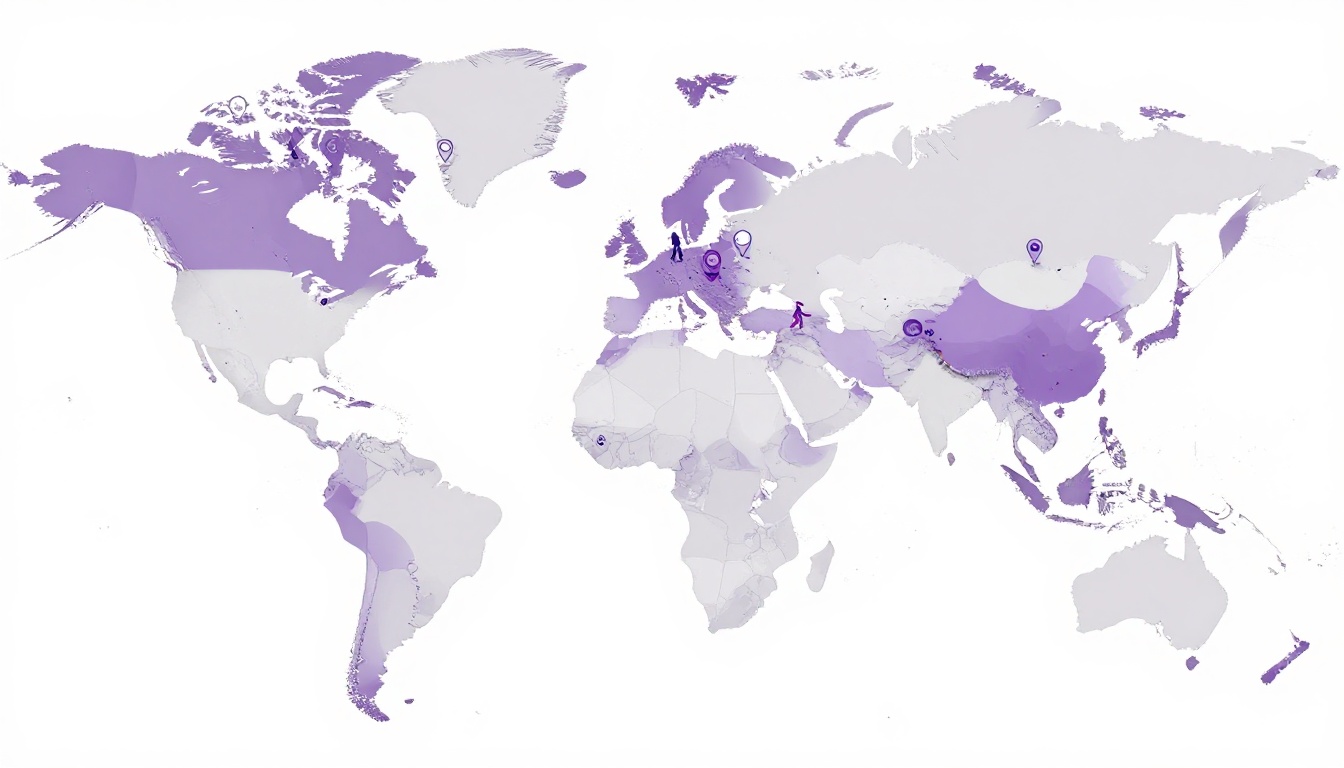
Zoom out further, and "sim" isn't just a Brazil-and-Portugal word. Portuguese is an official language across a surprising spread of countries: Angola, Mozambique, Cape Verde, Guinea-Bissau, São Tomé and Príncipe, East Timor, Macau, and Equatorial Guinea, alongside Brazil and Portugal themselves. The full list of countries and territories where Portuguese is an official language covers all of them, and the Community of Portuguese Language Countries is the organization that formally links them. Across every single one of those countries, "sim" is the standard word for yes, the same way it was true for "comigo" in the earlier post on that word: some pieces of a language stay rock solid no matter how far the language travels, and "sim" is one of them.
It's also worth putting "sim" side by side with its closest relatives in other Romance languages, because the comparison highlights exactly what makes it distinctive. Spanish says "sí," Italian says "sì," both without any nasalization at all, and neither language writes the word with a trailing consonant. French breaks from the pattern entirely with "oui," which descends from an entirely different root, Old French "o il," rather than from the Latin "sic" that gives the other three their shape. Portuguese, alone among its closest relatives, took the same Latin root as Spanish and Italian and nasalized it, adding a written "m" that neither of its siblings kept. Wiktionary's entry for the Spanish "sí" and its entry for the Italian "sì" both show the shared root plainly, and Wikipedia's overview of the Romance languages is a good starting point if you want to see how many small divergences like this one exist across languages that all grew out of spoken Latin.
That shared root traces back further still. Wiktionary's entry for "sim" and its entry for the Latin "sic" lay out the chain: Portuguese "sim" comes from Old Galician-Portuguese "si," which comes from Latin "sic" ("thus, so, in this manner"), which itself traces back to a Proto-Indo-European root meaning roughly "this" or "that." So the word you're learning to say correctly today has been passed hand to hand for something close to five thousand years, worn down, reshaped, and nasalized along the way, before landing, unchanged for a few centuries now, in a conversation you might have next week in Rio de Janeiro.
Do Brazilians nod for yes the way you'd expect?
One quick reassurance before we move on: yes, nodding your head up and down to mean "yes," and shaking it side to side to mean "no," works in Brazil exactly the way it does across most of the English-speaking world. This isn't true everywhere. Certain regions, including parts of Bulgaria, Greece, and India, use head gestures that run opposite to, or differently from, the Western pattern, which trips up plenty of travelers who assume body language is universal. Brazil isn't one of those exceptions. If you nod along while someone explains directions to you in Portuguese, you're communicating exactly what you think you are. Wikipedia's overview of nonverbal communication and its entry specifically on head shaking both cover how much this gesture varies globally, which makes it worth a one-line check whenever you're heading somewhere new, even if Brazil, in this particular case, holds no surprises.
Common mistakes English speakers make with "sim"
Every mistake below is common, forgivable, and completely fixable once you see it named clearly.
| Mistake | What it sounds like | The fix |
|---|---|---|
| Pronouncing it like the English word "sim" | A flat, hard, non-nasal ending | Let the vowel go nasal, no firm consonant closure |
| Saying "seem" instead | Borrowing an English vowel sound and a clear final consonant | Say a nasalized "see," not "seem" |
| Answering every question with a bare "sim" | Technically correct, but a little stiff | Repeat the verb from the question, add "sim" for warmth if you like |
| Panicking when you hear "pois não" | Assuming "não" always means no | "Pois não" usually means "yes, of course" or "how can I help you?" |
| Trusting "pois sim" as plain agreement | Missing the sarcasm baked into the phrase | "Pois sim" usually signals doubt, closer to "yeah, sure" |
| Leaving a bare "não" as a full answer | Coming across as blunt or cold | Soften it with the negated verb, or add "obrigado/obrigada" |
The "pois não" and "pois sim" mistakes deserve one more sentence, because they're the kind of trap that a written rule alone rarely fixes on the first try. You can read the explanation five times, nod along, and still freeze for half a second the first time a waiter actually says "Pois não?" to you in real time, because reading a rule and reacting to it instantly, under real conversational pressure, are two different cognitive tasks entirely. Hearing it once, live, from an actual person, and answering back correctly, tends to lock the pattern in far faster than another pass through a table like this one.
Most of the mistakes above share a root cause: they're reading mistakes wearing a speaking costume. Every single one becomes obvious the moment you say the sentence out loud to a native speaker and watch their reaction, and almost none of them announce themselves while you're silently scanning a page of vocabulary. That gap is exactly why practicing "sim," and the whole yes-and-no toolkit around it, with your mouth rather than only your eyes, matters more than most learners expect going in. If you've been weighing a few different tools to close that gap, it's worth a look at how various options actually compare on our language app reviews page before settling on one, since the honest difference between them usually comes down to whether an app makes you speak, or just lets you recognize words silently.
How to make "sim" actually come out of your mouth
Here's the honest problem with a page like this one, and it's worth naming directly instead of pretending otherwise. You can read every table above, understand the verb-repetition pattern completely, memorize "pois não" versus "pois sim" well enough to explain it to a friend, and still freeze the first time a Brazilian actually asks you something in real time. Recognizing an answer on a page and producing it instantly, under real conversational pressure, are two entirely different skills, and only one of them gets built by reading.
This gap has a name in second-language acquisition research: the difference between passive and active vocabulary. Passive vocabulary is everything you'd recognize if you saw or heard it. Active vocabulary is the much smaller slice that comes out of your mouth without conscious searching, under time pressure, while someone is actually waiting on your answer. Closing that gap takes actual spoken practice, out loud, repeated, not more silent reading, no matter how good the reading material is.
There's a very real emotional obstacle sitting on top of that gap too: foreign language anxiety, the specific nervousness that shows up only when you're asked to perform in a language you're still learning, even if you're completely relaxed doing anything else in your day. That nervousness is exactly why so many people can silently read a hundred Portuguese sentences without a hitch, and then genuinely freeze the first time a real person expects a spoken answer back.
This is the actual problem Comigo was built to solve, and it shows up in the name of the company itself: "comigo" means "with me," and the whole idea is a companion you speak a new language with, out loud, rather than a stack of flashcards you quietly review alone. Every lesson is a spoken conversation from the very first minute, guided by Capy, an easygoing capybara who runs the practice and reacts to what you actually say, never a silent multiple-choice screen you can tap through without opening your mouth. You answer questions like the ones in this article out loud, get instant feedback on the actual words you said, and build the pattern until "gosto, sim" or "sim, claro" starts coming out on reflex instead of after a three-second mental pause.
None of this works by cramming every word in one sitting, either. Spaced repetition, reviewing a word or phrase right before you'd naturally start to forget it rather than all at once, is one of the most well-documented ways to make vocabulary stick for the long term, and the testing effect, the finding that actively trying to recall something yourself beats simply rereading it, backs up why speaking a phrase out loud from memory works better than silently rereading the same phrase for the tenth time.
If saying "sim" correctly, catching "pois não" without flinching, and answering a real question with a real verb instead of a stiff, bare "yes" are things you actually want ready in your mouth before your next trip, your next call home, or your next conversation with a Brazilian partner's family, Comigo's quiz takes about two minutes and builds a short, specific speaking plan around exactly that, instead of one more page you read once and quietly forget.

Frequently asked questions about saying yes in Portuguese
Is "sim" pronounced like the English word "sim"?
No. Portuguese "sim" is a nasal vowel, IPA /sĩ/, with no firm consonant closure at the end. It sounds closer to a nasalized "see" than to the English word "sim" (as in a SIM card) or to "seem," which has a clear final consonant that Portuguese doesn't produce here.
What is the most common way Brazilians answer yes?
In casual conversation, Brazilians most often repeat the verb from the question rather than saying "sim." Asked "Você gosta disso?" ("Do you like this?"), the natural answer is "Gosto" ("I do"), often with "sim" added afterward for emphasis: "Gosto, sim."
What does "pois não" mean?
Despite containing the word "não" (no), "pois não" actually means "yes, of course," and it's very commonly used as a polite service phrase, roughly equivalent to "How can I help you?" from a shopkeeper, waiter, or receptionist.
How do you say no in Portuguese?
"Não" is the word for no. A bare "não" can sound blunt in casual Brazilian conversation, so it's usually softened, either by repeating the negated verb ("Não, não quero") or by adding "obrigado" or "obrigada" ("No, thank you").
Is "sim" used the same way in Portugal and Brazil?
The word itself is identical in both countries. European Portuguese speakers tend to use a bare "sim" more often and more neutrally in casual conversation than Brazilians do, where the verb-repetition pattern dominates everyday speech.
How do you say yes formally in Portuguese?
"Sim, senhor" or "sim, senhora" are the standard formal, polite affirmatives, appropriate for talking to someone senior or in a professional setting. "Certamente" and "com certeza" also work well in formal or professional contexts.
What do Brazilians say instead of a plain "sim"?
Depending on the situation, Brazilians reach for the repeated verb from the question, or words like "claro" (of course), "com certeza" (for sure), "tá bem" (okay), "certo" (right), or the casual sounds "aham" and "uhum," rather than a bare "sim."
Is there a slang way to say yes in Portuguese?
"Pode crer," literally "you can believe it," is a casual slang way to say "you bet" or "trust me." "Tá," the spoken contraction of "está," also works as a quick, informal "yeah" or "okay" in fast conversation.
What does "pois sim" mean, and is it different from "pois não"?
"Pois sim" usually signals sarcasm or doubt, closer to "yeah, sure" or "yeah, right" than genuine agreement, even though it contains the word "sim." It's essentially the mirror image of "pois não," which contains "não" but means an enthusiastic yes.
Does nodding mean yes in Brazil?
Yes. Nodding for yes and shaking your head for no work the same way in Brazil as they do across most of the English-speaking world, unlike a few regions elsewhere where head gestures run in the opposite direction.
The last word
You came here for one word, and "sim" was always going to be the easy part of the answer. The harder, more useful part is everything wrapped around it: knowing when to leave it bare and when to dress it up with a verb, catching "pois não" without flinching, softening a "não" so it doesn't land cold, hearing the nasal hum that makes "sim" sound Brazilian instead of like a keychain accessory. That's the actual skill a searcher typing "how do you say yes in Portuguese" is really after, whether they know it yet or not: not a flashcard answer, but the ability to open their mouth in front of someone who matters to them and have the right sound come out, on the first try, without translating in their head first.
Related guides
- BoldVoice vs ELSA SpeakBoldVoice vs ELSA Speak: accent coaching, feedback quality, price and which to pick.
- Rosetta Stone vs BabbelRosetta Stone vs Babbel: price, method and which one to pick.
- Rosetta Stone vs DuolingoRosetta Stone vs Duolingo: free vs paid, method and results.
- italki vs Preplyitalki vs Preply: pricing models, tutors and which is better.


