

You're texting a friend in Brazil about a dress you just bought. "It's black, with a little gold trim," you type, then stop. How do you even say that in Portuguese? You could look it up in ten seconds and get "preto." Easy. Done. Except twenty minutes later you're reading a Brazilian news article about racial identity and the word isn't "preto" at all, it's "negro," and now you're wondering if you just learned the wrong word, or if maybe you learned half of a word that actually needs two.
Both things are true. "Preto" is the color, the one you want for that dress, for a black car, for black coffee. "Negro" is a different word with a different job, used mostly for race and identity, and stitched permanently into a handful of expressions where "preto" would sound flatly wrong. English collapses all of this into one word, "black," and expects context to sort out the rest. Portuguese refuses to collapse it. Getting this right is one of those small distinctions that quietly signals whether you're translating in your head or actually thinking in the language, and it's exactly the kind of nuance that's easy to read about and hard to internalize until you've said it out loud a few dozen times, which is the whole idea behind a quick two-minute placement quiz if you want to see where your Portuguese actually stands before you keep reading.
This post covers both words in full: how to pronounce them, how they change for gender and number, when each one is the right choice, the idioms that only work with "negro," the color chart "preto" belongs to, and the cultural context, from a historic mining town to New Year's Eve superstitions, where "preto" shows up in real Brazilian life. By the end you'll know exactly which word to reach for, and why.
Quick answer
Here's the short version before the long one. Three words, three different jobs, and none of them are perfect substitutes for each other.
| Word | Meaning | Register | When to use it |
|---|---|---|---|
| preto | black (the color) | Neutral, everyday | Describing objects, clothes, colors: "uma camisa preta" |
| negro | Black (race/identity), also fixed idioms | Respectful for people, frozen in set phrases | Talking about a person's race, or idioms like "mercado negro" |
| escuro | dark | Neutral, everyday | Describing darkness, dim light, nighttime: "está escuro" |
That's the map. Now let's walk through the terrain, starting with the word you'll use the most.
Preto: the everyday color word
"Preto" is the word you reach for almost every time you mean the color black. It's what shows up in the Cambridge Dictionary's Portuguese entry for "black" and in Collins Dictionary's Portuguese translation of "black", and it's the one you'll hear a hundred times before you ever hear "negro" used the same way.
How to say it
"Preto" is two syllables: "PREH-too," with the stress landing hard on the first syllable. The "e" is closed, meaning your mouth doesn't open as wide as it would for the English "eh" in "bed." Think of the vowel sound in "café," minus the little accent-driven openness at the end, or the vowel in "they" without the glide into a "y" sound that English tacks on. It's a clean, closed "eh," held short, then straight into "too."
If you want the technical breakdown of exactly how Portuguese vowels and consonants map to sound, Wiktionary's Portuguese pronunciation appendix and the IPA guide for Portuguese on Wikipedia both lay it out letter by letter. But phonetic charts only get you so far. Your ear needs real examples, and for that, YouGlish has a library of native speakers saying "preto" in real videos, pulled from natural speech instead of a studio recording. Forvo's entry for "preto" works the same way, letting you hear the word said by different speakers back to back until the rhythm settles into your ear.
Here's the part that matters more than any chart, though. Hearing "preto" said correctly a hundred times will get you close. Saying it yourself, out loud, and finding out in real time whether your stress landed on the right syllable, is what actually locks it in. That's the entire premise behind Comigo: every lesson is a spoken conversation with Capy, a capybara who talks to you, waits for you to answer out loud into the mic, and gives you green or red feedback on each word you said. A word like "preto" that you've said correctly fifty times sits in your mouth completely differently than one you've only ever read silently on a flashcard.
Gender and plural agreement
"Preto" isn't a fixed word the way "black" is in English. It's an adjective, and Portuguese adjectives change shape to match the noun they're describing, in both gender and number. That gives you four forms.
| Form | Portuguese | Example | English |
|---|---|---|---|
| Masculine singular | preto | um carro preto | a black car |
| Feminine singular | preta | uma blusa preta | a black blouse |
| Masculine plural | pretos | sapatos pretos | black shoes |
| Feminine plural | pretas | meias pretas | black socks |
Notice the pattern: "carro" is masculine, so it takes "preto." "Blusa" is feminine, so it takes "preta." Plural nouns just add an "s" to whichever gender form applies. This is standard behavior for Portuguese adjectives that end in "o," and if you want a broader look at how it works across dozens of common adjectives, Preply's guide to Portuguese adjectives runs through a hundred examples, and Elon.io's grammar page on gender agreement breaks down the mechanics in more detail. It's one of the first grammar habits worth drilling until it's automatic, because forgetting it is the single most common slip English speakers make with this word, and we'll come back to that later in the mistakes section.
Negro: the word for race and identity
Here's where English speakers usually get surprised. "Negro" is a real, commonly used Portuguese word, and it also means "black." But it isn't interchangeable with "preto," and the difference matters enough that it's worth slowing down and getting it right, especially if you're planning to live in or spend real time in Brazil.
Start with the official picture. Brazil's national statistics agency, IBGE, classifies the population by self-declared "cor ou raça" (color or race) using five categories: "branco" (white), "pardo" (mixed or brown), "preto" (black), "amarelo" (East Asian descent), and "indígena" (indigenous). So on the census form, "preto" is the official term for a Black person, not "negro." This classification system is described in detail in the Wikipedia article on Pardo Brazilians, and a deeper academic comparison of how Brazil's race and color categories work is available in a study published on NCBI/PMC.
Everyday spoken Portuguese doesn't quite follow the census, though, and this is the nuance worth actually sitting with. In casual conversation, "negro" is generally the respectful, preferred term when talking about a person's race, while using "preto" as a bare noun to label a person directly can land as crass or disrespectful, even though it's the exact word the government form uses. It's not a clean, single rule you can memorize in one sentence. Native speakers themselves navigate it, and you'll find genuine disagreement and discussion about it, like in this LinkedIn article walking through the connotations of "negro" versus "preto", this Quora thread where Portuguese speakers debate the exact difference, and this HiNative thread comparing the two words directly, question and answer style.
For a learner, here's the practical version that will keep you on solid ground. When you're talking about the color of an object, always reach for "preto." "Uma camisa preta" (a black shirt) is completely safe and completely normal, no matter who's in the room. When you're talking about a person's race, respectfully, "negro" or "negra" is the safer, warmer word in conversation. Think of it less as a strict grammar rule and more as the same kind of social calibration every language has around identity words, English included. Getting comfortable with this distinction is part of what makes learning Portuguese feel less like memorizing vocabulary and more like understanding how people actually talk.
Moreno: a word that isn't preto or negro
Here's a word that trips people up in a different direction entirely. "Moreno," or "morena" for a woman, sounds like it should mean "black" too, especially to English speakers scanning a Portuguese dictionary for skin tone words. It doesn't. "Moreno" describes someone with tan skin or dark hair, closer to "brunette" or "dark-complexioned" than to "black" in the preto or negro sense. Its roots trace back through Spanish and Portuguese alike, carrying the general sense of "dark-haired" or "dark-skinned," as one etymology breakdown of "morena" explains.
In everyday Brazilian speech, "moreno" gets used affectionately and loosely, often describing someone with dark hair regardless of their actual skin tone, a nuance confirmed in this native speaker discussion. That makes it a genuinely different category of word from everything covered above. It's not about the color black, and it's not about racial identity the way "preto" and "negro" can be. It's a description of coloring, hair and complexion, sitting entirely off to the side of the distinction this post is really about.
Where "negro" can't be swapped for "preto"
Portuguese has a set of fixed expressions where "negro" is locked in and native speakers simply don't substitute "preto," even though both words technically translate to "black" in English. These are frozen phrases, the kind where swapping the word breaks the idiom entirely, the same way "raining cats and dogs" stops working if you change the animals.
| Expression | Literal meaning | Actual meaning |
|---|---|---|
| mercado negro | black market | black market |
| lista negra | black list | blacklist |
| ovelha negra | black sheep | black sheep of the family |
| magia negra | black magic | black magic |
| buraco negro | black hole | black hole |
| humor negro | black humor | dark/black humor |
| quadro negro | black board | chalkboard (more common in Portugal) |
A good roundup of these color idioms, and several more besides, lives at Lusopatia's post on idiomatic color expressions. "Ovelha negra" in particular has an interesting backstory: Só Português traces the origin of the phrase back to old shepherding traditions, where a black sheep stood out visually from the rest of the flock and its wool couldn't be dyed the same way, making it, quite literally, the odd one out.
"Quadro negro" deserves a footnote of its own. It's more common in European Portuguese; in Brazil you'll more often hear "quadro-negro" said the same way, or just "lousa" for chalkboard, especially in schools. And a growing number of Brazilian educators and writers have started questioning phrases like "lista negra" and "ovelha negra" altogether, since they encode "black" as automatically negative and "white" as automatically positive. The Instituto Claro has written specifically about swapping out pejorative color-coded expressions as a small but real way to push back against everyday racism embedded in language, a conversation happening in Portuguese the same way it's happened in English around phrases like "blacklist."
While we're on idioms that don't translate cleanly, here's a fun mismatch worth filing away. "Black eye" in English is not "olho preto" and not "olho negro" in Portuguese. It's "olho roxo," literally "purple eye." Color idioms almost never survive a word-for-word translation between languages, and this is a clean example of exactly that trap.
Everyday phrases with "preto": food and drink
Some of the most common uses of "preto" show up at the table, and if you've spent any time around Brazilian food culture, you've probably already run into a few of these without realizing it.
| Portuguese | English | Notes |
|---|---|---|
| café preto | black coffee | Coffee with no milk added |
| feijão preto | black beans | The base of feijoada |
| pimenta preta / pimenta do reino | black pepper | Both terms are used, "do reino" is more formal |
| chá preto | black tea | As opposed to green or herbal tea |
| chocolate preto | dark chocolate | Less common than "meio amargo" |
| arroz com feijão preto | rice with black beans | A staple daily combination |
"Feijão preto" deserves special mention, since it's the backbone of feijoada, Brazil's iconic black bean and pork stew, usually served on weekends with rice, collard greens, and orange slices. It's less a recipe than a whole cultural institution, and the beans themselves are almost always described with "preto," never with any of the color's synonyms.
Chocolate is the one spot in this table where "preto" technically works but isn't the most natural choice. Brazilians talk about dark chocolate far more often as "chocolate meio amargo" (semisweet) or just "chocolate amargo" (bitter), leaning on flavor rather than color to describe it. We'll come back to exactly why in the section on "preto" versus "escuro."
Shopping for black clothes: a mini dialogue
Vocabulary lists teach you words. Dialogue teaches you how those words actually move through a conversation, so here's a short, realistic exchange between a customer and a shop clerk somewhere on a Brazilian shopping street.
| Portuguese | English |
|---|---|
| Cliente: Oi, tudo bem? | Customer: Hi, how's it going? |
| Vendedora: Tudo bem, obrigada! Posso ajudar? | Clerk: Doing well, thanks! Can I help you? |
| Cliente: Estou procurando uma calça preta. | Customer: I'm looking for a pair of black pants. |
| Vendedora: Temos várias. Prefere preta fosca ou com brilho? | Clerk: We have several. Do you prefer matte black or a shiny one? |
| Cliente: Fosca, por favor. E tem no meu tamanho? | Customer: Matte, please. And do you have my size? |
| Vendedora: Temos sim! Aqui está. | Clerk: We do! Here you go. |
| Cliente: Perfeito, muito obrigado. Tchau! | Customer: Perfect, thank you so much. Bye! |
Notice how much of this dialogue leans on words that have nothing to do with color at all. The customer opens with a casual hello in Portuguese and a quick how are you in Portuguese check-in, "tudo bem?", before ever mentioning what they came in for. That's not filler, it's how Brazilian small talk actually works, a beat of warmth before the transaction starts.
The rest of the exchange leans just as hard on manners. "Por favor" is your go-to for please in Portuguese, and it shows up the instant the customer states a preference, matte over glossy. "Obrigado" or "obrigada" for thank you in Portuguese closes almost every interaction like this one, often doubled up with an intensifier like "muito" to sound genuinely grateful rather than perfunctory. And when the clerk confirms they have the size in stock, she doesn't just say "temos," she says "temos sim," tacking a yes in Portuguese onto the verb for emphasis, a small but very Brazilian habit worth copying. The whole thing wraps with a plain "tchau," your simplest goodbye in Portuguese, no ceremony needed for a shop this casual.
Strip out "preta" and "fosca" and this dialogue could be about literally anything you're buying. That's the real lesson here: color words rarely travel alone. They ride inside ordinary, repeatable conversational scaffolding, and that scaffolding is worth learning just as hard as the vocabulary it's carrying.
The full color chart in Portuguese
"Preto" doesn't exist in isolation. It sits inside a full color vocabulary, and seeing where it fits alongside the others helps the whole system click into place faster than memorizing it one word at a time.
| Portuguese | English | Pronunciation note | Changes for gender? |
|---|---|---|---|
| preto | black | PREH-too | Yes |
| branco | white | BRAHN-koo | Yes |
| vermelho | red | ver-MEH-lyoo | Yes |
| azul | blue | ah-ZOOL | No |
| amarelo | yellow | ah-mah-REH-loo | Yes |
| verde | green | VER-jee | No |
| laranja | orange | lah-RAHN-zhah | No |
| roxo | purple | HOH-shoo | Yes |
| rosa | pink | HOH-zah | No |
| marrom | brown | mah-HOHN | No |
| cinza | grey | SEEN-zah | No |
| dourado | gold | doh-RAH-doo | Yes |
| prateado | silver | prah-tee-AH-doo | Yes |
| bege | beige | BEH-zhee | No |
The pattern worth noticing: colors ending in "o" (preto, branco, vermelho, amarelo, roxo, dourado, prateado) shift to an "a" ending for feminine nouns, exactly like "preto" becoming "preta." Colors that don't end in "o" (azul, verde, laranja, rosa, marrom, cinza, bege) stay the same regardless of gender. That single rule covers almost the entire color system in one shot, and it's the same logic you'd apply describing a house in Portuguese as "azul" (blue, no change) versus "branca" (white, feminine form, since "casa" is feminine).
For deeper dives into the full color list, Preply's colors in Portuguese article, Migaku's complete Portuguese colors guide, Babbel's colors in Portuguese piece, and FluentU's colors in Portuguese post all cover the list from slightly different angles, with example sentences and audio. Rio & Learn's colors lesson and Caminhos Languages' colors lesson are both aimed at learners actually living in Brazil, and The Brazilian Ways' article on color names adds a few regional notes worth knowing.
If you're learning European Portuguese specifically, pay attention to the pronunciation gap. Practice Portuguese's colours guide and the Portuguese Language Centre's article on European Portuguese colors both point out that Brazilian Portuguese tends to keep vowels open and syllables clearly separated, while European Portuguese swallows unstressed vowels more aggressively, the same split you'll notice comparing how someone in Rio says good afternoon in Portuguese versus how someone in Lisbon says it.
Preto vs. escuro: black vs. dark
English speakers blur this distinction constantly, mostly because English lets "dark" and "black" overlap in casual speech. "That's a dark color" and "that's a black color" can mean almost the same thing in English, depending on tone. Portuguese doesn't let you get away with that.
"Escuro" means dark in a general sense: a dark room, a dark color, nighttime itself. "Preto" means specifically the color black. They overlap sometimes, but they're not interchangeable, and mixing them up is one of the more common small errors English speakers make.
Take a simple pair of sentences: "Está escuro" means "it's dark," describing a state, usually about lighting or the time of day. "É preto" means "it is black," describing a fixed color of an object. You'd say "está escuro aqui" (it's dark in here) about a dim room, but you'd never say "está preto aqui" to mean the same thing, that would sound like you're saying the room itself is colored black, not that the lights are off.
This is also why "chocolate meio amargo" beats "chocolate preto" for dark chocolate. The color of the chocolate isn't really the point, the intensity of the flavor is, and "amargo" (bitter) captures that far more naturally than a straight color word would. Similarly, if you're describing a Brazilian evening turning into night, you'd talk about it getting "escuro" outside long before you'd reach for "preto," the same way you'd describe how the sky looks right before you head out to wish someone goodnight in Portuguese rather than during a bright good morning in Portuguese greeting.
Shades and intensity of black
Once you've got "preto" down, Portuguese gives you a few ways to describe just how black something is, which comes in handy for anything from paint to hair color.
| Portuguese | English | Notes |
|---|---|---|
| preto fosco | matte black | Flat, non-shiny finish |
| preto brilhante | glossy black | Shiny, reflective finish |
| preto azeviche | jet black | Deep, glossy black, often used for hair |
| preto piche | pitch black | Very deep black, "piche" means tar/pitch |
| breu | pitch dark (idiomatic) | Used in "escuro breu," total darkness |
"Escuro breu" is worth calling out on its own. It's an idiomatic intensifier, similar to how English says "pitch black" or "black as tar" to describe total darkness, rather than just "very dark." "Breu" literally refers to pitch or tar, and pairing it with "escuro" cranks the darkness up to its most extreme, poetic setting.
Ouro Preto: Brazil's "black gold" town
Here's a piece of real Brazilian history that uses "preto" in a way no vocabulary list would ever teach you. Ouro Preto is a colonial town in the state of Minas Gerais, founded during Brazil's 18th century gold rush. The name translates literally to "black gold," and the story behind it is straightforward once you know the chemistry: the gold ore found in the region was coated in iron oxide, which darkened its surface and gave it a blackish appearance, even though the gold underneath was, of course, gold colored.
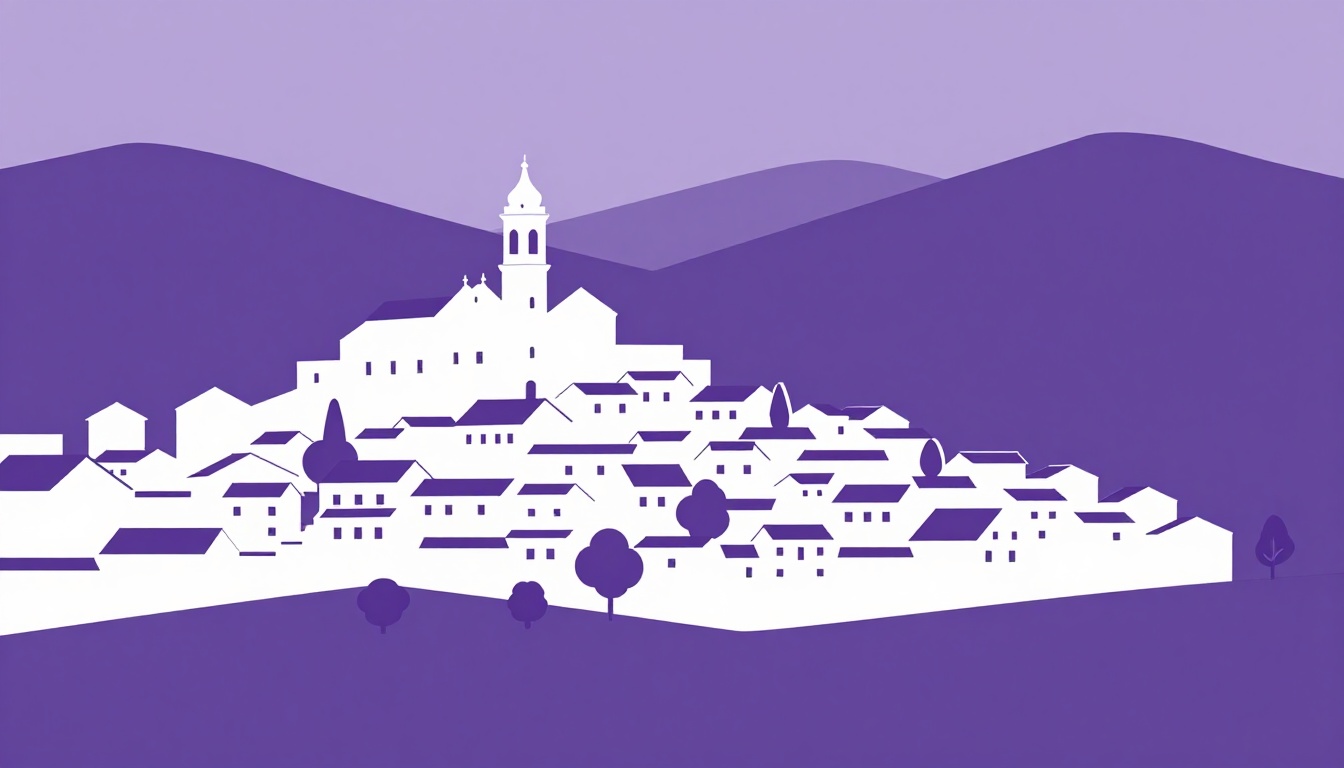
The town itself became one of the wealthiest and most important urban centers in colonial Brazil, and its Baroque architecture, much of it shaped by the celebrated sculptor Aleijadinho, earned it recognition as a UNESCO World Heritage Site in 1980. The Wikipedia article on Ouro Preto goes deeper into its history as a mining hub and its role in Brazil's push toward independence. It's a nice reminder that language study doesn't have to stop at flashcards. A single color word can be a doorway into a whole chapter of Brazilian history, the kind of context that makes vocabulary stick far better than rote repetition ever could, whether that vocabulary is days of the week in Portuguese or the name of a mountain town built on darkened gold.
Black cats and superstition in Brazil
Brazil shares a familiar superstition with a lot of Western folklore: a black cat, "gato preto," crossing your path is widely considered bad luck. It's the same basic belief that's floated around English speaking countries for generations, carried over through colonial and cultural exchange rather than developing entirely on its own.

There's a fun regional twist worth knowing, though. In some Brazilian folk variants, the direction the cat is walking actually matters. A black cat walking toward you is said to bring good luck, while one walking away from you takes the luck along with it as it goes. Caminhos Languages' roundup of Brazilian superstitions covers this variant alongside a whole list of other beliefs, and Paulo Coelho's blog post on common Brazilian superstitions rounds out the picture from a native Brazilian writer's perspective. It's a good example of how even a superstition you think you already know from your own culture can carry a small local variation once it crosses into Portuguese.
New Year's Eve and the colors Brazilians wear
Here's a cultural moment where color, including the absence of black, actually carries real weight. On Réveillon, Brazil's New Year's Eve celebration, many Brazilians deliberately wear white. The tradition traces back to Afro-Brazilian Candomblé religious practice, where white symbolizes purity, peace, and renewal, tied closely to the saying "ano novo, vida nova," new year, new life, which you'll hear repeated constantly across New Year in Portuguese celebrations up and down the coast.

White isn't the only color in play, either. Plenty of Brazilians pick their underwear color on New Year's Eve specifically to set intentions for the year ahead: yellow for money, red for passion, green for health, among others. Rio & Learn's article on New Year's Eve colors and Soul Brasil Magazine's piece on why Brazilians wear white for New Year's both cover the full color code in more detail, along with the beach rituals, like jumping seven waves for good luck, that often go alongside it. It's a great night to practice saying congratulations in Portuguese as the countdown hits zero, and notably, black is nowhere on the traditional Réveillon palette. The one night a year Brazilians think hardest about what color to wear, "preto" gets left out entirely.
Cultural moments before New Year's Eve tend to bleed into each other in Brazil the way they do everywhere. Families gather for December holidays first, trading a warm merry Christmas in Portuguese at the table days before anyone puts on white for Réveillon, and it's exactly the kind of gathering where you'll hear i love you in Portuguese said out loud more than usual, between parents and kids, between siblings who only see each other once a year. By the time midnight on December 31st actually arrives, the color choices and the well wishes are really just an extension of the same season, not a separate event.
Fun fact: "Black Friday" stays in English
Here's a genuine oddity. Brazilians don't translate "Black Friday" into Portuguese. They don't say "sexta-feira negra" or "sexta-feira preta." They just say "Black Friday," in English, dropped straight into an otherwise Portuguese sentence or advertisement, the same way plenty of English tech vocabulary gets borrowed wholesale rather than translated.
It's also stopped being just one day. In Brazilian retail, "Black Friday" has stretched into something closer to a month-long shopping event, with sales starting weeks before the actual Friday and running well past it. The PagBrasil article on Black Friday in Brazil breaks down exactly how far the event has expanded, and a HiNative thread on how Brazilians actually say "Black Friday" confirms that the English phrase, not a translated one, is simply what everyone uses. If you're keeping track of days of the week in Portuguese, Friday itself is "sexta-feira," but the shopping holiday attached to it skips right past translation altogether.
Faixa preta: the other black that matters in Brazil
There's one more "preto" worth knowing, and it has nothing to do with paint chips or clothing racks. "Faixa preta" means "black belt," and in Brazil it belongs to Brazilian Jiu-Jitsu, the grappling martial art that Brazil took, refined, and exported to the rest of the world.
A faixa preta in BJJ isn't treated as a finish line. Ask anyone who's earned one and they'll tell you it's closer to a starting gun. It marks the point where a practitioner has proven a complete game against real resistance and can finally start exploring the art on their own terms, rather than the end of some syllabus. That framing shows up again and again in writing about the belt system, including this breakdown of what the black belt actually represents and a broader glossary of BJJ vocabulary if you want the surrounding terms too. Rio & Learn has a good primer on Brazilian Jiu-Jitsu as a piece of Brazilian culture in its own right, not just a sport that happens to come from Brazil.
Worth contrasting here: capoeira, the Afro-Brazilian art that blends martial art, dance, and music, doesn't use a belt at all. It ranks practitioners with a "cordão," a braided cord tied at the waist, colored to match the Brazilian flag rather than the black-belt-at-the-top system BJJ borrowed from judo. A good explainer on capoeira's cord ranking system lays out exactly how the colors and order work, and how differently it's structured from a faixa preta.
Here's the parallel worth sitting with, and it's not a stretch. Nobody earns a faixa preta by reading about jiu-jitsu, watching technique videos, or nodding along to a coach's explanation. You earn it by drilling the moves on a mat, over and over, against a real opponent, until your body does the thing without your brain narrating it first. Learning to reach for "preto" instead of "negro," or "negro" instead of "preto," without stopping to think, works exactly the same way. It's one more reason Portuguese has a reputation for being hard to learn on paper and far more manageable once you're actually speaking it out loud, a gap plenty of people have written about in how I learned Portuguese style stories, and one worth keeping in mind next time you catch yourself wondering whether English itself ranks among the hardest languages to learn for someone coming the other direction.
Common mistakes English speakers make
A handful of errors show up again and again with this word, and most of them are easy to fix once you know to watch for them.
- Forgetting gender and plural agreement. Saying "uma blusa preto" instead of "uma blusa preta" is the single most common slip, since English adjectives never change shape and the habit of leaving them alone is hard to break.
- Using "preto" as a blunt noun to label a person. Reaching for "preto" the way you'd reach for it to describe a car or a shirt, but pointed at a person, can come across as crass. "Negro" or "negra" is the safer, more respectful choice in conversation.
- Confusing "preto" with "escuro." Saying "está preto" when you mean "it's dark outside" mixes up a color word with a description of lighting, and it reads oddly to a native ear.
- Mispronouncing the stress. Putting the emphasis on the second syllable, "preh-TOO" instead of "PREH-too," is a small slip but a noticeable one.
- Assuming color idioms translate literally. Expecting "olho preto" for a black eye, when Brazilians actually say "olho roxo," purple eye, is a classic example of a color idiom that simply doesn't cross languages word for word.
Most of these mistakes come from the same root cause: translating word by word in your head instead of learning the phrase as a whole unit the way a native speaker actually says it. That's a broader theme in how Portuguese is genuinely hard to learn for English speakers in some very specific, learnable ways, gender agreement chief among them.
Phrases you'll actually say
Vocabulary lists are useful, but real conversations happen in full sentences. Here are natural, everyday examples using "preto," "negro," and "escuro" the way a Brazilian would actually say them.
| Portuguese | English |
|---|---|
| Comprei um vestido preto para a festa. | I bought a black dress for the party. |
| Ele tem cabelo preto. | He has black hair. |
| Está muito escuro aqui. | It's very dark in here. |
| Aquele carro preto é meu. | That black car is mine. |
| Não gosto de humor negro. | I don't like dark humor. |
| Foi comprado no mercado negro. | It was bought on the black market. |
| Minha avó adora café preto de manhã. | My grandma loves black coffee in the morning. |
| A ovelha negra da família mora longe. | The black sheep of the family lives far away. |
That last one is a good sentence to keep in your back pocket. It works as a light joke about a grandpa in Portuguese who never shows up to family gatherings, or really about anyone in the family who's always the odd one out.
Frequently asked questions
How do you say black in Portuguese? The everyday word is "preto." It's what you'll use for describing colors of objects, clothing, cars, coffee, and almost anything else that isn't a person's race.
What's the difference between preto and negro? "Preto" is the standard color word, used for objects and things. "Negro" is generally the more respectful word when talking about a person's race, and it's also locked into a handful of fixed idioms like "mercado negro" (black market) where "preto" simply doesn't get substituted in.
Is preto offensive? Not for describing colors, no, it's the completely normal, neutral word for a black object. It can sound crass, though, if used as a bare noun to directly label a person, where "negro" tends to be the warmer, more respectful choice in everyday conversation.
How do you pronounce preto? "PREH-too," with the stress on the first syllable and a closed "e" sound, similar to the vowel in "café" without the open ending. Listening to native speakers on resources like YouGlish or Forvo helps a lot, but saying it out loud yourself is what really locks the pronunciation in.
Does preto change for gender and plural? Yes. It's "preto" for masculine singular, "preta" for feminine singular, "pretos" for masculine plural, and "pretas" for feminine plural, matching whatever noun it's describing.
What is the word for dark in Portuguese? "Escuro." It describes darkness generally, like a dim room or nighttime, and it's a different word from "preto," which specifically means the color black.
What is Ouro Preto? Ouro Preto is a historic colonial town in Minas Gerais, Brazil, founded during the 18th century gold rush. Its name means "black gold," referring to gold ore darkened by iron oxide, and it's a UNESCO World Heritage Site recognized for its Baroque architecture.
Why do Brazilians keep saying "Black Friday" in English? Rather than translating it to something like "sexta-feira negra," Brazilians simply use the English phrase "Black Friday" directly in Portuguese sentences and ads. In Brazil, it's also grown into a month-long shopping event rather than a single day.
What color do Brazilians wear on New Year's Eve? White is the most traditional choice, rooted in Afro-Brazilian Candomblé beliefs about purity and renewal. Some people also choose specific underwear colors, like yellow for money or red for passion, to set intentions for the year ahead.
Is a black cat bad luck in Brazil? Generally, yes, a black cat crossing your path is considered bad luck, much like in a lot of Western folklore. Some Brazilian folk traditions add a twist, though: a black cat walking toward you is said to bring good luck, while one walking away takes it with them.
Say it, don't just read it
You can read this entire post twice and still fumble "preto" versus "negro" the first time it actually matters in a real conversation. That's not a knock on you, it's just how language works. Reading builds recognition. Speaking builds instinct, and instinct is what you need in the two seconds you have to pick the right word while someone's actually waiting on your answer.
That's the whole reason Comigo exists, and it's baked right into the name: "comigo" means "with me" in Portuguese, a small detail worth knowing on its own if you're curious, covered in more depth in what Comigo means in English. Every lesson is a spoken conversation with Capy, not a multiple choice quiz you tap through. You hear a prompt, you say your answer out loud into the mic, and you get word by word feedback on what landed and what didn't. A distinction like preto versus negro, or preto versus escuro, gets real practice that way, out loud, in your own voice, instead of passive recognition you forget by next week.

If you've been piecing together Portuguese from scattered blog posts and flashcard apps, and you're curious what it feels like to actually speak it instead, Comigo's two-minute quiz is a fast way to see where you stand. No app store link needed here, just answer a few questions and find out. You already know how to say black in Portuguese. Now go say it, out loud, until it's yours.
Related guides
- Is Rosetta Stone worth it?Is Rosetta Stone worth the money in 2026? What it does well, and where it falls short.
- How much does Rosetta Stone cost?Rosetta Stone pricing explained: plans, lifetime deals and what you actually get.
- BoldVoice vs ELSA SpeakBoldVoice vs ELSA Speak: accent coaching, feedback quality, price and which to pick.
- Rosetta Stone vs BabbelRosetta Stone vs Babbel: price, method and which one to pick.


