Your phone buzzes at 1:15 in the afternoon. It's a message from a supplier in São Paulo, and before he says anything about the shipment you were waiting on, the first line is "Boa tarde, tudo bem?" You've got half a sandwich in one hand and zero idea what to type back that doesn't sound like you copied it from a phrasebook. Do you say the same thing back? Is there a whole different phrase for the afternoon than the one you already memorized for mornings? You start typing, delete it, and just ask Google: how do you say good afternoon in Portuguese.
The answer is "boa tarde." Two words, easy to say, and you'll use them constantly the moment you're anywhere Portuguese is spoken between roughly noon and sunset. But like most short phrases that look simple, "boa tarde" hides a few real rules underneath: a gender switch that trips up beginners, a pronunciation gap between Brazil and Portugal wide enough that they can sound like two different languages, and a time boundary that has nothing to do with your phone's clock. Let's get into all of it.
"Boa Tarde" Means Good Afternoon in Portuguese
"Boa tarde" translates directly to "good afternoon." "Boa" means "good," and "tarde" means "afternoon," so you're saying exactly what you think you're saying, no idiom, no hidden meaning. It's one of the first three phrases every Portuguese course teaches, right alongside "bom dia" (good morning) and "boa noite" (good night), and for good reason: greetings like this open almost every interaction, from a five-second exchange with a cashier to the first line of a formal email.
If you already know "bom dia," you might be tempted to guess "bom tarde" for the afternoon version. Don't. That's one of the most common slips English speakers make, and we'll unpack exactly why it's wrong in a minute. For now, just lock in the pairing: it's "boa tarde," not "bom tarde," and the Wiktionary entry for "boa tarde" confirms the phrase functions as a fixed, standalone greeting in both Brazilian and European Portuguese, not something you build word by word each time.
You'll see it explained the same way across pretty much every Portuguese learning resource, from quick flashcard-style breakdowns to dedicated explainer posts: "boa tarde" is the standard, neutral, works-everywhere way to greet someone in the afternoon, no regional dialect required, no slang version needed.
This is exactly the kind of phrase that behaves differently in your mouth than it does on a page, which is why Comigo has you say things like "boa tarde" out loud from the first lesson instead of just tapping a multiple-choice answer. If you want to hear it, repeat it, and get real feedback on whether you nailed the vowel sounds instead of guessing, you can try a quick placement quiz and see where your spoken Portuguese actually stands.
How to Pronounce "Boa Tarde" the Right Way
Here's where Brazilian and European Portuguese start to diverge, and it catches a lot of learners off guard because the spelling never changes, only the sound.
In Brazilian Portuguese, "boa tarde" comes out roughly as "BOH-ah TAR-jee." Notice that the final "de" doesn't sound like "deh." Brazilian Portuguese tends to soften that unstressed final "e" toward an "ee" sound, and when a "d" sits right before that "ee," it palatalizes into something close to the English "j." That's why "tarde" ends up sounding like "TAR-jee" instead of "TAR-deh," a pattern you'll hear again in words like "saudade" and "dificuldade." Memrise's phrasebook entry and Univext's pronunciation flashcard both land on essentially this same rendering.
In European Portuguese, the ending stays crisper and closer to the spelling: "TAR-d," almost clipped, with that final "e" reduced to barely a whisper rather than stretched into an "ee." A Portuguese speaker from Lisbon will often drop the vowel sound at the end nearly entirely, so the word lands closer to "tard" than "tar-deh" or "tar-jee." If you want to hear the contrast directly rather than take it from text, this pronunciation video is a decent place to start.
Then there's the "r." This is the part that genuinely surprises people who assume Portuguese sounds like Spanish with a few extra vowels. In Brazilian Portuguese, that "r" in "tarde" often comes out breathy, almost like an English "h," especially in fast, casual speech. It's not a hard consonant at all, more like a puff of air. In European Portuguese, the "r" tends to stay closer to a light tap, or in some regions a slight roll, a sound that's noticeably more consonant-like and less breathy than its Brazilian counterpart. Verbal Planet's guide to common Portuguese greetings touches on this same regional split, and it's worth internalizing early, because that one sound alone is often what makes native speakers instantly place which side of the Atlantic you learned from.
None of this needs to be perfect on day one. What matters is that you say the phrase out loud enough times that your mouth stops treating it like a string of unfamiliar letters and starts treating it like a sound you already know.
When Does "Boa Tarde" Start and End?
Roughly, "boa tarde" covers the window from around noon until sunset, so somewhere in the neighborhood of 12pm to 6 or 7pm. But "roughly" is doing real work in that sentence, and if you try to pin the boundary to an exact minute, you're going to be wrong more often than you're right.
Portuguese time-of-day greetings aren't tied to the clock the way you might expect from a language you learned rules-first. They're tied to daylight and to local habit, which means the actual switchover moves with the seasons, the latitude, and even the specific city you're in. Practice Portuguese's breakdown of greetings throughout the day makes this point directly: the boundary between "boa tarde" and "boa noite" tends to track sunset far more closely than it tracks a fixed hour, so in the long days of a Brazilian or Portuguese summer, you might still hear "boa tarde" comfortably past 7pm, while in winter, people slide into "boa noite" earlier.
The same fuzziness applies on the other end. "Bom dia" doesn't have a hard cutoff at 11:59am either. Some speakers switch to "boa tarde" right around midday, others hold onto "bom dia" until after lunch, closer to 1 or 2pm, especially in casual settings. One explainer on the good afternoon versus good evening distinction frames it as a loose zone rather than a line, and that framing is the most useful way to think about it. If you're ever unsure which greeting to use, listen to what the person in front of you says first and mirror it. That single habit will get you further than memorizing exact hours ever will.
It's worth glancing at the other end of the day too. Just like "boa tarde" fades into "boa noite" gradually around sunset, "boa noite" itself carries its own quirks about timing and usage, which we cover in more detail in our guide to saying good night in Portuguese. And on the front end, if you want the fuller picture of when and how "bom dia" gets used, our companion post on good morning in Portuguese walks through that boundary from the other direction. One source on this exact overlap point, the good afternoon vs good evening piece from Portuguese Learn, frames all three greetings as one continuous daylight cycle rather than three separate boxes, which honestly is the clearest mental model you can carry into a real conversation.

Why "Boa" Tarde but "Bom" Dia? (Gender Agreement Explained)
This is the detail that quietly wrecks a lot of beginners, usually right around the point they've finally gotten comfortable with "bom dia."
Portuguese adjectives change form to match the gender of the noun they describe. "Bom" and "boa" both mean "good," but "bom" is the masculine form and "boa" is the feminine form. The word "dia" (day) is grammatically masculine, so it pairs with "bom": "bom dia." The words "tarde" (afternoon) and "noite" (night), on the other hand, are both grammatically feminine, so they pair with "boa": "boa tarde," "boa noite." Wiktionary's entry for "dia" and its entries for "tarde" and "noite" all confirm this gender assignment if you want the dictionary-level backup.
There's no deep logic to memorize here beyond the pattern itself. Grammatical gender in Portuguese, like in Spanish or French, isn't about the actual gender of the thing being described. "Dia" just happens to be masculine and "tarde" just happens to be feminine, the same arbitrary way "el problema" is masculine in Spanish despite ending in "a." You don't need to understand why. You need to memorize the pairing so it becomes automatic.
Here's the trick that actually works for most learners: don't memorize "bom dia" and "boa tarde" as two separate facts. Memorize them as one linked pair, the exception and the rule, so that every time "bom dia" comes to mind, "boa tarde" and "boa noite" come with it as the other two thirds of the set. A companion piece on bom dia usage and another covering bom dia alongside boa noite both walk through this same three-greeting family together rather than teaching them in isolation, which is the right instinct.
There's a small piece of history tucked inside "tarde" that makes the word easier to remember, too. It traces back to the Latin adjective "tardus," meaning "slow" or "late." If that looks familiar, it should: the English word "tardy" comes from the exact same root. Latin had an adverb built from it, "tarde," meaning "late" or "slowly," and Wiktionary's etymology for "tarde" traces a direct line from that Latin adverb through Old Galician-Portuguese into the modern Portuguese word, the same root that gave Spanish its own "tarde" and French its "tard." Wiktionary's entry for the Latin root "tardus" shows the meaning drifting over centuries from "slow" toward "late," and eventually toward "the late part of the day," which is really just what an afternoon is: the stretch of day that comes after the early part has already run out. Once you see "tarde" as a distant cousin of "tardy," the word stops feeling foreign.
Time-of-Day Greetings at a Glance
Here's the full set side by side, since seeing all three together is the fastest way to make the pattern stick.
| Portuguese | English meaning | Rough hours | Formality / vibe |
|---|---|---|---|
| Bom dia | Good morning | Sunrise until around noon | Works everywhere, from strangers to close friends |
| Boa tarde | Good afternoon | Around noon until sunset | Works everywhere, business and casual alike |
| Boa noite | Good night / good evening | Sunset onward | Works everywhere, doubles as a hello and a goodbye |
Notice the "bom" versus "boa" split sitting right there in the first column. Once you see all three in one table, the pattern stops feeling like a rule you have to recall and starts feeling like something you just know.
How Do You Reply to "Boa Tarde"?
The simplest reply to "boa tarde" is, unsurprisingly, "boa tarde" right back. That's genuinely all you need in most situations, whether it's a cashier, a coworker, or a stranger holding a door. Portuguese greetings aren't designed to be clever, they're designed to be quick and mutual.
If you want to sound a little more natural or add warmth, you've got a few easy options. "Boa tarde, tudo bem?" adds "how's it going" right onto the greeting, which is extremely common in casual Brazilian Portuguese, especially with people you already know a little. A shopkeeper might answer your "boa tarde" with "Boa tarde! Em que posso ajudar?" ("Good afternoon, how can I help you?"), moving straight into the transaction. In more formal or written European Portuguese, especially over email or in customer service settings, you'll sometimes see the fuller "boa tarde, tenha uma boa tarde também" ("good afternoon, have a good afternoon too") as a closing courtesy, a pattern outlined in this guide to replying in common situations.
None of these replies require memorizing a script. What they require is being able to produce the sounds fast enough that you're not mentally translating word by word while the other person waits. Reading "BOH-ah TAR-jee" off a page only gets you so far. The real gap is between knowing a phrase and being able to say it back instantly in a live conversation without freezing.
Building the Habit Without Overthinking It
If you're teaching a kid to greet people in Portuguese, or you're an absolute beginner yourself, don't start with the clock. Start with routine.
Native-speaking children don't learn "bom dia," "boa tarde," and "boa noite" by memorizing hour ranges. They learn them by hearing each greeting attached to the same daily anchor over and over: "bom dia" at breakfast, "boa tarde" after school or after lunch, "boa noite" at the dinner table or right before bed. The greeting gets glued to the moment, not the minute hand. You can borrow that exact strategy as an adult learner. Instead of asking yourself "is it technically past noon," ask "have I had lunch yet." If yes, you're safely in "boa tarde" territory, no math required.
This also solves the anxiety a lot of learners feel about getting the boundary wrong. You genuinely don't need to nail it to the minute. Native speakers themselves disagree about the exact cutoff, as Practice Portuguese's own breakdown of the greeting cycle makes clear, so a beginner sounding slightly early or slightly late with "boa tarde" is not a mistake anyone will actually notice. What people do notice is confidence: a greeting said clearly and quickly, without a long pause while you calculate.
For kids especially, repetition beats explanation every time. A five-year-old doesn't need to understand grammatical gender to say "boa tarde" correctly; they just need to hear it enough times in the right context that it becomes automatic, the same way English-speaking kids learn to say "good afternoon" without ever being taught what an adjective is. A companion piece comparing good morning and good night usage makes a similar point about how these greetings get absorbed as whole chunks long before learners understand the mechanics behind them, and that's actually good news: you can start using "boa tarde" correctly today, long before you've internalized every grammar rule in this post.
That's the whole philosophy behind practicing out loud instead of just reading. Saying a phrase, hearing yourself say it, and getting corrected in the moment builds the same kind of automatic recall a kid gets from years of repetition, just compressed. If you want to build that habit for yourself instead of your inner critic second-guessing every greeting, Comigo's speaking-first lessons are built around exactly that kind of repeated, corrected, out-loud practice.

Other Ways to Greet Someone in the Afternoon
"Boa tarde" is the default, but it's not the only afternoon-appropriate option, and knowing a couple of variations helps you sound less like you're reciting a textbook line and more like you're actually talking to someone.
If you're addressing a room instead of one person, "boa tarde a todos" ("good afternoon to all" or "good afternoon everyone") is the natural upgrade. You'll hear it opening meetings, classroom sessions, presentations, or any moment where one greeting needs to cover a whole group at once. It's still just "boa tarde" underneath, with "a todos" tacked on to widen the audience.
You can also warm it up with "boa tarde, como vai?" which adds "how are you" in a slightly more measured, respectful register than the more casual "tudo bem?" "Como vai" tends to sit a notch more formal, the kind of thing you'd say to a client, an older relative, or someone you're meeting for the first time, while "tudo bem?" leans more toward peers and people you already know.
Then there are the greetings that aren't time-specific at all, and that's the key difference to understand. "Oi" and "e aí" both work at any hour, including the middle of the afternoon, because they were never built around daylight in the first place. "E aí" specifically means something close to "hey, what's up," and it's strictly casual: perfectly natural texting a close friend at 3pm, completely wrong walking into a job interview or greeting your partner's grandmother. Street Smart Brazil's breakdown of "e aí" is worth a look if you want the full flavor of how informal it actually reads.
So think of it as a spectrum rather than a single correct answer. "Boa tarde" sits in the safe middle, appropriate for a stranger, a boss, a friend, or a room full of people. "Boa tarde a todos" formalizes it further for groups. "Oi" and "e aí" trade that formality for warmth and speed, but only among people who already know you. When you're not sure which end of that spectrum a situation calls for, "boa tarde" is almost never the wrong call, which is exactly why it's the one worth learning first.
Is "Boa Tarde" Formal or Informal?
This is one of the genuinely nice things about "boa tarde": you don't have to think hard about register. Unlike some greetings that only work in casual settings or only work in formal ones, "boa tarde" sits comfortably in both.
Walk into a shop after lunch, and "boa tarde" is exactly right. Sit down for a business meeting that starts at 2pm, and "boa tarde" opens the room correctly too. Meet your partner's family for the first time on a Sunday afternoon, and it's the polite, safe choice. And if you're just texting a friend back from your lunch break, "boa tarde" still works without sounding stiff or overly formal. Rocket Languages' guide to salutations and Preply's roundup of Portuguese greetings both note this same flexibility, contrasting it with more clearly casual openers like "oi," which would feel off in a formal context.
Written communication leans on it heavily too. If you're writing a business email in Portuguese, opening with "boa tarde" (or "bom dia," depending on when you're sending it) is standard practice, a much more common opener than the English habit of jumping straight to "Hi" or "Dear." Practice Portuguese's guide to writing emails, Tandem's email-writing breakdown, and Elon's guide to email and letter formulas all confirm this pattern, and PortuguesePod101's rundown of business phrases lists it right alongside the other core professional openers you'd want in your back pocket for client calls or written correspondence.
So if you're wondering whether you need a separate "polite version" of good afternoon for formal settings, you don't. "Boa tarde" already is the polite version, and it happens to also be the casual version. One phrase, every context.
Brazil vs Portugal (and Beyond)
We already covered the pronunciation gap between Brazil's softer "TAR-jee" and Portugal's crisper "TAR-d," along with the breathy Brazilian "r" versus the tapped or lightly rolled Portuguese "r." But pronunciation isn't the only thing that shifts across the Atlantic.
Physical greeting customs differ too. In Brazil, greeting someone with a kiss on the cheek is common in social settings, sometimes one kiss, sometimes two depending on the region, alongside "boa tarde" or a warm handshake in more professional contexts. In Portugal, two cheek kisses are typical among friends and acquaintances of similar social standing, while handshakes dominate business settings, a pattern this guide on greeting customs in Portugal and Brazil lays out clearly. In more formal professional environments across Angola and Mozambique, a firm handshake tends to be the default rather than any cheek kissing at all.
That brings up something worth knowing if your only mental map of Portuguese is "Brazil and Portugal": the language is also the official or co-official language in Angola, Mozambique, Cape Verde, Guinea-Bissau, São Tomé and Príncipe, and East Timor, a full list you can see broken down by population in this ranking of Portuguese-speaking countries. Across all of these countries, "boa tarde" is understood and used the same way, as the standard good afternoon greeting. What changes from country to country isn't the phrase itself but the accent, some vocabulary choices, and the social customs wrapped around it, a point covered in more depth in the broader background on the language's reach on Wikipedia's page on Portuguese. Learn "boa tarde" once, and you've got a phrase that works from Lisbon to São Paulo to Luanda without a single word changing.
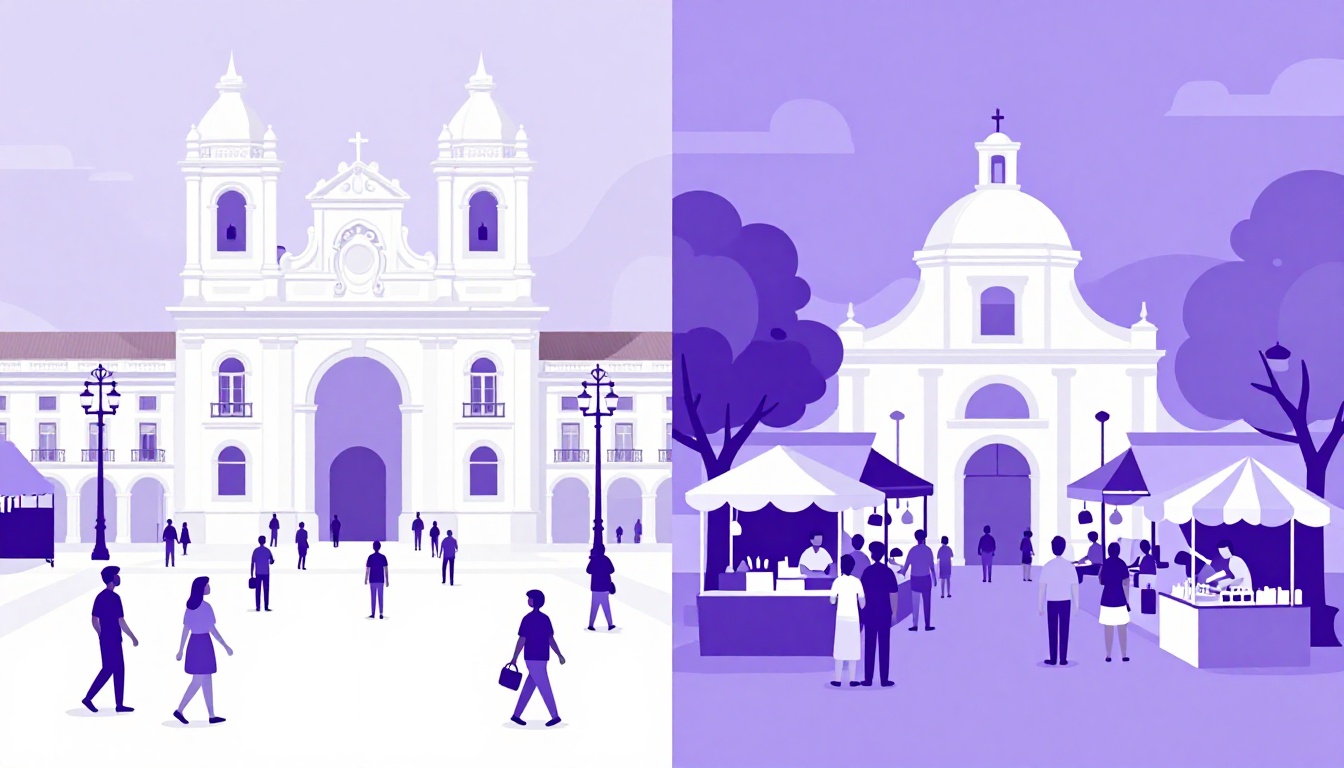
If You Know Spanish: "Boa Tarde" vs "Buenas Tardes"
If Spanish came before Portuguese for you, "boa tarde" is going to feel almost familiar, and almost is the key word. In Spanish, the good afternoon greeting is "buenas tardes," plural on both the adjective and the noun. In Portuguese, it's "boa tarde," singular on both. Drop the "s" entirely, not just from "tardes" but from "buenas" too.
This trips up Spanish speakers surprisingly often, because the instinct to pluralize feels so automatic that it's easy to say "boas tardes" without noticing. Wiktionary's entry for "buenas tardes" and PONS's Spanish-to-Portuguese translation reference both confirm the same contrast: Spanish treats the greeting as plural, Portuguese treats it as singular. It's a small thing, one letter, but it's exactly the kind of small thing that native speakers notice immediately even when they'd never mention it out loud.
If Spanish isn't part of your background at all, don't worry about this section, it's just a useful bridge for anyone coming from that direction.
Common Mistakes English Speakers Make with "Boa Tarde"
A few patterns show up again and again with learners, and knowing them ahead of time means you can skip straight past them.
| Mistake | Why it happens | Fix |
|---|---|---|
| Saying "bom tarde" | "Bom dia" gets learned first and locks in as the default "good" | Remember "tarde" is feminine, pair it with "boa" |
| Sticking with "bom dia" all afternoon | Old habit, especially right after lunch when the switch feels early | Switch to "boa tarde" once it's clearly past midday |
| Treating noon as a strict cutoff | English speakers expect greetings tied to the literal clock | Let daylight and context guide you, not the minute hand |
| Assuming it also means goodbye | "Boa noite" works both ways, so learners assume "boa tarde" does too | Use "boa tarde" for hello, save goodbyes for other phrases |
That first mistake, saying "bom tarde," is the single most common one, and it's almost always a leftover habit from learning "bom dia" first and assuming "bom" is the universal word for "good." A piece specifically on bom dia usage and common errors flags this exact confusion, and it's worth reading if you want more detail on the gender pattern beyond what we covered above. Migaku's guide to good morning in Portuguese makes a similar point from the other direction, walking through how learners often over-rely on "bom dia" simply because it was the first greeting they memorized.
The second mistake, holding onto "bom dia" too long, usually comes from genuine uncertainty rather than habit. If you're not sure whether it still counts as morning, that hesitation itself is a sign you've probably crossed into "boa tarde" territory. When in doubt, match what the people around you are saying.
Does "Boa Tarde" Work as a Goodbye Too?
Short answer: not really, and it's worth being honest about that rather than fudging it. "Boa tarde" functions primarily as an arrival greeting, something you say when you first see someone or first pick up the phone, not something you say on your way out the door.
This is actually a point where "boa tarde" differs from "boa noite." "Boa noite" pulls double duty, working as both a nighttime hello and a nighttime goodbye, a quirk this roundup of everyday Portuguese greetings points out directly. "Bom dia" and "boa tarde" don't share that flexibility in the same way, they're built for hellos. If you're leaving someone's company in the afternoon, you'd reach for something else entirely, like "tchau," "até logo" (see you soon), or "adeus," phrases covered in full in our guide to saying goodbye in Portuguese.
So if you catch yourself wanting to end an afternoon conversation with "boa tarde," swap it for one of those instead. It's a small distinction, but it's the kind of thing that makes your Portuguese sound noticeably more natural once you internalize it.
"Boa Tarde" in Real-World Travel Situations
Once you leave the classroom and land in an actual airport, "boa tarde" stops being a vocabulary word and starts being a tool you reach for a dozen times a day, often before you've had coffee to think about grammar. A few common spots where it'll come up immediately:
Checking into a hotel after an afternoon flight, you'll open with something like "Boa tarde, tenho uma reserva em nome de [seu nome]," which means "Good afternoon, I have a reservation under the name of [your name]." The front desk will almost always greet you first, so you're often just mirroring what you already heard.
Sitting down for a late lunch, a simple "Boa tarde, uma mesa para dois, por favor" ("Good afternoon, a table for two, please") gets you seated without any fuss. Worth knowing: lunch service in much of the Portuguese-speaking world runs later than many English speakers expect, often until around 2:30 or 3pm, so "boa tarde" is genuinely the right greeting for a meal that would feel like mid-afternoon back home, a detail confirmed in general Portuguese travel phrase guides.
At a pharmacy, "Boa tarde, tem alguma coisa para dor de cabeça?" ("Good afternoon, do you have anything for a headache?") opens the exchange politely before you get to the actual problem. The same applies at a ticket counter, on a bus, or with a tour guide meeting your group for a 2pm walking tour: lead with "boa tarde," then get to your question.
One cultural note worth internalizing here, since it surprises a lot of first-time visitors: skipping the greeting entirely, in a small shop, a pharmacy, an elevator, or even a taxi, tends to read as cold or even rude, far more than it would back home. Migaku's guide to basic Portuguese travel phrases and Preply's roundup of essential travel phrases both flag this same expectation: say "boa tarde" first, every time, even for a thirty-second interaction. It costs you two words and buys you a much warmer response.

"Boa Tarde" in Action: A Quick Dialogue
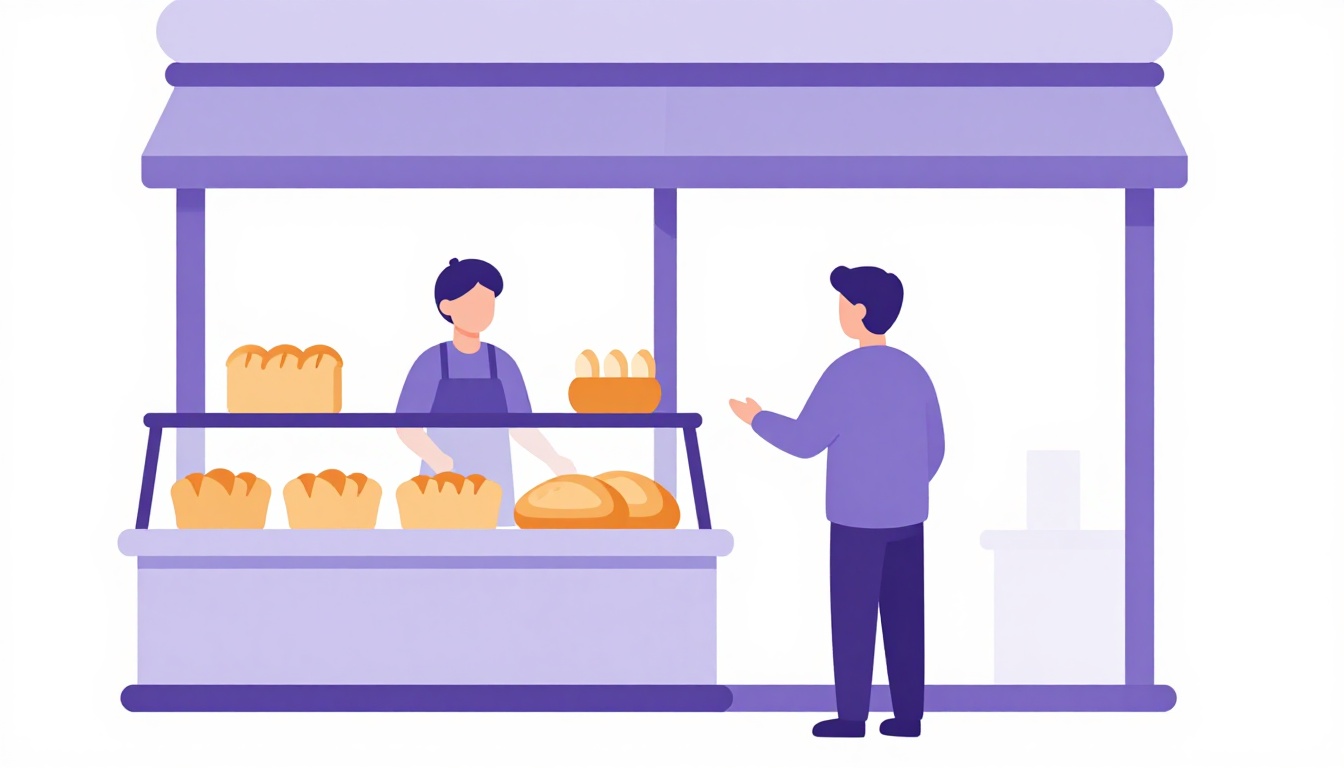
Sometimes the fastest way to understand a phrase is to see it doing actual work. Here's a short exchange you might have walking into a small bakery just after lunch.
Cliente: Boa tarde! Tem pão fresco? Vendedora: Boa tarde! Temos sim, acabou de sair do forno. Cliente: Perfeito. Queria dois pães, por favor. Vendedora: Claro. Mais alguma coisa? Cliente: Não, é só isso. Obrigado! Vendedora: De nada. Tenha uma boa tarde!
In English, that's roughly: "Good afternoon, do you have fresh bread?" "Good afternoon, we do, it just came out of the oven." "Perfect, I'd like two loaves, please." "Of course, anything else?" "No, that's all, thank you." "You're welcome, have a good afternoon."
Notice how much work "boa tarde" does in just six lines, opening the conversation and closing it as a well-wish. Notice too that "obrigado" shows up right alongside it, since thank-yous and greetings tend to travel together in everyday Portuguese, if you want the full picture there, our guide to saying thank you in Portuguese covers the gendered forms and variations. And if the vendor had asked "tudo bem?" instead of jumping straight to business, our post on how are you in Portuguese walks through exactly how that exchange usually goes.
A Business Call That Opens with "Boa Tarde"
Shops and bakeries aren't the only place "boa tarde" earns its keep. It's just as common opening a work call, especially one that lands right after lunch, the exact scenario from the top of this post. Here's how that might sound.
Ana: Boa tarde, aqui é a Ana, da equipe de vendas. Cliente: Boa tarde, Ana. Tudo bem? Ana: Tudo ótimo, obrigada. Podemos começar a reunião? Cliente: Podemos sim, estou pronto. Ana: Perfeito. Vou compartilhar a tela agora.
In English: "Good afternoon, this is Ana, from the sales team." "Good afternoon, Ana. How are you?" "All good, thank you. Can we start the meeting?" "Yes, we can, I'm ready." "Perfect. I'll share my screen now."
Notice that Ana doesn't skip the greeting just because it's a work call rather than a face-to-face interaction. If anything, professional phone and video calls in Portuguese lean on "boa tarde" more consistently than casual chats do, since it sets a clear, polite tone before the actual business begins. Skipping straight to "so, about the shipment" without a greeting first would come across as unusually abrupt.
Texting and WhatsApp: Do Brazilians Abbreviate "Boa Tarde"?
If you've spent any time in Brazilian WhatsApp chats, you've probably seen the abbreviation soup: "vc" for "você," "blz" for "beleza," "vlw" for "valeu," "tb" or "tbm" for "também," "flw" for "falou." Brazilian texting culture loves shortening casual, high-frequency words, a habit covered in detail by Preply's guide to Portuguese abbreviations, Falando's breakdown of Brazilian texting and WhatsApp slang, and Talkpal's rundown of common text messaging abbreviations.
"Boa tarde," though, generally isn't part of that trend. It gets written out in full, even in quick messages. Part of that is practical: it's already short, so there's not much to save by abbreviating it. Part of it is social: greetings carry a small dose of politeness with them, even in casual texting, and clipping a greeting down to a couple of letters can read as a little too curt or careless for something meant to set a warm tone. So even in a message stacked with "vc" and "blz," you'll usually still see "boa tarde" spelled out completely, sitting right there at the top of the text.
Related Vocabulary Worth Knowing
You don't need a whole separate vocabulary list to use "boa tarde" well, but a handful of related words round out the picture and make the surrounding conversation easier to follow.
| Portuguese | English | Notes |
|---|---|---|
| dia | day | Masculine, pairs with "bom" |
| tarde | afternoon | Feminine, pairs with "boa" |
| noite | night / evening | Feminine, pairs with "boa" |
| meio-dia | noon / midday | The literal midpoint, often used as a rough reference for the bom dia to boa tarde switch |
| entardecer | dusk / late afternoon | Describes the fading light that also roughly marks boa tarde sliding into boa noite |
| oi | hi | Casual only, common in Brazil |
| olá | hello | Neutral, works in most contexts |
| tudo bem? | how's it going? | Often tacked onto a greeting like "boa tarde" |
If you want the fuller story on any of the greetings in that last section, our complete guide to saying hello in Portuguese covers "oi," "olá," and their cousins in much more depth, since this post is really about "boa tarde" specifically. For a broader collection of everyday greetings beyond just this one, FluentU's roundup of 25 Portuguese greetings, Mondly's overview of basic Portuguese greetings, and Migaku's guide to Portuguese greeting basics are all solid places to keep exploring.
Quick Answers About "Boa Tarde"
What time do you stop saying "boa tarde"?
Somewhere around sunset, which usually lands between 6 and 7pm depending on the season and where you are, but it's genuinely flexible. There's no clock alarm that flips the switch. Listen for what the people around you are saying and follow their lead.
Is "boa tarde" formal or informal?
Both, and that's exactly what makes it so useful. It works in a business meeting, in an email, in a shop, and with close friends. You don't need a separate casual version.
How do you say good afternoon in Brazilian Portuguese specifically?
The exact same phrase, "boa tarde." The only real difference from European Portuguese is pronunciation: in Brazil it comes out closer to "BOH-ah TAR-jee," with that softened, palatalized ending.
What do you say if you're not sure it's still afternoon?
Default to "boa tarde" anyway. It's the safer guess in the gray zone right around sunset, since a "boa tarde" said a little late reads as perfectly normal, while a "boa noite" said too early can feel like you're rushing the day along. When genuinely stuck, watch what the person across from you says first and match it.
Is there a Portuguese greeting that works at any time of day?
Yes: "olá." It's the true all-purpose hello, not tied to daylight the way "bom dia," "boa tarde," and "boa noite" are, so it's a safe fallback if you truly can't tell what part of the day you're in, say, right after a long flight when your internal clock is useless.
Does "boa tarde" ever sound rude or too formal?
No, essentially never. If anything, the opposite is true: leaving it out entirely, walking into a shop or elevator without saying anything, is what tends to read as cold or rude in Portuguese-speaking cultures. "Boa tarde" is about as safe and low-risk a phrase as exists in the language.
You've now got more detail on two words than most learners ever bother to look up, which puts you ahead of where you started this morning. The next step is just repetition, saying "boa tarde" enough times out loud that it stops being something you're translating and starts being something you just say. If you're ready to move past memorizing greetings on a page and start actually speaking Portuguese out loud, take Comigo's quick quiz and get a feel for how the app trains your mouth, not just your memory.