

You're three days into a trip, sitting at a hostel breakfast table in Lisbon, and the woman across from you puts down her coffee and asks, "Você fala português?" Or maybe it happens at a family dinner, when your partner's avó leans over and says it slower, hopeful, like she's tossing you an easy pitch to hit. Or it happens on a Zoom call, in a job interview, when the hiring manager casually drops it in just to see what you'll do with it.
Here's the answer to the question that brought you here, right away, no scrolling required. "Do you speak Portuguese?" is "Você fala português?" in Portuguese. And if you want to answer it, "I speak Portuguese" is "Eu falo português." Say those two sentences out loud a few times right now, before you read another word. That's the core of this whole post. Everything below is about using them correctly, sounding natural when you do, and knowing exactly what to say next when someone expects a real answer.
Because that's the actual problem, isn't it? Knowing a phrase gets you nowhere if you freeze the second someone actually says it to your face. If you've ever memorized "Você fala português?" from a flashcard app and then gone completely blank the first time a real person asked, you're not alone, and part of the fix is practicing out loud instead of just reading silently, which is exactly what a speaking-first tool like Comigo is built for.
Breaking Down "Você Fala Português?" Word by Word
Let's take the sentence apart so you know exactly what you're saying, not just how to repeat it.
"Você" means "you," in the general-purpose sense used across most of the Portuguese-speaking world. "Fala" is the third-person singular form of the verb "falar," which means "to speak" or "to talk." "Português" is, obviously, "Portuguese," the language itself. Put together, "Você fala português?" reads literally as "You speak Portuguese?"
Notice what's missing. In English, you can't just say "You speak Portuguese?" as your default written question; you need "do" to show up out of nowhere to make it work: "Do you speak Portuguese?" Linguists call that little trick "do-support," and English leans on it constantly for questions and negatives. Portuguese doesn't bother with it. There's no helper verb standing in for anything. You take the plain statement "Você fala português" (you speak Portuguese) and either raise your voice at the end when you say it out loud, or add a question mark when you write it. That's the whole transformation. No extra word, no verb gymnastics, just intonation.
This is one of the first things that trips up English speakers building sentences in Portuguese, because your brain keeps reaching for a "do" that Portuguese simply never needed. Once it clicks, it clicks for good, and you'll notice the same pattern the moment you build other simple questions, like asking someone's name or asking what time it is.

A quick note on the pronoun itself. "Você" sits in the same subject slot that "ele" (he) or "ela" (she) would occupy, which is why the verb takes the "fala" ending rather than some special "you" form. If you've spent any time with basic vocabulary lists in Portuguese, you've likely already met "você" as the default translation for "you," and this is the sentence where it earns its keep.
You'll also hear a shorter, more casual version constantly in Brazil: people simply drop "você" and ask "Fala português?" instead. It still means exactly the same thing, "Do you speak Portuguese?", and it's arguably more natural in relaxed conversation than the fuller version. Brazilians drop subject pronouns all the time in casual speech, because the verb ending already tells you who's being asked about, the same logic that lets "Não falo português" stand on its own as a complete answer in the negative version of this exchange, which we'll get to shortly.
Word order matters too, even in a sentence this short. Try scrambling it and things stop working: "Português você fala?" sounds like broken, hesitant Portuguese, the kind you'd only produce if you were translating word by word from an English sentence in your head rather than actually thinking in Portuguese. Subject, then verb, then object, same as the basic shape of an English sentence, which is one of the small mercies that makes Portuguese sentence structure feel familiar even while its grammar rules diverge from English in other places.
Tu or Você? Why the Question Changes Depending on Where You Stand
Here's where a lot of textbooks quietly get things wrong, or at least oversimplify to the point of being misleading. Portuguese has two common ways to say "you" in the singular: "você" and "tu." Which one is "correct" for asking "do you speak Portuguese?" depends heavily on where you are and who you're talking to, and the rule genuinely differs between Brazil and Portugal.
In Portugal, "tu" is the everyday, warm form you'd use with friends, family, classmates, and basically anyone you're on casual terms with. Using "você" instead can actually land as cold, distant, or even a little pointed, almost like you're scolding someone or keeping them at arm's length, according to a detailed breakdown from Practice Portuguese on formal versus informal treatment. That's the opposite of what a lot of English-speaking learners assume, since "você" looks like the "safe, polite default" on paper. In European Portuguese, if you ask a friend "Tu falas português?", you're doing it exactly right. Ask a stranger, a boss, or an older person you don't know well, and "Você fala português?" becomes the safer, more respectful choice, though even there many Portuguese speakers will just sidestep the pronoun entirely rather than risk sounding stiff, a nuance covered well by Elon.io's guide to tu versus você in Portugal.
In Brazil, the situation flips almost completely. "Você" is the default, everyday word for "you" nearly everywhere, including major cities like Rio de Janeiro and São Paulo. You'll hear "Você fala português?" or the pronoun-dropped "Fala português?" constantly, in casual and formal settings alike, without any of the coldness it can carry in Lisbon. "Tu" still exists in Brazil, especially across the Northeast and parts of the South, but it's usually treated as the more informal option sitting alongside "você" rather than replacing it, and pronunciation and conjugation habits around "tu" vary quite a bit by region, sometimes pairing with "falas" and sometimes with "fala," as explained in this regional breakdown from VerbPal on tu versus você conjugations across Brazil and Portugal.
Here's the split laid out plainly, including the verb form each pronoun demands, since "tu" and "você" don't just sound different, they trigger different conjugations of "falar."
| Region | Common pronoun for "you" | Question form | Verb form used |
|---|---|---|---|
| Portugal, with friends and family | tu | Tu falas português? | falas |
| Portugal, with strangers or elders | você | Você fala português? | fala |
| Brazil, almost everywhere | você | Você fala português? or Fala português? | fala |
| Brazil, parts of the Northeast and South | tu (informal, alongside você) | Tu fala português? (common regional use) or Tu falas português? | fala or falas, depending on region |
That last row is worth a second look. In much of Brazil where "tu" is used casually, speakers often pair it with the "você" verb form ("fala") instead of the grammatically expected tu-conjugation ("falas"), which is a real, widely documented regional pattern rather than a mistake, though it's far from universal across every Brazilian region. If you're ever unsure which to use, "Você fala português?" is the safest, most universally understood option anywhere Portuguese is spoken, whether you're at a beach in Rio, a café in Porto, or filling out paperwork somewhere else in the Portuguese-speaking world.
Choosing tu versus você isn't just a grammar footnote either. It signals how you see the relationship, the same way choosing between a formal greeting and a relaxed one does in English. Getting it "wrong" won't usually offend anyone, especially as a visibly non-native speaker, but getting it right earns you a small flicker of surprised approval, the kind of moment that only comes from practicing real exchanges out loud instead of just reading about the rule once.
It's worth remembering, too, that Brazil and Portugal aren't the only places this question travels. In Portuguese-speaking African nations, formal address norms often lean closer to the European pattern, with "você" reserved for more formal contexts and other polite forms used with elders or superiors, a legacy of Portugal's own formality customs documented in general terms by resources like the Wikipedia entry on European Portuguese and the Wikipedia entry on Brazilian Portuguese, which lay out how the two major varieties diverged over centuries of separate development. If you ever study Portuguese formally, institutions like the Instituto Camões, Portugal's official body for promoting the language abroad, are a reliable reference point for the standard European register that most African Portuguese-speaking countries lean toward in classrooms and government settings.
Pronouncing "Você Fala Português?" So You Actually Sound Right
Reading a sentence and saying it convincingly are two different skills, and Portuguese pronunciation has a few landmines built specifically for English speakers.
Start with "você." The stress falls on the second syllable: vo-SÊ, not VO-cê. That final "ê" is a closed vowel, meaning your mouth stays a bit more closed and tense than it would for an open "eh" sound in English. It's a small, precise sound, and rushing it or opening your mouth too wide flattens it out and makes it sound less natural, closer to an English "say" than the crisper Portuguese "sê."
Then there's "português" itself, which stresses its very last syllable: por-tu-GUÊS. English speakers often want to stress an earlier syllable out of habit, the way we do with similar-looking English words, but Portuguese sentence rhythm depends heavily on nailing which syllable carries the weight. Get the stress pattern down here and it carries straight over into other Portuguese words that share the same "-ês" ending, and into longer sentences where getting the stress wrong throws off the whole rhythm of what you're saying.
The final "s" sound in "português" changes depending on which Portuguese you're speaking. In much of Portugal, that trailing "s" softens into something close to the English "sh" sound, so "português" comes out sounding a bit like "por-tu-GUESH." In most Brazilian Portuguese, that same final "s" stays a cleaner "s" or shifts toward a "z" sound, depending on the specific region, so it lands closer to "por-tu-GUEZ" or "por-tu-GUES." Neither is wrong. They're just different accents doing different things with the same letter, and once you notice it, you'll hear it everywhere, including in how people count through numbers in Portuguese or run through the days of the week.
Don't let the "g" in "português" throw you either. It's followed by "u" and then a soft vowel, which in Portuguese spelling rules keeps the "g" hard, like the "g" in the English word "go," never soft like the "j" sound in "gem." So it's "gu-ês," not "zh-ês." This same spelling pattern shows up in plenty of other Portuguese words, and it's worth locking in early rather than guessing every time you hit a "gu" combination in a new word.

Now, neither "você" nor "português" happens to be a nasal word, which is worth flagging because Portuguese is famous for true nasal vowels that simply don't exist in English, the kind where air pushes out through your nose while you're producing a vowel sound. That nasal quality is a defining feature of the language, covered in depth by Elon.io's explainer on Portuguese nasal vowels and in a more casual walkthrough from Talkpal's guide to Portuguese nasal pronunciation. If you've already read the companion post on how to say "I don't speak Portuguese" in Portuguese, you've already met a genuine nasal word up close: "não" (no), where the sound truly comes out through your nose and holds there for a beat. Compare that to "português" or "você," where every vowel stays entirely in the mouth, and you start to feel the difference between the two categories rather than just reading about it on a page.
If you want a second reference point for how a word actually sounds, a tool like YouGlish's Portuguese pronunciation search, which pulls real video clips of native speakers saying a given word in context, is a useful sanity check once you've got the written rules down. Reading a phonetic explanation only gets you so far; hearing several native speakers say "português" back to back does more to fix the sound in your ear than another paragraph of description ever could.
Getting all of this from a page is only half the job, though. Pronunciation is a physical skill, closer to learning a golf swing than memorizing a fact, and that's exactly the gap that silent flashcard apps leave open. You can recognize "você fala português" perfectly on a screen and still stumble the first time you have to produce it live, at normal speed, with a real person waiting on your answer.
Flipping It Around: "Eu Falo Português"
Once someone asks you the question, you need an answer, and the simplest affirmative one is "Eu falo português," which means "I speak Portuguese." Say it enough times that it stops feeling like a memorized string and starts feeling like something you'd actually reach for without thinking.
Break it down the same way. "Eu" is "I." "Falo" is the first-person singular form of "falar," and that final "-o" ending is doing real work: it's the verb telling you, all by itself, that the subject is "I." Because of that, Portuguese speakers routinely drop the pronoun entirely and just say "Falo português," the exact same droppable-pronoun logic that lets "Não falo português" stand on its own in the negative version of this sentence. The verb ending has already announced who's speaking, so the pronoun becomes optional decoration rather than a requirement, unlike in English, where dropping "I" from "I speak Portuguese" would sound broken.
This droppable-subject habit runs through the entire language and shows up any time you build a sentence about yourself, whether you're talking about what you eat, where you live, or how you feel, so it's worth internalizing early rather than treating it as a one-off exception you only apply to this single sentence.
To really own this sentence, though, you need the whole verb, not just the "I" and "you" forms, because "falar" shows up in nearly every conversation you'll ever have in Portuguese. Here's the present-tense conjugation in full, all six persons, exactly as documented by conjugation references like Cooljugator's Portuguese conjugation of falar, the Reverso Conjugator entry for falar, and dictionary entries like Priberam's Portuguese dictionary listing for falar and the Wiktionary entry for falar, all worth bookmarking for other verbs down the line.
| Pronoun | Conjugation of falar | English meaning |
|---|---|---|
| eu | falo | I speak |
| tu | falas | you speak (informal, especially in Portugal) |
| você / ele / ela | fala | you speak (general) / he speaks / she speaks |
| nós | falamos | we speak |
| vós | falais | you all speak (archaic and regional, rarely heard today) |
| eles / elas | falam | they speak |

A few things jump out once you see the full table side by side. Notice how "fala" covers three different subjects at once, "você," "ele," and "ela," which is exactly why context matters so much in Portuguese; the verb form alone won't always tell you who's being talked about, so you lean on the pronoun or the surrounding sentence to fill in the gap. Notice too that "vós" and "falais" barely get used in everyday speech anymore, mostly surviving in formal, religious, or literary Portuguese, so don't spend much energy memorizing it beyond recognizing it if you ever run into it in an old text or a church service.
This is also the exact verb you'll reach for constantly outside this one phrase. You'll use it to describe which languages you're learning, to ask someone to spell a word for you, or to explain politely that you only speak "um pouco" and need someone to slow down. Locking in "falar" early pays off across dozens of other sentences, which is exactly the kind of connected, reusable practice that sticks better when you say it out loud repeatedly instead of reading it once and moving on to the next page, the same habit that people describe when they talk about how they actually learned Portuguese instead of just studying it silently on paper.
How to Answer Honestly, at Whatever Level You're Actually At
So someone asks "Você fala português?" and now it's your turn. The honest answer doesn't have to be a flat yes or no; Portuguese gives you a whole spectrum of natural-sounding replies depending on where you genuinely are. Overclaiming just sets you up to get answered back in rapid Portuguese you can't follow, and underclaiming can make you miss out on a great conversation you were actually ready for. Here's the real range, laid out so you can pick the one that fits.
| Portuguese phrase | English meaning | When to use it |
|---|---|---|
| Sim, eu falo português | Yes, I speak Portuguese | A confident, general yes, no extra detail needed |
| Falo português fluentemente | I speak Portuguese fluently | You're genuinely comfortable in most conversations |
| Falo muito bem | I speak very well | Strong, confident level, just short of calling yourself fluent |
| Falo um pouco de português | I speak a little Portuguese | Beginner to lower-intermediate, can handle the basics |
| Falo um pouquinho | I speak a little bit (softer, more affectionate tone) | Same idea as above, but warmer and more casual |
| Mais ou menos | So-so, more or less | The classic noncommittal answer when you're unsure how to rate yourself |
| Estou aprendendo português | I'm learning Portuguese | You're actively studying but not confident calling it "speaking" yet |
| Não, não falo português | No, I don't speak Portuguese | See the full breakdown of this exact phrase below |
That third-from-bottom entry, "Mais ou menos," deserves its own moment, because it's one of the most useful phrases in the whole language, not just for this question. It literally means "more or less," and Portuguese speakers reach for it constantly, including when someone asks how you're doing. It's the perfect noncommittal answer when you genuinely don't know how to rate your own level, or when you'd rather downplay it than oversell it. Say it with a little shrug in your voice and you'll sound completely natural, native even.
Pay close attention to "Falo um pouco de português." That little word "de" in the middle isn't optional filler, it's grammatically required; you can't just say "Falo um pouco português" and expect it to sound right. This exact point gets its own dedicated breakdown in a short video from Practice Portuguese on saying "I speak a little" Portuguese, which is worth watching once you've got the written form down, since hearing the phrase said at natural speed helps the "de" stop feeling like an extra step you have to remember consciously.
"Estou aprendendo português" is the honest answer for anyone early in the process, and there's no shame in it at all; it's arguably the most useful answer you can give, because it invites the other person to slow down, simplify, and meet you where you are, the same generous instinct that makes people patient when you're still working through basic vocabulary or figuring out how to say please and thank you without hesitating first.
And if the honest answer is genuinely "no," don't force a "sim" you can't back up. That's exactly the situation covered in detail over on the full guide to saying "I don't speak Portuguese" in Portuguese, which walks through "Não falo português" and the softer, more polite ways to phrase that same idea, so we won't repeat that ground here; just know it's the natural next step if "sim" doesn't apply to you yet.
It also helps to have a couple of small follow-up moves ready once you've answered, since a bare "sim" or "falo um pouco" often invites another sentence right back at you. Something like "sim, um pouquinho, ainda estou aprendendo" (yes, a little bit, I'm still learning) buys you goodwill and sets expectations at the same time, and pairing your answer with a genuine "Como você está?" back to the person who asked turns a one-line exchange into an actual short conversation instead of a dead end.
Common Mistakes English Speakers Make Saying This Out Loud
Even once you know exactly what to say, your mouth can still betray you, and there are a handful of specific habits that reliably mark English speakers when they say Portuguese out loud, all documented in a practical rundown from Elon.io's guide to common Portuguese pronunciation errors.
The biggest one is the "r" sound. English speakers default to the English "r," a soft, rounded sound made without much contact in the mouth. Portuguese "r" sounds are sharper and more distinct, ranging from a light tap of the tongue to a guttural, throat-based sound depending on position in the word and regional accent. Say "português" with an English "r" hiding in there and it instantly flags you as a non-native speaker, even if every other part of the sentence is flawless.
Second, English speakers tend to clip final vowels short, almost swallowing them, because English vowels at the end of words often get reduced or dropped in casual speech. Portuguese vowels, by contrast, like to ring out fully, especially in words like "fala" or "português." Cutting that last vowel short makes your Portuguese sound clipped and hesitant even when your grammar is perfect on paper.
Third, watch what happens to "t" and "d" before an "i" sound. In Brazilian Portuguese especially, "ti" and "di" combinations often palatalize, meaning they shift toward "tchi" and "dji" sounds rather than staying as a hard English "t" or "d." This shows up constantly in everyday words, in the names of foods you'll order, in the word for house, in dozens of ordinary nouns, and ignoring it is one of the fastest ways to sound like you're reading Portuguese with an English mouth rather than actually speaking it.
Fourth, and this circles back to the earlier pronunciation section, skipping the nasal quality on nasal vowels entirely. English speakers who've never trained their mouth to push air through the nose mid-vowel tend to default to the nearest regular vowel sound instead, flattening words that are supposed to have that distinctive nasal hum. It's subtle on paper and very noticeable out loud, the kind of gap that only closes with repeated, corrected speaking practice rather than silent reading.
Fifth, a smaller but common one: stress placement drifting toward the wrong syllable on longer words, the same trap covered earlier with "português" itself. English stress patterns are notoriously inconsistent and rely a lot on memorization word by word, so English speakers often guess at Portuguese stress using instinct built from English, which fails more often than it succeeds. Words tied to celebration and connection, like congratulations or I love you, carry real emotional weight in the moment you say them, and getting the stress wrong on a word that matters that much stings a little more than fumbling a grocery list item.

All five of these mistakes share the same root cause: they're motor habits, not knowledge gaps. You can explain the rule for Portuguese "r" perfectly and still produce an English "r" the second you're not thinking about it, because your mouth has spent a lifetime practicing the wrong shape. Fixing that takes repetition out loud, ideally with some kind of feedback loop telling you when you've got it right, which is a very different kind of practice than reading a pronunciation guide once and moving on to the next page.
Real Situations Where You'll Actually Hear This Question
It helps to picture exactly where "Você fala português?" shows up, because it's not just a phrasebook curiosity, it's one of the most commonly asked questions a Portuguese speaker will put to a visible foreigner.
At a hostel or guesthouse. Breakfast tables at hostels are basically built for this exact question. Someone hears your accent, catches you struggling with a menu, or just wants to make conversation, and "Você fala português?" is the natural opener. Answering with something honest, "Falo um pouco" plus a smile, tends to open the door to a friendly exchange rather than closing one.
At a family dinner. If you're dating or married into a Portuguese-speaking family, this question comes from grandparents constantly, often gently, often repeated slower the second time. Knowing how to talk about your grandpa or your partner's grandma in Portuguese, alongside a solid answer to this exact question, goes a long way toward feeling like part of the table instead of a guest who happens to be there.
In a job interview. Bilingual roles, or roles at companies with offices in Brazil or Portugal, often slip this question in casually to gauge your real comfort level, not just what's on your resume. A confident, accurate answer, whether that's "Falo muito bem" or an honest "Estou aprendendo," matters more here than an inflated claim that falls apart three questions later.
On a work call or in a coworking space. If you've relocated for work, colleagues will often default to Portuguese and then catch themselves, asking "Você fala português?" before deciding whether to keep going in Portuguese or switch to English for your benefit. Your answer here directly shapes how the rest of the meeting goes.
At a market or small shop. A vendor haggling over price, weighing fruit, or explaining a special will often pause mid-sentence to ask this question once they notice you're not following. This is where knowing enough vocabulary around everyday food, a house you're furnishing, or a bottle of wine you're buying turns a stalled interaction into a real purchase.
On a beach or at a coastal town. Vacation towns along the Brazilian and Portuguese coasts are full of casual small talk, and a vendor renting out beach chairs or a bartender at a beach kiosk will often ask this question right after "De onde você é?" (where are you from). Between the two questions, you've basically covered the opening of most casual conversations you'll have on a trip.
Around holidays and celebrations. New Year's Eve, birthdays, weddings, the kind of events where you're meeting someone's extended family or friend group all at once, tend to produce this question repeatedly across a single evening, often right before or after someone wishes you a happy new year or offers a congratulations toast. Having a smooth, honest answer ready saves you from answering the exact same question five separate times with five slightly different, increasingly awkward responses.
Scheduling and logistics. Booking anything, a hotel room, a dentist appointment, a repair visit, often opens with someone confirming your Portuguese level before they launch into details about what time to show up or which day of the week works. A clear, quick answer up front means the rest of that logistics conversation goes far more smoothly than if you let them assume a fluency you don't have.
Across every one of those scenarios, the pattern repeats: someone asks, you answer honestly, and the conversation adjusts itself around your real level. That's the whole function of this question in daily life, and it's worth having your answer ready rather than scrambling for it in the moment.
Where in the World You'll Actually Use This Question
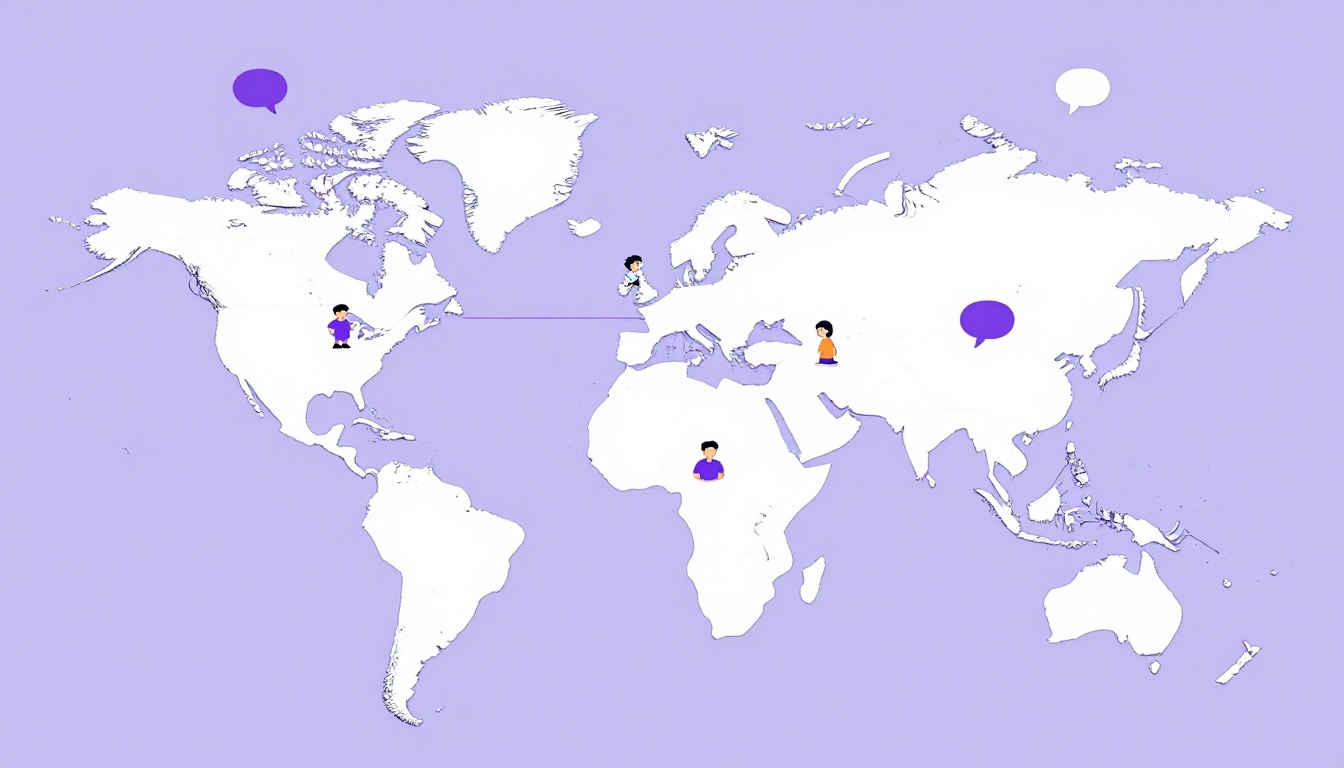
It's easy to assume "Você fala português?" is only useful in Brazil, but that badly undersells how far this phrase travels. Portuguese is an official language in nine sovereign countries that make up the Community of Portuguese Language Countries, commonly known by its Portuguese acronym CPLP: Brazil, Portugal, Angola, Mozambique, Cape Verde, Guinea-Bissau, São Tomé and Príncipe, Equatorial Guinea, and Timor-Leste, according to Wikipedia's overview of CPLP member states. Add Macau, where Portuguese holds co-official status alongside Chinese, and you're looking at a genuinely global language footprint stretching across South America, Europe, Africa, and Asia.
Scale that out to actual speakers and the numbers get even more striking. Roughly 260 million people speak Portuguese worldwide, according to Wikipedia's entry on the Portuguese language, a figure that puts it consistently among the world's most spoken languages in rankings like the one published by Visual Capitalist on the world's most spoken languages. Brazil alone accounts for roughly 80 percent of all Portuguese speakers on the planet, which is why so much of the learning material and pop culture around the language leans Brazilian, but it also means one in five Portuguese speakers is using the language somewhere else entirely, often with noticeably different vocabulary, accent, and grammar habits from what you'll hear on a Brazilian telenovela.
That spread matters for a phrase like "Você fala português?" because it's genuinely useful across wildly different settings: at a beach bar in Fortaleza, in a business meeting in Luanda, on a ferry between the Cape Verde islands, in a market in Bissau, or at a family gathering in Lisbon. You'll get slightly different accents and slang everywhere, but the core sentence, and the core verb "falar," stays completely stable across all of them. That's part of what makes Portuguese such a practical language to invest in if you're weighing whether Portuguese is hard to learn compared to other options, or checking it against a broader list of the hardest languages for English speakers to pick up.
One more useful note while we're here: this exact sentence structure works for any language, not just Portuguese. "Do you speak English?" becomes "Você fala inglês?", built exactly the same way, just swap "português" for "inglês." Same verb, same word order, same missing "do." It's a handy pattern to notice once, because it means learning this one sentence properly hands you a template for a whole family of similar questions later on, though that's really a topic for its own dedicated post rather than something to dig into fully here.
Knowing the Phrase Isn't the Same as Being Able to Answer It
Here's the uncomfortable truth buried underneath everything above. You can read this entire post, memorize "Você fala português?" and "Eu falo português" perfectly, ace a quiz on the "falar" conjugation table, and still completely lock up the first time someone actually asks you the question in real life.
That gap is incredibly common, and it's not really about vocabulary or grammar at all. It's about the fact that most language learning happens in total silence: reading, tapping flashcards, matching words to pictures, watching a progress bar fill up. None of that trains the actual physical, split-second skill of hearing a question and producing spoken words back in real time, under a little bit of social pressure, with someone waiting on the other end.
That's the specific gap Comigo is built around. It's a speak-first app, meaning the exercises have you talking out loud from the very start rather than tapping silent multiple-choice answers, practicing real exchanges like "Você fala português?" until the response comes out on reflex instead of after a three-second mental scramble. You play through scenarios, you say the words, and you build the muscle memory that silent studying skips entirely, whether you're practicing solo or with a friend, and you can see what that actually looks like by trying a quick starting quiz on Comigo to find your current level.
Think about how you'd actually want this to go. Someone at a family dinner asks "Você fala português?" You don't want to have technically "known" the right words for months while your mouth still trips over them live. You want the answer to come out clean, whatever level it's honestly at, whether that's a confident "Falo muito bem" or a humble "Estou aprendendo português." Getting there takes the same kind of repeated, corrected, out-loud practice that shows up in most real accounts of how people actually learned Portuguese rather than just studied it on paper for years without using it.
It also compounds. Every time you successfully use "falo" out loud in a real or practiced exchange, the next sentence built on that same verb gets a little easier, whether you're describing your house, your favorite food, a glass of wine you tried, or wishing someone congratulations at a celebration, or saying a warm goodbye as the night winds down. Speaking practice isn't a separate track from vocabulary building; it's what makes the vocabulary actually usable when it counts, in the moment, with a real person in front of you rather than a screen.
Frequently Asked Questions
Is it rude to ask "Você fala português?" Not at all. It's one of the most common, neutral questions in the language, asked constantly between strangers, coworkers, and new acquaintances everywhere Portuguese is spoken. The only real nuance is the tu-versus-você choice covered earlier: in Portugal, asking a close friend "Você fala português?" instead of "Tu falas português?" can feel a touch stiff or distant, but it's never actually impolite, just slightly less warm than the situation might call for.
What's the actual difference between "falo" and "fala"? They're both forms of the verb "falar," just for different subjects. "Falo" is the "I" form, used when you're talking about yourself: "Eu falo português." "Fala" covers "you" (você), "he" (ele), and "she" (ela): "Você fala português?", "Ele fala português," "Ela fala português." Same verb, different ending, different subject, and getting the ending right is what tells your listener who you actually mean without needing extra words attached.
How do you say "I speak Portuguese fluently"? "Falo português fluentemente" is the direct match. If that feels like a big claim to make, "Falo muito bem" ("I speak very well") is a slightly softer way to say almost the same thing, and both are perfectly natural, confident answers to "Você fala português?"
Do Brazilians say "tu" or "você"? Mostly "você," almost everywhere in the country, including major cities like São Paulo and Rio de Janeiro. "Tu" survives strongly in parts of the Northeast and South of Brazil, often used informally alongside "você" rather than replacing it entirely, and pronunciation and conjugation habits around it shift by region, as detailed in VerbPal's regional breakdown of tu versus você. If you're not sure which region you're dealing with, "você" is always understood and always safe to default to.
Is "Mais ou menos" a real answer, or is it a cop-out? It's completely real and genuinely useful, not a dodge. Portuguese speakers use "Mais ou menos" constantly, for this question and for others like "How are you?", whenever the honest answer sits somewhere in the middle rather than at a clean yes or no. Nobody will think less of you for using it; if anything, it signals self-awareness about your actual level, which usually lands better than an overconfident "sim" that falls apart two sentences later.
What if I answer "sim" and then can't keep up with what they say back? This happens to almost everyone at some point, and it's not a disaster, just a small course correction. Following your "sim" with "mas fala mais devagar, por favor" (but speak slower, please) resets expectations immediately, and pairing that with a genuine "obrigado" or "obrigada" for their patience keeps the exchange warm rather than awkward.
How do I actually get better at answering this out loud, not just on paper? Repetition, out loud, with real or simulated back-and-forth, not more silent reading. Reading this post gets you the words; producing them under a little pressure, in a real exchange, is a completely separate skill that only builds with practice. That's exactly why Comigo is built around speaking from the first exercise rather than tapping silent answers, so the gap between "I know the phrase" and "I can say the phrase" closes as fast as possible, one real conversation at a time.
Whatever your honest answer is right now, "Sim," "Mais ou menos," or "Estou aprendendo," the sentence "Você fala português?" is one you'll hear again and again: at a beach, at a family table, on a work call, on a random Tuesday you didn't see coming. The goal isn't just recognizing it. It's answering it, out loud, without the pause.
Related guides
- BoldVoice vs ELSA SpeakBoldVoice vs ELSA Speak: accent coaching, feedback quality, price and which to pick.
- Rosetta Stone vs DuolingoRosetta Stone vs Duolingo: free vs paid, method and results.
- italki vs Preplyitalki vs Preply: pricing models, tutors and which is better.
- Busuu vs DuolingoBusuu vs Duolingo: which app actually teaches more.


