
If you searched "ice cream in Portuguese," here's the short answer: it's "sorvete." One word, three syllables, and it's masculine, so you'll always hear "o sorvete," never "a sorvete." Say that word in Rio de Janeiro or São Paulo and you'll be understood instantly, whether you're pointing at a menu or flagging down a vendor on the beach.
But here's the twist that trips up almost every English speaker who studies Portuguese from a single source: fly to Lisbon and order "sorvete," and you might get a blank look. In Portugal, the word for ice cream is "gelado." Same language, same continent's worth of history, two completely different words for the exact same frozen treat. And the trap runs deeper than just vocabulary, because in Brazil, "gelado" already means something else entirely, something that has nothing to do with dessert. Get this one wrong and you'll confuse a waiter in a way that's genuinely funny once you understand why.
This guide covers all of it: how to say "sorvete" so it doesn't sound like you're reading it off a flashcard, why Brazilians and the Portuguese split so sharply on this one word, the real difference between "sorvete" and "picolé" (a distinction that matters if you don't want to order the wrong thing), the phrases you need at an actual sorveteria counter, the flavors you'll find on a Brazilian menu, the tropical fruit flavors you won't find anywhere else in the world, why açaí na tigela doesn't count as "sorvete" even though it looks like it should, and a short trip through the history of how ice cream even got to Brazil in the first place. If you also want the wider food vocabulary that surrounds a word like "sorvete," our complete guide to food in Portuguese covers the rest of the table, and if bread is more your speed, we've got the full story on bread in Portuguese too.
How to Pronounce "Sorvete" (and "Gelado")
"Sorvete" breaks into three syllables: "sor-VE-te," with the stress landing on the middle syllable. Written out phonetically for an English speaker, it comes out close to "sohr-VEH-chee" in Brazilian Portuguese. Read that last part again, because it's the part that surprises people. The written ending is "-te," but in most of Brazil it doesn't sound like "teh" at all. It softens into a "chee" sound, the same way the "t" in "tune" softens toward "choon" for some English speakers, except in Brazilian Portuguese this shift is a full, standard feature of the accent, not a regional quirk.
This isn't unique to "sorvete." It happens constantly. "Gente" (people) comes out "JEN-chee." "Quente" (hot) becomes "KEN-chee." Even the English loanword "internet" gets Brazilianized into something like "in-ter-NECH-chee." Once you notice this pattern, half the words that sounded impossible to pronounce from a textbook suddenly make sense, because you stop expecting a hard "t" every time you see the letter on the page. Wikipedia's overview of Portuguese phonology covers this affrication in more technical detail if you want to understand exactly what your tongue is doing differently, but the practical version is simple: in Brazil, "te" and "ti" almost always turn into a soft "chee" or "chi" sound, and "sorvete" is one of the most common words where you'll hear it.
European Portuguese does not do this. If you're learning the Portugal variety, "sorvete" barely even applies, because the word you actually need is "gelado," pronounced "zheh-LAH-doo," with a clearer, harder ending than its Brazilian cousin. The "g" softens into something closer to the "s" in "measure," which is a different sound entirely from the hard "g" an English speaker might guess at first glance. Practice Portuguese's breakdown of the differences between European and Brazilian Portuguese is worth reading in full if this is the first time you're realizing just how differently the two dialects can sound, because pronunciation is only the beginning of where they diverge.
Reading a phonetic spelling only gets you partway. You need to actually hear a native speaker say it, more than once, and ideally back to back in both dialects so your ear can catch the difference. Forvo has native audio for "sorvete" recorded by real Brazilian speakers, and there's a separate Forvo entry for "gelado" if you want to hear the European version too. YouGlish pulls real video clips of Brazilians saying "sorvete" in natural context, which is a better training tool than isolated audio, because you hear the word the way it actually gets used in a sentence, at normal speed, without anyone slowing down for your benefit. There's a matching page of European Portuguese speakers saying "gelado" too, and toggling between the two back to back is one of the fastest ways to train your ear for exactly how different Brazilian and Portugal accents can sound, even on words that mean the same thing.

Here's the thing nobody tells you about pronunciation drills: reading a phonetic guide a hundred times does nothing for the muscles in your mouth. Only saying the word out loud, repeatedly, builds that muscle memory. That's the entire idea behind practicing Portuguese out loud with a tool built around speaking rather than just recognizing words silently on a screen. You can stare at "sorvete" for a month and still freeze the first time a real person asks what flavor you want. The word has to actually leave your mouth, correctly, before it counts as learned.
Is "Sorvete" Masculine or Feminine? Grammar and Basic Sentences
"Sorvete" is masculine: "o sorvete," never "a sorvete." The plural is regular, unlike some of the trickier "-e" ending nouns in Portuguese, so you just add an "s": "os sorvetes." One scoop or a hundred, the grammar doesn't throw any surprises at you here, which makes "sorvete" a friendlier word to start with than some of its food-vocabulary cousins.
Portuguese treats "sorvete" the way English treats "coffee" or "bread": it can act as a mass noun describing the category, or as a countable noun describing one serving. "Eu adoro sorvete" means "I love ice cream" in the general sense, the whole category of frozen dessert, no article needed. But "Eu quero um sorvete" means "I want an ice cream," referring to one specific treat you're about to order or eat. That small shift, adding "um," changes the sentence from a statement about your taste in desserts to an actual request. English does the exact same thing with "I love coffee" versus "I'll have a coffee," so if that distinction already feels natural in English, it'll transfer over to Portuguese without much friction.
Here's a table of the sentence patterns you'll actually use, from stating a preference to placing a real order.
| Portuguese | English | Notes |
|---|---|---|
| Eu adoro sorvete. | I love ice cream. | General statement, no article, describes the category. |
| Eu quero um sorvete. | I want an ice cream. | Countable, refers to one serving. |
| Vou tomar um sorvete. | I'm going to have an ice cream. | "Tomar" here means "to have/eat," a common Brazilian usage. |
| Você quer sorvete? | Do you want ice cream? | Casual offer, no article needed. |
| O sorvete está derretendo. | The ice cream is melting. | Definite article, describing a specific serving. |
| Os sorvetes daqui são ótimos. | The ice creams here are great. | Regular plural, simple "s" added. |
That third row is worth a second look. "Tomar" usually translates as "to take" or "to drink," which is why English speakers sometimes assume "tomar sorvete" is a mistake, since you don't exactly drink ice cream. But Portuguese uses "tomar" loosely for consuming a range of things, including ice cream, and "vou tomar um sorvete" is a completely natural, extremely common thing to say in Brazil, roughly equivalent to "I'm going to grab an ice cream" in English. If you've already spent time with basic words in Portuguese, you've probably noticed that a handful of verbs like "tomar," "pegar," and "fazer" get stretched to cover far more ground than their literal English translations suggest, and this is one of those cases.
Word order also matters a little here, in a way it doesn't in English. Put the adjective in the wrong place and a sentence still gets understood, but it stops sounding like something a native speaker would actually say. "Sorvete gostoso" (tasty ice cream) puts the adjective after the noun, which is the default in Portuguese for most descriptive adjectives. Flip a handful of them before the noun instead, and the meaning shifts slightly toward emphasis or a more emotional register, the same subtle move English makes when you say "what a day" instead of "the day was something." You don't need to master that nuance before your next trip. You just need to notice that Portuguese adjectives are flexible about position in a way English adjectives generally aren't, so don't panic if you hear "gostoso sorvete" from someone leaning into a compliment rather than stating a plain fact.
Brazil vs Portugal: "Sorvete" vs "Gelado," and the Trap Nobody Warns You About
Here's the central split, and it's a genuinely useful one to understand before you ever set foot in either country. In Brazil, ice cream is "sorvete," full stop. In Portugal, ice cream is "gelado." These aren't two dialect variants of the same word the way "elevator" and "lift" are in English. They're two entirely different words, unrelated in form, both meaning the same frozen dessert.
| Aspect | Brazil | Portugal |
|---|---|---|
| Word for ice cream (noun) | sorvete | gelado |
| Article | o sorvete | o gelado |
| Plural | os sorvetes | os gelados |
| Is "gelado" used at all? | Yes, but only as an adjective meaning "cold" or "iced" | Yes, as the standard noun for ice cream |
| Is "sorvete" used at all? | Yes, as the standard noun | Rarely, if ever, in everyday speech |
Now for the part that actually catches people off guard. In Brazil, "gelado" isn't a synonym for ice cream sitting quietly in the background, waiting to be used interchangeably. It's an adjective, and it means "very cold" or "iced." A Brazilian will say "a água está gelada" (the water is cold) or "essa cerveja está bem gelada" (this beer is nice and cold) constantly, every single day, without ever once meaning dessert. If a Brazilian orders a drink and asks "pode ser bem gelado?" (can it be really cold?), they're talking about temperature, not asking for a scoop of anything.
So here's the trap: an English speaker who studied a little European Portuguese, or who picked up "gelado" from an Italian gelato shop and assumed the words were related, might walk into a Brazilian sorveteria and ask for "um gelado." A Brazilian will likely understand what you mean from context, because tourists make this mistake often enough that it's not shocking, but grammatically it sounds roughly like walking into an American diner and asking for "a chilled," leaving off the noun entirely. "Gelado" as a standalone noun just isn't how Brazilian Portuguese works. It needs something to modify: cold water, cold beer, cold ice cream even, since Brazilians will sometimes say "sorvete gelado" to emphasize temperature, which sounds redundant to Portuguese ears in the same way "iced ice cream" would sound slightly odd in English, but isn't grammatically wrong.

The reverse trap exists too. If you learn "sorvete" first and then travel to Lisbon expecting it to work the same way "gelado" doesn't in Brazil, you'll find that most Portuguese speakers simply don't use "sorvete" in daily conversation. It's not offensive or embarrassing to say, it's just not the local word, closer to how "chips" and "fries" both exist in English but signal which side of the Atlantic you learned your vocabulary from. WordHippo's entry for the Portuguese word for ice cream and the Cambridge English-Portuguese dictionary entry for "ice cream" both list "sorvete" and "gelado" side by side without much explanation of the split, which is exactly the kind of gap a quick dictionary lookup leaves you with and a guide like this one is meant to fill. Cambridge's own Portuguese-English entry for "gelado" and Wiktionary's entry for the same word both list the adjective sense first, cold or iced, before getting to the Portugal-specific noun sense, which quietly confirms exactly the split this section is about.
There's one more wrinkle worth knowing. "Gelato," the Italian word, shows up as a loanword in some upscale Brazilian ice cream shops that want to signal an Italian-style, denser, less airy product than typical Brazilian "sorvete." You'll see "gelato" on a sign or a menu in São Paulo or Rio without it replacing "sorvete" as the everyday umbrella term. Wikipedia's entry on gelato explains the actual production differences, less air churned in during freezing, which is why gelato tends to taste denser and more intensely flavored than American-style or standard Brazilian ice cream, even when the ingredients are similar.
Picolé vs Sorvete: Popsicle or Ice Cream?
Once you've got "sorvete" down, the next word worth knowing is "picolé," because it describes something genuinely different, not just a stylistic variant. "Picolé" is the Portuguese word for popsicle, and the distinction between it and "sorvete" is real, not just a technicality dictionaries invented to fill space.
A "picolé" is made mostly from water or fruit pulp rather than milk or cream, molded around a stick, and frozen until it's completely solid all the way through. You eat it by holding the stick, and there's no spoon involved anywhere in the process. "Sorvete," by contrast, is the creamy, scoopable kind, built on a milk or cream base, softer in texture even at freezer temperature, and eaten with a spoon out of a cup or piled into a cone. A detailed comparison from Dicionário Informal lays out exactly this distinction, and Mr. Mix Brasil's blog post on the differences between picolé and sorvete goes further into the manufacturing side, covering how the fat content and freezing process differ between the two.
| Feature | Picolé | Sorvete |
|---|---|---|
| Base ingredient | Water or fruit pulp | Milk or cream |
| Texture | Frozen solid, hard all the way through | Soft, creamy, scoopable |
| How you eat it | Hold the stick | Spoon, cup, or cone |
| Fat content | Low or none | Higher, richer |
| Typical serving | On a stick, unwrapped from a plastic sleeve | Scooped into a cup or cone |
| English equivalent | Popsicle / ice pop | Ice cream |
Here's a small detail that surprises a lot of learners: because "picolé" leans so heavily on real fruit pulp rather than cream, Brazilian picolé stands are often where you'll find the most adventurous, purely tropical flavors, since fruit-based recipes travel more easily than dairy-based ones in a hot climate. A "picolé de manga" (mango popsicle) or a "picolé de maracujá" (passion fruit popsicle) is a completely different experience from a scoop of vanilla "sorvete," lighter, tarter, and often more refreshing on a genuinely hot day. This is also why picolé carts are such a common sight on Brazilian streets and at the beach: no freezer case full of tubs required, just a cooler and a stack of sticks.

Don't confuse either of these with "gelo" (ice) itself, a completely separate word that just means frozen water with no flavor or sweetness attached, the stuff you'd ask for in a drink. Wiktionary's entry for "picolé" is worth a quick look if you want the word's etymology, which traces back to a trademark that became generic, the same way "popsicle" itself started as a brand name in English before becoming the everyday word for the whole category. Wikipedia's general entry on ice cream covers this same brand-name-to-generic-word pattern happening across several languages at once, since frozen desserts on a stick seem to invite it everywhere they're sold.
If you've ever heard the British English term "ice lolly," that's the closest match to "picolé" you'll find, a fruit-based, water-based treat frozen on a stick, distinct from the creamier "ice cream" or "ice cream bar" category entirely. Keeping "picolé" and "sorvete" straight in your head early saves you from a small but real mix-up: ask a Brazilian vendor for "sorvete" when what you actually want is the popsicle cart on the corner, and you'll likely get redirected toward the nearest sorveteria instead, since the two words point to genuinely different products, not two names for the same one.
At the Sorveteria: Ordering Phrases You'll Actually Use
A "sorveteria" is an ice cream shop, and walking into one in Brazil follows a pretty predictable rhythm: you pick a size, you pick your scoops, someone asks about toppings, and you pay. Knowing the actual phrases ahead of time means you're not standing at the counter fumbling through a translation app while a line forms behind you.
| Portuguese | English | When you'd use it |
|---|---|---|
| Uma bola de sorvete, por favor. | One scoop of ice cream, please. | Ordering a single scoop. |
| Duas bolas, por favor. | Two scoops, please. | Ordering two scoops. |
| Três bolas de morango e chocolate. | Three scoops of strawberry and chocolate. | Specifying flavors with your scoop count. |
| Na casquinha ou no copo? | In a cone or in a cup? | What the person behind the counter often asks you. |
| Na casquinha, por favor. | In a cone, please. | Choosing a cone. |
| No copo, por favor. | In a cup, please. | Choosing a cup instead. |
| Com cobertura? | With a topping? | Asked when a topping option is available. |
| Pode colocar calda de chocolate? | Can you add chocolate syrup? | Requesting a specific topping. |
| Quanto custa? | How much is it? | Checking the price before you pay. |
| Só isso, obrigado / obrigada. | Just that, thank you. | Wrapping up your order (man / woman speaking). |
A few of these deserve a closer look. "Bola" literally means "ball," and it's the standard word for a scoop in Brazil, so "duas bolas" isn't describing two literal balls, it's just the normal way to ask for two scoops. "Casquinha" is worth a second glance too, since it literally means "little shell," a fitting image for the crisp wafer cone it names; Wiktionary's entry for "casquinha" traces the word back to "casca" (shell, peel, or crust), the same root behind other Portuguese words for anything crisp on the outside and soft within. Aventura do Brasil's guide to Brazilian sorveterias and a dedicated vocabulary breakdown from Portuguese Learn both walk through this exact counter exchange in more detail, including how shops typically charge by cup size or scoop count rather than a flat price.
That last row leans on something worth understanding fully. "Obrigado" and "obrigada" split based on the speaker's own gender, not the listener's, a rule that trips up a surprising number of learners; our complete guide to saying thank you in Portuguese explains exactly why that split exists. And if you freeze up when someone rattles off a price in fast Portuguese, brushing up on numbers in Portuguese ahead of time saves you the awkward "pode repetir?" moment at the register. If you want the fuller politeness picture, our guide to saying please in Portuguese covers when "por favor" is expected and when it can be dropped without sounding rude.
Here's a short, realistic exchange stitched together from the table above, the kind you'd actually hear at a counter in São Paulo or Salvador:
| Speaker | Portuguese | English |
|---|---|---|
| Attendant | Boa tarde! O que você vai querer? | Good afternoon! What would you like? |
| You | Duas bolas, por favor. | Two scoops, please. |
| Attendant | Na casquinha ou no copo? | In a cone or in a cup? |
| You | No copo, por favor. Morango e creme. | In a cup, please. Strawberry and cream. |
| Attendant | Com cobertura? | With a topping? |
| You | Sim, calda de chocolate, por favor. | Yes, chocolate syrup, please. |
| You | Quanto custa? | How much is it? |
| Attendant | São doze reais. | That's twelve reais. |
| You | Obrigado! | Thank you! |
Practicing a short exchange like this out loud, start to finish, is worth more than memorizing the individual words in isolation. Nobody becomes confident ordering ice cream in a new language by silently reading a phrase list twice. They get confident by actually saying the words enough times that the sentence stops feeling foreign in their mouth, which is exactly why running through a real dialogue like this one out loud with a speaking-first tool works so much better than tapping through flashcards in silence. A whole ordering exchange, greeting to payment, takes about fifteen seconds to say out loud. Do it enough times before your trip and it stops being a script you memorized and starts being a sentence you just know.
Flavor Names: A Complete Table
Once you can order confidently, the fun part starts: picking a flavor. Brazilian sorveterias tend to have long, colorful menus, often twenty or thirty flavors deep at a single shop, and a chunk of them will be entirely unfamiliar if you've only ever ordered ice cream in English. Here's the everyday set you'll see almost everywhere.
| Portuguese | English | Notes |
|---|---|---|
| baunilha | vanilla | The standard, most universally available flavor. |
| chocolate | chocolate | Same word as English, Portuguese pronunciation. |
| morango | strawberry | Extremely common, often paired with cream flavors. |
| pistache | pistachio | A common premium option, especially at gelato-style shops. |
| açaí | açaí | Deep purple, tangy, and distinctly Brazilian, covered in more detail below. |
| flocos | chocolate flake | Vanilla base with chocolate shavings mixed through, a Brazilian favorite. |
| coco | coconut | Common across Brazil, especially in coastal regions. |
| manga | mango | A classic tropical fruit flavor, especially in summer months. |
| maracujá | passion fruit | Tart and bright, one of the most popular fruit flavors in Brazil. |
| amora | blackberry | Deep purple, tart, less common than strawberry but widely available. |
| creme | sweet cream | A plain, mildly sweet cream flavor Brazilians order constantly, distinct from vanilla. |
| napolitano | Neapolitan | The classic three-flavor combination of chocolate, vanilla, and strawberry. |
"Creme" deserves a special mention, since it confuses a lot of visitors at first. It's not vanilla, even though it looks similar in a display case. It's a plain sweetened cream flavor with its own distinct taste, less aromatic than vanilla, and it's one of the most frequently ordered flavors in Brazil precisely because it pairs so well with fruit flavors like "morango" or "maracujá" without competing with them. And "napolitano" gets its name the same way it does in English, borrowed from the classic three-stripe combination associated with Neapolitan ice cream, even though the specific flavor trio can vary slightly from shop to shop.
If you want to check pronunciation or usage on any of these individually, Collins' English-Portuguese dictionary entry for ice cream and Wiktionary's entry for "sorvete" both cross-reference several of these common flavor words within their broader entries, useful if you're building flashcards and want a second source to confirm a translation.
Uniquely Brazilian and Tropical Flavors
This is the section that separates a Brazilian sorveteria from an ice cream shop almost anywhere else in the world. Brazil's biodiversity means its ice cream menus include fruits most English speakers have never tasted, let alone seen frozen into a scoop. Here's a table of the flavors worth trying on purpose, not just recognizing on a menu.
| Portuguese | English | What it tastes like |
|---|---|---|
| cupuaçu | cupuaçu | Tangy and creamy, often described as somewhere between chocolate and pineapple, a close relative of cacao. |
| graviola | soursop | Creamy with notes of strawberry, pineapple, and citrus all at once. |
| jaca | jackfruit | Sweet, tropical, sometimes compared to a cross between pineapple and banana. |
| abacaxi com hortelã | pineapple with mint | A classic Brazilian combination, tart pineapple balanced against fresh mint. |
| tapioca | tapioca | A mild, slightly nutty and milky flavor, based on the same starch used in the breakfast dish. |
"Cupuaçu" is worth lingering on, since it's arguably the most distinctly Brazilian flavor on any list like this one. It comes from a fruit in the same family as cacao, grown in the Amazon, and Atlas Obscura's feature on cupuaçu describes its flavor as a genuinely strange, wonderful mix that doesn't map cleanly onto any single fruit an English speaker already knows. Wikipedia's entry on cupuaçu fills in the botanical side, including how the fruit's large pod and creamy white pulp make it just as suited to a frozen dessert as it is to the juices and candies it also shows up in across northern Brazil. "Graviola," known in English as soursop, shows up constantly in juices and ice creams across Brazil, and Wikipedia's entry on soursop notes how the fruit's soft, custardy interior makes it a natural fit for a creamy frozen dessert.
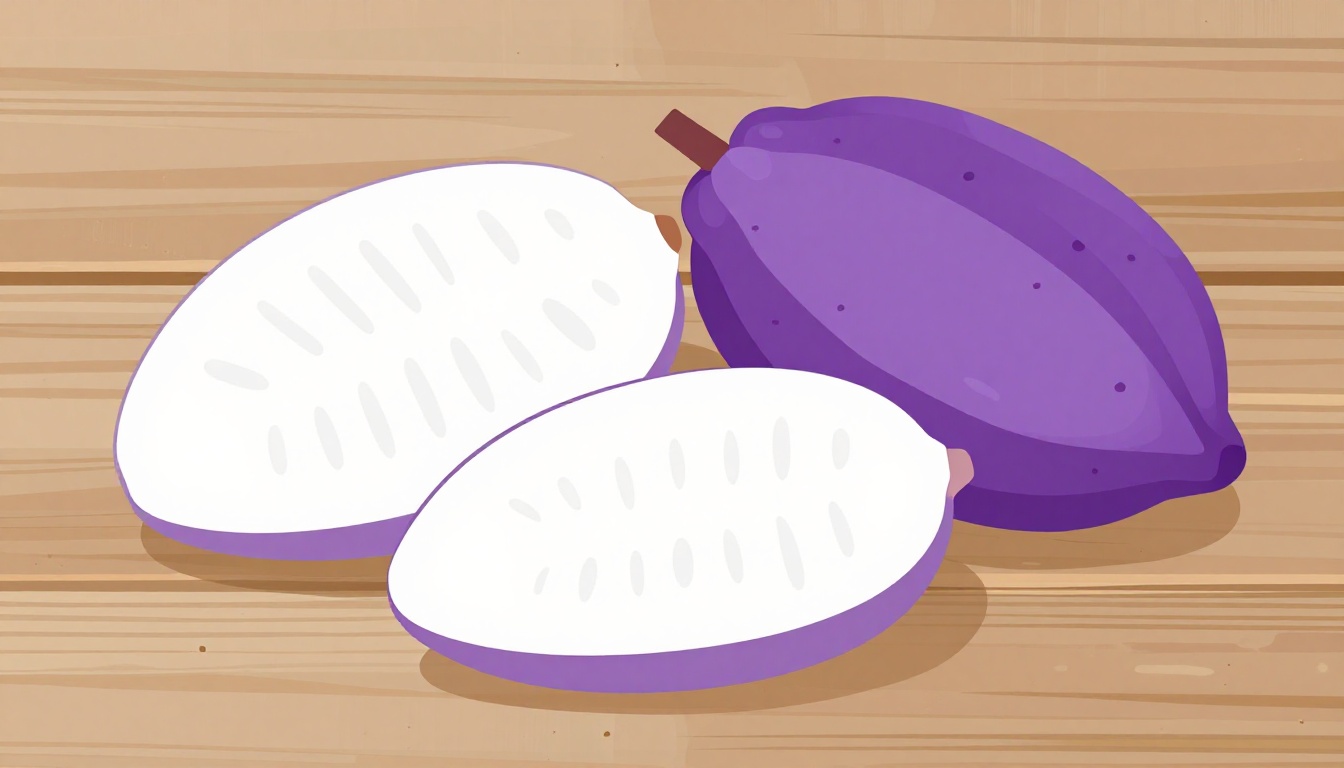
"Jaca," or jackfruit, has an odd reputation outside Brazil, where it's more often discussed as a meat substitute than a dessert ingredient. Wikipedia's entry on jackfruit explains why: unripe jackfruit has a neutral, fibrous texture that absorbs savory flavors well, but ripe jackfruit is intensely sweet and aromatic, which is exactly the version that ends up in a scoop of Brazilian sorvete. If you've only encountered jackfruit as a "pulled pork" stand-in at a vegan restaurant, a jackfruit-flavored ice cream will genuinely surprise you.
"Tapioca" rounds out the table for a different reason: it's not a fruit at all, but a starch pulled from the same cassava root that shows up across Brazilian cooking, from breakfast crepes to cheese bread. Wikipedia's entry on tapioca explains how the starch gets processed from the root, and as an ice cream flavor it comes out mild, faintly sweet, and a little nutty, closer in spirit to a plain custard than to anything fruity. It's proof that Brazilian sorveterias don't limit their creativity to tropical fruit alone. If a familiar breakfast ingredient can become a scoop of ice cream, almost anything on the table can.
Why does Brazil have such an unusually wide flavor menu compared to most countries? Partly geography, since the Amazon and the country's tropical regions grow fruits that simply don't exist commercially almost anywhere else, and partly culture, since Brazilian sorveterias compete on variety the way American ice cream shops compete on size or novelty toppings. A roundup of fruits worth trying in Brazil from Street Smart Brazil covers several of these fruits in their fresh form too, useful if you want to know what to look for at a street market before you ever see them frozen into a scoop. The wider point ties back to something we cover in our guide to food in Portuguese: Brazilian cuisine borrows constantly from Indigenous ingredients, and nowhere is that clearer than standing in front of an ice cream case with flavors named after fruits you've genuinely never heard of.
Açaí na Tigela: Is It Ice Cream?
If you've spent any time on social media, you've probably seen "açaí na tigela," literally "açaí in a bowl," a thick, deep purple frozen dessert topped with granola and banana slices, often photographed looking suspiciously like a scoop of sorbet in a bowl. Here's the important clarification: Brazilians don't call it "sorvete," and they don't really think of it as ice cream at all, even though the texture and temperature suggest otherwise.
"Açaí na tigela" starts as frozen açaí berry pulp, blended until it turns into a thick, spoonable puree, usually with a banana blended in for sweetness and body. It gets served immediately, in a bowl, topped with granola, more banana, and sometimes condensed milk, honey, or other fruit. The base ingredient and the preparation are different enough from either "sorvete" or "picolé" that Brazilians treat it as its own category entirely: a snack, a breakfast, a post-workout meal, or a beach treat, depending on who's eating it and when. Wikipedia's entry on the açaí palm covers the fruit's origins in the Amazon and how it moved from a regional staple to an international health-food phenomenon over the past two decades.
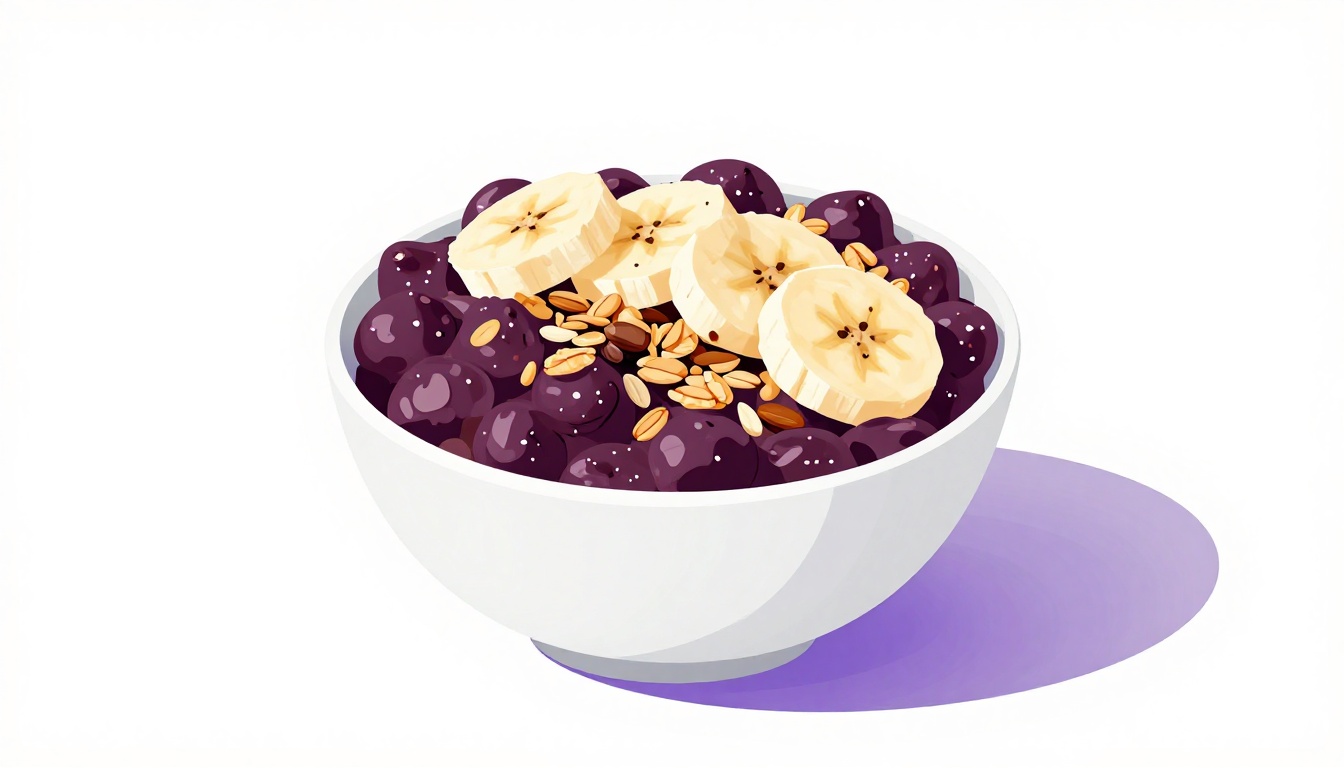
This is a genuinely useful distinction for a learner to nail down early, because English speakers often lump "açaí na tigela" into the broader category of "Brazilian ice cream" without realizing that a Brazilian would find that framing a little strange. If you're at a juice bar and want the frozen berry bowl, ask for "açaí na tigela," not "sorvete de açaí." The second phrase does exist and refers to actual açaí-flavored ice cream, milk-based and churned like any other "sorvete" flavor, which is a real, different product you'll also find on some menus. Confusing the two won't get you the wrong thing exactly, since both are açaí-based and cold, but it will mark you instantly as someone who learned the word from a smoothie bowl influencer rather than a menu.
It's worth noting, too, that "açaí na tigela" is most closely associated with beach culture in Brazil, sold from kiosks and juice bars up and down the coast the same way coconut water and other cold snacks are. If beach vocabulary interests you beyond dessert, our guide to beach in Portuguese covers the fuller picture of what people eat, drink, and say while their feet are in the sand.
A Short History of Sorvete in Brazil
Words carry history, and "sorvete" carries a genuinely surprising one. Ice cream arrived in Brazil almost by accident, tied to a single shipment rather than a slow trickle of culinary influence. In 1834, a cargo ship sailed from Boston to Rio de Janeiro carrying roughly two hundred tons of ice, cut from frozen lakes in New England and packed for the long ocean voyage south. Two local merchants bought the entire shipment and began making a frozen dessert with it, mixed with local Brazilian fruit, since real dairy-based ice cream needed the imported ice just to exist in a tropical climate at all.

There was a catch, and it's a detail that makes the whole story more vivid once you picture it: without refrigeration, that early Brazilian "sorvete" had to be eaten immediately, the same day the ice arrived, before it melted away entirely. A history of sorvete published by iFood and a detailed historical account from Curitiba Histórica both cover this founding moment, describing a genuinely precarious, expensive luxury dessert that only the wealthiest residents of Rio could access at all, since keeping anything frozen in a nineteenth-century tropical port city was an enormous logistical feat.
The next major chapter came with waves of Italian immigration to Brazil starting in the late 1800s and continuing into the early 1900s. Italian immigrants brought their own gelato-making traditions with them, and their influence helped push ice cream from a rare, expensive novelty toward something closer to a mainstream treat by the 1880s onward, decades before mechanical refrigeration made mass production possible. The Portuguese-language Wikipedia entry on sorvete traces this immigrant influence in more detail, alongside the eventual shift toward industrial manufacturing.
That industrial shift arrived in the early 1940s, with Harkson do Brasil, founded in 1941 in Rio de Janeiro, among the first companies to produce ice cream at real commercial scale in the country. Once refrigeration and industrial production solved the "melts before you can eat it" problem that had limited sorvete to a wealthy luxury for over a century, the dessert spread rapidly across Brazilian cities, and sorveterias became the neighborhood fixture they remain today. Wikipedia's broader entry on the history of ice cream and Britannica's overview of ice cream both place Brazil's story within the wider global arc of the dessert, from ancient iced treats enjoyed by royalty to the industrialized, universally available snack it became in the twentieth century almost everywhere at once.
It's a small thing to sit with, honestly: the next time you order "duas bolas de morango e chocolate" at a sorveteria in São Paulo, you're taking part in a chain that started with a ship full of New England ice, two merchants willing to gamble on a strange new luxury, and a century of immigration and industry that turned it into one of the most ordinary pleasures in Brazilian daily life. That's the same pattern behind a lot of Brazilian food and language, actually. Words and dishes that feel completely native today often carry a tangled, international backstory if you dig even one layer down, which is part of why learning whether Portuguese is hard to learn always ends up being about more than grammar. It's about culture too, and ice cream is as good a place as any to start noticing that.
Frequently Asked Questions
Is ice cream masculine or feminine in Portuguese?
"Sorvete" is masculine in Brazilian Portuguese: always "o sorvete," never "a sorvete." In European Portuguese, "gelado" is also masculine: "o gelado." Both words follow the regular masculine pattern for plurals too, "os sorvetes" and "os gelados."
What do you call an ice cream truck in Portuguese?
In Brazil, you'll usually hear "carrinho de sorvete" (literally "ice cream cart") or "carrinho de picolé" if the vendor is specifically selling popsicles rather than scooped ice cream. Both describe the small mobile carts, sometimes on foot, sometimes on a bicycle or motorbike, that sell frozen treats on streets and at the beach, the same general concept behind what Wikipedia calls an ice cream van in English-speaking countries, just usually smaller and without the music box jingle.
How do you say ice cream cone in Portuguese?
"Casquinha." It's the standard word across Brazil for the cone your scoop gets served in, and you'll hear it in the common counter question "na casquinha ou no copo?" (in a cone or in a cup?).
What is gelato called in Portuguese?
"Gelato" is used as a loanword, unchanged from Italian, in Brazilian shops that specifically want to signal an Italian-style, denser product. It doesn't replace "sorvete" as the everyday umbrella term for ice cream generally, it just labels a specific style within the broader category.
Is "gelado" the same as "sorvete"?
No, and this is the single most important nuance in this whole guide. In Portugal, "gelado" is the standard noun for ice cream. In Brazil, "gelado" is an adjective meaning "very cold" or "iced," used for drinks and food temperature, never as a noun for the dessert itself. Brazilians say "sorvete" for ice cream; the Portuguese say "gelado."
What is the Portuguese word for popsicle?
"Picolé." It's a distinct category from "sorvete," made mostly from water or fruit pulp, molded on a stick, and frozen completely solid, as opposed to the creamy, spoonable texture of "sorvete."
How do you say ice cream shop in Portuguese?
"Sorveteria." You'll see the word on signs across Brazil, and it functions exactly the way "ice cream shop" or "ice cream parlor" does in English, describing a dedicated storefront rather than a section of a grocery store freezer.
Is açaí na tigela considered ice cream in Brazil?
Not really, even though it's cold, thick, and spoonable in a way that resembles sorbet. Brazilians treat "açaí na tigela" as its own category, closer to a smoothie bowl or a snack than to "sorvete," and the two words are rarely used interchangeably in everyday speech.
Say It, Don't Just Read It
You could memorize every table on this page, quiz yourself until the flavor names come automatically, and still hesitate the first time a real attendant asks "na casquinha ou no copo?" faster than you expected. That's not a failure on your part. It's the normal gap between recognizing a word on a screen and producing it, correctly, under a little bit of real-world pressure, with your own mouth doing the work.
That gap is exactly what Comigo is built to close. It's a speak-first app, which means every lesson is a spoken conversation rather than a silent multiple-choice tap. You talk out loud to Capy, a capybara companion who listens and gives live, word-by-word feedback on your pronunciation, so a word like "sorvete" gets corrected in the moment instead of quietly mispronounced for months. There's a Free Speak mode too, for open-ended voice conversation whenever you want to practice something specific, like ordering "duas bolas de morango" or explaining that no, you didn't mean "gelado" the adjective, you meant the dessert. If you're just getting started and want a broader entry point before diving into food vocabulary, our guide to learning Portuguese for free is a solid place to build the basics first.
"Sorvete" is a small, sweet word to start with. It's short, it shows up on every corner in Brazil, and it comes with a built-in reason to say it slowly and get it right: showing up at a sorveteria without knowing whether to ask for a cone or a cup, or accidentally asking for something "cold" instead of the dessert itself, is a genuinely funny way to learn a grammar lesson the hard way. Better to practice it now, out loud, before you're standing in line with the sun overhead and someone waiting behind you for their turn. Once you've got this one down, the same habit of speaking first carries over to everything else worth learning in Portuguese, one word, one sentence, one scoop at a time.
Related guides
- Rosetta Stone vs BabbelRosetta Stone vs Babbel: price, method and which one to pick.
- Rosetta Stone vs DuolingoRosetta Stone vs Duolingo: free vs paid, method and results.
- italki vs Preplyitalki vs Preply: pricing models, tutors and which is better.
- Busuu vs DuolingoBusuu vs Duolingo: which app actually teaches more.