
You're sitting in a waiting room in Belo Horizonte. Your friend's mother was rushed in an hour ago with a sharp pain under her ribs, and a nurse just walked over and asked you, in fast Portuguese, whether she has ever had a problem with the "vesícula." You know "fígado." You know "estômago." You have no idea what this one is. Your phone is almost dead, and the translation app is loading. Slowly.
Here's the answer. Gallbladder in Portuguese is "vesícula biliar," and in everyday speech people shorten it to just "vesícula." It's a feminine word, so you say "a vesícula." You pronounce it roughly "ve-ZEE-koo-la," with the stress on the second syllable and the "s" buzzing like a "z." Any bilingual source agrees, including the Cambridge English-Portuguese dictionary entry for "gall bladder".
That's the quick answer. It probably won't be the whole answer you need. A single word doesn't get you through a conversation with a nurse, a pharmacist, or your aunt who just had surgery. So this guide goes further: how to say it, how the grammar works, where the word comes from, how to talk about gallstones, surgery, food, and pain, and the exact phrases a doctor in Brazil will use. If you'd rather hear yourself say these words than just read them, you can practice speaking out loud in Comigo while you work through this page. Speaking is the skill that fails under stress, so it's the one worth training.
One honest note first. This is a language guide, not medical advice. If you or someone near you has real symptoms, see a doctor.
Gallbladder in Portuguese: The Quick Answer Cheat Sheet
Let's start with the words you'll use most. Screenshot this table if you need to. Every entry is explained further down.
| English | Portuguese | Notes |
|---|---|---|
| gallbladder | vesícula biliar | The full, formal term |
| the gallbladder | a vesícula | The everyday short form, feminine |
| gallstones | pedras na vesícula / cálculos biliares | "Pedras" is casual, "cálculos" is medical |
| a gallstone | um cálculo biliar | "Cálculo" is masculine |
| gallbladder surgery | cirurgia da vesícula | What most people say out loud |
| gallbladder removal (medical) | colecistectomia | The surgical name |
| bile | bile / bílis | Both are correct, "bile" is more common in medicine |
| liver | fígado | Masculine, "o fígado" |
| bile duct | ducto biliar / via biliar | Plural: "vias biliares" |
| gallbladder attack | cólica biliar | Feminine, "a cólica biliar" |
| gallbladder infection or inflammation | colecistite | The "-ite" ending means inflammation |
You'll find the same main entries in most bilingual references. WordHippo's Portuguese translation page for "gallbladder" shows the translation with example words nearby, and Learn with Oliver's English-Portuguese entry gives you the same translation in a simple learner layout. For the Portuguese side of the story, the Dicio entry for "vesícula" lists the anatomical meaning along with the other uses, and the Priberam dictionary entry for "vesícula" does the same from a European Portuguese point of view.
Those pages stop at the word. They don't tell you how to use it in a sentence with a real person waiting for your answer. Keep reading.
How to Pronounce "Vesícula Biliar"
"Vesícula biliar" has seven syllables split across two words: ve-SÍ-cu-la bi-li-AR. Say the first word slowly. "Ve," "SÍ," "cu," "la." The accent mark sits on the "í," and that's your stress. The loudest, longest beat of the word lands on the second syllable.
Now the tricky part for English speakers. The letter "s" between two vowels sounds like a "z" in Portuguese. So "vesícula" is not "veh-SEE-koo-la." It's "veh-ZEE-koo-la." The Wiktionary entry for "vesícula" lists the pronunciation in International Phonetic Alphabet symbols, roughly /veˈzikulɐ/. That final "a" is weak and short, more like the "uh" at the end of "sofa" than a full "ah."

The second word, "biliar," is easier. It's "bee-lee-AR." Stress lands on the last syllable this time. In most of Brazil, that final "r" sounds like a soft English "h," so it comes out something like "bee-lee-AH." In Portugal and some Brazilian regions, the "r" is a quick tap of the tongue. Both are normal.
Here's a table you can use as a pronunciation map. The respellings are only rough guides, since English spelling can't fully capture Portuguese sounds.
| Word | Rough English respelling | Where the stress goes |
|---|---|---|
| vesícula | veh-ZEE-koo-lah | second syllable, "SÍ" |
| biliar | bee-lee-AR | last syllable, "AR" |
| vesícula biliar | veh-ZEE-koo-lah bee-lee-AR | "SÍ" and "AR" |
| cálculo | KAL-koo-loo | first syllable, "CÁL" |
| colecistite | ko-leh-sis-CHEE-chee (Brazil) | second-to-last, "TI" |
| fígado | FEE-gah-doo | first syllable, "FÍ" |
Now, Brazil versus Portugal. In European Portuguese, the first "e" in "vesícula" is much weaker, almost swallowed: something like "v'ZEE-koo-la." Vowels that aren't stressed get squeezed hard in Portugal. Brazilian speakers keep them clearer and more open. If you learn the Brazilian version, Portuguese people will understand you without a problem. And the reverse is true too.
Want to hear it from real speakers? YouGlish's page for "vesícula" in Brazilian Portuguese plays the word inside real videos, so you catch the rhythm around it. To understand why the letters behave the way they do, the Wiktionary appendix on Portuguese pronunciation and the Wikipedia IPA chart for Portuguese show every sound side by side, while Wikipedia's Portuguese phonology article explains why vowels change between Brazil and Portugal.
And about that accent mark. Portuguese puts a written accent on words where the stress falls third from the end, and "vesícula" is one of those. That's exactly why the accent isn't optional. Wikipedia's article on Portuguese orthography lays out the accent rules if you want the full system, and if you ever need to spell this word aloud to a receptionist, how to spell in Portuguese covers every letter's sound.
Is "Vesícula" Masculine or Feminine? Gender and Grammar
"Vesícula" is feminine. Always. It ends in "-a," it comes from a Latin feminine noun, and it takes feminine articles: "a vesícula," "uma vesícula," "minha vesícula." Nobody says "o vesícula."
"Biliar" is a different animal. It ends in "-ar," and adjectives like that don't change for gender. The same form goes with both masculine and feminine nouns. That's why you'll see "cálculo biliar" (masculine noun) and "cólica biliar" (feminine noun) with the exact same last word. The only thing that changes is the plural: "biliar" becomes "biliares."
Portuguese has two genders and no neutral one, which trips up English speakers constantly. Wikipedia's overview of the Portuguese language covers this basic structure. Here's how the pieces of our word family behave.
| Phrase | Gender | Plural | English |
|---|---|---|---|
| a vesícula biliar | feminine | as vesículas biliares | the gallbladder |
| o cálculo biliar | masculine | os cálculos biliares | the gallstone |
| a cólica biliar | feminine | as cólicas biliares | the biliary colic |
| a via biliar | feminine | as vias biliares | the bile duct |
| o ducto biliar | masculine | os ductos biliares | the bile duct (medical) |
| a pedra na vesícula | feminine | as pedras na vesícula | the gallstone (casual) |
The little words in front matter. Portuguese glues prepositions to articles, so "de" plus "a" becomes "da," and "em" plus "a" becomes "na." That's how "vesícula" shows up in real sentences.
| Pattern | Example | English |
|---|---|---|
| na vesícula (em + a) | Tenho pedras na vesícula. | I have stones in my gallbladder. |
| da vesícula (de + a) | A dor vem da vesícula. | The pain comes from the gallbladder. |
| sem a vesícula | Ela vive sem a vesícula. | She lives without her gallbladder. |
| operar da vesícula | Ele vai operar da vesícula. | He's going to have gallbladder surgery. |
| pela vesícula (por + a) | Passa pela vesícula. | It goes through the gallbladder. |
| minha vesícula | Minha vesícula dói. | My gallbladder hurts. |
Notice "operar da vesícula." It literally means "to operate from the gallbladder," which sounds weird in English, but it's the natural way Brazilians say a patient had surgery on that organ. We'll come back to it in the family section.
If you want to see how "ser" and "estar" shape sentences like "A vesícula é um órgão," the post on ser conjugation in Portuguese will help you build definitions quickly.
Where the Word Comes From: Latin, Bile, and "Gall"
The word "vesícula" comes from Latin. It's a diminutive of "vesica," which means "bladder," so "vesícula" literally means "little bladder." English took the same Latin root and gave us "vesicle," a small sac or bubble. Once you see that, the word stops being a random string of letters and becomes a picture: a small pouch. The etymology section on Wiktionary's "vesícula" page is short if you'd like to check the history yourself.
"Biliar" works the same way. It comes from "bile" (Latin "bilis"), and it's the sibling of English "biliary." If you know the medical English word, you already know the Portuguese one. Two words down.
Bile itself has a few names in Portuguese, and they're worth sorting out.
| Portuguese | English | Where you'll meet it |
|---|---|---|
| bile | bile | Medical texts, doctors, most modern usage |
| bílis | bile | Dictionaries, older or literary writing, also figurative |
| fel | gall / bile | Older Portuguese, poetic use, figurative meaning |
| biliar | biliary | Adjective, as in "vias biliares" |
| bilioso | bilious | Rare, not used for anatomy |
For deeper reading, the Priberam entry for "bílis" and the Dicio entry for "bílis" show the meanings in Portuguese, and the etymological dictionary entry for "bílis" walks through where it came from. The Wiktionary entry for "fel" covers the older word.
Here's the fun part. English says "gall" for bile, and the same word means nerve or cheek: "He had the gall to ask." That's the same idea as bitterness turning into boldness. Portuguese "fel" and "bílis" carry a matching bitter feeling. In writing, someone can speak with "fel," meaning with bitterness: "um comentário cheio de fel" is a comment full of venom. And "bílis" can hint at bad temper or irritation in some texts.
But when a Brazilian wants the "nerve" meaning of "gall," they don't reach for "fel." They say "cara de pau," literally "wooden face."
| English | Portuguese | Literal meaning |
|---|---|---|
| He had the gall to ask. | Ele teve a cara de pau de perguntar. | He had the wooden face to ask. |
| What a nerve! | Que cara de pau! | What a wooden face! |
| a bitter comment | um comentário amargo / cheio de fel | a bitter comment / full of gall |
You'll hear "cara de pau" all over Brazil, and it's one of those expressions that makes people smile when a foreigner uses it right. If that kind of colorful phrase interests you, common sayings in Portuguese has a whole collection. And if a hospital wait makes you want to vent, bad words in Portuguese is at least good for understanding what you overhear.
Vesícula vs Bexiga vs Bolha: Don't Mix Them Up
Now for a confusion that trips up beginners. "Vesícula" alone can mean more than one thing. In anatomy it means a small sac. In medicine and dermatology it also means a small blister-like bubble on the skin. And English speakers hear "bladder" and want to say "bexiga," which is a different organ.
Let's separate them.
| Word | Meaning | Example |
|---|---|---|
| vesícula biliar | gallbladder | Operei a vesícula biliar. |
| vesícula (skin) | a small fluid-filled blister, medical term | Apareceram vesículas na pele. |
| bexiga | urinary bladder | Tenho infecção na bexiga. |
| bolha | blister, everyday word (also a bubble) | Fiz uma bolha no pé. |
| vesícula seminal | seminal vesicle (a different organ) | Aparece em textos de urologia. |
The Wiktionary entry for "bexiga" confirms that "bexiga" means the urinary bladder, and in casual Brazilian speech it can also mean a party balloon. So "Estou com dor na bexiga" is about urination trouble, not about your gallbladder. Big difference.
This is exactly why doctors say "vesícula biliar" instead of just "vesícula" when they want to be precise. The extra word "biliar" removes doubt. In casual conversation, "vesícula" is enough because the context makes it obvious. If a friend says "Tirei a vesícula ano passado," nobody thinks about blisters.
A quick rule of thumb: if the sentence is about pain, stones, or surgery, "vesícula" means the gallbladder. If it's about skin, it means a blister. If it's about peeing, you want "bexiga."
What the Gallbladder Does, Explained in Portuguese
Let's put the word to work. Here's what the gallbladder does, in the kind of plain Portuguese a doctor might use with a patient.
"O fígado produz a bile. A vesícula biliar guarda essa bile. Quando você come algo gorduroso, a vesícula libera a bile no intestino delgado, e isso ajuda a digerir a gordura."
In English: the liver makes bile. The gallbladder stores it. When you eat something fatty, the gallbladder releases bile into the small intestine, which helps digest the fat. That matches how the Wikipedia article on the gallbladder describes it, and the Portuguese-language Toda Biologia page on the gallbladder explains the same job in Portuguese, so you can watch the same ideas in your target language.
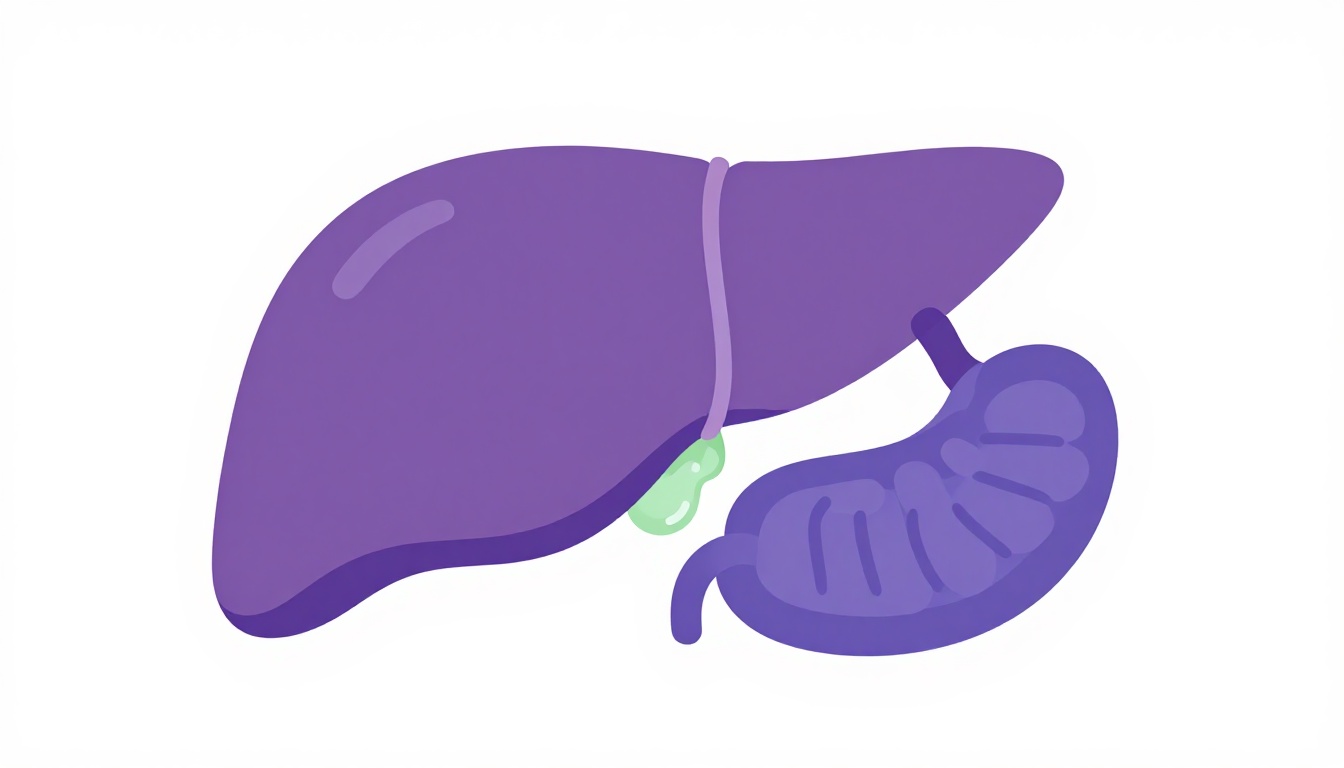
The gallbladder doesn't work alone. It's one piece of the digestive system, and doctors will use all these words in the same breath. Here's the vocabulary map.
| Portuguese | English | Notes |
|---|---|---|
| o fígado | liver | Masculine, accent on "í" |
| a vesícula biliar | gallbladder | Feminine |
| o pâncreas | pancreas | Masculine, accent on "â" |
| o estômago | stomach | Masculine |
| o intestino delgado | small intestine | Literally "thin intestine" |
| o intestino grosso | large intestine | Literally "thick intestine" |
| o duodeno | duodenum | First part of the small intestine |
| o esôfago (BR) / o esófago (PT) | esophagus | Spelling differs by country |
| o ducto biliar / a via biliar | bile duct | The tube bile travels through |
| a bile | bile | Feminine |
| a digestão | digestion | From "digerir" |
The Wiktionary entry for "fígado" and the Dicio entry for "fígado" are good places to check the liver word and its many idioms. For the bigger picture, Toda Matéria's Portuguese-language page on the digestive system walks through every organ with the same vocabulary.
Body vocabulary in general is worth building in one sitting. Several learner guides list dozens of organs and body parts with pronunciation help, including Migaku's guide to Portuguese body parts, Learn Portuguese's body parts page, and Transparent Language's parts of the body post. Pick one and read it out loud. Then say your own organs, one by one, with "Meu/minha" in front.
Since the topic is digestion, you may also want the words for what goes in. Food in Portuguese gives you the menu vocabulary, and water in Portuguese covers the drink you'll ask for in every hospital.
Gallbladder Problems: The Vocabulary You'll Hear
Let's talk about what goes wrong, and how Portuguese names it. Most of these words follow patterns you'll recognize, and a few have both a casual and a formal version.
The main thing to know: gallstones are common, and many people who have them never feel anything. The NHS page on gallstones says that they often cause no symptoms, and the NIDDK page on gallstones explains what they are and how they form. When a stone does cause trouble, the typical picture is pain in the upper right belly, often after a fatty meal. Doctors call that "biliary colic," and the Wikipedia article on biliary colic describes it in detail.
| Portuguese | English | Plain-English meaning |
|---|---|---|
| pedra na vesícula | stone in the gallbladder | The everyday way to say gallstone |
| cálculo biliar | gallstone | The medical term |
| litíase biliar | gallstone disease | Having gallstones (medical) |
| colelitíase | cholelithiasis | Another medical term for gallstones |
| cólica biliar | biliary colic | Strong pain when a stone blocks the flow |
| colecistite | cholecystitis | Inflamed or infected gallbladder |
| icterícia | jaundice | Yellow skin or eyes |
| inflamação | inflammation | Swelling and irritation |
| infecção | infection | Germs causing trouble |
| náusea / enjoo | nausea | Feeling like you'll throw up |
| vômito (BR) / vómito (PT) | vomiting | Throwing up |
| dor abdominal | abdominal pain | Belly pain |
| febre | fever | High body temperature |
| urina escura | dark urine | A sign doctors ask about |
| refeição gordurosa | fatty meal | A common trigger for pain |
Two of these deserve extra attention. "Cólica" in Portuguese is feminine, "a cólica," unlike the Spanish "cólico." And "enjoo" is the casual word for nausea, which is what you'd use with friends, while "náusea" is what the doctor writes down.
Two Portuguese-language explainers show these terms in their natural habitat. One is a clinic's article on whether gallbladder stones really require surgery, and the other is a gastroenterologist's page on symptoms and treatment of cálculo biliar. Reading pages like these teaches you how the terms sit inside real sentences.
Now, a plain statement of what these pages agree on. Some symptoms need fast care: pain that won't stop, fever, yellow skin or eyes, dark urine, or repeated vomiting. In Portuguese, a friend might say: "Se a dor não passa, vá ao médico." If the pain doesn't go away, go to the doctor. You'll see how to explain all of that in the sections below.
Surgery and Treatment Words in Portuguese
Gallbladder surgery has a formal name and a casual name, and you'll hear both. The formal name is "colecistectomia," and it's the same word as English "cholecystectomy," with the ending changed. The casual version is "cirurgia da vesícula," or the very short "tirar a vesícula" (to take out the gallbladder).
The operation is usually done through small cuts with a camera, which is called laparoscopy in English. Brazilians say "videolaparoscopia" or just "laparoscopia." The Wikipedia article on cholecystectomy describes the different ways it's done, and the NHS page on gallbladder removal explains the process in plain English. For a patient-leaflet view, the Milton Keynes hospital leaflet on laparoscopic cholecystectomy walks through what happens step by step, and the MD Anderson explainer on gallbladder removal covers what to know before and after.
And yes, people live without a gallbladder. That's why Portuguese has a phrase for it: "ficar sem a vesícula."
| Portuguese | English | Notes |
|---|---|---|
| colecistectomia | cholecystectomy | The medical name |
| cirurgia da vesícula | gallbladder surgery | Everyday phrase |
| videolaparoscopia (BR) | laparoscopic surgery | Surgery with a camera |
| laparoscopia | laparoscopy | Shorter form |
| anestesia geral | general anesthesia | You're fully asleep |
| internação (BR) / internamento (PT) | hospital stay | Being admitted |
| alta hospitalar | discharge from hospital | "Ter alta" = to be discharged |
| pós-operatório | post-op / recovery period | Also used as an adjective |
| recuperação | recovery | Feminine noun |
| cicatriz | scar | Small cuts leave small scars |
| jejum | fasting | Not eating before surgery |
| cirurgião / cirurgiã | surgeon | Masculine / feminine |
| tirar a vesícula | to have the gallbladder removed | Very common in speech |
| ficar sem a vesícula | to end up without a gallbladder | Describes the result |
Notice how many of these are near-copies of English words. "Anestesia," "recuperação," "cirurgião." That's a huge advantage, and we'll look at the pattern in a later section.
A few sentences you can borrow right away:
| Portuguese | English |
|---|---|
| Preciso tirar a vesícula. | I need to have my gallbladder removed. |
| A cirurgia é por videolaparoscopia. | The surgery is laparoscopic. |
| Vou ficar internado. | I'm going to be admitted to the hospital. |
| Quando eu tenho alta? | When will I be discharged? |
| Vou ter cicatriz? | Will I have a scar? |
| Quanto tempo dura a recuperação? | How long does the recovery take? |
One more Portuguese-language source is worth a look: Cochrane's Portuguese summary about early versus delayed laparoscopic cholecystectomy shows how researchers write "colecistectomia laparoscópica" in real medical Portuguese.
Eating After Gallbladder Surgery: The Portuguese You Need
After surgery, the first practical question is usually about food. This section is language, not medical advice. Your own doctor or nutritionist decides what you should eat, and you should follow what they say. What this section gives you is the Portuguese to ask and answer.

Here's the vocabulary you'll hear from a doctor or nutritionist.
| Portuguese | English | Notes |
|---|---|---|
| a dieta | the diet | Also means "diet" in the medical sense |
| a gordura | fat | Feminine |
| gorduroso / gordurosa | fatty, greasy | Adjective, changes with gender |
| as frituras | fried foods | Very common in Brazilian medical talk |
| refeições leves | light meals | "Leve" means light |
| porções pequenas | small portions | Literally "small portions" |
| comer devagar | to eat slowly | A common tip |
| o nutricionista / a nutricionista | nutritionist | Same word, changes only the article |
| seguir a orientação médica | to follow medical advice | A useful formal phrase |
And here's how to talk about your own food limits:
| Portuguese | English |
|---|---|
| Não posso comer fritura. | I can't eat fried food. |
| Prefiro comer coisas leves. | I prefer to eat light things. |
| Estou evitando comida gordurosa. | I'm avoiding greasy food. |
| Como em porções pequenas. | I eat small portions. |
| O médico mandou eu seguir uma dieta. | The doctor told me to follow a diet. |
| Isso tem muita gordura? | Does this have a lot of fat? |
| Tem alguma opção mais leve? | Is there a lighter option? |
At a restaurant, you'll want to ask about ingredients politely. The same "com licença" and "por favor" you use everywhere will help: read excuse me in Portuguese and please in Portuguese for the exact words, and pair them with what you learned in food in Portuguese.
How to Describe Your Pain in Portuguese
If you only learn one section of this guide well, make it this one. A doctor can't help until you explain where it hurts, how it feels, and when it started. Portuguese has two common patterns.
| Pattern | Example | English |
|---|---|---|
| Estou com dor + place | Estou com dor na barriga. | I have pain in my belly. |
| Sinto uma dor + place | Sinto uma dor nas costas. | I feel a pain in my back. |
| Tenho dor + place | Tenho dor no lado direito. | I have pain on the right side. |
| Está doendo + place | Está doendo aqui embaixo das costelas. | It's hurting right here under my ribs. |
| Dói + place | Dói o ombro direito. | My right shoulder hurts. |
Now the location words. Biliary pain usually sits in the upper right part of the belly, and it can spread. In Portuguese, you say where with small, simple phrases. Body vocabulary guides such as Rio and Learn's body parts guide and Preply's body parts post give you the words for your ribs, back, shoulder, and belly.
| Portuguese | English | Notes |
|---|---|---|
| a barriga / o abdômen | belly / abdomen | "Barriga" is casual |
| parte superior direita da barriga | upper right part of the belly | The classic location |
| embaixo das costelas | under the ribs | "Costelas" = ribs |
| as costas | the back | Always plural |
| o ombro direito | the right shoulder | Pain can spread here |
| irradia para as costas | it radiates to the back | Medical phrase |
| irradia para o ombro | it radiates to the shoulder | Same pattern |
| no meio da barriga | in the middle of the belly | Center of the belly |
Next comes how strong it is and how often it comes. Doctors always ask both.
| Portuguese | English |
|---|---|
| É uma dor fraca. | It's a mild pain. |
| É uma dor forte. | It's a strong pain. |
| É uma dor insuportável. | It's unbearable. |
| A dor vem e vai. | The pain comes and goes. |
| A dor é constante. | The pain is constant. |
| Começa depois de comer. | It starts after I eat. |
| Dura algumas horas. | It lasts a few hours. |
| Começou ontem à noite. | It started last night. |
| Piora quando como gordura. | It gets worse when I eat fat. |
| Melhora quando eu deito. | It gets better when I lie down. |
For real-world phrase sets built for health situations, Street Smart Brazil's phrases for communicating health concerns and Kaiwa's Portuguese medical phrases for the doctor are worth bookmarking, and Caminhos Languages' body parts guide for Brazilian Portuguese plus the Portuguese Language Guide body vocabulary page are good for the details.
Time words matter here too, since "when did it start?" is the first question. If you want to answer with a day or a month, days of the week in Portuguese and months in Portuguese give you the words, and numbers in Portuguese covers "three days ago" and "twice a week."
At the Doctor in Brazil: A Sample Dialogue
Reading a word list is one thing. Following a real conversation is another. Here's a short, realistic visit to a clinic in Brazil. It's written in everyday Brazilian Portuguese, with the English beside it.

| Portuguese | English |
|---|---|
| Médica: Bom dia. Como posso ajudar? | Doctor: Good morning. How can I help? |
| Você: Bom dia. Estou com uma dor forte na barriga. | You: Good morning. I have a strong pain in my belly. |
| Médica: Onde exatamente? | Doctor: Where exactly? |
| Você: Aqui, do lado direito, embaixo das costelas. | You: Here, on the right side, under the ribs. |
| Médica: Desde quando? | Doctor: Since when? |
| Você: Começou ontem, depois do jantar. | You: It started yesterday, after dinner. |
| Médica: A dor vai para as costas ou para o ombro? | Doctor: Does the pain go to your back or your shoulder? |
| Você: Vai para as costas. Também estou enjoado. | You: It goes to my back. I also feel nauseous. |
| Médica: Teve febre ou vômito? | Doctor: Any fever or vomiting? |
| Você: Vomitei uma vez. Sem febre. | You: I vomited once. No fever. |
| Médica: Vou pedir um ultrassom da vesícula. | Doctor: I'll order an ultrasound of your gallbladder. |
| Você: Preciso ficar em jejum? | You: Do I need to fast? |
| Médica: Sim, sem comer nada por algumas horas antes do exame. | Doctor: Yes, no food for a few hours before the exam. |
| Você: Entendi. Muito obrigado, doutora. | You: Got it. Thank you very much, doctor. |
Before you go, learn the polite frame around it. A visit almost always starts with a greeting like the ones in how are you in Portuguese and ends with a proper thank-you from how to say thank you in Portuguese. And if the doctor speaks too fast, you have an escape hatch: do you speak Portuguese in Portuguese and I don't speak Portuguese in Portuguese give you the exact phrases to ask someone to slow down or switch languages.
Now the other side of that conversation. The doctor asks questions in a set pattern, and once you've seen them, they stop being scary. Here's what to expect and how to answer.
| The doctor asks | English | A simple answer |
|---|---|---|
| Onde dói? | Where does it hurt? | Dói aqui, do lado direito. |
| Desde quando? | Since when? | Desde ontem. |
| A dor é constante ou vem e vai? | Is the pain constant or does it come and go? | Vem e vai. |
| Piora depois de comer? | Does it get worse after eating? | Sim, principalmente gordura. |
| Você tem febre? | Do you have a fever? | Não. / Sim, um pouco. |
| Já vomitou? | Have you vomited? | Vomitei duas vezes. |
| Sua urina está escura? | Is your urine dark? | Um pouco mais escura. |
| Sua pele ou olhos estão amarelados? | Are your skin or eyes yellowish? | Não. |
| Você já teve isso antes? | Have you had this before? | Já, uma vez. |
| Toma algum remédio? | Do you take any medicine? | Tomo um remédio para pressão. |
| Tem alguma alergia? | Do you have any allergies? | Não tenho alergia. |
| Alguém na família teve problema na vesícula? | Has anyone in your family had gallbladder trouble? | Minha mãe tirou a vesícula. |
Notice how short the answers are. You don't need perfect grammar. "Sim," "não," "desde ontem," "aqui." A short, clear answer is better than a long one you have to fight through. And speaking those answers out loud a few times before you need them turns them from words you recognize into words you can produce. If you want a safe place to rehearse, you can role-play the whole visit out loud with Capy in Comigo, where the conversation is live and no one is judging your accent. For hospital vocabulary in a slightly wider frame, Rio and Learn's hospital in Portuguese guide and Preply's Portuguese medical terminology post add more words worth having.
Brazil vs Portugal: Words That Change
Portuguese isn't one uniform language. Brazil and Portugal share the same core, but medical vocabulary drifts, and spelling has small differences too. Here's the short version. Keep it light: if you learn one set, the other side will still understand you.
| Brazil | Portugal | English |
|---|---|---|
| ultrassom / ultrassonografia | ecografia | ultrasound |
| pronto-socorro / UPA | urgência / serviço de urgência | emergency room |
| vômito | vómito | vomit |
| esôfago | esófago | esophagus |
| abdômen | abdómen | abdomen |
| internação | internamento | hospital admission |
| plano de saúde / SUS | seguro de saúde / SNS | health insurance / public system |
| Estou me sentindo mal. | Sinto-me mal. | I feel bad. |
| Estou com dor. | Tenho dor. / Dói-me. | I'm in pain. |
| Ela tirou a vesícula. | Ela foi operada à vesícula. | She had her gallbladder removed. |
Where do these differences show up in everyday practice? Take the ultrasound, since that's the exam most people get first for a gallbladder problem. In Brazil it's "ultrassom" in speech and "ultrassonografia" on paper. In Portugal it's "ecografia." The Portuguese-language Doctoralia answer on the difference between ultrassonografia and ecografia explains that they're basically the same exam with different names, and the Saúde Bem-Estar page on ecografia shows the European Portuguese wording.
The health systems differ, too. In Brazil, public care runs through the SUS, and many people also hold a private "plano de saúde." The federal Ministério da Saúde website is the official Brazilian source, and that's also where you'll see the emergency medical service called SAMU, reached by dialing 192. In Portugal, the national public system is the SNS, and the general emergency number is 112. Wikipedia's article on healthcare in Portugal gives the background.
The difference in tone matters as well. Brazilian doctors often use "você" or "o senhor / a senhora," while Portuguese doctors more often address you in the third person: "Onde lhe dói?" It's polite, and it's normal. You don't need to imitate it. Just recognize it.
Portugal isn't the only country that speaks the language, of course. If you're curious how far it spreads, countries in Africa that speak Portuguese is a surprising map. And if you're planning to actually live the language, learning Brazilian Portuguese in Brazil covers what that experience looks like.
Medical Word Patterns That Save You Time
Here's the best news in the whole guide. English medical words come mostly from Latin and Greek, and Portuguese took the same roots. So instead of memorizing hundreds of words, you can memorize a handful of patterns.
| English pattern | Portuguese pattern | Examples |
|---|---|---|
| -ectomy | -ectomia | colecistectomia, apendicectomia |
| -itis | -ite | colecistite, gastrite, apendicite, hepatite |
| -ology | -ologia | cardiologia, gastroenterologia |
| -ion | -ção | digestão, infecção, inflamação, operação |
| -y (in nouns) | -ia | anestesia, anemia |
| -ic (adjective) | -ico / -ica | crônico (BR) / crónico (PT), clínico |
So "cholecystitis" becomes "colecistite" with three small changes. "Appendicitis" becomes "apendicite." "Gastroenterology" becomes "gastroenterologia." A word like "inflammation," which ends in "-ion," becomes "inflamação," and the "-ção" ending sounds like "sow" with a nasal twist. Once you know the rule, you can guess and be right most of the time.
Some words don't fit, and that's the trap. A few English medical words look the same but change meaning, and you'll only catch them by testing them out loud. Still, the patterns will take you surprisingly far. Learner guides such as Migaku's Portuguese medical vocabulary list, Language Trainers' medical vocabulary post, and Caminhos Languages' medical vocabulary guide list many more terms that follow the same rules.
If you enjoyed this, the earlier post on measles in Portuguese uses the same approach with a different illness. And if you're wondering whether all this is a lot to take on, is Portuguese hard to learn gives an honest answer: pronunciation takes work, but the vocabulary is friendlier than most English speakers expect.
Talking About Other People and the Past
Most of the time, you won't be the patient. You'll be the friend, the coworker, the son or daughter, the person who gets the WhatsApp message. So here's how to talk about someone else's gallbladder.
The most natural phrase is "tirar a vesícula." A person can say "Minha mãe tirou a vesícula" (My mom had her gallbladder taken out), even though technically the surgeon did it. Portuguese doesn't mind. You can also say "operou a vesícula" for the same idea. The more careful form is passive: "Ela foi operada da vesícula." And for the current state: "Ela está sem a vesícula."
| Portuguese | English | Notes |
|---|---|---|
| Minha mãe tirou a vesícula. | My mom had her gallbladder removed. | Casual, very common |
| Ela foi operada da vesícula. | She was operated on for her gallbladder. | "Operada" is feminine |
| Ele foi operado da vesícula. | He was operated on for his gallbladder. | "Operado" is masculine |
| Ela está sem a vesícula. | She's without a gallbladder. | Describes the state |
| Ele vai ser operado amanhã. | He's going to be operated on tomorrow. | "Vai ser" + participle |
| Ela vai operar a vesícula. | She's going to have gallbladder surgery. | Casual future |
| Ele está internado. | He's in the hospital. | "Internado" = admitted |
| Ela já teve alta. | She has already been discharged. | "Ter alta" |
| Ele está se recuperando bem. | He's recovering well. | "Se recuperar" |
| A cirurgia deu tudo certo. | The surgery went well. | Literally "gave everything right" |
Notice the participle patterns. "Operado" and "operada" change with the person's gender. That's why you need to know who you're talking about, and the pronouns in the post on she in Portuguese are a good warm-up for the feminine forms.
Now the past. Portuguese uses "ter" plus a participle for things that have happened before: "Já tive problema na vesícula" (I've already had gallbladder trouble). Brazilians often use the simple past too: "Tirei a vesícula ano passado." Both are fine.
Here's a set you can copy for messages and small talk.
| Situation | Portuguese | English |
|---|---|---|
| WhatsApp to a coworker | Oi! Fiquei sabendo da sua cirurgia. Melhoras! | Hi! I heard about your surgery. Get well soon! |
| Asking about a friend | Como ela está? Já teve alta? | How is she? Has she been discharged yet? |
| Telling a boss | Preciso me ausentar, vou operar a vesícula. | I need to be away, I'm having gallbladder surgery. |
| Updating family | Ele está internado, mas está bem. | He's in the hospital, but he's doing fine. |
| Good news | A cirurgia deu tudo certo! | The surgery went well! |
| Offering support | Se precisar de algo, é só falar. | If you need anything, just say so. |
| Ending a call | Boa recuperação! Um abraço. | Have a good recovery! A hug. |
That last line matters. When you close a hospital conversation, goodbye in Portuguese has the warm ways to do it. And if someone asks whether the surgery already happened, you'll want a quick yes in Portuguese, which is more varied than you'd think. When you're describing plans for tomorrow, like "Ele vai ser operado amanhã," the future with "ir" is what makes it work, and ir verbs in Portuguese explains how that verb runs. And when you're at home caring for someone, you'll use the words from house in Portuguese more than you'd guess.
Common Mistakes English Speakers Make With This Word
Here are the slips that show up again and again. They're all fixable.
| Mistake | Why it happens | Fix |
|---|---|---|
| "bexiga da bile" for gallbladder | Translating "bladder" word for word | Use "vesícula biliar" |
| "o vesícula" | Assuming it's masculine | It's feminine: "a vesícula" |
| Saying the "s" as "s" | English spelling habits | Between vowels, "s" sounds like "z" |
| Writing "vesicula" without the accent | Forgetting the stress mark | Write "vesícula" |
| Stressing the wrong syllable | Copying English stress | Stress the "SÍ" |
| Using "bilioso" for anatomy | Confusing the adjective | Use "biliar" |
| "pedra no fígado" | Mixing up the organs | It's "pedra na vesícula" |
| "cólico biliar" | Copying Spanish | Portuguese uses "cólica biliar" |
| Confusing "vesícula" with "bexiga" | Both are "little bags" | Bladder for urine is "bexiga" |
| Thinking "biliar" changes for gender | Adjective habit | It stays the same, only plural changes |
Most of these mistakes come from one habit: translating word by word instead of learning the phrase as a chunk. Chunks like "tirar a vesícula" or "cálculo biliar" carry the gender, the preposition, and the meaning all at once. That habit is the same one that makes Portuguese feel harder than it is, a theme covered in is Portuguese hard to learn.
By the way, if you speak Spanish, you already know part of this. "Vesícula biliar" is spelled exactly the same in Spanish, but it sounds different: Spanish keeps the "s" as an "s" and doesn't turn it into a "z" sound. It's a friendly cognate with different music.
How to Actually Learn and Remember This Vocabulary
You've now got the words, the grammar, the phrases, and the patterns. The next step decides whether any of it survives until the day you need it.
Reading doesn't do the job. Reading builds recognition: you see "vesícula" and think "oh yes, gallbladder." But in a real conversation, someone's waiting, your heart's a bit fast, and you have to produce the word, not recognize it. Those are two different skills. Production comes only from saying things out loud.
So here's a simple routine.
| Step | What to do | Why it works |
|---|---|---|
| 1 | Say "vesícula biliar" ten times out loud | Trains your mouth for the "z" sound and the stress |
| 2 | Say one sentence with "a vesícula" | Locks in the feminine gender |
| 3 | Describe pain in three different ways | Builds the "Estou com dor" habit |
| 4 | Role-play a doctor's visit | Turns vocabulary into a conversation |
| 5 | Save the words you missed | Gives you a short review list |
| 6 | Repeat next week | Spacing beats cramming |
That's exactly what Comigo is built around. Comigo means "with me" in Portuguese, and it's a speak-first app: you learn by talking, not by tapping the right answer in silence. Comigo doesn't have a medical lesson, and it doesn't need one for this. Free Speak gives you a live voice conversation with Capy, the capybara companion, about anything you want. So you can ask Capy to play the doctor, describe your pain out loud, and try the sentences from this page until they stop feeling foreign. When a word in the transcript trips you up, you can tap it to save it for later. You can start a Free Speak conversation and rehearse a doctor's visit any time you like.
Curious how other learners built this habit? How I learned Portuguese tells one story, how to learn Portuguese for free lists low-cost ways to practice, and language learning apps for Portuguese compares your options if you want to see the field. The most useful things in all of them are the same: speak early, speak often, and speak about things you might actually need.
And the basics never go out of style. If you still feel shaky on the everyday layer under all of this medical vocabulary, basic words in Portuguese is a solid warm-up, and the sentences from this page will sit better on top of it.
Gallbladder in Portuguese: Quick Answers
How do you say gallbladder in Portuguese?
"Vesícula biliar." In everyday speech, people usually shorten it to "vesícula." It's feminine: "a vesícula."
Is it "vesícula" or "vesícula biliar"?
Both are correct. "Vesícula biliar" is the full, precise term. "Vesícula" alone is what most people say in conversation, because the context makes it clear. Doctors use the full form when they need to avoid confusion with skin blisters.
How do you say gallstones in Portuguese?
"Pedras na vesícula" is the casual way, and "cálculos biliares" is the medical term. The condition is called "litíase biliar" or "colelitíase." One stone is "um cálculo biliar."
How do you say gallbladder surgery in Portuguese?
"Cirurgia da vesícula" in speech, and "colecistectomia" as the medical name. Most surgeries are done by "videolaparoscopia," meaning with a camera through small cuts.
How do you say "I had my gallbladder removed" in Portuguese?
"Tirei a vesícula" is the most natural version. "Fui operado da vesícula" (or "operada," if you're a woman) is a bit more formal. "Estou sem a vesícula" describes your current state.
Is "vesícula" masculine or feminine?
Feminine. You say "a vesícula" and "uma vesícula." The adjective "biliar" stays the same for both genders and only changes in the plural: "vesículas biliares."
Is it the same in Spanish and Portuguese?
The spelling is the same: "vesícula biliar." The pronunciation isn't. In Portuguese, the "s" between vowels sounds like a "z," and unstressed vowels are weaker. The Spanish "cólico biliar" is also masculine, while Portuguese uses the feminine "cólica biliar."
How do you pronounce "vesícula"?
Roughly "veh-ZEE-koo-lah," with the stress on "ZEE" and a soft, short "a" at the end. In Portugal the first "e" is swallowed and the ending is even lighter.
Do people in Portugal say the same word?
Yes, "vesícula biliar" is the standard term in both countries. What changes is the surrounding vocabulary, such as "ecografia" instead of "ultrassom" and "vómito" instead of "vômito."
One Word, Then the Rest
You started this page with one word, and now you have a small toolkit. You can say "a vesícula biliar" with the right buzz on the "s." You know it's feminine, that "biliar" doesn't change, and that "vesícula" can also mean a skin blister while "bexiga" means the urinary bladder. You can talk about stones, surgery, food, pain, and a friend's recovery.
Go back to that waiting room in Belo Horizonte. Now when the nurse asks, "Ela já teve problema na vesícula?", you can answer. "Não sei, mas ela sente dor do lado direito, embaixo das costelas." A short sentence. A calm voice. That's the goal.
If you want the words to be ready before you need them, say them out loud, again and again, until they feel like yours, and keep measles in Portuguese open for the next health topic. As always, this is language help, not medical advice, so see a doctor if something feels wrong.