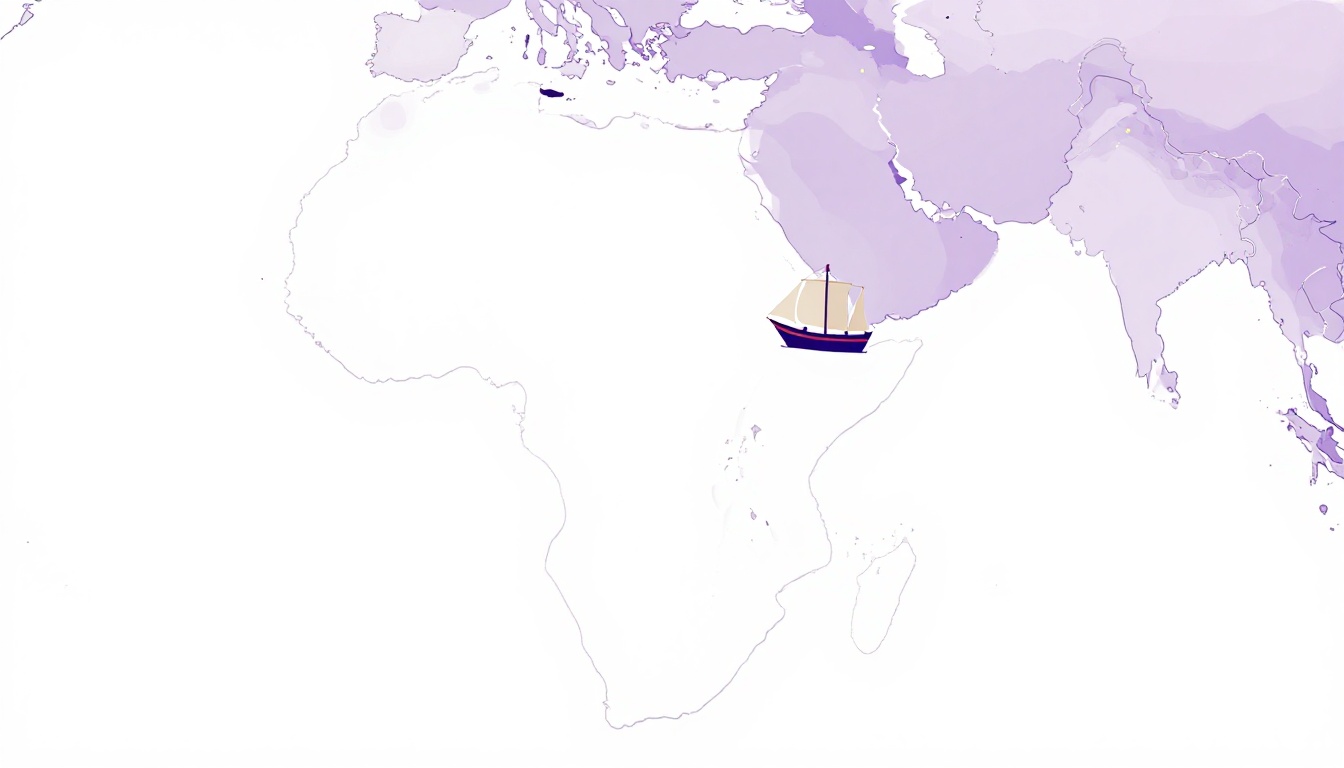
The Six Portuguese-Speaking Countries in Africa, at a Glance
Six countries in Africa list Portuguese as an official language: Angola, Mozambique, Cape Verde, Guinea-Bissau, and São Tomé and Príncipe, plus one country almost nobody expects, Equatorial Guinea. Five of those six were Portuguese colonies for centuries. The sixth adopted Portuguese on paper in 2010, for reasons that have less to do with history and more to do with politics.
That is the short answer. If you only came here for the list, you have it. But the story behind that list is stranger and richer than a single sentence can hold, and if you are learning Portuguese yourself, it changes how you think about the language. Portuguese is not just spoken in Lisbon cafes and Rio de Janeiro beaches. It is the language of Luanda traffic jams, Maputo fish markets, and volcanic islands in the middle of the Atlantic. Together, these five original colonies plus Equatorial Guinea are often called Lusophone Africa, from "Lusitania," the old Roman name for Portugal. According to Wikipedia's overview of Portuguese in Africa, the language now has tens of millions of speakers across the continent, and that number is climbing fast.
Here is the group, side by side, before we dig into each one.
| Country | Capital | Independence Year | Portuguese Speakers | Other Major Languages |
|---|---|---|---|---|
| Angola | Luanda | 1975 | About 45.5% of the population, roughly 16.66 million people | Umbundu, Kimbundu, Kikongo, Chokwe |
| Mozambique | Maputo | 1975 | About 47% speak it as a second language; only around 17% are native speakers | Makhuwa, Sena, and other Bantu languages |
| Cape Verde | Praia | 1975 | Official language, though most people speak Kriolu day to day | Cape Verdean Crioulo (Kriolu) |
| Guinea-Bissau | Bissau | 1974 (declared 1973) | Official language, fluently spoken by a minority | Guinea-Bissau Creole (Kriol) |
| São Tomé and Príncipe | São Tomé | 1975 | Official language | Forro Creole and other local creoles |
| Equatorial Guinea | Malabo | Not a Portuguese colony; adopted Portuguese in 2010 | Barely spoken outside official documents | Spanish, French, plus an Annobonese Portuguese-based creole |
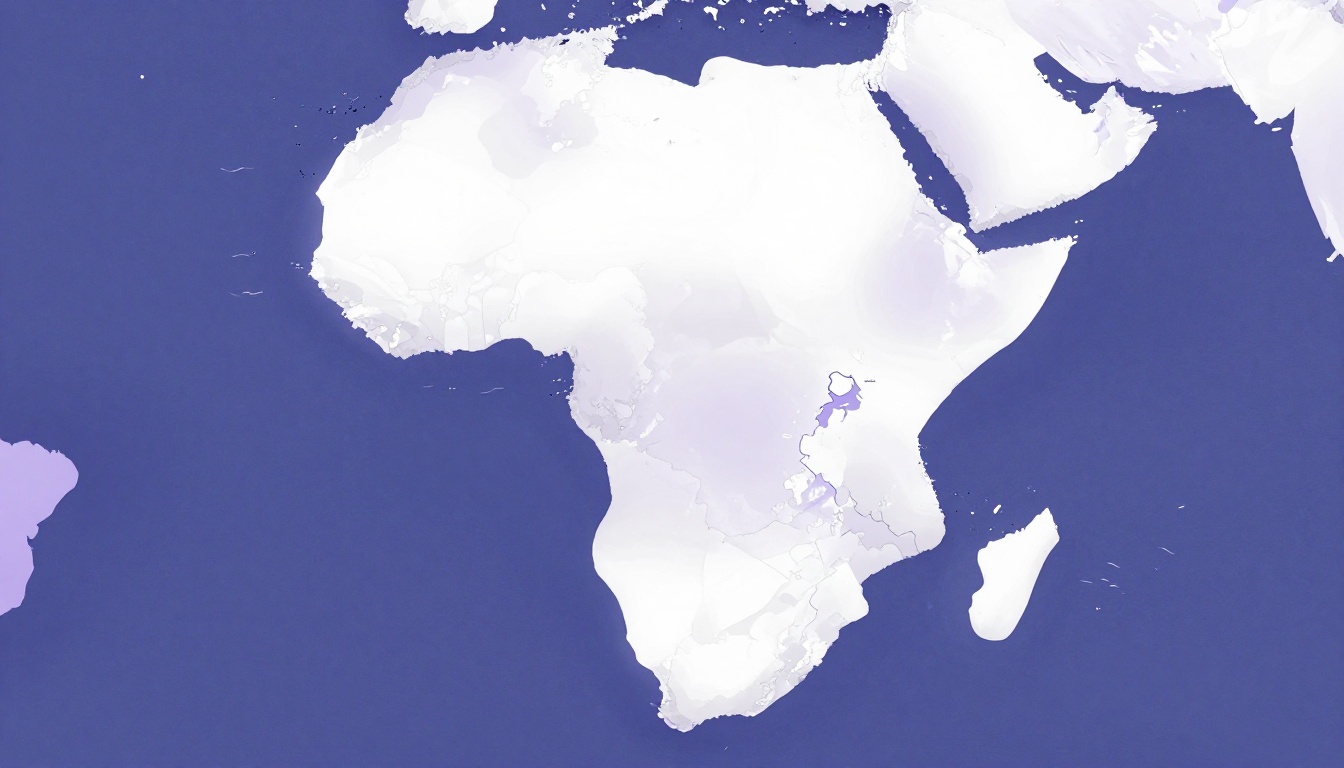
Notice something in that table. None of these countries are neighbors of each other, except loosely by ocean. Angola and Mozambique sit on opposite coasts of southern Africa, one facing the Atlantic, one facing the Indian Ocean. Cape Verde is a cluster of volcanic islands hundreds of miles off the West African mainland. Guinea-Bissau and São Tomé and Príncipe are small, tucked into the bend of West Africa. They share a language, and in most cases a colonial history, but not a border. That is six more places on the map where Portuguese does real work, beyond the two countries most learners picture first, Portugal and Brazil. If you are building your vocabulary from scratch, you can start putting that vocabulary to use with Comigo, which teaches Brazilian Portuguese through speaking out loud instead of just memorizing flashcards, so the words feel useful the moment you learn them.
Angola: The Giant of Lusophone Africa
Angola is the biggest Portuguese-speaking country in Africa by almost every measure that matters. Its capital, Luanda, is a sprawling coastal city whose metro area held close to 8.8 million people as of 2024, making it one of the largest urban areas on the entire continent. The country as a whole had about 36.6 million residents that same year, and Wikipedia's country profile lists it as one of the fastest-growing populations in Africa.
Portuguese sits at the center of Angolan public life, spoken as a first or fluent second language by roughly 16.66 million people, about 45.5% of the population as of the most recent estimates. That is a huge number of speakers for a single African country, and it keeps growing as more young Angolans grow up in cities where Portuguese is the language of school, media, and government. Outside the capital, though, Angola is home to a deep patchwork of Bantu languages: Umbundu in the central highlands, Kimbundu around Luanda, Kikongo in the north, and Chokwe in the east, among others. Many Angolans grow up bilingual, speaking a home language alongside Portuguese.
Angola won its independence on November 11, 1975, ending roughly five centuries of Portuguese colonial presence that dated back to the 1500s. Independence did not bring peace right away. A brutal civil war followed and dragged on for decades, and that history still shapes the country's economy and infrastructure today. What has emerged from it is a Portuguese variety with its own identity. Angolan Portuguese, as linguists call it, has absorbed vocabulary and rhythm from Kimbundu and Umbundu, and its accent tends to sit closer to European Portuguese than to the Brazilian Portuguese most language apps teach. If you have only ever heard a Brazilian accent, an Angolan speaker can sound almost like a different language at first, tighter vowels, a faster clip, words borrowed from Bantu languages sprinkled into ordinary sentences.
Angola has also given the world kizomba, a slow, sensual dance and music style born in Luanda in the 1980s that blends semba rhythms with Caribbean zouk. Kizomba spread far beyond Angola's borders and now has dance communities in Europe, Brazil, and across Africa, one small proof of how culture, not just colonial paperwork, carries a language outward.
Mozambique: Portuguese on the Indian Ocean Coast
Flip to the other side of southern Africa and you land in Mozambique, the only country on this list facing the Indian Ocean instead of the Atlantic. That geography matters. Centuries of trade with Arab merchants, Indian traders, and later British colonial neighbors gave Mozambique a cultural flavor distinct from its Atlantic-facing cousins, even though it shares the same colonial language.
Maputo, the capital, had a metro population around 1.23 million as of 2025, a mid-sized capital by African standards. The country overall was home to about 34.9 million people in 2024, according to Mozambique's Wikipedia entry. Portuguese fluency here tells a more complicated story than the headline number suggests. A 2017 census found that about 47.4% of Mozambicans aged five and older could speak Portuguese, but only around 16.6% of the population speaks it as a first language at home. Other counts, drawing on 2020 data, put the number of Portuguese speakers closer to 5.26 million, or about 17% of the population, a figure widely cited on Wikipedia's page on the languages of Mozambique. Either way, the pattern is clear: Portuguese is the language of school, government, and national media, while millions of Mozambicans grow up speaking Makhuwa, Sena, or one of dozens of other Bantu languages first, and pick up Portuguese later.
Mozambique became independent on June 25, 1975, after a long armed struggle against Portuguese colonial rule that had begun in earnest in the 1960s. Unlike Angola, whose post-independence war dragged on for almost three decades, Mozambique's own civil conflict eventually gave way to a fragile but lasting peace, and the country has spent recent decades rebuilding.
Musically, Mozambique is known for marrabenta, an upbeat guitar-driven dance style that grew out of Maputo's neighborhoods in the mid-20th century and remains a symbol of national identity. Along the coast, wooden dhows still sail the same waters that once carried Swahili and Arab traders past islands like Mozambique Island, a UNESCO World Heritage town whose old stone architecture is a physical record of centuries of trade between Africa, the Arabian Peninsula, and beyond.
Cape Verde: Islands Where Everyone Speaks Two Languages at Once
Cape Verde, officially Cabo Verde, is nothing like the mainland countries on this list. It is a nation of volcanic islands scattered in the Atlantic Ocean roughly 385 miles off the coast of Senegal, with a total population just over half a million people. Praia, on the island of Santiago, is the capital and largest city.
Here is what makes Cape Verde unusual among the Lusophone African countries: almost everyone speaks Portuguese, and almost nobody uses it as their first language at home. Portuguese is the official language, the language of schools, courts, and formal writing, but the true everyday language of the islands is Cape Verdean Crioulo, often called Kriolu. It is a Portuguese-based creole that developed centuries ago as enslaved Africans and Portuguese settlers on the islands built a shared way to communicate, blending Portuguese vocabulary with West African grammar and rhythm. Wikipedia's entry on Cape Verdean Creole describes it as one of the oldest and most stable Portuguese-based creoles in the world, and it varies noticeably from island to island.
Cape Verde's independence came on July 5, 1975, following an election for the country's National Assembly on June 30 of that year. The islands had been a Portuguese territory since the 1400s and served for centuries as a hub in the Atlantic slave trade, a painful chapter of history that still shapes conversations about the country's past today.
Musically, Cape Verde is inseparable from morna, a slow, melancholic style often compared to Portuguese fado or the blues, sung mostly in Kriolu. The genre found its most famous voice in Cesária Évora, the barefoot singer from the island of São Vicente whose warm, aching voice carried morna to concert halls around the world in the 1990s and made "Sodade," a song about longing and distance, into something close to an unofficial national anthem.

Guinea-Bissau and São Tomé and Príncipe: The Smaller Members of the Group
Two more countries round out the original five, and both are easy to overlook simply because of their size.
Guinea-Bissau sits wedged on West Africa's coast between Senegal and Guinea, with a capital, Bissau, whose city population sits around 492,000. Portuguese is the official language, used in government and formal education, but daily life runs on Guinea-Bissau Creole, locally called Kriol. According to Wikipedia's page on Guinea-Bissau Creole, Kriol functions as the country's true lingua franca, spoken and understood far more widely than standard Portuguese itself, which remains fluent only among a minority of the population, mostly the educated and urban class. Guinea-Bissau also holds a notable distinction on this list: it was the first to break from Portugal, unilaterally declaring independence in 1973 during a drawn-out guerrilla war, with that independence formally recognized on September 10, 1974, months before the other four followed. The country has struggled with political instability in the decades since, but its cultural identity, expressed through Kriol, music, and its cashew-farming economy, remains distinct and resilient.
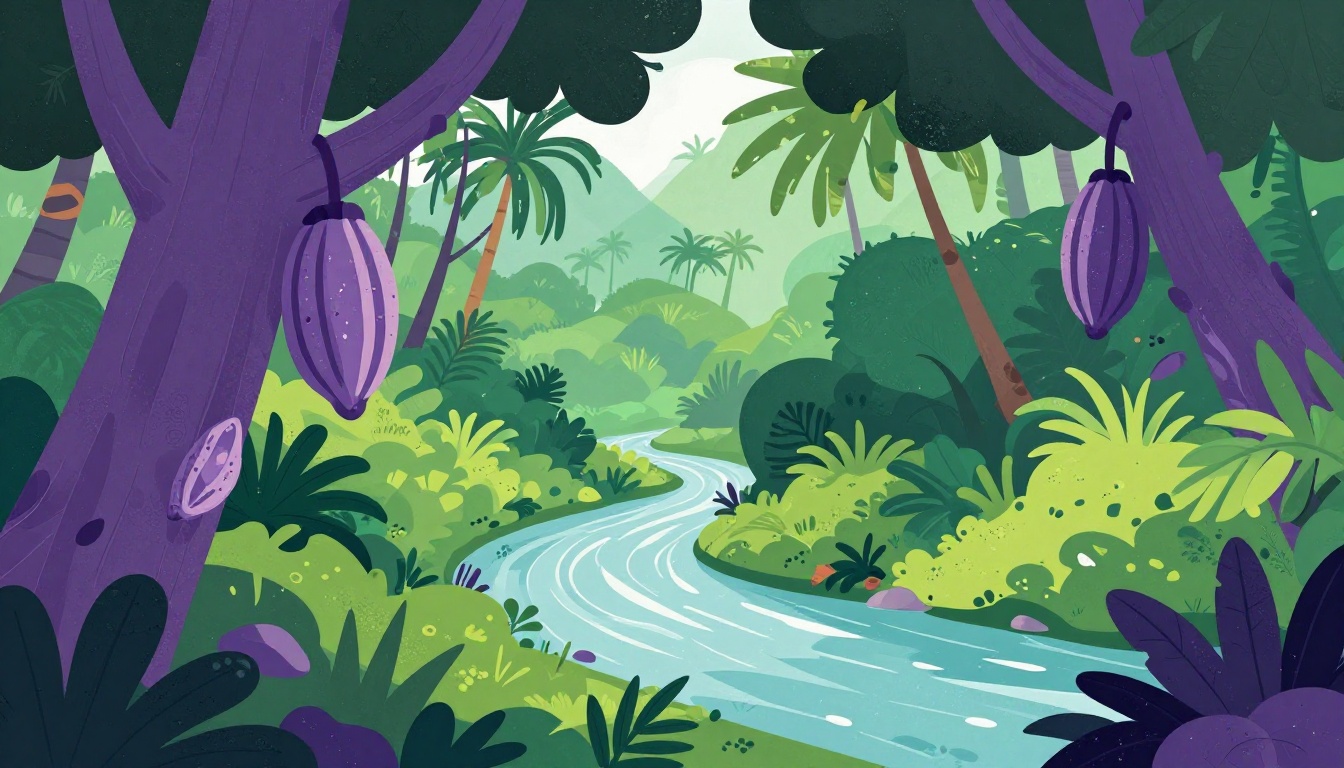
Then there is São Tomé and Príncipe, the smallest country on this entire list and, geographically, one of the smallest in Africa. It is a pair of volcanic islands sitting in the Gulf of Guinea, close to the equator, with a total population in the low hundreds of thousands. Portuguese is the official language, but historically, around 85% of islanders on São Tomé grew up speaking Forro Creole, sometimes called Santome, as their home language, a creole that developed on plantations centuries ago and carries its own literature and oral tradition. Wikipedia's entry on Forro Creole traces its roots back to the earliest Portuguese settlement of the islands in the late 1400s. São Tomé and Príncipe became independent on July 12, 1975. Economically, the islands are best known for cacao, once among the world's largest producers, and cacao farms still dot the lush, humid interior today, a green, tangled landscape a world away from Angola's savanna or Cape Verde's volcanic bluffs.
Equatorial Guinea: The Country That Was Never a Portuguese Colony
Here is where most people searching for this topic get confused, and honestly, it is a fair thing to be confused about.
Equatorial Guinea is not, and never was, a Portuguese colony. It spent centuries as a Spanish territory, and its two long-standing official languages are Spanish and French. So why does it keep showing up on lists of "countries in Africa that speak Portuguese"?
The answer is bureaucratic, not linguistic. On July 20, 2010, Equatorial Guinea's government formally adopted Portuguese as a third official language. The move had little to do with actual usage inside the country and everything to do with membership in the Community of Portuguese Language Countries, known by its Portuguese acronym CPLP, a club of nations that, at the time, required an official Portuguese-speaking status to join. Global Voices covered the announcement when it happened, noting the widespread skepticism about whether the move reflected any real linguistic shift on the ground.
It did not go smoothly. Portuguese and Mozambican civil society groups petitioned against Equatorial Guinea's CPLP membership bid, pointing to the long-ruling Obiang government's human rights record, and the organization rejected the application both in 2010 and again in 2012. A follow-up Global Voices piece from 2012 laid out the controversy in detail, including accusations that adopting Portuguese was a symbolic gesture meant to paper over deeper governance concerns. The CPLP finally relented and admitted Equatorial Guinea as a full member at its 2014 summit held in Dili, the capital of East Timor, on July 23 of that year.
Today, Wikipedia's page on Equatorial Guinea is blunt about the outcome: Portuguese is barely spoken by ordinary Equatoguineans in daily life. It exists mostly on paper, in official documents and school curricula that have been slow to take root. The one real exception is on the tiny island of Annobón, where a Portuguese-based creole, distinct from mainland Spanish and French, has been spoken for generations, a linguistic leftover from the island's earlier Portuguese colonial period before it was traded to Spain in the 1700s. Linguists studying this variety sometimes refer to it as Equatoguinean Portuguese, though its everyday reach remains tiny compared with the five countries that were genuinely colonized by Portugal.
So if you are counting "countries where people actually grow up speaking Portuguese," the honest number is five. If you are counting "countries where Portuguese is an official language," the number is six, with an asterisk next to the sixth.
Lusophone African Literature and Culture
Numbers and census reports only tell part of the story. Some of the best evidence that Portuguese is a living, breathing African language sits on bookshelves, not in government data.
Mozambique's Mia Couto is probably the best known name here, and for good reason: he is widely considered the most translated Portuguese-language author to come out of Africa, with his novels appearing in dozens of languages worldwide. Born in the coastal city of Beira in 1955, in a country covered above in Mozambique's own profile, Couto writes in a style critics call magical realism, blending ordinary Mozambican life with folklore, ghosts, and dreamlike logic. His 1992 novel "Sleepwalking Land," originally published as "Terra Sonâmbula," follows an old man and a boy wandering a war-ravaged countryside, and it is frequently named among the most important novels to come out of postcolonial Africa, in Portuguese or any other language.
Angola has produced an equally striking literary voice in José Eduardo Agualusa. Born in the central Angolan city of Huambo in 1960, Agualusa built a career turning Angola's tangled colonial and post-colonial history into fiction that reads like something between a dream and a newspaper report. His novel "The Book of Chameleons" won the Independent Foreign Fiction Prize in 2007, a major award for a work translated into English, and another of his novels, "Creole," known as "Nação Crioula" in the original Portuguese, took home the Portuguese Grand Prize for Literature. Angola has also given the Portuguese-speaking world one of its most respected poets, Ana Paula Tavares, whose work has earned her the Camões Prize, widely considered the single most prestigious literary award anywhere in the Portuguese language, something close to the Nobel Prize of the Lusophone world.
None of this is only for literature students. If you already have some Portuguese vocabulary under your belt, whether from basic word lists or months of practice, translated African fiction is one of the most enjoyable ways to hear a different regional voice than whatever textbook or app got you started. The words, rhythm, and imagery in a Mia Couto or Agualusa novel sound nothing like a Lisbon news broadcast, and that contrast is exactly the point: it shows you how far this one language actually stretches once you learn to hear the regional differences instead of getting thrown off by them.
Why Portugal Ended Up With So Many African Colonies
None of this happened by accident, and it did not happen quickly either. The roots go back to 1415, when Portuguese forces captured Ceuta, a port city in North Africa, marking what historians often treat as the opening move of the Age of Discovery. The driving force behind Portugal's push down the African coast was Prince Henry the Navigator, who lived from 1394 to 1460 and sponsored decades of voyages even though, famously, he rarely sailed himself. World History Encyclopedia's collection on Portugal's Age of Exploration lays out how Henry's court in the Algarve became a hub for cartographers, shipbuilders, and sailors chasing a single goal: find a sea route around Africa to reach the riches of Asia directly, bypassing the overland trade routes controlled by Middle Eastern and Italian merchants.
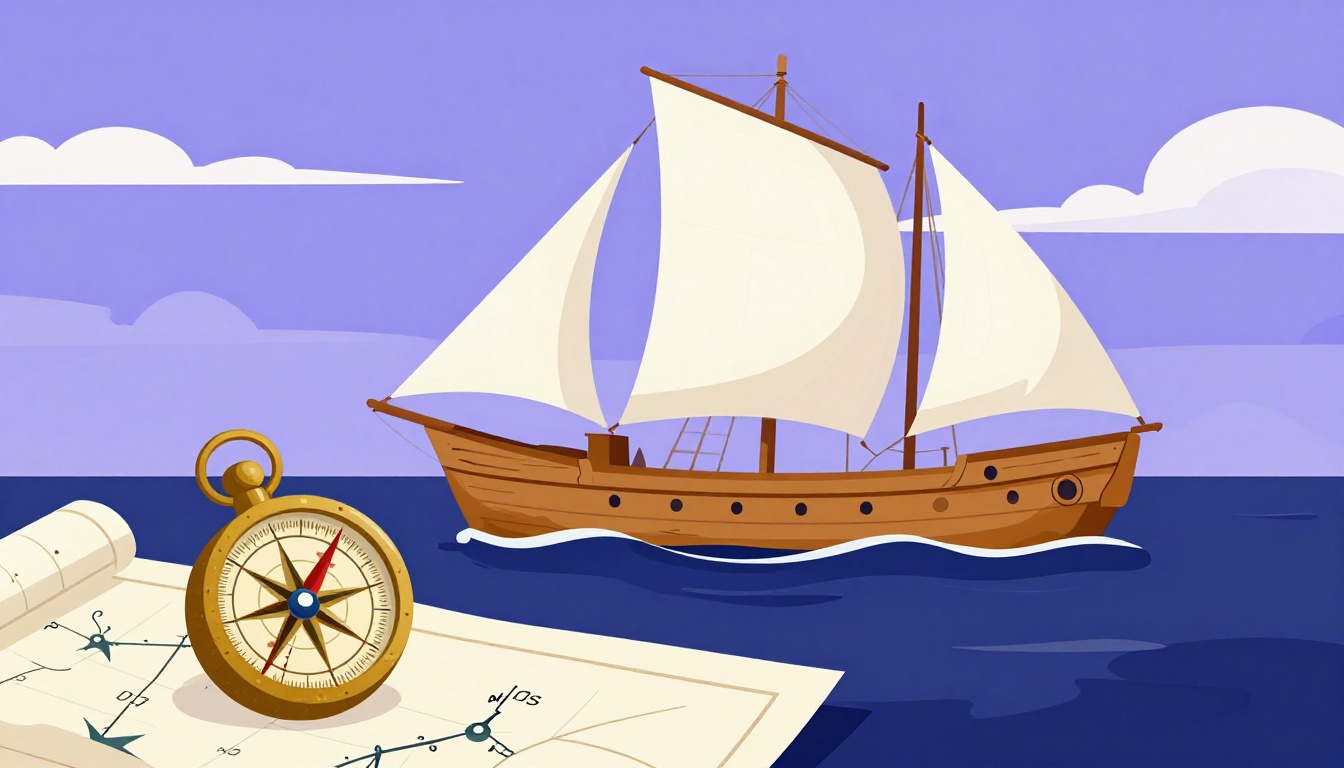
Henry ran that effort from his residence at Sagres, on the windswept southwestern tip of the Algarve, where sailors, mapmakers, and shipbuilders gathered to plan each voyage a little farther down the African coast than the last. The real breakthrough was not just ambition, it was engineering. Portuguese shipbuilders developed the caravel, a small, light vessel with triangular lateen sails that could sail closer to the wind than the bulky ships of the time, which made it possible to explore unfamiliar coastlines and still sail home again against the prevailing wind. Without the caravel, the sea route that eventually connected Lisbon to the far corners of the Portuguese Empire might never have been mapped at all.
Portuguese ships crept down the African coast decade by decade, trading for gold and establishing fortified posts as they went, long before anyone in Lisbon had a full map of the continent's shape. Eventually, in 1488, Bartolomeu Dias rounded the southern tip of Africa, and a decade later Vasco da Gama used that route to reach India, opening a direct sea link between Europe and Asia that would reshape global trade for centuries. Along that long coastal path, Portugal planted trading posts and, later, full colonial administrations: on the islands that became Cape Verde, along the coast that became Guinea-Bissau, on the volcanic islands that became São Tomé and Príncipe, down through what became Angola, and around the continent's edge to Mozambique on the Indian Ocean side. Wikipedia's overview of the Portuguese Empire describes it as one of the longest-lived colonial empires in history, stretching from the 1400s all the way to the 1970s in some territories, nearly 500 years in places like Angola.
It is worth being plain about what that meant. These were not friendly trading arrangements between equals. They were colonies, built and maintained through conquest, forced labor, and, for centuries, the transatlantic slave trade that routed through ports like those in Cape Verde and São Tomé. The Portuguese language spread through Africa because Portugal's colonial administration imposed it as the language of law, church, and commerce, not because African communities chose it freely. That history is the uncomfortable backbone of everything else in this article, and it is worth sitting with for a moment before moving on to how it ended.
Independence and the Carnation Revolution
For most of the 20th century, Portugal held onto its African colonies more tightly than other European powers held theirs. While Britain and France were granting independence to most of their African territories through the 1950s and 1960s, Portugal, under the long dictatorship of António de Oliveira Salazar and later Marcelo Caetano, refused to let go, fighting costly colonial wars in Angola, Mozambique, and Guinea-Bissau throughout the 1960s and into the 1970s.
That changed almost overnight in 1974. On April 25 of that year, a group of military officers in Lisbon, exhausted by years of unwinnable colonial wars, staged a nearly bloodless coup that became known as the Carnation Revolution, so named because citizens reportedly placed carnations in soldiers' rifle barrels as the old regime collapsed. The new government moved fast to end the colonial wars and decolonize, and within about a year, all five of Portugal's African colonies gained independence: Guinea-Bissau's independence was recognized that September, followed by Cape Verde, Mozambique, São Tomé and Príncipe, and finally Angola in November 1975. Wikipedia's list of countries that gained independence from Portugal lays the whole timeline out country by country, and the tight clustering of dates, five countries in about fourteen months, is a direct result of that one political turning point in Lisbon.
The speed of it all left deep scars. Newly independent governments inherited colonial-era institutions built for extraction, not self-rule, and several of these countries, Angola and Mozambique especially, tumbled almost immediately into civil wars that outside powers fed with Cold War arms and money. Decades later, the language Portugal left behind is one of the few threads tying these nations together, alongside painful memories of how that language arrived.
What the CPLP Is, and Why It Still Matters
Out of that shared history grew a modern institution: the Community of Portuguese Language Countries, founded on July 17, 1996, at a summit in Lisbon. Portuguese speakers often call it the CPLP, from its Portuguese name, Comunidade dos Países de Língua Portuguesa.
The organization now counts nine full member states, spread across four continents. Wikipedia's list of CPLP member states names them: Angola, Brazil, Cape Verde, Equatorial Guinea, Guinea-Bissau, Mozambique, Portugal, São Tomé and Príncipe, and Timor-Leste, also called East Timor, a small nation in Southeast Asia that was also once a Portuguese colony. Together, the CPLP's own overview puts the combined population of member states at roughly 290 million people, a bloc that spans Africa, the Americas, Asia, and Europe.
In practice, the CPLP works a bit like a smaller, Portuguese-language version of the Commonwealth: it promotes cooperation on education, culture, and diplomacy, coordinates positions on issues affecting Portuguese speakers globally, and occasionally weighs in on political crises within member states. It is far from a perfect institution, as Equatorial Guinea's contested membership bid shows, but it is the closest thing Lusophone Africa has to a shared table, a place where a diplomat from Luanda, a diplomat from Lisbon, and a diplomat from Dili can sit down and, in theory, understand each other without an interpreter.
How Many Countries Speak Portuguese in Total?
Zoom out past just Portuguese in Africa for a second, because this is a question people ask right alongside "which African countries speak Portuguese," and the answer puts everything above into perspective.
Portuguese holds official status in nine sovereign countries: the five Lusophone African nations covered above, plus Brazil, Portugal, Equatorial Guinea, and Timor-Leste, a small nation in Southeast Asia and, like the African members, a former Portuguese colony. There is also one more place worth knowing about: Macau, a special administrative region of China where Portuguese remains co-official alongside Cantonese, a legacy of more than four centuries of Portuguese administration before the territory returned to Chinese control in 1999. Macau is not a sovereign state, which is exactly why the CPLP counts nine members rather than ten.
| Country or Territory | Continent | Status |
|---|---|---|
| Brazil | South America | Sovereign, CPLP member |
| Portugal | Europe | Sovereign, CPLP member |
| Angola | Africa | Sovereign, CPLP member |
| Mozambique | Africa | Sovereign, CPLP member |
| Cape Verde | Africa | Sovereign, CPLP member |
| Guinea-Bissau | Africa | Sovereign, CPLP member |
| São Tomé and Príncipe | Africa | Sovereign, CPLP member |
| Equatorial Guinea | Africa | Sovereign, CPLP member |
| Timor-Leste | Asia | Sovereign, CPLP member |
| Macau | Asia | Special administrative region of China, Portuguese co-official |
Add all of that up, native speakers plus everyone who learned it as a second language, and estimates for the Portuguese-speaking world land somewhere between 260 and 280 million people, enough to make Portuguese the fifth most spoken native language on the planet. Brazil dwarfs every other country on that list, accounting for roughly 78% of all Portuguese speakers worldwide. Angola comes in a distant second at around 9.5%, followed by Mozambique at about 7.2% and Portugal itself at roughly 3.9%. Put plainly, most Portuguese speakers alive today have never set foot in Portugal, and as the population trends discussed later in this article suggest, that gap is only going to widen.
Lusophone Africa vs. Francophone and Anglophone Africa
If you have spent any time reading about African geography or politics, you have probably run into the terms "Francophone Africa" and "Anglophone Africa" as well. They describe the same basic idea as "Lusophone Africa," just built around a different colonial language.
| Language Zone | Colonial Power | Example Countries | Rough Country Count |
|---|---|---|---|
| Lusophone Africa | Portugal | Angola, Mozambique, Cape Verde, Guinea-Bissau, São Tomé and Príncipe | 5 (plus Equatorial Guinea by adoption) |
| Francophone Africa | France, Belgium | Senegal, Ivory Coast, Democratic Republic of Congo, Mali, Cameroon | Around 20+ |
| Anglophone Africa | United Kingdom | Nigeria, Kenya, South Africa, Ghana, Uganda | Around 20 |
Portuguese is, by most counts, the third-largest European colonial language footprint in Africa, well behind French and English in the number of countries, but with real weight in raw speaker numbers thanks to Angola and Mozambique's large, fast-growing populations. Wikipedia's broader page on the Portuguese-speaking African countries frames Lusophone Africa as smaller but culturally distinct, tied together by language, music, cuisine, and a shared colonial and post-colonial history that looks quite different from the French or British experience.
Do People Actually Speak Portuguese Day to Day, or Just Officially?
This is probably the most useful question buried inside the keyword "countries in Africa that speak Portuguese," because the honest answer is: it depends enormously on the country, and on the difference between "official" and "everyday."
In Angola, Portuguese genuinely is an everyday language for a large and growing share of the population, especially in cities. In Mozambique, it is closer to a second language learned at school, layered on top of a Bantu mother tongue spoken at home, as the data on Mozambique's languages makes clear. In Cape Verde, Guinea-Bissau, and São Tomé and Príncipe, the pattern flips again: Portuguese is the formal, official language you use with government offices and in writing, while a Portuguese-based creole, Kriolu, Kriol, or Forro, is what people actually speak with their families, friends, and neighbors. And in Equatorial Guinea, Portuguese barely functions as a living language at all outside of paperwork and a single small island community.
None of that makes the "six countries" answer wrong. It just means the keyword hides a more layered reality, one where a single word, "speak," can mean anything from "grew up speaking it at home" to "learned it in school and uses it for official business" to "adopted it on paper for diplomatic reasons." If you remember one thing from this section, make it this: official status and everyday use are two different things, and Lusophone Africa is a good reminder of exactly how different they can be.
African Portuguese vs. Brazilian and European Portuguese
If you are learning Portuguese and wondering which version you are actually studying, here is the short version: most apps, including most courses aimed at English speakers, teach Brazilian Portuguese, because Brazil has by far the largest number of native speakers in the world. African Portuguese varieties sit in an interesting middle ground.
Linguists generally describe African Portuguese, whether Angolan or Mozambican, as phonologically closer to European Portuguese than to Brazilian Portuguese. That makes sense once you think about the timeline. Brazil became independent from Portugal all the way back in 1822, so Brazilian Portuguese has had two centuries to drift and evolve on its own, shaped by Indigenous languages, African languages brought by enslaved people, and waves of European and Asian immigration. African countries, by contrast, only became independent in 1975, so their Portuguese had far less time to separate from the European standard and was shaped more directly by contact with 20th-century European Portuguese through school systems and media right up until independence. Wikipedia's page on Portuguese dialects breaks down these regional differences in more technical detail, covering everything from vowel reduction to rhythm.
That said, it is not a clean split. In some patterns of vowel reduction, Angolan Portuguese actually resembles Brazilian Portuguese more closely than European Portuguese does, a reminder that language families rarely sort themselves into neat boxes. On top of the European-versus-Brazilian question, every African country has layered its own local flavor onto the language: Angolan Portuguese has absorbed words and cadences from Kimbundu and Umbundu, Mozambican Portuguese carries traces of Bantu grammar, and so on. A word an Angolan uses without a second thought might draw a blank stare in São Paulo, and vice versa.
None of this should scare you off. If anything, it is a good argument for learning the fundamentals well rather than obsessing over which accent is "correct," because once your ear is trained on the core grammar and vocabulary, you can adjust to a new accent far faster than you can build that foundation from zero. That is exactly the approach Comigo takes: it teaches Brazilian Portuguese through speaking practice, games, and conversation with friends, so the sounds and rhythms of the language become second nature, the kind of base that travels well whether the person across the table grew up in Rio, Luanda, or Lisbon.

Will Portuguese Become More Spoken in Africa Than in Europe?
Here is a genuinely interesting projection, and it is worth flagging clearly as a projection, not a settled fact. Angola and Mozambique both have young populations and high birth rates, growing much faster than Portugal's aging, shrinking population or, for that matter, most of Europe. Demographers who study the future of the Portuguese-speaking world have pointed out that if current growth trends hold, the number of Portuguese speakers living in Africa could eventually rival, and possibly surpass, the number living in Portugal itself, and some longer-range projections even suggest most Portuguese speakers worldwide could end up living in Africa by the second half of this century. Wikipedia's page on the Portuguese-speaking world touches on these long-term demographic shifts, though as with any population projection decades out, treat the exact numbers as informed estimates rather than certainties.
Whether or not the precise math holds up, the direction of the trend is hard to miss. Lusophone Africa is young, urbanizing, and growing, while Lusophone Europe is aging and shrinking. If you are learning Portuguese today for long-term reasons, career, travel, family, that shift is one more reason the language is a smart bet for the next few decades, not a shrinking niche.
Is Portuguese the Official Language of Any Other African Country?
No. Beyond the five original PALOP countries, the countries formally recognized as Países Africanos de Língua Oficial Portuguesa, and Equatorial Guinea's 2010 addition, no other African nation lists Portuguese as an official language. You will find Portuguese-speaking communities and pockets of Portuguese heritage scattered elsewhere on the continent, small legacies of old trading posts or missionary schools, but nowhere else does it carry official government status the way it does in these six countries.
It is also worth clearing up a related mix-up. Some travelers assume Namibia or South Africa might have Portuguese ties because they border Angola, but both countries run on English and other official languages entirely separate from Portuguese, aside from small immigrant communities. The Lusophone club in Africa really is limited to the six names on this list, nothing more.
Football: Another Way to Hear Portuguese in the Wild
If reading translated novels feels like a big commitment, there is a much lower-pressure way to hear African Portuguese in action: turn on a football match.
Angola's only appearance at a FIFA World Cup came in 2006, when the Angolan national team shocked plenty of people by holding Portugal, its former colonial ruler, to a scoreless draw in the group stage before being eliminated. It remains one of the most talked-about moments in the country's sporting history, a former colony and its old colonizer facing off on a football pitch and walking away even.
Cape Verde went one better. In October 2025, the Cape Verdean national team sealed qualification for the 2026 FIFA World Cup for the first time in the country's history, beating Eswatini 3-0 on October 13 to clinch the spot. The achievement made headlines well beyond sports pages: Cape Verde became the smallest country by land area, and the second least populated nation after Iceland, ever to qualify for a men's World Cup. For an island nation of roughly half a million people, that is a genuinely enormous accomplishment, and it sent the whole country, plus its large diaspora communities abroad, into celebration.
You do not need to understand every word a commentator shouts to enjoy that kind of moment, and honestly, that is exactly why football is such a good listening tool for learners. Announcers repeat the same handful of phrases over and over, goal calls, player names, simple exclamations, so your ear starts recognizing patterns fast. You will catch friend in Portuguese, amigo, shouted between teammates celebrating a goal, and you will not need a dictionary to understand exactly what the crowd means when it roars yes in Portuguese, sim, the instant the ball hits the net. Two national teams from the wider group of Portuguese-speaking African countries carrying the language onto one of the biggest stages in the world is as good a reminder as any that Lusophone Africa is not some obscure footnote.
Why This Matters If You Are Learning Portuguese
Here is the part that should actually change how you think about studying this language. When you picture "a Portuguese speaker," your mind probably jumps to Rio de Janeiro or Lisbon. Fair enough, those are the two biggest, most visible Portuguese-speaking cultures in the world. But the moment you widen the picture to include Lusophone Africa, the language stops feeling like it belongs to two countries and starts feeling like what it actually is: a genuinely global language, spoken across four continents, carried by hundreds of millions of people with wildly different accents, foods, music, and histories.
That matters for a few practical reasons. First, it means more places to actually use the language if you travel, more communities to connect with if you live somewhere with Angolan or Mozambican immigrants, and more music, film, and literature to explore once you can understand it. Second, it is a reminder that "learning Portuguese" does not mean chasing one perfect, unchanging accent. Real Portuguese speakers sound different from Luanda to Lisbon to São Paulo, and that variation is a feature of a living language, not a flaw in your learning. You do not need to master every regional accent before you start, you just need a solid foundation you can build on wherever you end up using it.
If you are starting from zero, or you have tried and stalled out before, is Portuguese actually hard to learn is a fair question to ask honestly before you commit real time to it, and the answer is more encouraging than most people expect. Once you are ready to build real vocabulary, a guide to basic words in Portuguese or a rundown of common Portuguese sayings is a good place to start layering in the phrases native speakers actually use, alongside the fundamentals like numbers, days of the week, and months of the year that show up in almost every early conversation. If you want to hear how someone else actually stuck with it, this account of how one learner picked up Portuguese walks through what worked and what did not, and if budget is a concern, there is also a full guide to learning Portuguese for free. Curious how Portuguese stacks up against other languages people attempt? Check the list of the hardest languages for English speakers to learn for some context, or if Brazil specifically is on your radar, there is a dedicated guide to learning Brazilian Portuguese in Brazil.
Whichever accent you end up hearing first, Angolan, Mozambican, Brazilian, or European, the words themselves will carry you a long way. Learning to say how are you in Portuguese or, eventually, I love you in Portuguese works the same whether the person listening grew up in Luanda or Lisbon. Small talk opens the same doors everywhere. The same goes for the small survival phrases you will actually lean on while traveling: knowing how to say thank you in Portuguese or ask for water in Portuguese gets you just as far in a Cape Verdean market as it does in a São Paulo restaurant.
Six countries in Africa carry this language forward, each in its own accent, each shaped by its own history, music, and daily life. If reading about them has you itching to actually speak some Portuguese instead of just reading about where it is spoken, that is the whole point. You do not need to wait until a trip to Angola or Cape Verde is booked to start. You can open Comigo right now and start speaking out loud, playing through short games, and practicing real conversations with friends, building the same language that connects a fishing village in Mozambique to a music hall in Cape Verde to wherever you happen to be sitting today.

Related guides
- BoldVoice vs ELSA SpeakBoldVoice vs ELSA Speak: accent coaching, feedback quality, price and which to pick.
- Rosetta Stone vs BabbelRosetta Stone vs Babbel: price, method and which one to pick.
- italki vs Preplyitalki vs Preply: pricing models, tutors and which is better.
- Busuu vs DuolingoBusuu vs Duolingo: which app actually teaches more.