How Do Portuguese People Celebrate Christmas? A Quick Overview
Picture Christmas in Portugal and you probably imagine something close to the version you already know: a tree, some lights, maybe a turkey. You'd be half right. Portuguese Christmas does happen on December 25, and there is a tree in most homes now too. But the emotional center of the holiday sits a full day earlier, on the night of December 24, around a table loaded with salted fish instead of a roast bird. That single fact surprises most people the first time they hear it, and it's the key to understanding everything else about how the holiday actually works.
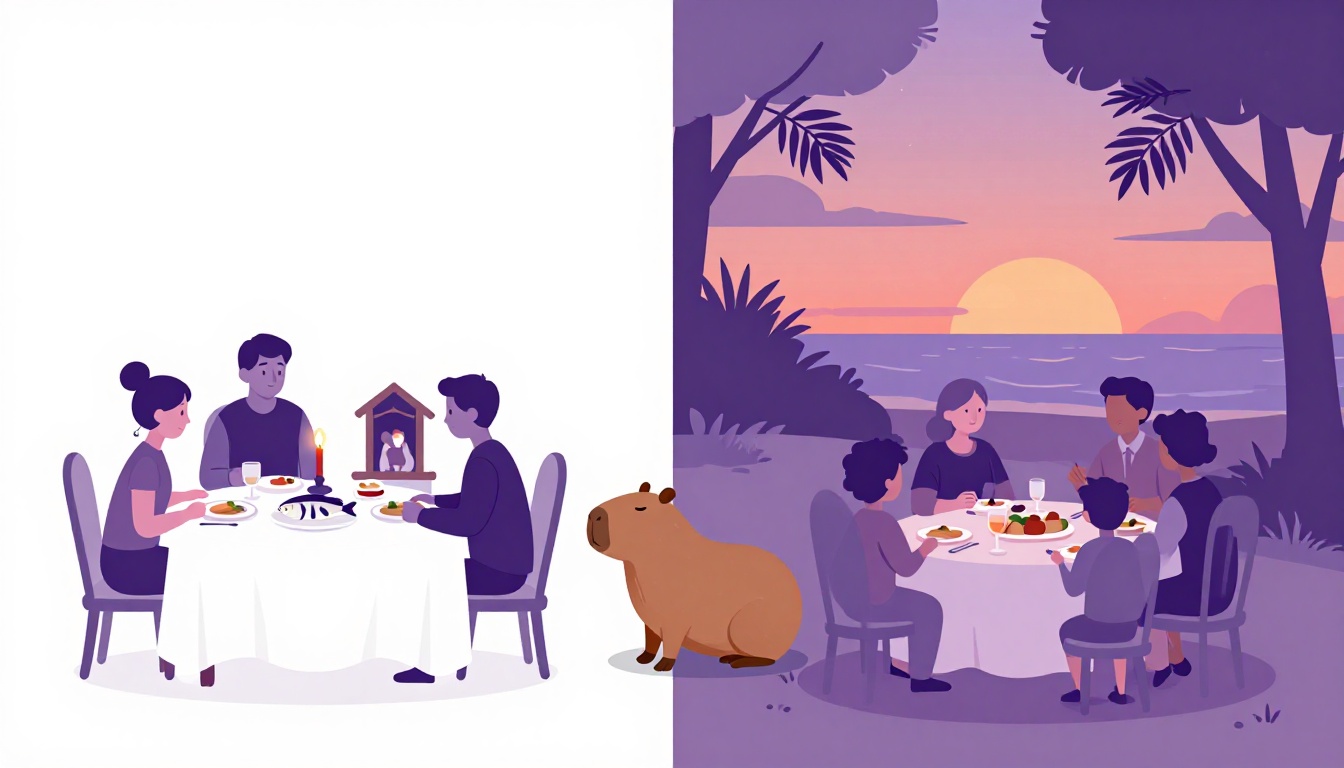
Portugal spreads its Christmas across two connected nights and two very different moods. December 24 is "Consoada," a quiet, almost sacred family dinner followed by midnight mass. December 25 is looser, a day for visiting grandparents and eating leftovers, according to Portugal.com's rundown of the season. And if you widen the lens to Brazil, where the same religion and the same language produced a wildly different holiday shaped by summer heat and beach sand, you start to see how much "Portuguese Christmas" actually contains. This guide walks through both versions: the meal, the mass, the presents, the desserts, the words you'll want if you're trying to wish someone well in Portuguese, and the exact day the whole season quietly ends.
Maybe you're studying Portuguese and want context for the words you keep running into every December. Maybe you're dating someone whose family does one of these two versions, and you'd rather not show up clueless. Either way, the questions are usually the same ones: when do the presents actually come out, what's really on the table, and why does everyone keep saying "Missa do Galo" like you're supposed to already know what that means. None of it is complicated once someone walks you through it in plain language, one tradition at a time, starting with the meal that anchors the whole night.
Consoada: Portugal's Christmas Eve Feast Comes First
"Consoada" is the word for the Christmas Eve supper, and in Portugal it carries more emotional weight than Christmas Day itself. The name comes from an old word for a late-night meal eaten before a fast or a long journey, and that origin still shapes the mood: this is a meal eaten slowly, with everyone who matters to you gathered at the same table, right before the biggest night of the religious calendar. According to Portugal: The Simple Life's overview of the holiday, families treat Consoada as the true climax of Christmas, with December 25 functioning almost like an encore.
If you grew up somewhere that treats December 25 as the main event, this can be a genuinely strange thing to wrap your head around. There's no single big gift-opening moment planned for Christmas morning, no build-up to a Christmas Day feast that outshines everything before it. The good dishes come out on the 24th. The whole extended family often travels to be there for the 24th. Even church, in the form of midnight mass, happens on the night of the 24th, spilling just barely into the 25th. Christmas Day itself, once it arrives, is comparatively relaxed, a day for visiting people you didn't see the night before, according to that same Portugal.com feature on Portuguese Christmas traditions.
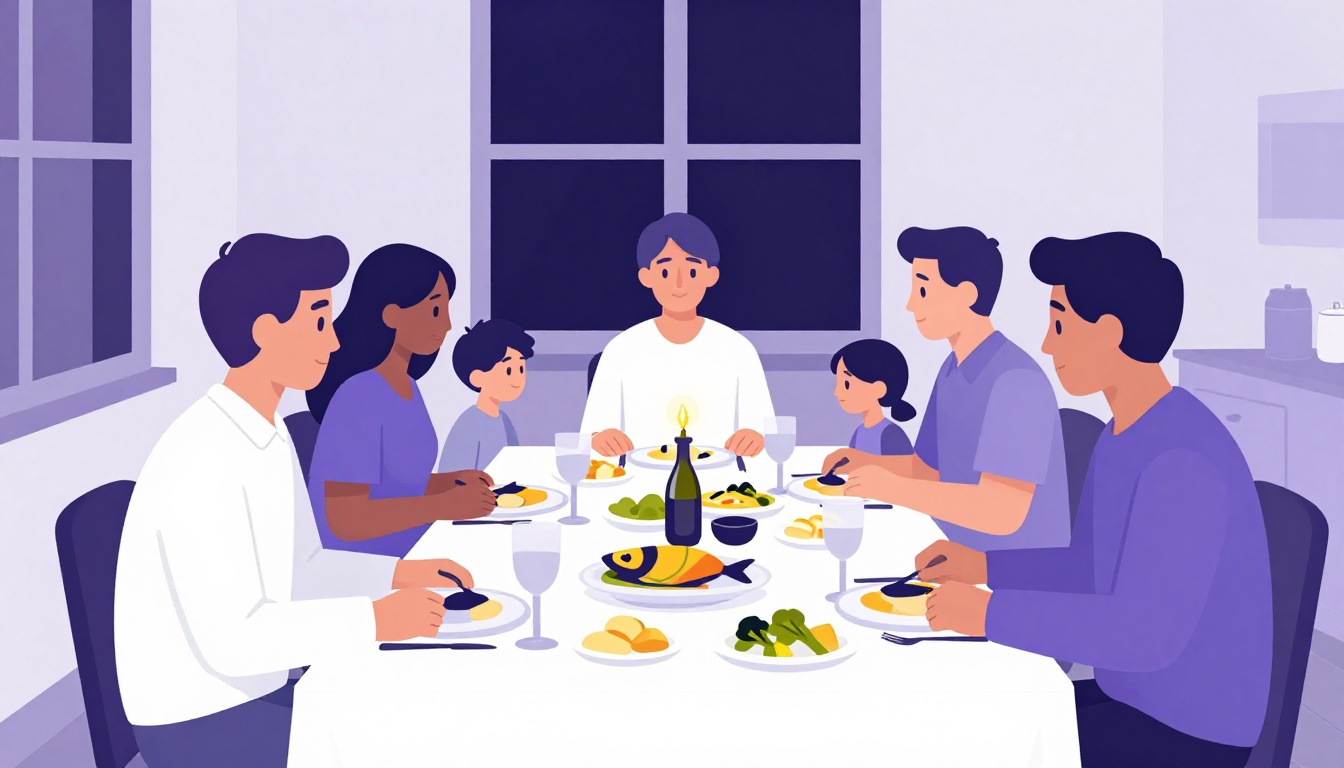
Part of what makes Consoada feel so different from a typical Christmas dinner is the food itself, and part of it is the pacing. Nobody rushes a Consoada. Courses arrive slowly. Conversation fills the gaps. By the time dessert lands on the table, it's often close to eleven at night, timed deliberately so the meal flows straight into the walk or drive to midnight mass. That timing isn't an accident. It's the whole design of the evening, and once you understand it, the rest of Portuguese Christmas starts making a lot more sense.
Think about what that pacing actually does to a family. A meal that unfolds over three or four hours forces conversation in a way a rushed hour-long dinner never does. Kids get restless and are allowed to wander off and come back. Grandparents tell the same stories they told last year, and nobody minds. By the time the table is cleared, the household has already spent the best part of an evening together before the night's real centerpiece, the walk to midnight mass, even begins. That's the quiet logic behind treating December 24 as the main event: the meal isn't a warm-up act for the 25th, it's the reason everyone traveled home in the first place.
What's on the Consoada Table: Bacalhau, Octopus, and Regional Traditions
Ask a Portuguese person what they're eating for Christmas and you'll almost always hear one word first: "bacalhau," salted, dried codfish that gets rehydrated, boiled, and served with potatoes, cabbage, carrots, and a generous pour of olive oil. It sounds plain written out like that, but in practice it's a dish built around quality rather than complexity. Good bacalhau, properly soaked and cooked, has a texture and flavor that Portuguese families take seriously enough to argue about, and the Christmas Eve version, often called "bacalhau cozido" or "bacalhau com todos" ("codfish with everything"), is considered the most traditional version of all, according to Portugal-The Simple Life's Christmas roundup and a broader look at Portuguese Christmas customs from Ancestral Findings.
Codfish shows up on so many Portuguese tables partly because of history. Portugal has fished cod in the North Atlantic for centuries, and salting it was originally a preservation method, a way to eat well-traveled fish months after it was caught, long before refrigeration existed. That history is baked into the Christmas Eve menu in a way that turns a practical fishing tradition into a genuine cultural symbol. It's worth pointing out here, if you're building your Portuguese vocabulary around holidays and gatherings, that food words come up constantly at Christmas, and a page like food in Portuguese is a useful companion if you want the everyday vocabulary that surrounds a big meal like this one.
Not every region sticks to plain bacalhau, though. Coastal communities with a strong fishing history sometimes swap in octopus or other local seafood instead, a regional variation that reflects what's actually pulled out of the water nearby rather than a single national script, as noted in that same Ancestral Findings piece on Portuguese Christmas. And no Consoada table is complete without wine. Families pour a red or a vinho verde alongside the fish, the kind of table detail that rarely makes it into tourist guides but matters enormously if you're actually sitting at that table. If drinks vocabulary interests you beyond the holiday itself, a post like wine in Portuguese covers the words you'd actually use ordering or offering a glass.
The vegetables matter more than they sound like they would on paper, too. Boiled potatoes, cabbage, and carrots aren't filler around the codfish, they're the dish's backbone, soaking up the olive oil that gets drizzled generously over everything right before serving. Some families finish the whole plate with a hard-boiled egg sliced on top, or a scatter of boiled chickpeas, small regional touches that change from one kitchen to the next but never stray far from the same basic idea: simple ingredients, cooked with care, served in generous quantities to a table that's going to be sitting there for hours anyway.
Missa do Galo: Midnight Mass and the Rooster Legend
Once the Consoada plates are cleared, a large share of Portuguese families head out into the cold for "Missa do Galo," literally "Rooster's Mass," the midnight service held on Christmas Eve. The name sounds like an odd detail to build a whole tradition around until you hear the folk story behind it: legend holds that a rooster crowed at the exact moment Christ was born, hours before dawn, announcing the birth to a sleeping world. That's the origin most commonly cited for the name, according to both VisitPortugal's guide to Christmas Eve supper and midnight mass and Premium Tours' breakdown of Portuguese Christmas traditions.
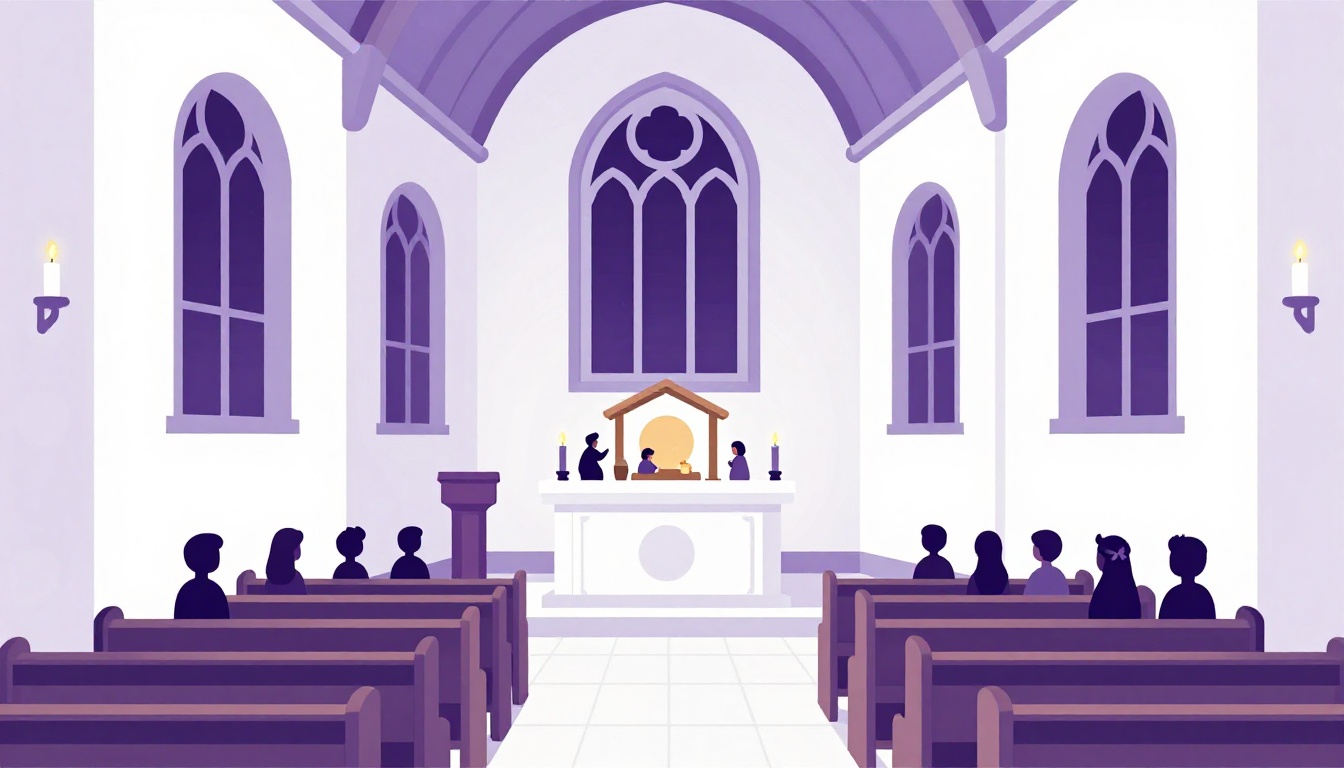
The mass itself is less about the rooster and more about a specific, tender ritual: an image of baby Jesus is carried out during the service, and people line up, one by one, to kiss it before it's placed into the nativity scene at the front of the church. It's a slow, quiet moment inside a night that's otherwise full of noise, food, and family, and for a lot of Portuguese families it's the actual emotional peak of the whole holiday, more than any gift under a tree, per that same VisitPortugal account of the tradition.
If you want to wish someone well around this time of year in Portuguese, "Feliz Natal" is the phrase everyone reaches for, and it's worth learning to say it properly rather than just reading it off a page, since the pronunciation shifts noticeably between Brazil and Portugal. A dedicated guide like merry Christmas in Portuguese breaks that pronunciation down in detail, syllable by syllable, if you want to actually sound like you know what you're saying rather than just repeating it phonetically. And once you're at the stage of wishing people well for occasions beyond Christmas too, a post on congratulations in Portuguese rounds out the same social toolkit.
Reading a pronunciation guide only gets you halfway there, though. The only way "Feliz Natal" actually sticks is saying it out loud, more than once, ideally with something checking whether you got it right. That's the whole premise behind Comigo, a speak-first app where you talk out loud from the first lesson instead of tapping an answer on a screen, with a capybara named Capy keeping you company while you practice. If you'd rather walk into midnight mass able to actually say the greeting than just recognize it on a page, the two-minute quiz at app.usecomigo.com builds a speaking plan around exactly that.
Presépio and Madeiro: Nativity Scenes and Bonfires Instead of Just a Tree
Ask what decoration matters most in a Portuguese home at Christmas and the answer, historically, isn't the tree. It's the "presépio," a nativity scene that ranges from a simple tabletop figurine set to an elaborate miniature village, complete with tiny shepherds, animals, and sometimes entire recreations of Portuguese rural life built around the manger scene. You'll find presépios in homes, in churches, and set up in public squares during December, and in many families building or arranging the presépio together is itself a small Christmas ritual, done well before the 24th arrives, according to Portugal.com's overview of Christmas traditions.
There's a specific, less internationally known tradition worth knowing too: in rural parts of Portugal, communities build large bonfires called "Madeiro" right next to the parish church, timed to be burning around Missa do Galo. The folk explanation is sweet and practical at once: the fire is lit "to warm baby Jesus's feet," a phrase locals still use even though the custom is really about community and warmth on a cold December night, as described in Ancestral Findings' rundown of Portuguese Christmas customs. Standing around one of these bonfires with your whole village on Christmas Eve is about as far from a shopping-mall Christmas as it gets, and it's exactly the kind of detail that never shows up unless you go looking for it.
None of this means the Christmas tree has been left out in the cold, so to speak. Trees have become common in Portuguese living rooms too, especially in cities and in households with young kids, sitting right alongside the presépio rather than replacing it. What's different from a lot of other Christmas cultures is the order of importance: the presépio came first, historically, and it still holds the emotional center even in homes that also put up a tree, a layering of old and new that shows up again and again once you start noticing it in Portuguese holiday customs.
When Do Portuguese People Open Presents, Christmas Eve or Christmas Day?
Here's the direct answer, since it's one of the most common questions people actually search: in most of Portugal, presents get opened on Christmas Eve, not Christmas morning. The sequence runs Consoada dinner first, then midnight mass, then home again, where families place the baby Jesus figure into the presépio and finally open gifts, often well past midnight, according to VisitPortugal's account of the Christmas Eve sequence. That means Portuguese kids are frequently unwrapping presents in the small hours of December 25, technically Christmas Day by the clock but still, emotionally, the tail end of Christmas Eve.
December 25 itself, once people wake up again later that morning, shifts into a different kind of day. It's for visiting extended family you didn't see the night before, for eating whatever's left of the Consoada spread, and for a slower pace generally, per Portugal.com's description of how the two days differ. If you've got grandparents, uncles, or a big family circle in the picture, that visiting day is exactly when you'd hear a lot of family vocabulary in action. Words for relatives come up constantly around a Portuguese Christmas table, and posts like father in Portuguese and grandpa in Portuguese cover the specific terms you'd actually hear used at a gathering like that, including the informal versions families use far more than textbook ones.
This two-day rhythm, one intense night followed by one relaxed day, is honestly a more forgiving structure than a single all-or-nothing Christmas morning. Nobody's rushing to unwrap everything before breakfast. Nobody's racing the clock to visit three different houses in one afternoon. The big emotional moment already happened the night before, which frees up December 25 to be exactly what a holiday should be: unhurried, a little sleepy, and mostly about being around people you like.
Bolo Rei and Rabanadas: The Desserts on Every Portuguese Table
No Portuguese Christmas table is complete without "Bolo Rei," the King's Cake, a crown-shaped ring studded with candied fruit, raisins, and nuts, usually dusted or glazed to catch the light. It's a relatively recent tradition as far as Portuguese food history goes: it arrived in Portugal in the late 1800s, introduced by a Lisbon bakery, Confeitaria Nacional, that adapted it from the French "gâteau des rois," the cake of kings, according to Portugal: The Simple Life's history of Bolo Rei. What started as an import became a full-blown national institution within a couple of generations, which says a lot about how quickly a good Christmas tradition can take root once people decide they love it.
The cake used to come with a game built right into it. Bakers hid a small dried fava bean inside the batter, and whoever found the slice with the bean in it had to buy next year's Bolo Rei, a lighthearted, slightly absurd forfeit that turned dessert into a running family joke, as detailed by Gimme Yummy's Bolo Rei recipe and history. Food safety rules have made the hidden-bean version less common these days, but the story survives, and plenty of families still tell it even when the actual bean isn't in the cake anymore.
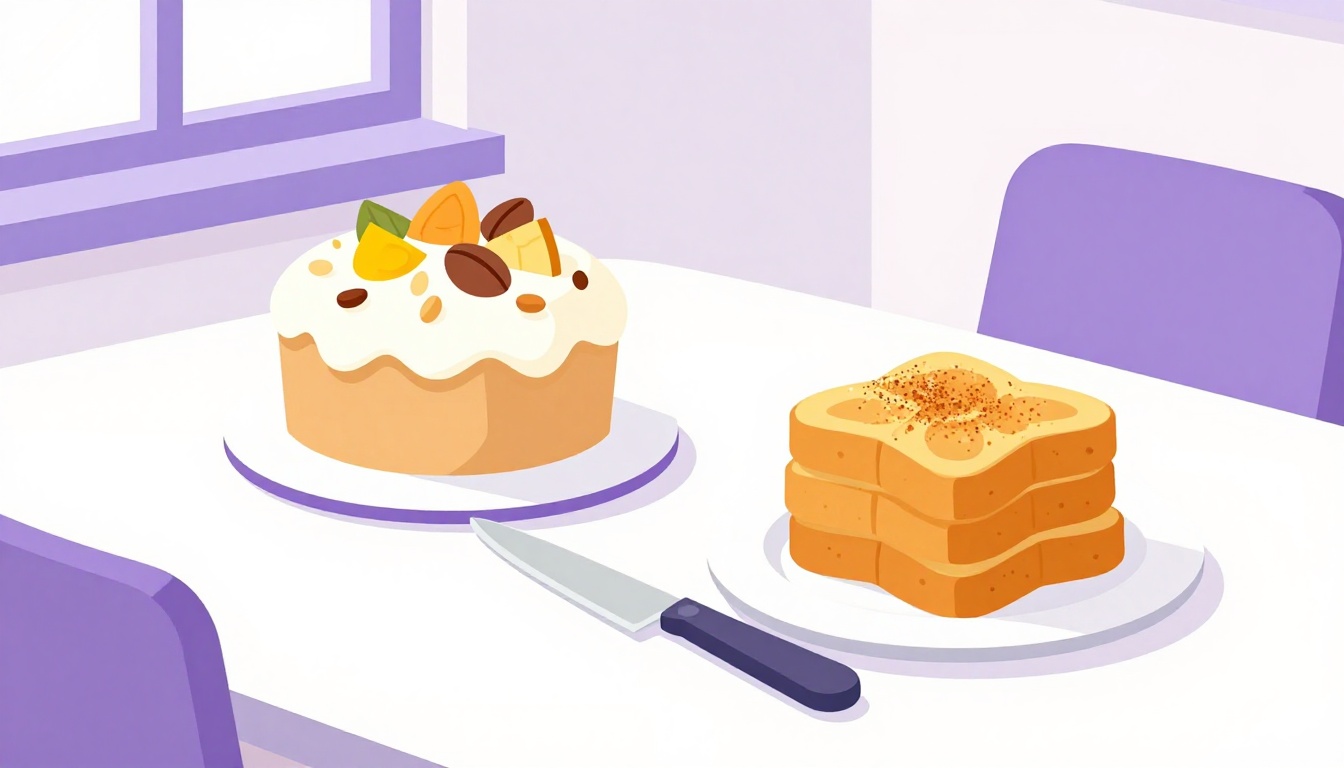
The other essential dessert is "rabanadas," Portugal's version of French toast, and honestly a strong contender for best thing on the whole table. Stale bread, often a day-old baguette, gets soaked in milk or sometimes wine, dipped in egg, fried until golden, then coated in cinnamon and sugar while it's still warm. It's humble, cheap to make, and completely irresistible, which is probably why it's stayed a Christmas fixture for generations, according to both Portugal Things' list of traditional Christmas desserts and Cooking Lisbon's piece on traditional Christmas sweets. Bolo Rei and rabanadas together are the closest thing Portugal has to a dessert dress code at Christmas: skip one and someone at the table will definitely notice.
Every family seems to have strong opinions about both desserts, and that's part of the fun. Some households swear by soaking rabanadas in wine instead of milk, arguing it gives the bread a deeper flavor. Others insist milk is the only correct base and treat the wine version as a strange regional experiment. Bolo Rei has its own quiet rivalries too: candied fruit versus a plainer glaze, a bakery-bought cake versus a homemade one, a debate that resurfaces every December like clockwork. None of it is serious, but all of it is exactly the kind of small, specific detail that makes a culture's food traditions feel lived-in rather than staged for a brochure.
Portuguese Christmas Words and Phrases You Can Actually Use
If you're learning Portuguese, or you've got a Portuguese-speaking partner, friend, or in-law, having the right vocabulary for the holiday season turns you from a quiet observer into someone who can actually join the conversation. Here's a starter set, with the Brazil and Portugal difference flagged where it matters, since a couple of these words genuinely split the two countries. Keep it nearby during December, whether you're texting a "Feliz Natal" to someone or trying to follow along at a family dinner where half the table is talking over the other half.
| Portuguese phrase | Pronunciation guide | English meaning |
|---|---|---|
| Feliz Natal | feh-LEEZ nah-TAL (Brazil) / fliz nuh-TAL (Portugal) | Merry Christmas |
| Boas Festas | BOH-ahs FESH-tahs | Happy holidays |
| Feliz Ano Novo | feh-LEEZ AH-noo NOH-voo | Happy New Year |
| Consoada | kon-soo-AH-dah | Christmas Eve family supper |
| Missa do Galo | MEE-sah doo GAH-loo | Midnight Mass (Christmas Eve) |
| Presépio | preh-ZEH-pyoo | Nativity scene |
| Bolo Rei | BOH-loo RAY | King's Cake |
| Rabanadas | hah-bah-NAH-dahs | Portuguese-style French toast |
| Papai Noel (Brazil) / Pai Natal (Portugal) | pah-PYE noh-EL / pie nah-TAL | Santa Claus |
| Ceia de Natal | SAY-ah jee nah-TAL | Christmas dinner (Brazil's term for the main meal) |
Notice that last-but-one row. "Santa Claus" isn't even the same word depending on which side of the Atlantic you're on: Brazilians say "Papai Noel," literally "Father Christmas" borrowed loosely from the French style of naming, while people in Portugal say "Pai Natal," a more direct, home-grown "Father Christmas." Get that one wrong in front of the wrong audience and you'll immediately mark yourself as having learned your Portuguese from the other country, which, depending on the room, might be a fun icebreaker or a minor faux pas.
Learning to actually say these phrases, rather than just recognize them on a page, is a different skill entirely, and it's one most quick vocabulary lists don't help with at all. That's exactly the gap Comigo is built around. It's a speak-first app, so instead of tapping multiple-choice answers, you say every phrase out loud from your very first lesson, with a capybara named Capy keeping you company and checking your pronunciation word by word. If you want to go from silently reading "Feliz Natal" to actually being able to say it with confidence, the quiz at app.usecomigo.com takes about two minutes and builds a speaking plan around exactly that kind of real, spoken Portuguese. If you want more of this kind of everyday vocabulary beyond the holidays, basic words in Portuguese and common sayings in Portuguese are good next stops, and if you're curious whether picking up a new language at your age or stage is even realistic, is Portuguese hard to learn tackles that question honestly.
How Brazil Celebrates Christmas Differently
Cross the Atlantic to Brazil and the calendar says the same date, December 25, but almost nothing else about the holiday matches what you just read about Portugal. The single biggest reason is geography: Brazil sits in the Southern Hemisphere, so December lands in the middle of summer, not the dead of winter. There's no cold to bundle up against, no early sunset making the Missa do Galo feel dramatic and dark. Instead, Brazilian Christmas Eve often plays out in shorts and flip-flops, sometimes with a trip to the beach built right into the evening, a contrast that Why Christmas' page on Brazilian traditions describes as one of the most striking differences from a typical European or North American Christmas.
That summer setting changes the whole feel of the night. Where a Portuguese Consoada is often a cozy indoor affair with the fireplace going, a Brazilian Christmas Eve can spill outdoors entirely, windows open, fans running, sometimes music and dancing woven into the evening in a way that a colder climate simply doesn't allow for. If experiencing that kind of Christmas firsthand sounds appealing rather than just reading about it, a guide on learning Brazilian Portuguese in Brazil is worth a look, since showing up during the holiday season is one of the more memorable ways to actually use the language you're studying.
It's worth sitting with how disorienting this is for anyone raised on a cold-weather Christmas. Every image that usually comes bundled with the holiday, bare trees, wool sweaters, breath fogging in the air, simply doesn't apply once you're standing on a hot beach in Rio on December 24. Plenty of Brazilian families have made peace with that gap and lean fully into the summer version instead: cold drinks, open windows, and a Christmas Eve that feels a lot closer to a summer barbecue than a fireside gathering.

December itself carries extra weight in Brazil beyond the holiday, too. Most workers receive a "décimo terceiro," a 13th salary paid out around this time of year, which effectively turns December into a month when people have a bit more cash for gifts, travel, and a bigger-than-usual Ceia de Natal. If you want the vocabulary and cultural context behind that specific detail, december in Portuguese goes deeper into the word "dezembro" and what makes the month distinct in Brazil beyond just the holiday itself.
Ceia de Natal: Chester, Farofa, and Panettone on the Brazilian Table
Brazil's answer to the Consoada is the "Ceia de Natal," the Christmas Eve dinner, and it tends to happen late, often close to midnight, timed so the meal flows straight into the gift exchange rather than a church service, according to Aventura do Brasil's guide to Brazilian Christmas traditions. Where Portugal's table centers on codfish, Brazil's centers on poultry: a "chester," a specific large-breasted chicken breed developed for the holiday market, or a full "peru de Natal," Christmas turkey, usually stuffed with or served alongside "farofa," toasted cassava flour mixed with olives, bacon, onion, garlic, and egg, a dish that shows up at Brazilian tables well beyond Christmas but gets its fanciest treatment on this one night, per Texas de Brazil's recipe roundup for Brazilian Christmas.
Dessert tells its own story about Brazilian identity, layered with immigrant history. "Panetone," Brazil's spelling of panettone, the sweet Italian bread studded with candied fruit, became a full-blown Christmas staple after Italian immigrant communities brought it over, and today it sits on nearly every Brazilian table in December regardless of the family's background, according to iHeartBrazil's overview of Christmas in Brazil. It's a good reminder that "Brazilian Christmas" isn't one single unbroken tradition passed down since colonial times. It's a layered thing, built from Portuguese Catholic roots, African and Indigenous influence, and waves of immigration that each left something behind on the holiday table.
Farofa deserves a moment of its own, since it's easy to underestimate a side dish made mostly of toasted flour. Done well, it's crunchy, savory, studded with little pockets of bacon and egg, and it's the piece of the plate that ties the whole Ceia together, cutting through the richness of the turkey or chester the same way stuffing does at a North American Thanksgiving. Ask a Brazilian which part of the meal they'd miss most if it disappeared, and you'll get farofa as an answer just as often as you'll get the bird itself. Between the codfish in Portugal and the farofa-and-chester combination in Brazil, you can see two very different food cultures answering the exact same question, what do we serve on the most important night of the year, in two completely different ways.
Brazilian midnight mass, incidentally, goes by the exact same name as in Portugal: "Missa do Galo," per that same iHeartBrazil piece on Brazilian Christmas customs. The name and the rooster legend crossed the Atlantic intact even as everything around them, the weather, the menu, the mood, changed completely. That's a small detail, but it's a nice one: proof that some threads of a shared culture hold on tight even while a whole holiday reinvents itself around them.
Papai Noel, Gifts, and the Ceia de Natal
Santa Claus in Brazil goes by "Papai Noel," sometimes affectionately called "Bom Velhinho," the Good Old Man, a nickname with real warmth to it, according to iHeartBrazil's rundown of Brazilian Christmas figures. Gifts typically get exchanged after the Ceia de Natal, late at night on the 24th, much like the Portuguese pattern, though the mood around it leans more festive and less solemn than a Portuguese Consoada followed by midnight mass. Music plays a bigger role. Extended family often stays up together long after the food is finished, and by the time gifts actually come out, the evening can stretch well past midnight into Christmas Day proper.
There's something a little funny about a "Bom Velhinho" wearing his classic heavy red suit while everyone around him is in shorts and sandals. Brazilian department stores and malls still dress their Papai Noel in the full northern-hemisphere costume, fur trim and all, because that's the version of Santa the whole world recognizes. It's a small visual mismatch that nobody really questions anymore, one more example of how a European Christmas image got adopted wholesale in Brazil and then just quietly coexists with a completely different climate outside the window.
One of the biggest public expressions of Brazilian Christmas spirit isn't in Rio or São Paulo at all. It's in Gramado, a small town in the southern state of Rio Grande do Sul, home to "Natal Luz," a massive annual Christmas light festival that draws visitors from across the country and beyond. Gramado sits at a higher elevation than most of Brazil, which gives it a noticeably cooler climate, and the town leans hard into a European-style winter Christmas aesthetic even while the rest of the country is celebrating in shorts, a deliberate contrast that's made Natal Luz one of Brazil's biggest annual Christmas tourism draws, according to its Wikipedia entry on the Natal Luz festival. If you ever wondered whether Brazil has a "cold, twinkly-lights Christmas" tucked away somewhere, Gramado in December is your answer.
Family gatherings around the Ceia de Natal also mean a lot of relative-specific vocabulary flying around the table, the same way it does in Portugal. If you're building out your Portuguese around family terms specifically, posts like brother in Portuguese and how do you say grandma in Portuguese cover the informal, warm versions of these words that families actually use out loud, which tend to differ quite a bit from the stiffer versions a textbook hands you.
Portugal vs Brazil: A Side-by-Side Comparison
Put the two countries next to each other and the contrast becomes almost comically clear. Same religion, same root language, same basic calendar date, and yet the actual experience of Christmas Eve barely overlaps. If you only read one table in this whole guide, make it this one, since it answers most of the comparison questions people search for in a single glance.
| Portugal | Brazil | |
|---|---|---|
| Main meal | Consoada, Christmas Eve (Dec 24) | Ceia de Natal, Christmas Eve (Dec 24) |
| Centerpiece dish | Bacalhau (salted codfish) with potatoes and cabbage | Chester or peru de Natal (turkey) with farofa |
| Weather and season | Winter, cold nights | Summer, often hot, sometimes celebrated at the beach |
| Who brings the gifts | Pai Natal, opened Christmas Eve night | Papai Noel, opened after the Ceia de Natal |
| Name for midnight mass | Missa do Galo | Missa do Galo |
| Signature dessert | Bolo Rei and rabanadas | Panetone |
| When the season ends | Dia de Reis, January 6 | Dia de Reis, January 6 |
A few of those rows land as genuinely surprising once you see them side by side. The gift-giver has two completely different names depending on which country you're in, even though both trace back to the same Saint Nicholas tradition further upstream. The weather split is the most visually dramatic difference of all: one country's Christmas Eve calls for a coat, the other's calls for sunscreen, per that same Why Christmas comparison of holiday customs across cultures. And yet the season's actual start and end dates, and even the name of the midnight service, stayed identical, a reminder that colonial history left threads that never fully unraveled even as the two countries built very different Christmases on top of them. For a broader comparison of how Portugal's holiday customs stack up against its closest neighbor rather than its former colony, Sagres Vacations' look at Christmas in Portugal and Spain is worth a glance too, since it shows the Iberian side of the same story.
What the table can't fully capture is how each difference traces back to something bigger than just a menu choice. The bacalhau versus chester split isn't random: it's a fishing nation's table next to a country whose Christmas bird got adapted from a European tradition to fit a very different climate and a very different mix of cultural influences. The coat versus sunscreen split isn't a coincidence either, it's the entire Southern Hemisphere quietly rewriting what "Christmas weather" even means. Once you see the table this way, as a record of two countries solving the same holiday with different available ingredients, weather, and history, the differences stop feeling arbitrary and start feeling like the most interesting part of the whole story.
When Does the Christmas Season End in Portugal and Brazil?
Christmas doesn't just stop on December 26 in either country. Both Portugal and Brazil close out the season on January 6, "Dia de Reis," the Day of the Kings, marking Epiphany and the traditional arrival of the three wise men. This is when Christmas trees, presépios, and decorations formally come down, and when the last of the holiday visiting and eating wraps up, according to Portugal.com's note on when the season officially ends.
Thirteen days is a long runway for a holiday to wind down, and it changes how the whole season feels compared to cultures that pack everything into one long weekend. Decorations stay up. Leftover cake keeps appearing on the counter. There's no single jarring moment where the tree comes down and the house suddenly feels bare again, just a slow, gradual return to ordinary life that finishes on a specific, agreed-upon date rather than whenever everyone gets tired of looking at tinsel.
That two-week stretch between Christmas and Dia de Reis is its own mini-season, honestly, full of leftover Bolo Rei, leftover panetone, and a slower, quieter kind of togetherness than the big nights that came before it. It's also when New Year's wishes get exchanged, so if you're building your Portuguese vocabulary for this whole window rather than just Christmas Eve itself, a guide to happy new year in Portuguese fills in exactly the phrases you'd want for that January 1 crossover, right in the middle of the Dia de Reis countdown.
For a broader, learner-focused view of how the whole holiday season fits together month by month in Portugal, Practice Portuguese's learning notes on the holiday season is a solid resource, and if you want the folklore angle specifically, both Learn Portuguese's piece on Christmas traditions and Why Christmas' page on Portugal cover the older stories and superstitions tucked behind the modern celebration. If you're planning a trip specifically to see the lights and markets, Visitar Porto's guide to Christmas and New Year in Porto is worth bookmarking, and on the Brazilian side, both Next Stop Brazil's answer to how Brazilians celebrate Christmas and Christmasify's country profile on Brazil round out the picture with details this guide didn't have room for.
How to Actually Practice These Portuguese Christmas Phrases
Reading about "Feliz Natal," "Consoada," and "Papai Noel" is one thing. Saying them out loud, at the right moment, in front of a Portuguese-speaking family, is a completely different skill, and it's the one most people never actually build. You can recognize a hundred Portuguese words on a page and still freeze the second someone expects you to say one back to them. That gap between recognition and real speech is exactly the problem worth solving before you show up at your first Consoada or Ceia de Natal.
This is the part where Comigo actually fits. It's a speak-first language app: every lesson is a spoken conversation, not a multiple-choice quiz, so you talk out loud from the very first screen, with a capybara companion named Capy guiding you through it and giving you real feedback on what you actually said. There are games built into the app too, so practicing doesn't feel like homework, and the whole thing is built around Brazilian Portuguese, the exact version of the language behind everything in this article's Brazil half. If wishing someone "Feliz Natal" with real confidence, rather than a shaky guess, sounds worth two minutes of your time, take the quiz at app.usecomigo.com and see the kind of speaking plan it builds around your goal.
If your interest in Portuguese goes beyond one holiday, plenty of people who started exactly where you are now, curious about a single tradition, ended up building a real relationship with the language. Stories like how I learned Portuguese are worth a read if you want to see what that longer path actually looks like, and if you're wondering whether other celebrations deserve the same treatment as Christmas, a post on how do you say happy birthday in Portuguese covers the next occasion you're likely to need the language for.
There's a reason so many people say learning a language finally clicked once they had a real occasion to use it, a wedding, a holiday, a trip planned around family rather than a classroom. Christmas gives you one of those occasions built right in: a specific date, a specific greeting, a specific table you might actually be sitting at one day. Between the two countries, the codfish and the beach, the midnight mass and the panetone, Portuguese Christmas turns out to be less one tradition than two closely related ones, both worth knowing, and both, it turns out, worth being able to actually talk about out loud.
The Short Version
If you remember nothing else: Portugal centers Christmas on the night of the 24th, with bacalhau, midnight mass, and gifts opened late that same night, while Brazil moves the whole celebration into summer, swaps codfish for chester and farofa, and still calls its midnight service by the exact same name Portugal does. Both countries close the season on January 6, and both will happily forgive an American accent on "Feliz Natal," as long as you're willing to actually say it.
Two countries, one language, one shared religious calendar, and almost none of the same weather, food, or timing once you actually dig into the details. That's usually how it goes with culture. The parts that look identical on paper, the date, the name of the midnight mass, the word for Christmas itself, turn out to be the connective tissue holding together two celebrations that otherwise went their own separate ways. Knowing the difference between them, and being able to say "Feliz Natal" the right way to the right person, is a small thing. But small things are usually where real fluency actually starts.
Related guides
- Tandem vs HelloTalkTandem vs HelloTalk: which language exchange app is better.
- What is the Palteca method?What the Palteca method is, how it claims to work, what it costs and who it suits.
- How much does italki cost?What italki really costs per lesson, how tutor pricing works and how to spend less.
- italki reviewAn honest italki review: how lessons work, tutor quality, pricing and the downsides.