

You're sitting at a dinner table in Brazil for the first time, and the man at the head of it is your partner's father. Everyone else calls him "pai" one minute and "papai" the next, and a small cousin somewhere in the back is yelling "painho" like it's the most natural word in the world. You know the textbook word for father. You did not know there were four of them.
That's the real shape of this topic. Portuguese doesn't hand you one word for father and call it done; it hands you a small family of words, each one carrying its own warmth, its own audience, its own moment. This guide walks through every real word for father in Portuguese, when native speakers actually reach for each one, and the one accent-mark trap that trips up more English speakers than anything else on this list. If you'd rather hear yourself say these words than just read them silently, app.usecomigo.com is a fast way to try.
Family vocabulary tends to get skipped in beginner courses in favor of ordering coffee or asking directions, but it's some of the first vocabulary you actually need once a real relationship enters the picture. Some of what's below is genuinely tricky, the kind of thing is Portuguese hard to learn covers honestly rather than pretending every part of this language is easy. Most of it, though, is just a handful of warm, simple words waiting for you to say them out loud a few times until they stop feeling foreign.
Quick answer: father in Portuguese at a glance
If you only need the short version, here it is. The rest of the post is the "why," and the why is what actually makes a word stick instead of slipping back out of your head the next day.
| Word | Pronunciation | Register | When to use it |
|---|---|---|---|
| pai | "PIE," one syllable | Neutral, standard | Dictionaries, forms, talking about "a father" in general |
| papai | pa-PIE | Warm, everyday | What most Brazilian kids and adults call their own dad |
| painho / paizinho | pah-EE-nyoo / pie-ZEE-nyoo | Affectionate, diminutive | Regional and personal nicknames, extra tenderness |
| velho / coroa | VEL-yoo / koh-ROH-ah | Slang, casual | Said about your dad to friends, not usually to his face |
None of these is "more correct" than the others in any absolute sense. They're doing different jobs, the way "father" and "dad" do different jobs in English, depending on who's listening and how close you are to the man you're talking about. Once you've got a handle on basics like how do you say hello in Portuguese and how are you in Portuguese, you've already noticed that Portuguese cares a lot about register. Father vocabulary is no exception, and picking the right word for the room matters just as much as pronouncing it correctly.
Pai: the standard word for father
"Pai" is the word you'll find first in any dictionary. It's the entry Cambridge lists for father, it's what Collins gives as the standard Portuguese-to-English translation, and it's what Wordhippo confirms as the direct equivalent when you look up "father" and want the plainest possible answer. Grammatically, pai is a masculine noun, and it takes the article "o": "o pai" means "the father," and "meu pai" means "my father." You'll rarely hear the bare noun standing alone in a full sentence, the same way English rarely drops "the" or "my" in front of "father" either.
Pronunciation is refreshingly simple: say it "PIE," a single syllable, close to the English word for the dessert. There's no separate stress question to untangle here, unlike a word such as "avô," because one syllable can't really be misplaced. Forvo's audio entry for pai is worth a listen if you want to hear a few native speakers say it back to back, and a HiNative thread on the word shows real learners asking the exact same pronunciation question you might be asking right now.
Etymology-wise, pai comes from Latin "pater" by way of Old Portuguese, the same root behind the English word "paternal" and Spanish "padre." Wiktionary's entry on pai traces that lineage, and its entry on the Latin root pater shows how far back the word actually goes. If you've ever studied Spanish before picking up Portuguese, that shared ancestry is exactly why "padre" and "pai" feel like distant cousins rather than unrelated words: they both descend from the same Latin parent, shaped differently by two neighboring languages over a thousand years.
Here's where it gets useful and, later, a little tricky: the plural "pais" can mean "fathers," two or more of them, but far more often it means "parents" collectively, mother and father together. Preply's guide to Portuguese family vocabulary and Practice Portuguese's notes on family members both confirm this double duty, the same way "avós" can mean grandparents collectively rather than just grandfathers. Hold onto that detail. It matters a lot once we get to a word that looks almost identical to "pais" on the page but means something completely different.
It also helps to see pai used the plain, neutral way it shows up constantly in real writing, outside of anyone's specific family. A newspaper caption might read "o pai da criança não foi identificado" (the child's father wasn't identified), or a form might simply ask for "nome do pai" (father's name), no warmth implied one way or the other, just a fact being recorded. That's the register pai lives in most of the time: correct, useful, a little distant, exactly the way "father" reads more like paperwork than affection in English too. You'll see it constantly in this neutral form long before you hear anyone use it warmly to address their own dad directly, which is precisely the gap the next word closes.
Papai: the word Brazilian kids actually use
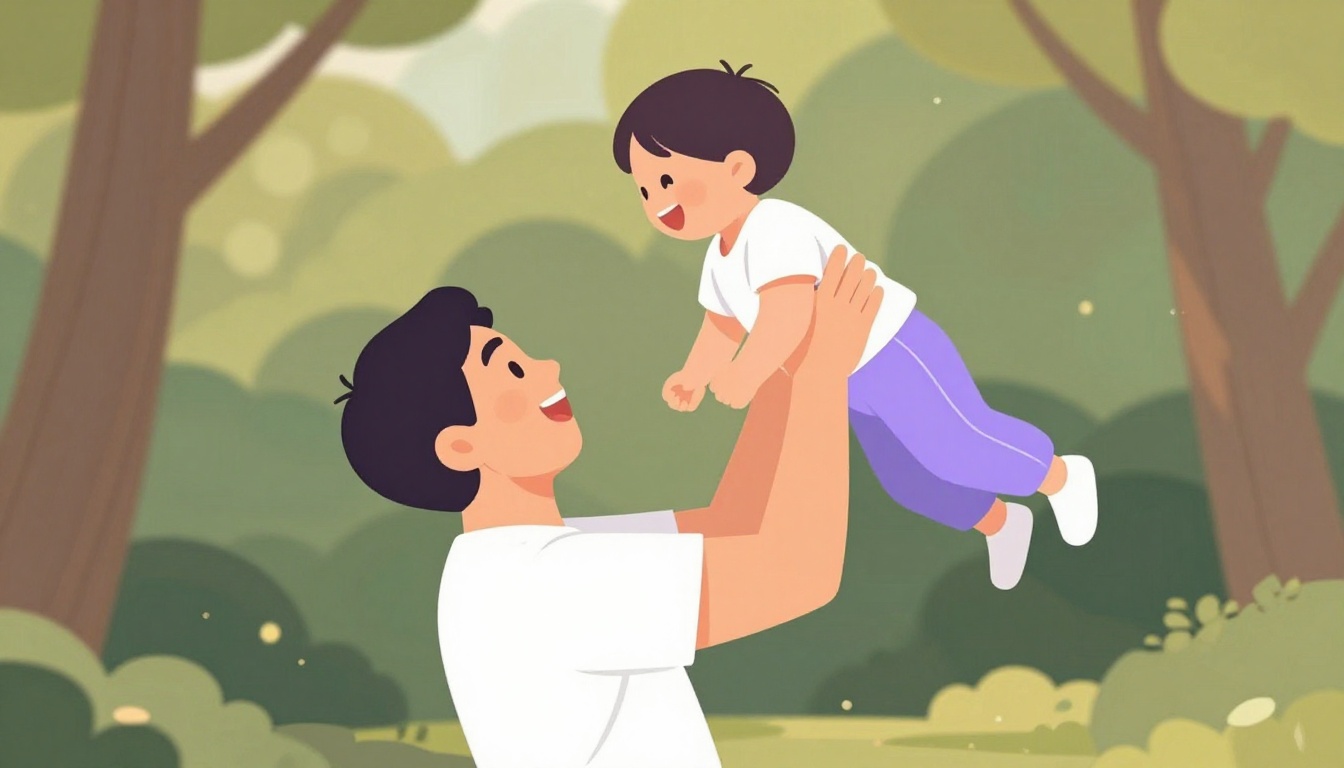
"Papai" is the word you'll actually hear across a Brazilian dinner table, not "pai." It means "dad" or "daddy," and it's the warm, everyday register that Brazilian kids grow up saying and that plenty of grown adults never stop using for their own fathers. Bab.la's entry for papai lists it plainly as the affectionate Brazilian Portuguese term, and if you've ever wondered why the textbook "pai" sounded stiffer than what you actually heard in a family conversation, this is the reason. The contrast is almost exactly the one English speakers already know instinctively: "father" versus "dad." Nobody's five-year-old calls him "father" at breakfast.
One detail worth knowing before you use this word on a trip: papai is not typically how European Portuguese speakers refer to their fathers. In Portugal, people tend to lean on "pai" itself in casual speech, sometimes alongside other regional forms, rather than reaching for "papai" the way Brazilians do. Street Smart Brazil's rundown of family vocabulary and The Brazilian Ways' guide to family words both flag papai specifically as a Brazilian usage pattern, not a universal Portuguese one. If your in-laws are Portuguese rather than Brazilian, don't assume the word transfers cleanly.
There's a fun, very visible place you'll spot "papai" every single year without even trying: Papai Noel, Brazil's name for Santa Claus, literally "Father Christmas." It shows up on decorations, in songs, in kids' letters every December, and it's a genuinely painless way to absorb the word without any study at all, the same way a lot of people accidentally learn holiday vocabulary just from being around it. If December vocabulary interests you beyond this one word, this blog's guide to merry Christmas in Portuguese rounds out the rest of the season.
Notice, too, how naturally papai slots into everyday sentences the way "pai" almost never does in the same context. "Papai chegou!" ("Dad's home!") is what a kid actually shouts at the sound of a car in the driveway, not "o pai chegou," which would sound like a line from a novel rather than something a real household says out loud. "Cadê o papai?" ("Where's dad?") is another one you'll hear constantly, especially from small kids scanning a crowded room for a familiar face. Once you notice the pattern, you'll start hearing papai everywhere, in a way pai, precise and correct as it is, simply doesn't show up in casual speech nearly as often.
Painho, paizinho, and other nicknames
Beyond pai and papai, Brazilian Portuguese has a layer of even softer nicknames built the way a lot of Portuguese diminutives are built: by tacking "-inho" onto the end of a word to shrink it and warm it up at the same time. "Painho" and "paizinho" both roughly translate to something like "daddy" or "little dad," carrying a level of tenderness that goes a notch past even papai. Migaku's Portuguese family vocabulary guide and Rocket Languages' family vocabulary lesson both list this diminutive pattern as a normal, productive feature of the language, not a rare exception.
Painho in particular carries a strong Northeastern Brazilian flavor, showing up constantly in states like Bahia and Pernambuco as an everyday, unremarkable way to refer to one's father, not a special-occasion word saved for birthdays. Paizinho is more evenly spread across Brazil and tends to skew slightly more childlike, the kind of word a small kid uses more than an adult, though plenty of adults use it too without a hint of self-consciousness. Neither one replaces papai so much as it sits alongside it, another notch on the same dial between formal and affectionate.
And then there's the category no dictionary will ever cover: personal nicknames a specific child invented by accident and that stuck for life. A toddler mangles "papai" into something else entirely, and thirty years later the whole extended family still calls him by that mangled version, cousins included. This happens constantly, in Portuguese and plenty of other languages, and it's part of why family vocabulary feels so personal rather than purely textbook. If your partner's family has one of these, ask where it came from. It's almost always a good story.
None of these diminutives are things a course or a phrasebook will ever hand you upfront, which is exactly why they catch learners off guard the first time a five-year-old cousin runs past yelling "painho, painho!" and you have no idea what just happened. The safest approach: learn papai as your default warm word, recognize painho and paizinho when you hear them, and don't stress about producing the regional or personal versions yourself until a specific family teaches them to you directly. Nobody expects an outsider to walk in already knowing a household's private vocabulary. What matters is not freezing when you hear it.
Velho and coroa: when Brazilians go slang
Brazilian Portuguese also has a casual, slangy register for talking about your dad, and the two most common words in it are "velho" and "coroa." "Velho" literally means "old," and "coroa" literally means "crown," neither of which has an obvious connection to fatherhood until you hear how they're actually used. Kaikki's dictionary entry for velho confirms the slang sense alongside the literal one, and Untranslatable's piece on coroa digs into how a word for "crown" ended up meaning "an older person," specifically a parent, in casual Brazilian speech.
Here's the register warning worth actually paying attention to: both words are much more common said about your dad to friends than said to him directly. "Vou pedir uma grana pro meu velho" ("I'm going to ask my old man for some money") sounds completely normal between friends. Walking up to your own father and calling him "velho" or "coroa" to his face can land differently depending on the relationship, sometimes affectionate and joking, sometimes a little flip, depending entirely on tone and how close you are. It's not a word that gets you in trouble exactly, but it's worth knowing the difference between "about him" and "to him" before you try it out loud for the first time.
Think of the English equivalent: plenty of people call their father "the old man" when talking to a friend, and almost nobody opens with "hey, old man" walking through the front door, unless the whole family already jokes that way. Velho and coroa work on that same logic, casual among peers, riskier in direct address, and entirely dependent on the specific relationship you're in.
Both words extend beyond fathers, too, which is worth knowing so you don't misread a sentence. "Velho" can describe any older man, a friend, a stranger, a coworker, and "coroa" often gets used more broadly for "an older person" in general, not exclusively a parent. Context does most of the work: "meu velho" almost always means "my dad" specifically, while "aquele velho ali" (that old man over there) is just describing some unrelated stranger on the street. As a learner, you're safest reaching for these words only in the possessive, "meu velho," "meu coroa," where the meaning locks onto "my dad" and can't be misread.
How to actually pronounce pai
The good news: pai is one of the easier sounds in this whole topic. It's what's called an oral diphthong, two vowel sounds gliding together in a single syllable, and it's not nasal at all. That matters, because a lot of Portuguese family vocabulary leans hard on nasal sounds, the "ão" ending that shows up in words like "mão" (hand) or plenty of other everyday nouns, and those nasal vowels are genuinely one of the harder things for English speakers to produce accurately. Pai skips all of that. Say it the way you'd say the English word "pie," or "sky" without the "s," and you're already close to correct.
Wiktionary's Portuguese pronunciation appendix breaks down the mechanics of diphthongs like this one if you want the technical version, and Practice Portuguese's vowel pronunciation guide walks through the broader vowel system that "ai" fits into. Since there's only one syllable, there's no stress placement to get wrong the way there is with a two-syllable word like "avô." That single-syllable simplicity is genuinely rare in Portuguese family vocabulary, and it's worth appreciating while you have it, because the next word on this list undoes that simplicity almost entirely.
Compare pai to a word like "mão" (hand) or the ending on "irmão" (brother), both of which push air through your nose while you say them, a physical habit English speakers simply never developed, since English has no nasal vowels of its own. Pai asks for none of that. Your mouth just glides from an open "ah" toward a closed "ee," lips relaxed, nothing routed through your nose, which is exactly why native Portuguese speakers rarely correct a foreigner's "pai" the way they might gently correct a mangled "não." If you want a genuinely useful listening exercise, say "pai" and "não" back to back a few times and pay attention to whether air is escaping through your nose on the second one. Once you can feel that difference physically, you've got the core of Portuguese vowel pronunciation down, not just for this word but for a huge share of everyday vocabulary.
The pais vs país trap
This is the single biggest mix-up in this entire topic, and it deserves real attention rather than a quick footnote. "Pais," no accent mark at all, one syllable, is the plural of pai: fathers, or much more commonly, parents. "País," with an acute accent mark sitting on the í, is a completely different word, two syllables, pa-ÍS, and it means "country" or "nation." One accent mark, one extra syllable, and the entire meaning of the sentence flips.
Pons' dictionary entry for pais lists both the "fathers" and "parents" senses clearly, and a HiNative thread on the distinction shows learners working through this exact confusion in real time, which tells you it's common enough to keep coming up. It's worth seeing the whole family of related forms laid out together, since the accent mark is doing all the heavy lifting across every one of them.
| Written form | Syllables | Accent mark | Meaning |
|---|---|---|---|
| pai | 1 | none | father |
| pais | 1 | none | fathers, or more often, parents |
| país | 2 | acute on í | country, nation |
| países | 3 | acute on í | countries, nations |
Why does this trip up so many English speakers? Because the two words that matter most, "pais" and "país," are separated by exactly one accent mark and one syllable, and English readers aren't trained to treat accent marks as meaning-changing the way Portuguese speakers are. "Dia dos pais" means "Father's Day" (or, read another way, "Parents' Day"). "Meu país" means "my country." Swap the accent by accident, or skip it while typing on an English keyboard, and you've quietly changed the sentence from a family holiday to a geography lesson. Here's a trick that actually works: think of the accent mark on país as a little flag planted on top of the í, the same way a flag marks a country on a map. No flag, no country, just a father. It's a small mental image, but it's the kind of thing that sticks precisely because it's a little silly.
Reading that trick is one thing. Actually holding onto it the first time you're mid-sentence with a Brazilian family and need to decide, in real time, whether you mean "pais" or "país" is a different skill entirely, the kind that only comes from saying both words out loud enough times that your mouth stops hesitating. That's the sort of rep app.usecomigo.com is built around: short spoken drills where you say the tricky pair back to back until the syllable count stops feeling like a guess.
Feliz Dia dos Pais: Father's Day in Brazil
Brazil's Father's Day has a surprisingly specific origin story, and it's not an ancient tradition at all. It was created in 1953 by Sylvio Bhering, a publicist who was also the director of the newspaper O Globo and its radio station, Rádio Globo. Rio & Learn's article on Brazil's Father's Day and BB Mag's piece on Brazil's Father's Day history both cover this history, and the founding motive was at least partly commercial: Mother's Day was already an established, successful holiday, and a father-focused equivalent made obvious business sense for a media company in a good position to promote one.
The first celebration landed on August 16, 1953, and the date wasn't random either. It was timed near the Catholic feast day of Saint Joachim, traditionally regarded as the father of Mary and the patron saint of fathers and grandfathers. The following year, the date shifted to the second Sunday of August, and it's stayed there ever since. In 2026, that lands on Sunday, August 9.
However it started, the holiday is thoroughly real now: families gather for a big meal, kids give gifts and handwritten cards, and "Feliz Dia dos Pais!" ("Happy Father's Day!") shows up on every group chat and grocery store banner in the country come August. Try Kaiwa's 2026 guide to Portuguese Father's Day phrases has a good rundown of the messages people actually send that week if you want to get one right ahead of time. Notice, too, that this is exactly the "Dia dos pais" phrase from the section above, no accent on "pais," which makes sense once you remember it's a day about fathers, not countries.
The commercial roots of the holiday are worth sitting with for a second, because they explain a lot about how it's celebrated today. A publicist inventing a holiday around a media company's own newspaper and radio station is, by any modern definition, a marketing campaign, and Brazil's Father's Day has never fully shaken that origin. Stores run sales, restaurants book out weeks in advance, and gift categories follow a predictable pattern: clothing, tools, electronics, a good bottle of something, the same broad categories a lot of countries default to for a parent's holiday. None of that makes the day feel less genuine to the families celebrating it. If anything, it's a reminder that plenty of beloved traditions, in any culture, started out as somebody's marketing idea before they became something people actually looked forward to.
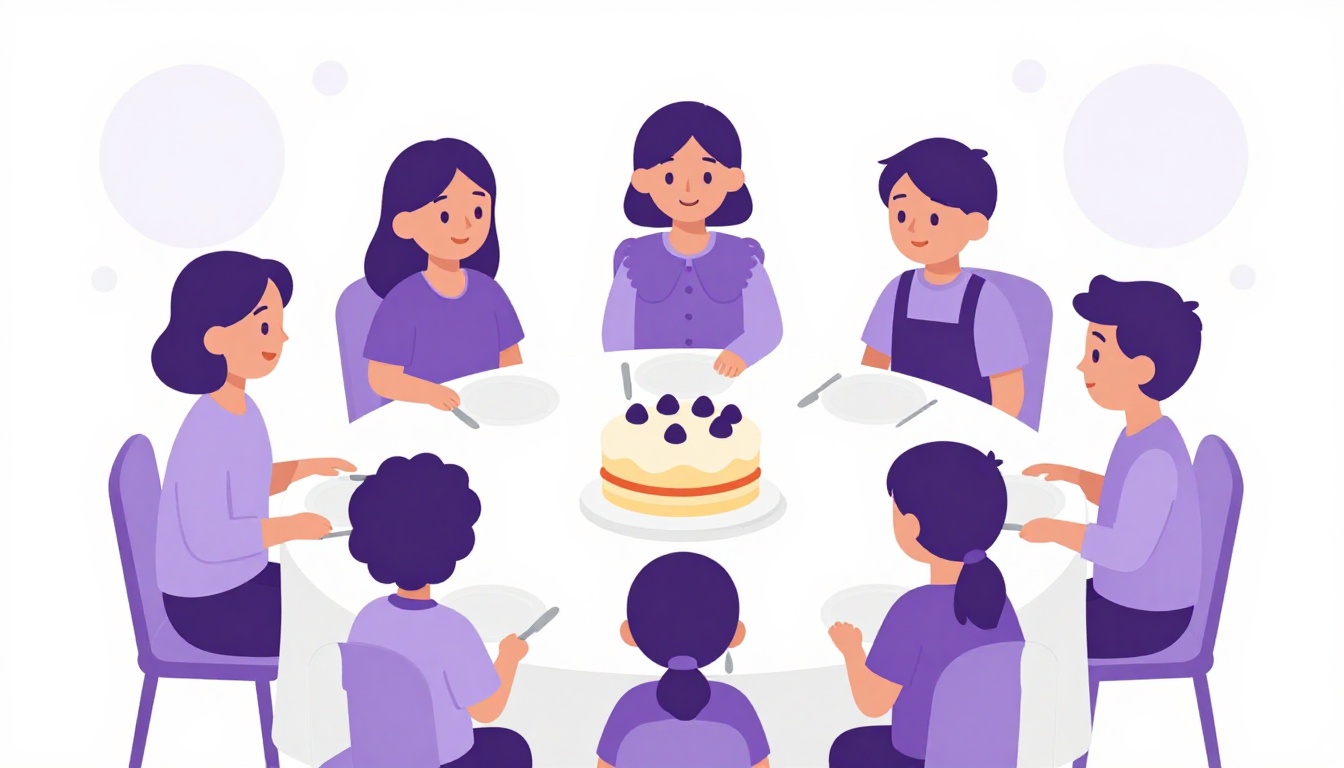
What a Brazilian Father's Day actually looks like, hour by hour, is fairly predictable and genuinely warm: a late lunch rather than dinner, extended family showing up gradually through the early afternoon, kids presenting handmade cards alongside store-bought gifts, and a lot of photos taken specifically to send to relatives who couldn't make it. If your partner's family invites you to one, expect a full table, expect to be asked what you'd like to eat more than once, and expect "Feliz Dia dos Pais" to be said out loud, warmly and repeatedly, to every father in the room, not just the one being specifically honored.
Father's side of the family tree
A handful of related words round out how "pai" fits into the wider family picture, without needing a full detour, since some of these already have their own dedicated coverage on this blog. "Padrasto" means stepfather, languagedrops' entry for stepfather confirms the standard translation clearly. "Sogro" means father-in-law, the word you'll actually need most if you're the one meeting a Brazilian partner's dad for the first time, and languagedrops' entry for father-in-law covers it directly. "Padrinho" means godfather, distinct from both, and languagedrops' entry for godfather lays out that meaning too.
One generation up, there's "avô," grandfather, which this blog already covers in real depth in a dedicated post on grandpa in Portuguese, and the equivalent word for grandmother gets its own full treatment in how do you say grandma in Portuguese. No need to repeat any of that groundwork here beyond pointing you to it: the short version is that avô follows the exact same formal-versus-warm split as pai and papai, just one generation removed.
If you're the one dating into a Brazilian family rather than born into it, "sogro" is genuinely the word worth memorizing first out of this whole group. It's what you'll call your partner's father once things get serious, and it's also the word he'll likely use for you eventually, since "genro" (son-in-law) and "sogro" describe the relationship from both directions. Get "sogro" right, pronounced "SO-groh," and you've already cleared one small, real hurdle before you've even worked out what to call him directly, which is usually just "seu" plus his first name, or eventually, if he insists, "pai" as an honorary, affectionate stretch of the word.
Common mistakes English speakers make
A handful of patterns show up again and again with English speakers on this exact topic, and knowing them ahead of time saves you the small, awkward correction later.
The first, and the biggest by far: confusing pais and país, either in writing or by ear. It's an easy accent mark to drop on a phone keyboard that doesn't default to Portuguese, and an easy syllable count to blur when you're still new to the language. The second: forgetting the article. English can say "father" bare in a sentence, but Portuguese almost always wants "o pai" or "meu pai" rather than the noun standing alone; "pai chegou" instead of "meu pai chegou" sounds noticeably clipped to a native ear.
The third: mispronunciation, usually in one of two directions. Either the stress lands wrong, which is less of a risk here since pai is one syllable, or, more commonly, English speakers over-nasalize the "ai" sound out of habit, treating it like the nasal vowels elsewhere in Portuguese family vocabulary. Pai is not nasal. It's a clean, oral diphthong, closer to "pie" than to anything with a hum in it.
The fourth: assuming papai works identically in Portugal. It doesn't, or at least not with the same frequency; European Portuguese speakers lean more on plain "pai" in everyday speech, and defaulting to Brazilian usage in front of a Portuguese family can sound slightly off, even if it's understood.
The fifth, a small one: capitalizing "Pai" the way English capitalizes "Dad" in direct address ("Happy birthday, Dad!"). Portuguese doesn't generally capitalize pai, papai, or painho this way, even when you're speaking straight to him. It's a minor habit to unlearn, but it's exactly the kind of small detail that makes written Portuguese look more natural once you drop it.
The sixth, and it only comes up in writing, is skipping accent marks altogether on an English keyboard and hoping context fills in the gap. It usually does, native readers are good at guessing from context, but it's a habit worth breaking early, the same way it's worth typing "café" correctly instead of "cafe" and shrugging. Getting comfortable with Portuguese's accent system pays off across dozens of unrelated words, not just this one pair.
If any of this makes Portuguese spelling and accent marks feel like a bigger project than you expected, this blog's guide to how to spell in Portuguese covers the accent system in more depth, and it's worth reading before you get much further into family vocabulary, since the same kind of accent-mark trap shows up again and again in unrelated words.
Father phrases you'll actually use
Vocabulary sticks better inside full sentences than as isolated words on a list. Here's a set of phrases built around pai and papai that you'll actually hear, or actually want to say, in a real family setting. Read them out loud, not just silently; that's where the pronunciation work from earlier gets tested for real.
| Portuguese | English | Notes |
|---|---|---|
| Eu te amo, pai. | I love you, dad. | See the fuller breakdown in i love you in Portuguese |
| Feliz Dia dos Pais, pai! | Happy Father's Day, dad! | The line you'll send every second Sunday of August |
| Meu pai mora em São Paulo. | My father lives in São Paulo. | Basic, everyday "meu pai" usage |
| Ele é igualzinho ao pai. | He's just like his father. | Common way to say "spitting image" |
| Sinto saudades do meu pai. | I miss my father. | "Saudades" carries more weight than plain "miss" |
| Como está o seu pai? | How is your father? | A natural way to ask after someone's dad |
| Bom dia, papai! | Good morning, dad! | Pairs with how do you say good morning in Portuguese |
| Parabéns, pai! | Congratulations, dad! | See congratulations in Portuguese for more uses |
| Meu pai faz aniversário em maio. | My father's birthday is in May. | Useful with how do you say happy birthday in Portuguese |
| Papai, que horas são? | Dad, what time is it? | Handy for coordinating plans; see what time is it in Portuguese |
If you want to round out the everyday politeness that sits naturally alongside family conversation, this blog's guides to please in Portuguese and how to say thank you in Portuguese cover exactly that ground, and days of the week in Portuguese helps with the "when are we visiting" side of things once a father-in-law starts inviting you over regularly.
Learning to actually hold a phone conversation with a Brazilian father-in-law takes more than a phrasebook, though. Every phrase in that table is easy to nod along to on the page and surprisingly hard to produce cold, under a little real pressure, with someone waiting on the other end of the line for your answer. That gap between recognizing a sentence and actually producing it, out loud, without a script in front of you, is the real work, and no amount of rereading the table closes it by itself.
Idioms and expressions with pai
A few idioms built around "pai" are common enough that you'll hear them regularly once you're paying attention. "Pai coruja," literally "owl father," describes a doting, overly proud father, the kind who shows every coworker fifty photos of his kid without being asked. Reverso's entry for pai coruja confirms the exact sense, and the logic behind it is genuinely charming: owls are folk-believed to think their own owlets are the most beautiful in the forest, blind to anything but their own chick's perfection. Apply that same blind, adoring pride to a human father, and you've got "pai coruja."
"De tal pai, tal filho" is the Portuguese equivalent of "like father, like son," used exactly the way English uses it, usually pointing out a resemblance in personality, habits, or looks rather than anything genetic in the strict sense. You'll hear it applied loosely too, to a boss and an employee who pick up the same mannerisms, or a teacher and a student, anywhere one person clearly rubbed off on another over time.
"Pai solteiro" means single father, a straightforward compound you'll see in official contexts as often as casual ones; bab.la's entry for pai solteiro lists it plainly. It follows the same pattern as "mãe solteira" (single mother), "solteiro" simply meaning "single" or "unmarried" attached to whichever parent word it modifies. And "ser pai," literally "to be a father," is the phrase people reach for around a birth or a pregnancy announcement: "Vou ser pai" means "I'm going to be a father," the kind of sentence that shows up in a lot of joyful family group chats, often followed immediately by photos nobody asked for and everybody wanted anyway.
None of these idioms need much padding beyond what they actually mean. They're the sort of phrases you'll recognize instantly once you've heard them once, and then start noticing everywhere, in a soap opera, in a birthday card, in something your father-in-law says without even thinking about it.
Getting comfortable actually saying it
Here's the honest truth about everything in this post: reading it won't make "pai" or the pais-versus-país distinction automatic. Only saying it, out loud, enough times, does that. You can understand the accent mark rule perfectly on paper and still freeze for half a second at the dinner table when you actually need to produce the sentence in real time, with a real father-in-law waiting for an answer.
This is the exact gap Comigo is built to close. It's a speak-first Portuguese app: a capybara companion named Capy plays you a line, you answer out loud into your microphone, and you get word-level feedback, green for what landed, red for what didn't, right there in the moment instead of after the fact. There are mini games built around the same vocabulary, and a social layer, streaks, nudges from friends, a weekly coin podium, so practicing doesn't happen in total isolation. Most language apps let you finish a lesson by silently tapping the right multiple-choice answer, which teaches recognition, not speech. Comigo skips that shortcut on purpose and makes you actually say "eu te amo, pai" or "feliz dia dos pais" out loud, in private, with nobody grading your accent, which turns out to be the missing piece for a lot of people who understand plenty of Portuguese but still freeze the moment they have to speak it. If that gap sounds familiar, app.usecomigo.com is where to go try it for yourself.
If you want a longer, more personal account of what that repetition actually feels like over months rather than a single afternoon, this blog's how I learned Portuguese post walks through the real, sometimes clumsy process rather than pretending fluency shows up from reading alone.
There's a particular kind of freeze that happens with family vocabulary specifically, worth naming honestly. You can drill flashcards for weeks, recognize "pai" and "papai" instantly on a screen, and still go completely blank the first time a real father-in-law asks you a direct question over dinner. That's not a knowledge gap. It's a speaking gap, and the two close at very different speeds. Reading builds recognition fast. Producing words under mild social pressure, in real time, with someone actually listening for your answer, only gets built by doing exactly that, over and over, ideally somewhere lower-stakes than a first dinner with the in-laws.
Frequently asked questions
Is pai or papai more common in everyday speech? Papai, by a wide margin, in direct address and casual conversation. Pai shows up more in formal writing, dictionaries, and neutral references, like describing "a father" in general rather than your own.
How do you pronounce pai correctly? Say "PIE," a single syllable, close to the English word for the dessert. It's an oral diphthong, not nasal, which makes it easier than a lot of Portuguese family vocabulary.
What do Brazilian kids actually call their father? Usually "papai," sometimes softened further into "painho" or "paizinho" depending on the region and the family. "Pai" is understood but sounds more like a dictionary entry than something a kid yells across the house.
Is papai used in Portugal? Not typically, or at least not nearly as often as in Brazil. European Portuguese speakers tend to lean on plain "pai" in everyday speech rather than reaching for "papai" the way Brazilians do.
What's the difference between pais and país? "Pais," no accent mark, one syllable, means fathers or, more commonly, parents. "País," accent on the í, two syllables, means country or nation. One accent mark and one syllable is the entire difference between the two words.
What is Dia dos Pais and when is it in 2026? "Dia dos Pais" is Brazil's Father's Day, created in 1953 and celebrated on the second Sunday of August ever since 1954. In 2026, that date falls on Sunday, August 9.
What is pai coruja? Literally "owl father," it describes a doting, overly proud father, drawing on the folk idea that owls think their own owlets are the most beautiful in the forest.
How do you say "my father" in Portuguese? "Meu pai" in a neutral or formal context, "meu papai" if you want the same warmth you'd use talking to or about him directly, though "meu pai" is genuinely the more common phrasing even in warm contexts.
Is it rude to call your dad "velho"? Not rude exactly, but it depends heavily on context. It's common and harmless said to friends about your dad, but calling him "velho" or "coroa" to his face can land as playful or a little flip, depending entirely on your relationship and tone.
Wrapping up
Pai is the word you'll find in a dictionary. Papai is the word an actual Brazilian family lives inside, the one you'll hear across the table more than any other. Painho, paizinho, velho, and coroa fill in the rest of the emotional range, from tender nickname to casual slang, and pais-versus-país is the one accent mark worth burning into memory before your next visit.
None of it needs to be memorized in one sitting. Most people pick up papai first, simply from hearing it constantly, then slowly notice the diminutives, then eventually catch themselves automatically reaching for "meu país" instead of "meus pais" without stopping to think about the accent mark at all. That's what fluency with a word actually looks like: not reciting the rule, but not needing the rule anymore.
If you want more of this same practical, real-family Portuguese, this blog also covers basic words in Portuguese and excuse me in Portuguese, two more corners of vocabulary you'll lean on constantly once you're actually surrounded by a Portuguese-speaking family. Read them when you're ready, say the words out loud when you get the chance, and the rest tends to follow on its own.


