
You're standing in a kitchen, holding a bright yellow jar, and you need the name. Turmeric in Portuguese is "cúrcuma" (feminine, so "a cúrcuma"). You'll also hear "açafrão-da-terra" and "açafrão-da-índia," and in some places people just say "açafrão." That last one is where learners get tangled, because "açafrão" is also the word for real saffron.
This guide gives you the answer first, then everything around it. You'll get every name in use, how to say them, the saffron mix-up, look-alike spices like colorau and curry, and the small grammar that lets you drop the word into a real sentence. Later sections cover shopping, cooking, golden milk, and a full spice vocabulary. If you want the wider picture of kitchen words first, our guide to food in Portuguese is a good companion.
Knowing a word on the page is one thing. Saying it while a shop assistant waits is another, and that gap is exactly why we built Comigo around speaking out loud, with Capy the capybara listening and giving you feedback on every word. Read on, then say each name out loud as you go.
How Do You Say Turmeric in Portuguese? The Quick Answer
The main word is "cúrcuma." Open the Cambridge English-Portuguese dictionary and that's the translation you get. The Linguee entry for turmeric and the Glosbe English-Portuguese page list the same word first, followed by "açafrão-da-terra" and "açafrão-da-índia."
Here's the short version, and it's all you need if you're in a hurry.
| Portuguese | English | Quick note |
|---|---|---|
| a cúrcuma | turmeric | The standard word, safe in Brazil and Portugal |
| o açafrão-da-terra | turmeric (literally "saffron of the earth") | Very common in Brazilian recipes |
| o açafrão-da-índia | turmeric (literally "saffron of India") | Understood widely, points to the plant's Indian origin |
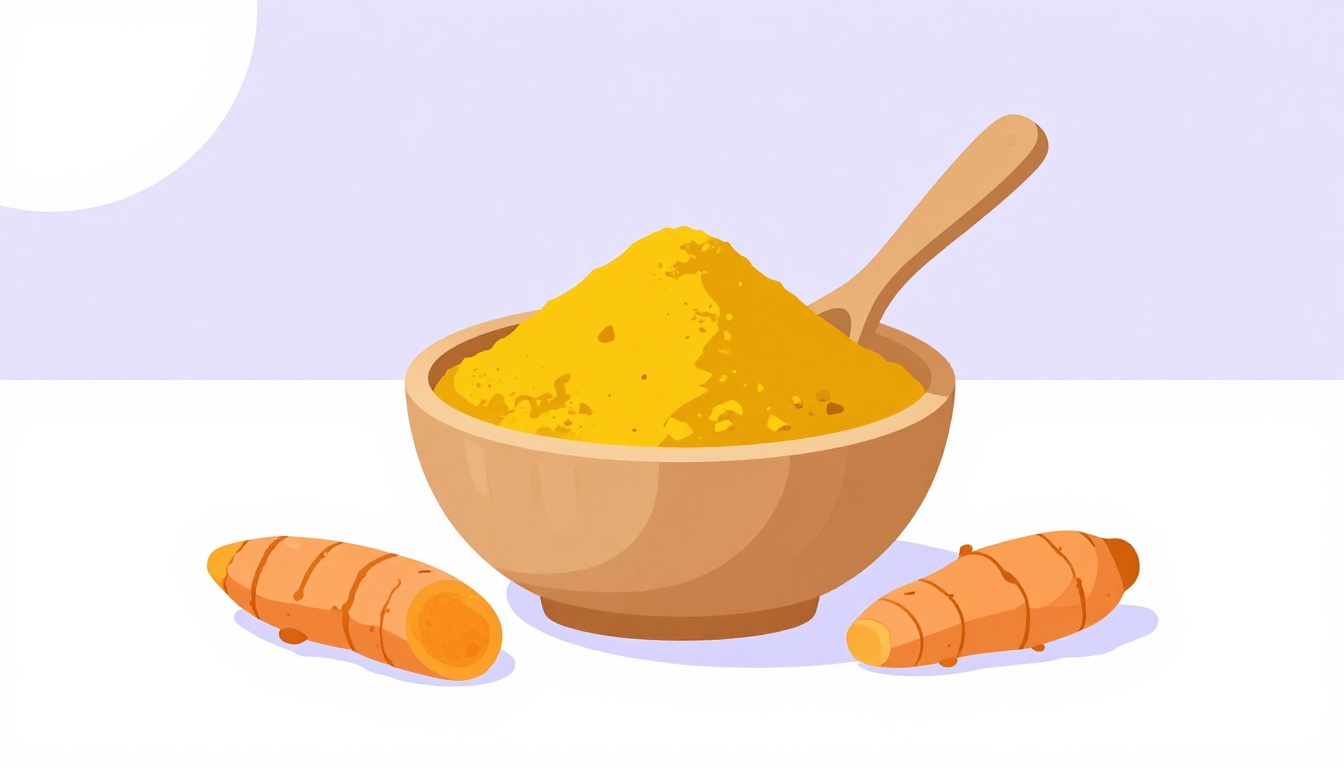
So why does a yellow powder have two "saffron" names? Because for a long time it was the cheap stand-in for saffron, and the habit stuck. We'll unpack that in a moment. For now, know that the plant itself is the same one English speakers call turmeric: "Curcuma longa," a relative of ginger, and the part we use is the underground stem, the rhizome. The Wikipedia article on turmeric covers the plant and its history if you're curious.
Let's put the word to work right away. Four sentences you can steal today:
| Portuguese | English |
|---|---|
| Você tem cúrcuma? | Do you have turmeric? |
| Eu uso cúrcuma no arroz. | I use turmeric in rice. |
| Preciso de açafrão-da-terra. | I need turmeric. |
| Esta cúrcuma é muito amarela. | This turmeric is very yellow. |
Notice "cúrcuma" and "açafrão-da-terra" are interchangeable in all four. Swap them and nobody blinks.
Which one should you pick? If you're writing a shopping list, sending a message, or talking to someone you've just met, "cúrcuma" is the low-risk choice. It's the word on labels and in dictionaries, and it never gets confused with real saffron. If you're reading Brazilian recipes, expect "açafrão-da-terra" constantly, so learn to recognize it on sight even if you say "cúrcuma" yourself. Recognizing and using are two different skills, and it's fine to start with recognizing.
Every Portuguese Name for Turmeric
Portuguese has more names for turmeric than English does. Some you'll hear daily. Others you'll only meet in a herbal shop or an old book. Here's the full list, with an honest note on how common each one is.
| Name | Meaning | Where you hear it | Note |
|---|---|---|---|
| cúrcuma | turmeric | Everywhere: dictionaries, labels, supermarkets | The most standard and neutral choice |
| açafrão-da-terra | "saffron of the earth" | Brazilian recipes, spice aisles | Extremely common in Brazil |
| açafrão-da-índia | "saffron of India" | Health articles, shops in both countries | Common, points to the plant's Indian origin |
| açafrão | saffron, or turmeric by habit | Depends on the country and context | Ambiguous, see the next sections |
| gengibre-amarelo | "yellow ginger" | Some dictionaries and online sources | Less common, treat as a word to recognize |
| raiz-de-sol | "root of the sun" | Some Portuguese plant sources | Rare, you'll seldom need it |
| turmérico | turmeric | Some Portuguese sources | Rare, looks like the English word |
| açafroa | listed as a turmeric name in some sources | Rare, older or regional texts | Only recognize it, don't use it |
If you only learn three, learn "cúrcuma," "açafrão-da-terra," and "açafrão-da-índia." Those three cover nearly every real situation. The Portuguese-language Wikipedia page on açafrão-da-terra lists the rarer names if you want to see them in one place.
Brazil and Portugal: what actually differs
This is where you have to be careful, so here's what the Portuguese-language sources say and nothing more.
In Brazil, and in many Latin American countries too, people often treat "açafrão" and "cúrcuma" as the same thing when they say "açafrão-da-terra." So a Brazilian recipe that calls for "uma colher de açafrão-da-terra" wants the yellow powder, not the expensive threads.
In Portugal, "açafrão" normally means true saffron, the flower spice. But many people also call turmeric "açafrão," especially in the phrase "açafrão em pó," because real saffron is expensive and the yellow powder took over the everyday name. Iguaria's guide to the difference says that in Portugal many people cook with turmeric and call it "açafrão," especially in everyday cooking. Portuguese pages like the Continente food feed on cúrcuma and Onelink's explainer on cúrcuma or açafrão-da-índia then stress that the two are different spices.
The practical rule is simple. In writing and in shops, "cúrcuma" is the safest word in both countries. In speech, expect "açafrão" to mean either thing, and let the recipe or the price tell you which.
How to Pronounce Cúrcuma and Açafrão
Four sounds do most of the work in these words: the stress, the "ç," the "-uma" ending, and the nasal "ão." Let's take them one at a time. Every sound guide below is an approximation in English letters, so treat it as a starting point, not a rulebook.
Stress. In "cúrcuma," the accent mark on the "ú" tells you where to push: the first syllable. Say KOOR-koo-mah. In "açafrão," the stress lands on the last syllable, "frão." That's ah-sah-FROWN, with a nasal ending. The written accent is your friend in Portuguese. Where it appears, stress goes there.

The "ç." It always sounds like "s," never like "k." So "açafrão" starts with "ah-sah," the way you'd say "sassy" without the second half. If you're ever unsure how a word is spelled out loud, our guide on how to spell in Portuguese covers the alphabet and those accent marks.
The ending "-uma." It's unstressed, so say it lightly and quickly: "koo-mah," not "KOO-MAH." Rushing the tail of the word is one of the easiest ways to sound more natural.
The nasal "ão." This is the real challenge. It's not "ah" plus "oh." It's one sound, close to the "ow" in "cow," but with air flowing through your nose too. Some teachers describe it as a blend of "ow" and "ong," without ever closing your mouth for the "ng." The Rio and Learn guide to nasal sounds and Elon's page on nasal diphthongs both walk through how to lower the back of the soft palate. A handy fact: "ão" and "am" sound the same, which is why you'll see both endings in verbs.
Portuguese vowels also come in open and closed versions, and that's a real topic for another day. The good news here: nothing in these particular words depends on it. The "ú" is a clear "oo" and the "a" sounds are "ah."
| Word | Rough sound guide | Stressed syllable | Watch out for |
|---|---|---|---|
| cúrcuma | KOOR-koo-mah | cúr | Light, quick ending |
| açafrão | ah-sah-FROWN (nasal) | frão | The "ç" is "s," and "ão" goes through the nose |
| açafrão-da-terra | ah-sah-FROWN dah TEH-hah (approximate) | frão, then ter | The "r" varies by region |
| açafrão-da-índia | ah-sah-FROWN dah EEN-jee-ah (approximate) | frão, then ín | Brazilian "di" often sounds like "jee" |
| colorau | koh-loh-ROW | rau | "au" is like "ow" in "cow" |
You can find the IPA transcription for the saffron word on Wiktionary's açafrão entry, and if you want to know how hard the whole language really is on English ears, is Portuguese hard to learn gives you the honest answer.
One last tip. Don't rely on text to learn a sound. Listen to a native speaker say the word, pause, and copy it. Do that ten times and "açafrão" stops feeling like a tongue twister.
Here's a simple three-step drill you can do in two minutes. First, say "cúrcuma" five times, slowly, pushing on the first syllable. Second, say "açafrão" five times, and feel the air move through your nose on the last syllable. Third, say the full sentence "Eu uso cúrcuma e açafrão" once, at normal speed. If the nasal sound feels odd, hold your nose gently while you say it. When the sound changes, the air is going through the right place.
Turmeric vs Saffron: The Big Portuguese Mix-Up
Here's the confusion in one sentence. In Portuguese, "açafrão" can mean true saffron, or it can mean turmeric, depending on who's talking and where.
True saffron is the dried stigma of the flower "Crocus sativus." Each flower gives you only three of those threads, and they're picked by hand, which is why saffron is one of the most valuable spices in the world. The Wikipedia article on saffron explains the harvest in detail. Turmeric is a root. Different plant, different family, different price tag.
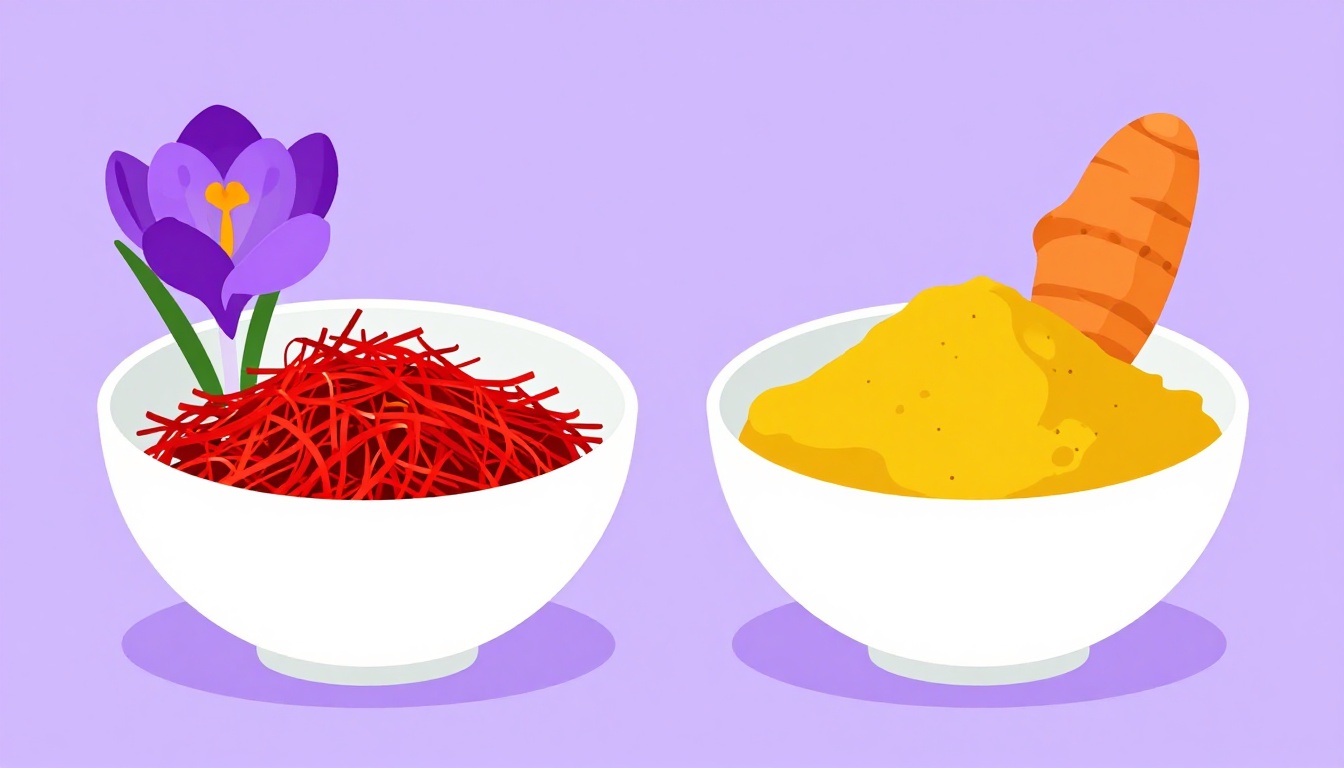
Botanically, the two aren't related at all. Saffron belongs to Iridaceae, the iris family. Turmeric belongs to Zingiberaceae, the ginger family. They share a name in Portuguese because they both turn food yellow-gold, and because turmeric was long the affordable replacement. The Brazilian explainers from Rituaali on the difference between cúrcuma and açafrão and Nutri Ana Paula on whether they are the same thing make the same point: two different plants, one confusing name.
| Feature | Turmeric | Saffron |
|---|---|---|
| Portuguese name | cúrcuma, açafrão-da-terra, açafrão-da-índia | açafrão (the plain word) |
| Plant | Curcuma longa | Crocus sativus |
| Family | Zingiberaceae (ginger) | Iridaceae (iris) |
| Part used | Rhizome (root), usually ground to powder | Dried stigmas (threads) of the flower |
| Color | Bright yellow-orange | Deep red threads that color food golden |
| Flavor | Earthy, resinous, slightly bitter | Floral, honey-like, slightly bitter |
| Price | Cheap | Among the most expensive spices |
| Typical use | Rice, chicken, stews, curries | Tiny pinches in rice, stews, and special dishes |
What to do when a recipe says "açafrão"
Don't guess. Check three clues.
First, look at the amount. A pinch of threads, or "fios de açafrão," is real saffron. A spoonful of powder is almost certainly turmeric. Second, check the country. A Brazilian recipe that says "açafrão-da-terra" is turmeric. A Portuguese recipe that says just "açafrão" may be either, so read the ingredient details. Third, consider the price. If a recipe calls for a tablespoon of "açafrão" for a family dinner, no one is putting real saffron in that pot.
Still not sure? Ask, out loud, in Portuguese. This mini exchange is useful in a shop:
| Who | Portuguese | English |
|---|---|---|
| You | Isto é açafrão ou cúrcuma? | Is this saffron or turmeric? |
| Assistant | É cúrcuma, em pó. | It's turmeric, powdered. |
| You | E o açafrão de verdade, onde está? | And where is the real saffron? |
| Assistant | Ali, nos temperos mais caros. | Over there, with the pricier spices. |
Short, polite, and it works in both countries. If the answer is "é cúrcuma," the jar in your hand is the yellow powder, and you've just had a real conversation about spices.
Turmeric, Colorau, Curry and Other Look-Alikes
Turmeric isn't the only spice that turns food yellow, orange, or red. A Portuguese kitchen has a handful of look-alikes, and mixing them up is the second most common mistake after the saffron one.
The big one is "colorau," also called "urucum." It's a reddish powder made from annatto seeds, the plant "Bixa orellana." The Wikipedia page on Bixa orellana says it's native to tropical America, and the Portuguese Wikipedia entry on urucum covers its use as a natural dye. In Brazil it's used to color dishes, and it even has a nickname, "falso-açafrão" ("false saffron"), because it gives food a golden or orange tint without the price of the real thing. Turmeric, by contrast, comes from India and is a completely different plant.

So a jar labeled "colorau" is not turmeric, even if both end up coloring your rice. Word meanings can also shift between countries, so if a Portuguese recipe says "colorau," look at the rest of the ingredient list and the color of the dish before you assume. The two also look different in the jar: colorau leans red-orange, turmeric leans bright yellow. For a fuller overview of how Brazilians tell these spices apart, the Ocean Drop blog on the difference between açafrão and cúrcuma is a clear read.
Curry is a blend, not a single plant, and it often includes turmeric. In Portuguese you can just say "curry" and be understood. You may also see the spelling "caril" on some Portuguese labels, but "curry" is the safe choice in both countries. Paprika is "páprica," a red powder with a mild, sweet flavor that colors and seasons at once.
| Spice | English | Portuguese | Color | What it does in a dish |
|---|---|---|---|---|
| Turmeric | turmeric | cúrcuma, açafrão-da-terra | Yellow-orange | Adds earthy flavor and a strong yellow color |
| Saffron | saffron | açafrão | Red threads, golden when cooked | Adds floral aroma and a golden tint, in tiny amounts |
| Annatto | annatto | colorau, urucum, "falso-açafrão" | Reddish orange | Mostly colors food, with a mild flavor |
| Curry | curry powder | curry (caril in some Portuguese labels) | Yellow to brown | A ready-made blend of several spices |
| Paprika | paprika | páprica | Red | Adds mild sweetness and a red color |
Colors are half the game with these spices. If you want the words for "yellow," "orange," and the rest, the guide to colors in Portuguese has them all, and the shorter page on red in Portuguese helps with the reddish ones like paprika and annatto. A quick rule of thumb from the table: if you want yellow, look for cúrcuma. If you want red-orange, look for colorau. If you want a fancy golden aroma and you have the budget, look for açafrão.
Gender, Plurals and Grammar Around Cúrcuma
Every noun in Portuguese is masculine or feminine, and our spices are no exception. "Cúrcuma" ends in "-a," which is the usual sign of a feminine word, so it's "a cúrcuma." "Açafrão" is masculine: "o açafrão." That difference matters the moment you add an adjective or an article.
| Portuguese | Gender | English | Plural |
|---|---|---|---|
| a cúrcuma | feminine | the turmeric | as cúrcumas (rare, mostly for brands or types) |
| o açafrão | masculine | the saffron or turmeric | os açafrões |
| o açafrão-da-terra | masculine | the turmeric | os açafrões-da-terra |
| o colorau | masculine | the annatto powder | os coloraus (rare) |
| a páprica | feminine | the paprika | rarely used, it's uncountable in most sentences |
Spices are usually uncountable, like "salt" or "flour" in English, so you'll seldom need a plural. When you do, it's usually for varieties or brands. "Açafrão" follows a pattern you'll see in many words ending in "-ão": the plural is "-ões," as in "açafrões." If that feels like a lot of rules, remember these are the basic words in Portuguese patterns, and they repeat across hundreds of nouns.
Gender also changes the little words around the noun, especially adjectives. They have to match. Compare the two spices side by side.
| With "a cúrcuma" (feminine) | With "o açafrão" (masculine) | English |
|---|---|---|
| a cúrcuma fresca | o açafrão fresco | the fresh turmeric |
| a cúrcuma amarela | o açafrão amarelo | the yellow turmeric |
| uma cúrcuma forte | um açafrão forte | a strong turmeric |
| esta cúrcuma | este açafrão | this turmeric |
Notice the pairs: "a" goes with "-a" endings, "o" with "-o" endings, and "esta" and "este" follow the same split.
Small words that carry the meaning
Three little words do most of the work around spices: "de," "com," and "sem."
"De" means "of" and links the container or measure to the spice. "Com" means "with" and "sem" means "without." Add "a gente tempera com," a very common spoken way of saying "we season with," and you're ready to build real sentences.
| Portuguese | English | Pattern |
|---|---|---|
| pó de cúrcuma | turmeric powder | noun + de + noun |
| uma colher de chá de cúrcuma | a teaspoon of turmeric | measure + de + spice |
| chá de cúrcuma | turmeric tea | drink + de + spice |
| arroz com cúrcuma | rice with turmeric | food + com + spice |
| arroz sem cúrcuma | rice without turmeric | food + sem + spice |
| A gente tempera o frango com açafrão-da-terra. | We season the chicken with turmeric. | "a gente" = "we" in casual speech |
| Eu não gosto de cúrcuma. | I don't like turmeric. | gostar de + noun |
| Você pode trocar o açafrão por cúrcuma? | Can you swap the saffron for turmeric? | trocar X por Y |
Look at "gosto de cúrcuma": the "de" is required with "gostar," and "de" plus "a" merges into "da." So "I like the turmeric" becomes "Eu gosto da cúrcuma." Small detail, big difference in how natural you sound.
One more practical drill. Answering "yes" or "no" in a shop conversation is half of what you'll say, so it helps to know the many ways to answer, and our guide to yes in Portuguese shows you all of them. Here's a short exchange that puts the grammar to work.
| Who | Portuguese | English |
|---|---|---|
| Friend | Você põe cúrcuma no arroz? | Do you put turmeric in the rice? |
| You | Sim, uma colher de chá. | Yes, a teaspoon. |
| Friend | E sem pimenta? | And without pepper? |
| You | Sem pimenta, mas com bastante alho. | Without pepper, but with plenty of garlic. |
That's a full, natural exchange using "de," "com," and "sem," in under twenty words. Say it out loud a few times, swap in other spices, and you'll have it.
Buying Turmeric: Supermarket and Market Phrases
You know the word. Now you need it in a shop, with a real person standing next to you, waiting. That's a different skill. Reading "cúrcuma" on a jar is easy. Asking for it out loud, in a hurry, with a queue behind you, takes a few phrases you've already practiced.

Start with where to look. In a big supermarket, turmeric lives in the spice aisle, called "o corredor de temperos" or "o corredor de especiarias." Small jars and sachets sit on the shelf, usually next to pepper, cumin and paprika. In Brazil you'll also find "a cerealista," a shop that sells grains, nuts, dried fruit and spices, often by weight. In Portugal, "a mercearia" is a small grocery, and "a ervanária" is a herbal shop where turmeric capsules and teas are common. Street markets, "a feira" or "o mercado," sell fresh roots when they're in season.
Here's the first phrase set. These are for finding the product.
| Portuguese | English | When to use |
|---|---|---|
| Onde fica o corredor de temperos? | Where is the spice aisle? | Asking a shop worker |
| Você tem cúrcuma? | Do you have turmeric? (Brazil, informal "you") | At a small shop or market stall |
| Tem açafrão-da-terra? | Do you have turmeric? (literally "earth saffron") | Brazil, when you want the everyday name |
| Tem açafrão em pó? | Do you have powdered turmeric or saffron? | Portugal, where this often means turmeric |
| Estou à procura de cúrcuma. | I'm looking for turmeric. | Any shop, a polite opener |
| Onde posso encontrar temperos? | Where can I find spices? | When you're lost in a big store |
That "açafrão em pó" line needs a warning. In Portugal, someone might hand you turmeric. Or they might hand you very expensive saffron powder. If price matters, ask "É cúrcuma ou açafrão verdadeiro?" (Is it turmeric or real saffron?). A jar of true saffron costs far more per gram, so the price on the label usually settles the question fast.
Fresh root, powder or capsules
Turmeric comes in a few forms, and each one has its own word. Fresh root looks like a small, orange-fleshed ginger. Powder is the yellow-orange spice most recipes want. Capsules are for supplements, which we'll get to later in the health section.
| Portuguese | English | Notes |
|---|---|---|
| a raiz de cúrcuma | turmeric root | Technically a rhizome, but "raiz" is the everyday word |
| a cúrcuma fresca | fresh turmeric | Look in the produce section or at a market |
| a cúrcuma em pó | ground turmeric | The standard cooking form |
| o açafrão-da-terra em pó | ground turmeric | The Brazilian everyday version |
| as cápsulas de cúrcuma | turmeric capsules | Sold at pharmacies and herbal shops |
| o pacote / o pote / o frasco | packet / small tub / jar | How spices are packaged |
Quantities matter when you buy by weight. A shop worker might ask "Quanto o senhor quer?" or "Quanto a senhora quer?" (How much do you want?). You can answer with grams and a number. Our guide to numbers in Portuguese covers the hundreds you need for "duzentos gramas" (200 grams) and "quinhentos gramas" (500 grams).
| Portuguese | English | When to use |
|---|---|---|
| Quero cem gramas, por favor. | I'd like 100 grams, please. | Buying by weight |
| Só um pacote pequeno. | Just one small packet. | When you want a little |
| É fresca ou seca? | Is it fresh or dried? | Checking the product |
| Quanto custa? | How much is it? | Any price check |
| Vou levar este. | I'll take this one. | Deciding at the shelf |
The small words carry the politeness. Say "por favor" every time, and if you're squeezing past someone in a narrow aisle, use the phrases from our post on how to say please in Portuguese. A quick "com licença" (excuse me) works too, and we break down when to use it in excuse me in Portuguese. At the till, finish with "obrigado" or "obrigada," which you can learn properly in how to say thank you in Portuguese.
A 20-second shop dialogue
Here's how it sounds when it goes right. You're at a market stall in Brazil.
| Speaker | Portuguese | English |
|---|---|---|
| You | Bom dia! Vocês têm cúrcuma fresca? | Good morning! Do you have fresh turmeric? |
| Seller | Tenho sim. Quanto você quer? | Yes, I do. How much do you want? |
| You | Uns duzentos gramas, por favor. | About 200 grams, please. |
| Seller | Aqui está. Mais alguma coisa? | Here you go. Anything else? |
| You | Só isso. Quanto fica? | That's all. How much is it? |
| Seller | Doze reais. | Twelve reais. |
Notice "uns." It means "about" or "some" before a number, and Brazilians use it constantly. Notice "Só isso" too. It closes the deal and it's easier than any long sentence.
Cooking With Turmeric in Portuguese
Turmeric in a Portuguese-language kitchen does one main job: it turns food golden. It also adds an earthy, slightly bitter note that sits quietly behind the other flavors. You rarely use much. One teaspoon can color a whole pot of rice.

Recipes in Portuguese follow a pattern. They give you a list of ingredients, then a short set of orders in the imperative: "refogue," "adicione," "misture," "tampe." Once you know about fifteen verbs and a handful of measures, most recipes become readable. Here are the ones you'll see next to turmeric.
| Portuguese | English | Example |
|---|---|---|
| refogar | to sauté / to fry lightly | Refogue a cebola e o alho. |
| temperar | to season | Tempere o frango com sal e pimenta. |
| misturar | to mix | Misture bem. |
| adicionar / juntar | to add | Junte o açafrão. |
| espalhar | to sprinkle / spread | Espalhe o açafrão sobre o frango. |
| tampar | to cover | Tampe a panela. |
| cozinhar | to cook | Cozinhe por 20 minutos. |
| mexer | to stir | Mexa de vez em quando. |
| ferver | to boil | Deixe ferver. |
| servir | to serve | Sirva quente. |
Now the measures. Portuguese uses spoons much like English does, but the words go in a fixed order.
| Portuguese | English | Notes |
|---|---|---|
| uma pitada | a pinch | The tiny amount you hold between two fingers |
| uma colher de chá | a teaspoon | Literally "a spoon of tea" |
| uma colher de sopa | a tablespoon | Literally "a spoon of soup" |
| uma xícara (Brazil) / uma chávena (Portugal) | a cup | Different words in each country |
| a gosto | to taste | Very common at the end of a line |
| uma pitada de sal | a pinch of salt | Almost every recipe has one |
Classic dishes with turmeric
Several everyday dishes lean on turmeric for color. According to the recipe roundup on Tudo Gostoso's blog, açafrão-da-terra shows up in a wide range of Brazilian home cooking. The main ones you'll hear named are these.
| Portuguese | English | What makes it "açafrão" |
|---|---|---|
| frango com açafrão | chicken with turmeric | Turmeric rubbed on or stirred into the sauce |
| frango ensopado com açafrão-da-terra | turmeric chicken stew | Slow-cooked chicken with a golden broth |
| arroz amarelo | yellow rice | Rice fried briefly with turmeric |
| arroz com açafrão / arroz com cúrcuma | rice with turmeric | The same idea, two names |
| arroz de frango com açafrão | chicken rice with turmeric | A Portuguese one-pot dish |
| asas de frango com arroz de açafrão | chicken wings with turmeric rice | A Portuguese oven-and-pot combination |
A quick reminder from section two: in a Portuguese recipe, "açafrão" on its own can mean either spice. If the recipe is cheap and the rice is bright yellow, it's almost surely turmeric. If it's an expensive festive dish with a few threads soaked in water, it's saffron. Once you're comfortable with these, a bigger stock of dish names is waiting when you want to keep going.
Reading a recipe line by line
Let's walk through a Brazilian turmeric chicken stew, sentence by sentence. The steps follow the method on Leiliane's frango com açafrão recipe in spirit, simplified so you can see the grammar.
| Portuguese | English | What to notice |
|---|---|---|
| Refogue a cebola e o alho. | Sauté the onion and garlic. | "Refogue" is the imperative of "refogar" |
| Adicione o frango temperado. | Add the seasoned chicken. | "Temperado" is a past participle used as an adjective |
| Espalhe o açafrão-da-terra. | Sprinkle the turmeric. | "Espalhe" also means "spread" |
| Junte a água quente. | Add the hot water. | "Água" is feminine, so "quente" needs no change |
| Tampe e cozinhe por 20 a 30 minutos. | Cover and cook for 20 to 30 minutes. | "Por" plus a time span means "for" |
You'll spot the pattern quickly. Every step starts with a verb ending in "-e" or "-a," and the rest is just nouns you already know. If you want to see how "água" behaves with articles and pluralization, our post on water in Portuguese goes through it.
The rice version is even shorter. The steps in the Brazilian versions say to fry the rice with the turmeric for about two minutes, then add water, peas and salt. In Portuguese it sounds like this.
| Portuguese | English |
|---|---|
| Frite o arroz com o açafrão por dois minutos. | Fry the rice with the turmeric for two minutes. |
| Acrescente a água e as ervilhas. | Add the water and the peas. |
| Tempere com sal a gosto. | Season with salt to taste. |
| Tampe e deixe cozinhar em fogo baixo. | Cover and let it cook on low heat. |
"Fogo baixo" is "low heat," and "fogo alto" is "high heat." Literally, "fogo" means "fire." You'll see it in almost every recipe, so it's worth memorizing.
Golden Milk in Portuguese: Leite Dourado
Golden milk is a warm drink made with milk, turmeric and spices. In Portuguese it's called "leite dourado," which literally means "golden milk." You'll also see the English name "golden milk" printed as-is in many Portuguese recipes, because the drink is a trend, and trends travel with their names.

The drink has Ayurvedic roots, which is the traditional medicine system of India. Modern versions on Portuguese and Brazilian recipe sites, such as Made by Choices and Chefinha Natural, mix turmeric with a warm milk and a few spices. Here's what goes in.
| Portuguese | English | Notes |
|---|---|---|
| o leite | milk | The base |
| o leite vegetal | plant-based milk | Almond, oat or coconut; "leite de amêndoas," "leite de aveia," "leite de coco" |
| a cúrcuma (em pó) | turmeric (powder) | The star ingredient |
| a pimenta preta / a pimenta-do-reino | black pepper | Added on purpose, see below |
| o gengibre | ginger | Fresh or ground |
| a canela | cinnamon | A stick or a pinch of powder |
| o mel | honey | To sweeten |
Why is there black pepper in it?
That surprises most learners. Black pepper in a sweet drink? Recipe sites explain it the same way: pepper is added to help the body absorb curcumin, the main compound in turmeric. We'll look at what the research says about that in the next section. For now, the vocabulary is what matters. "Pimenta-do-reino" is the formal name for black pepper. "Pimenta preta" is the everyday one. Both work.
How to say the steps
You already know the verb pattern. Here's the whole method in short Portuguese.
| Portuguese | English |
|---|---|
| Aqueça o leite em fogo médio. | Heat the milk on medium heat. |
| Não deixe ferver. | Don't let it boil. |
| Adicione a cúrcuma, a pimenta, o gengibre e a canela. | Add the turmeric, the pepper, the ginger and the cinnamon. |
| Mexa por 3 a 5 minutos. | Stir for 3 to 5 minutes. |
| Adoce com mel a gosto. | Sweeten with honey to taste. |
| Sirva quente. | Serve hot. |
That's six sentences, and you can say every one of them out loud. Which is the point. If you'd rather practice with a partner who answers back, Comigo is a speak-first app where you talk with a capybara named Capy, so even a short kitchen sentence like "Aqueça o leite" gets said aloud and checked, instead of just read.
Health Words: Curcumin, Anti-Inflammatory and Careful Language
You'll see turmeric on wellness pages all the time. Portuguese-language articles about "cúrcuma benefícios" (turmeric benefits) are everywhere. This section is not medical advice. It's vocabulary, plus a careful look at what published research says, so you can read those pages without getting lost.
| Portuguese | English | Notes |
|---|---|---|
| a curcumina | curcumin | The main compound in turmeric |
| anti-inflamatório | anti-inflammatory | Adjective or noun |
| o antioxidante | antioxidant | Masculine noun |
| o suplemento | supplement | Often "suplemento alimentar" (food supplement) |
| a cápsula | capsule | The usual supplement form |
| o comprimido | tablet / pill | Also used for tablets |
| a absorção | absorption | How well the body takes something in |
| a biodisponibilidade | bioavailability | A technical word you'll see in articles |
| a dose | dose | Same spelling as English |
| os efeitos colaterais | side effects | "Efeitos secundários" is also used in Portugal |
What the research says
Two papers are worth knowing about, because Portuguese wellness sites often cite claims that trace back to studies like them. A 2022 comprehensive review on PubMed says curcumin shows anti-inflammatory and antioxidant activity. But the same review points out that its low solubility and poor bioavailability limit those benefits, and it warns that excessive intake may have adverse effects on organs such as the kidneys, heart, liver and blood. A 2023 systematic review and meta-analysis of randomized trials found that turmeric or curcumin supplements were linked with lower inflammatory markers, such as CRP, TNF-alpha and IL-6, and with better antioxidant measures.
That sounds promising, and it is worth reading. But it isn't a promise. Researchers themselves say more research is needed, and results from a study don't automatically apply to you. The US National Center for Complementary and Integrative Health keeps a plain-language turmeric page at the NCCIH if you want an official starting point. Whether any supplement is right for you is a question for a professional, not a blog post.
Body words come up quickly in health articles. If organs like "o fígado" (liver) or "o rim" (kidney) show up and you want to understand more of them, our post on the gallbladder in Portuguese covers a group of body words you'll see in exactly this kind of text.
Phrases to use at the pharmacy
If you're in a Portuguese-speaking country and want to ask about turmeric capsules, the safe move is to ask a professional. In Portuguese, the standard advice is "fale com um médico ou farmacêutico" (talk to a doctor or pharmacist). Here are phrases you can use yourself.
| Portuguese | English | When to use |
|---|---|---|
| Tem cápsulas de cúrcuma? | Do you have turmeric capsules? | Asking if the pharmacy stocks them |
| Posso tomar isto com o meu medicamento? | Can I take this with my medication? | Checking for interactions |
| Qual é a dose recomendada? | What is the recommended dose? | Asking the pharmacist |
| Há algum efeito colateral? | Are there any side effects? | Before you buy |
| Sou alérgico a... / Sou alérgica a... | I'm allergic to... | Masculine / feminine speaker |
| Estou grávida. / Estou a amamentar. | I'm pregnant. / I'm breastfeeding. | Pharmacists ask this often (the second phrase is Portugal usage; Brazilians say "Estou amamentando.") |
If you read Portuguese wellness pages, you'll notice the pattern: benefits are listed, then a note tells you to consult a health professional. That habit is worth copying whenever you talk about health in any language.
More Spice Vocabulary You'll Want Next
You already have "cúrcuma." Now build the rest of the spice rack. A few general words first, because they cause confusion.
| Portuguese | English | What it means |
|---|---|---|
| o tempero | seasoning / spice | The everyday word, also used for a seasoned mix |
| a especiaria | spice | Slightly more formal, often dried spices from far away |
| o condimento | condiment / seasoning | Broad, includes sauces and mustard |
| a erva | herb | Fresh or dried leaf, like parsley |
| as ervas finas | mixed herbs | A blend of small-leaf herbs |
| temperar | to season | The verb, also used for salads |
According to lists such as Transparent Language's spices found in Brazilian homes, the staples include garlic, onion, chili peppers, fresh herbs and açafrão-da-terra. The next tables cover the words you'll meet most often, grouped by what they do.
Warm and sweet spices
| English | Portuguese | Notes |
|---|---|---|
| black pepper | pimenta-do-reino | The most common table spice |
| cumin | cominho | Used for meats, stews and sauces |
| cinnamon | canela | Sweet and savory |
| ginger | gengibre | Fresh root or powder |
| nutmeg | noz-moscada | Grated over sauces and desserts |
| cloves | cravo | Also the word for "carnation" |
| vanilla | baunilha | For desserts and drinks |
| cardamom | cardamomo | Less common in everyday cooking |
| fennel | erva-doce | Literally "sweet herb" |
Savory herbs
| English | Portuguese | Notes |
|---|---|---|
| garlic | alho | Used in almost every savory dish |
| onion | cebola | Paired with garlic in most recipes |
| cilantro / coriander | coentro | Fresh leaves, common in Brazil and Portugal |
| parsley | salsinha | Often paired with "cebolinha" |
| chives / green onion | cebolinha | Small and mild |
| bay leaf | louro | Also called "folha de louro" |
| oregano | orégano | Common on pizza |
| basil | manjericão | Fresh, for tomato dishes |
| mint | hortelã | For drinks and salads |
| rosemary | alecrim | For roasted meats |
| thyme | tomilho | For stews and roasts |
Heat, color and the basics
| English | Portuguese | Notes |
|---|---|---|
| salt | sal | Masculine: "o sal" |
| chili | malagueta / pimenta | "Malagueta" is a small hot red chili |
| paprika | páprica | Red, often smoky |
| saffron | açafrão | The real one, or turmeric by habit |
| turmeric | cúrcuma / açafrão-da-terra | Yellow-orange, earthy |
| annatto | colorau / urucum | Reddish coloring powder |
| mustard | mostarda | Also the name of the sauce |
A small trick: the words for "spices" are often plural in daily speech. "Os temperos" describes the whole set on your rack. If someone asks "Quais temperos você usa?" (Which spices do you use?), you can list them like this: "Uso alho, cebola, pimenta-do-reino e cúrcuma." Short and natural.
Why Is It Called "Turmeric"? A Short Word History
Here's a fun one. English "turmeric" has no proven origin. Etymonline traces it to Middle English "turmeryte" in the early 1400s and calls the ultimate origin uncertain. The leading guess links it to Medieval Latin "terra merita," meaning "worthy earth," and to the French "terre-mérite," though nobody knows why anyone would call the spice that. A second idea says it's a twisted version of the Arabic word "kurkum." The Grammarphobia blog quotes the Oxford English Dictionary on both ideas and says the Arabic route looks too unlikely, so the mystery stays open.
The Arabic word still matters for Portuguese, though. "Curcuma," the scientific genus name, is a Latinized form of Arabic "al-kurkum," which originally meant saffron. You can read about the plant group on the Curcuma page on Wikipedia and the dictionary entry on Wiktionary. That root is why "cúrcuma" looks so close to English "curcumin" and "Curcuma longa." It also hints at something we saw earlier: turmeric and saffron have been mixed up for a very long time, and even their old names overlapped.
Learners often ask why English says "turmeric" while Portuguese says "cúrcuma." Part of the answer is that "cúrcuma" is close to the scientific Latin name, and "turmeric" is an older English word with a murky past. Neither is more "correct." Words just take different roads.
Words with this kind of story stick better in memory. Sayings and set phrases work the same way, and our post on common sayings in Portuguese has a batch of them, many with food in the middle.
Practice: Say It Out Loud
Reading a word ten times doesn't put it in your mouth. Saying it does. Here's a simple plan that takes about ten minutes.
- Say the three names in a row: "cúrcuma, açafrão-da-terra, açafrão-da-índia." Slowly, then at normal speed.
- Read one of the recipe tables above out loud, as if you're teaching a friend.
- Narrate the next meal you cook: "Estou refogando a cebola. Agora adiciono a cúrcuma."
- Ask a pretend shop worker for turmeric, then answer yourself.
Say it wrong. That's fine. The goal in the first weeks is volume, not perfection. If you need a free route to start, our guide to how to learn Portuguese for free lists options, and how I learned Portuguese shows one real path that worked. If you're heading to Brazil soon, learning Brazilian Portuguese in Brazil covers what to expect on the ground.
And when you want to hear yourself get better, Comigo is built for exactly this: you speak out loud in short lessons with Capy, get feedback on each word, and keep going until "cúrcuma" and "açafrão" feel easy in your mouth.
FAQ
Is turmeric the same as saffron in Portuguese?
No, but they can share a name. True saffron is "açafrão," the dried stigmas of Crocus sativus. Turmeric is "cúrcuma" or "açafrão-da-terra," a root. In Portugal, many people call turmeric "açafrão" too, especially in "açafrão em pó."
What is açafrão-da-terra in English?
It's turmeric. The name literally means "saffron of the earth." In Brazil it's the everyday name for the yellow powder in the spice aisle.
How do you say turmeric in Brazilian Portuguese?
Brazilians say "açafrão-da-terra" or "cúrcuma." Both are common. Dictionaries list "cúrcuma" as the main translation, and "açafrão-da-terra" is what you'll often hear in a kitchen or read on a spice jar.
What is turmeric in Portugal?
The word "cúrcuma" is widely used, and "açafrão-da-índia" is common too. People also say plain "açafrão" for the powder, so check whether a recipe means turmeric or true saffron. When in doubt, ask "É cúrcuma ou açafrão verdadeiro?"
Is cúrcuma masculine or feminine?
Feminine: "a cúrcuma," "uma cúrcuma." Its cousin "açafrão" is masculine: "o açafrão," "um açafrão." That's why "açafrão-da-terra" takes "o," while "cúrcuma" takes "a."
How do you say turmeric powder in Portuguese?
Say "cúrcuma em pó" or "açafrão-da-terra em pó." In a recipe, you'll usually see "uma colher de chá de cúrcuma em pó" (a teaspoon of ground turmeric).
What is the Portuguese word for curcumin?
It's "curcumina." The spelling is almost identical to English. It's a feminine noun: "a curcumina."
How do you say golden milk in Portuguese?
"Leite dourado." Many recipes also keep the English "golden milk," so you'll see both. It's usually made with milk or plant milk, turmeric, black pepper, ginger, cinnamon and honey.
Can I use turmeric instead of saffron?
You can, for color, but the taste changes. Turmeric is earthy and slightly bitter, while saffron is floral and honey-like. Turmeric gives a similar yellow but not saffron's floral flavor. Think of it as a color stand-in, not a flavor twin.
What is colorau?
Colorau, also called "urucum," is a reddish powder made from annatto seeds. It's used to color food in Brazil, and it's sometimes called "falso-açafrão." It comes from a different plant than turmeric.