You're at a flower stall in a Brazilian street market. Buckets of sunflowers lean against a table, the seller is wrapping roses in brown paper, and you want to buy something for your friend's mom without pointing like a tourist. So how do you say flower in Portuguese? The word is "flor." One syllable. Feminine. You say "uma flor" for one, "flores" for many, and the seller will understand you the first time.
That's the easy part. The trouble starts a second later, when you say it out loud and it comes out as "floor." Or when you wonder whether it's "o flor" or "a flor," or how you'd ask for a bouquet, or what a Brazilian means when they say someone is "à flor da pele." This guide covers all of it, and it's built to be spoken, not just read. If you'd like to say these words to something that actually listens, you can practice them out loud with Comigo while you read.
Here's the plan. First the quick cheat sheet, then the sound of the word (including the tricky R), then gender and plurals, then 40 flower names, then shop talk, compound words, idioms, culture, and 25 real sentences. Stay to the end and you'll have a quiz to check yourself.
Quick answer: flower in Portuguese cheat sheet
Need it fast? Start here. The notes column is where the real learning lives, so don't skip it.
| Portuguese | English | Notes |
|---|---|---|
| a flor | the flower | Feminine noun, always "a," never "o" |
| as flores | the flowers | Plural adds "-es," not just "-s" |
| uma flor | a flower | Feminine indefinite article |
| um buquê de flores | a bouquet of flowers | "Buquê" is the everyday Brazilian word |
| florzinha | little flower | Diminutive, sweet and affectionate |
| florista | florist | Both the person and, in Portugal, often the shop |
| beija-flor | hummingbird | Masculine: "o beija-flor," plural "os beija-flores" |
| girassol | sunflower | Masculine: "o girassol" |
| à flor da pele | on edge, emotions at the surface | Idiom, literally "at the flower of the skin" |
Brazilian Portuguese is the default in this post. When Portugal says something differently, you'll see a note. If you've read our guide to colors in Portuguese, you already know the trick with "cor" and "cores." "Flor" follows the same rule, and we'll get to it soon.
How to pronounce "flor"
"Flor" is one syllable, and it sounds like "FLOH" plus an R. That's it. The vowel is a clean, rounded "oh," the same sound you'd make saying "oh, I see." It is not the English "or" in "floor," where your mouth glides and the vowel bends. Keep your lips round and your jaw still, and the vowel stays pure.
The Wiktionary entry for flor lists the sound with a small final R, and the Priberam dictionary entry gives the definitions if you want to see every meaning. If you want to understand why the vowel behaves this way, the Wiktionary pronunciation appendix and the IPA chart for Portuguese show every letter and its sound.
Now the hard part. That final R is not one sound. It changes with the speaker's region, and hearing the difference early saves you a lot of confusion later.
| Region or accent | What the final R sounds like | How "flor" comes out |
|---|---|---|
| Rio de Janeiro and much of Brazil | A soft, breathy "h," like a whispered English "h" | "FLOH" with a light breath at the end |
| Interior of São Paulo, Goiás, southern Minas Gerais, interior Paraná | The "R caipira," a curled tongue R, close to the American English R | "FLOHR," like a country-style "floor" but with a pure vowel |
| Portugal | A tapped or trilled R, tongue flicking the roof of the mouth | "FLOHR" with a quick flick of the tongue |
The people of Rio have their own name, and if you're curious about them, the article on the Carioca explains who they are and how they talk. For a deep look at how the R shifts across the country, this regional R guide on elon.io maps it out, and Rio and Learn's guide to the Portuguese R walks you through the mouth positions. Philipe Brazuca's explainer on the R is another clear one.
Which one should you pick? If you're learning for Brazil, start with the soft "h" version. It's the most common and the easiest for English speakers, since you already make that sound. If your goal is Portugal, work on the tapped R, which is the same quick flick English speakers make in "butter" when they say it fast.
Try it in three steps
Start with "foh," lips round, like you're about to blow out a candle. Hold the vowel steady. Then add the R last, and keep it small. Don't drag it. Finally, say "a flor" as one smooth beat: "ah-FLOH."
You'll hear the difference immediately when you compare real speakers. Here's flor spoken by Brazilian voices on YouGlish, pulled from real video clips. Then switch to the European Portuguese version and listen to the R. Going back and forth for five minutes trains your ear faster than any chart.
The plural has its own sound. "Flores" is "FLOH-rees" in Brazil, with the stress on the first syllable and a soft "ees" at the end. In Portugal the ending is shorter and more clipped, and you'll hear it swallowed. Check the YouGlish clips for flores and count the syllables. Two. Never three.
The trap is stress. English speakers like to say "flo-RES," pushing the second syllable, because that's how the ending of many English words works. Portuguese puts the beat on the first syllable here. FLOH-rees. Say it a few times, and tap the table on the first beat if that helps.

Is "flor" masculine or feminine?
Feminine. Always. It's "a flor" (the flower) and "uma flor" (a flower). English has no grammatical gender, so this is a new habit, and new habits take reps. If the idea is unfamiliar, the basics of grammatical gender explain why languages do this at all.
Here's the surprise. "Flor" doesn't end in "a," and most feminine nouns do. That's why guesses go wrong. There's a good overview of the patterns and exceptions in this Portuguese gender rules guide, and the takeaway is simple: don't guess from the ending, learn the article together with the noun. Say "a flor," not "flor."
| Type | Portuguese | English |
|---|---|---|
| Definite, singular | a flor | the flower |
| Definite, plural | as flores | the flowers |
| Indefinite, singular | uma flor | a flower |
| Indefinite, plural | umas flores | some flowers |
The plural: add "-es"
Nouns that end in "r" take "-es," not just "-s." So "flor" becomes "flores." It's the same pattern as "amor" and "amores" (love), or "cor" and "cores" (color). We covered that last one in colors in Portuguese, and the red in Portuguese post shows it in action with "as cores vermelhas."
| Singular | Plural | English |
|---|---|---|
| a flor | as flores | the flower / the flowers |
| o amor | os amores | the love / the loves |
| a cor | as cores | the color / the colors |
| o valor | os valores | the value / the values |
Adjectives agree with the noun
Adjectives change to match. One flower is "uma flor bonita." Many flowers are "flores bonitas." The adjective takes the feminine ending and adds the plural "s."
| Portuguese | English |
|---|---|
| a flor bonita | the pretty flower |
| as flores bonitas | the pretty flowers |
| uma flor amarela | a yellow flower |
| flores vermelhas | red flowers |
| a flor cheirosa | the sweet-smelling flower |
Want to talk about how something looks? You'll need color words. For one more color to practice with, try black in Portuguese and build "rosas pretas" (black roses) yourself.
The "o flor" mistake
If you say "o flor," a Brazilian will understand you. But you'll sound like a beginner, the way "a apple" sounds in English. The fix is a habit, not a rule. Say "a flor" every time you practice, out loud, until "o flor" sounds wrong to you.
Two compound words that break the pattern
Some words with "flor" inside don't follow what you'd guess. "Beija-flor" is the hummingbird, and it's masculine: "o beija-flor." The plural is "os beija-flores," and only the noun part takes the plural ending. The Wiktionary entry for beija-flor shows the forms, and you can hear it on YouGlish.
"Couve-flor" is cauliflower, and it's feminine: "a couve-flor." The Wiktionary page for couve-flor confirms it, and the general article on cauliflower tells you what it is if you've never cooked one.
| Word | Gender | Plural | English |
|---|---|---|---|
| o beija-flor | masculine | os beija-flores | hummingbird |
| a couve-flor | feminine | as couves-flores | cauliflower |
| a flor | feminine | as flores | flower |
Yes, there's a plural for cauliflower. In everyday speech, people usually just say "duas couves-flores" or rephrase, so don't stress over it.
Flowers in Portuguese: 40 flower names
You'll say "flor" a lot. But the moment you're standing in a garden or a shop, you need the names. Here are 40 flowers, split into three groups, with the article and a simple sound guide. The sound hints are for Brazilian Portuguese, and the stressed syllable is in capitals.
If you want to compare, a flower topic page from Language Drops covers a handful of names. This list goes further on gender and sound.
Garden favorites
These are the flowers you'll find in bouquets, balconies, and most gardens.
| Portuguese | English | Gender and article | Pronunciation hint |
|---|---|---|---|
| rosa | rose | feminine, a rosa | HO-zah |
| orquídea | orchid | feminine, a orquídea | or-KEE-dyah |
| margarida | daisy | feminine, a margarida | mar-gah-REE-dah |
| girassol | sunflower | masculine, o girassol | zhee-rah-SOW |
| cravo | carnation | masculine, o cravo | KRAH-voo |
| lírio | lily | masculine, o lírio | LEE-ryoo |
| tulipa | tulip | feminine, a tulipa | too-LEE-pah |
| violeta | violet | feminine, a violeta | vyo-LEH-tah |
| hortênsia | hydrangea | feminine, a hortênsia | hor-TEN-syah |
| lavanda | lavender | feminine, a lavanda | lah-VAN-dah |
| jasmim | jasmine | masculine, o jasmim | zhaz-MEEN |
| crisântemo | chrysanthemum | masculine, o crisântemo | kree-ZAN-teh-moo |
| gerânio | geranium | masculine, o gerânio | zheh-RAH-nyoo |
| camomila | chamomile | feminine, a camomila | kah-moh-MEE-lah |
| amor-perfeito | pansy | masculine, o amor-perfeito | ah-MOR per-FAY-too |
| begônia | begonia | feminine, a begônia | beh-GOH-nyah |
| copo-de-leite | calla lily | masculine, o copo-de-leite | KOH-poo jee LAY-chee |
| boca-de-leão | snapdragon | feminine, a boca-de-leão | BOH-kah jee lee-OW (nasal) |
Notice the gender split. "Rosa" and "tulipa" end in "a" and are feminine, as you'd expect. "Girassol," "cravo," and "lírio" are masculine, and "jasmim" is too. That's why you should always learn the article with the word. Some of these are also common names, and there's a small reminder in "amor-perfeito," which literally means "perfect love."
Wild and field flowers
These grow on hillsides, in meadows, and along roads. You'll meet them on walks, in poems, and in songs.
| Portuguese | English | Gender and article | Pronunciation hint |
|---|---|---|---|
| narciso | daffodil | masculine, o narciso | nar-SEE-zoo |
| papoula | poppy | feminine, a papoula | pah-POH-lah |
| dente-de-leão | dandelion | masculine, o dente-de-leão | DEN-chee jee lee-OW (nasal) |
| azaleia (or azaléia, older spelling) | azalea | feminine, a azaleia | ah-zah-LAY-ah |
| camélia | camellia | feminine, a camélia | kah-MEH-lyah |
| malmequer | marigold or field daisy | masculine, o malmequer | mahl-meh-KEHR |
| prímula | primrose | feminine, a prímula | PREE-moo-lah |
| campânula | bluebell | feminine, a campânula | kam-PAH-noo-lah |
| jacinto | hyacinth | masculine, o jacinto | zhah-SEEN-too |
| petúnia | petunia | feminine, a petúnia | peh-TOO-nyah |
"Dente-de-leão" is a great one to learn because it's literally "lion's tooth," the same picture as the French "dent-de-lion" behind the English "dandelion." And "malmequer" is worth a warning: the exact flower it names shifts by region, so if it matters, point at a photo.
Older texts and some dictionaries spell "azaleia" with an accent, "azaléia." The Portuguese orthography reform dropped that accent, which is why you'll see both.
Tropical and special flowers
These are the showy ones, common in Brazil and worth knowing if you travel or garden there.
| Portuguese | English | Gender and article | Pronunciation hint |
|---|---|---|---|
| gérbera | gerbera | feminine, a gérbera | ZHEHR-beh-rah |
| magnólia | magnolia | feminine, a magnólia | mag-NOH-lyah |
| gardênia | gardenia | feminine, a gardênia | gar-DEH-nyah |
| hibisco | hibiscus | masculine, o hibisco | ee-BEES-koo |
| buganvília | bougainvillea | feminine, a buganvília | boo-gan-VEE-lyah |
| antúrio | anthurium | masculine, o antúrio | an-TOO-ryoo |
| bromélia | bromeliad | feminine, a bromélia | broh-MEH-lyah |
| flor-de-lótus | lotus | feminine, a flor-de-lótus | flor jee LOH-toos |
| flor-de-maracujá | passion flower | feminine, a flor-de-maracujá | flor jee mah-rah-koo-ZHAH |
| flor de cerejeira | cherry blossom | feminine, a flor de cerejeira | flor jee seh-reh-ZHAY-rah |
| estrelícia | bird of paradise | feminine, a estrelícia | es-treh-LEE-syah |
| alamanda | alamanda | feminine, a alamanda | ah-lah-MAN-dah |
Here's a pattern you can use right away. Many flowers are named "flor de" plus the plant they come from. "Flor de cerejeira" is the flower of the cherry tree. "Flor de laranjeira" is the flower of the orange tree, which English calls orange blossom. "Flor de maracujá" is the flower of the passion fruit vine. Once you know the fruit or the tree, you can build the flower name yourself. It's the same shortcut as saying "apple blossom" in English, only the order flips.
| Plant | Its flower | English |
|---|---|---|
| a cerejeira (cherry tree) | a flor de cerejeira | cherry blossom |
| a laranjeira (orange tree) | a flor de laranjeira | orange blossom |
| o maracujá (passion fruit) | a flor de maracujá | passion flower |
| a macieira (apple tree) | a flor de macieira | apple blossom |
Parts of a flower and how flowers grow
Naming the flower is one thing. Describing what it's doing is another. These are the parts you'll want when you're talking about a plant, a garden, or a painting.
| Portuguese | English | Notes |
|---|---|---|
| a pétala | petal | Feminine, and the accent falls on "pé" |
| o caule | stem | Masculine, sounds like "COW-lee" |
| a folha | leaf | Feminine, "FOH-lyah" |
| a raiz | root | Feminine, plural "raízes" |
| o botão | bud | Also means "button," so check the context |
| a semente | seed | Feminine |
| o espinho | thorn | Masculine, what roses have |
| o pólen | pollen | Masculine |
| o ramo | branch | Masculine, also "bunch" in Portugal |
| o buquê | bouquet | Masculine, from French |
| o vaso | vase or pot | Masculine |
| o jardim | garden | Masculine, plural "jardins" |
Two of these are double agents. "Botão" means "bud" for a plant and "button" for a shirt, and the context tells you which. "Ramo" can mean a branch, a bunch, or a bouquet. If you want to see how garden words fit into a home, check the vocabulary in house in Portuguese, where "jardim" and "quintal" get their own moment.
Verbs for flowers and gardens
Flowers do things. They open, they wilt, they need water. These are the verbs that come up.
| Portuguese | English | Example |
|---|---|---|
| florescer | to bloom, to flourish | As rosas florescem na primavera. |
| florir | to flower | O jardim floriu cedo este ano. |
| desabrochar | to open up, to burst into bloom | A flor desabrochou de manhã. |
| murchar | to wilt | As flores murcharam sem água. |
| regar | to water plants | Eu rego as plantas todo dia. |
| plantar | to plant | Vamos plantar girassóis. |
| colher | to pick, to harvest | Posso colher uma flor? |
| cheirar | to smell | Essa flor cheira muito bem. |
You can see the verbs in the dictionary. The Wiktionary entry for florescer shows the full conjugation, the Cambridge entry for desabrochar has examples, and the Wiktionary page for desabrochar explains the shades of meaning. "Desabrochar" is a favorite in poems because it sounds like the thing it describes, slowly opening.
"Regar" pairs naturally with the liquid it needs. Take a look at water in Portuguese for "água" and everything around it. And when you're talking about when things bloom, the months in Portuguese post gives you "setembro," "outubro," and the rest. In Brazil, spring starts in September, and that's when many trees put on a show.
"Em flor" means "in bloom"
Want to say a tree or garden is blooming? Use "em flor." "A cerejeira está em flor" means "the cherry tree is in bloom." It's short, it's natural, and it uses the word you already know. You can also say "florido" (flowery) or "cheio de flores" (full of flowers).
A Comigo speaking drill
Here's a drill that takes two minutes. Pick five words from the tables above, one from each group, for example "pétala," "regar," "girassol," "jardim," and "desabrochar." Then say one full sentence aloud for each. "A pétala caiu." "Eu rego o jardim." Say them, don't read them. That's the whole idea behind speaking first: you answer out loud and see which words landed. You can do a version of it on your own with a voice memo, too. Record yourself, play it back, and listen for the vowel in "flor."
At the flower shop: floricultura, florista, buquê, ramo
Flower shops are one of the best places to practice Portuguese, because the vocabulary is small and the situation is friendly. But the words change between Brazil and Portugal, and this is where learners get confused.
In Brazil, the shop is commonly a "floricultura." The word comes from "flor" plus "cultura," and the Wiktionary entry for floricultura explains the parts. The person who sells you flowers is a "florista," and the florista entry lists the forms. The bouquet is a "buquê," borrowed from French, and the buquê entry on Wiktionary shows the accent you need on the last letter.
In Portugal, people often say "florista" for the shop itself, and a bouquet is commonly a "ramo" (literally "branch") or a "ramo de flores." You'll also hear "bouquet" pronounced closer to French. Portuguese speakers use both, so listen to what the seller says and copy it. The European vs Brazilian Portuguese notes on Practice Portuguese show how often everyday words split this way.
| English | Brazil | Portugal |
|---|---|---|
| flower shop | a floricultura | a florista (often) |
| bouquet | o buquê | o ramo, o bouquet |
| florist (person) | o florista, a florista | o florista, a florista |
| wrapped as a gift | embrulhado para presente | embrulhado para oferta |
Now the phrases. These are written for Brazil, with notes when Portugal changes.
| Portuguese | English | Notes |
|---|---|---|
| Quanto custa este buquê? | How much is this bouquet? | In Portugal, "Quanto custa este ramo?" |
| Quero um ramo de rosas vermelhas. | I'd like a bunch of red roses. | Works in both, "ramo" is more natural in Portugal |
| Pode embrulhar para presente? | Can you wrap it as a gift? | In Portugal, "para oferta" is common |
| Vocês têm girassóis? | Do you have sunflowers? | Plural of "girassol" is "girassóis" |
| Tem flores frescas hoje? | Do you have fresh flowers today? | "Frescas" agrees with "flores" |
| Quais flores duram mais? | Which flowers last longest? | Useful before you buy |
| Pode montar um arranjo simples? | Can you make a simple arrangement? | "Arranjo" means arrangement |
| Quero algo para agradecer. | I want something to say thank you. | Pair with the words in how to say thank you in Portuguese |
| Pode escrever um cartão? | Can you write a card? | The seller may ask what to write |
That last bit matters. When you leave with a bouquet, you'll want to say "obrigado" or "obrigada" (thank you), and our guide on how to say thank you in Portuguese tells you which one to use. And if the seller asks something you didn't catch, excuse me in Portuguese has the polite way to ask again.
Words built on "flor"
Once you know "flor," you know a whole family. Portuguese loves to build words on a root, and this root is old. It comes from the Latin "flos, floris," which is the same source behind English "floral," "flora," and "flourish." So you probably recognize more than you think.
| Portuguese | English | What it means |
|---|---|---|
| florzinha | little flower | A diminutive, also used as a pet name |
| florido, florida | flowery, in bloom | Adjective, agrees with the noun |
| floreira | flower box, planter | The box on a balcony or window |
| floricultura | flower shop, flower growing | Shop in Brazil, also the craft |
| florista | florist | The person who sells or arranges flowers |
| florescer | to bloom | Also "to flourish" in a general sense |
| floração | blooming, flowering season | The time when plants flower |
| beija-flor | hummingbird | Literally "kiss-flower" |
| couve-flor | cauliflower | Literally "cabbage-flower" |
| girassol | sunflower | Literally "turns to the sun" |
| flor de sal | fleur de sel | The delicate salt crust |
| flor de laranjeira | orange blossom | Used in perfumes, sweets, and water |
| flor-de-lis | fleur-de-lis | The lily-shaped emblem |
A few deserve a closer look. "Beija-flor" is a charming one. The hummingbird gets its name because it hovers at a flower and appears to kiss it. If you'd like to see what one looks like, the article on the hummingbird has photos. "Girassol" is built from "gira" (turns) and "sol" (sun), and the sunflower article explains how young sunflowers follow the sun across the sky. You can hear girassol on YouGlish to check that R and the final L, which Brazilians often say like a soft "w."
"Florzinha" shows how Portuguese does small and cute. The "-zinha" ending is a diminutive, and Brazilians use it for people, pets, and things they love. You might tell a little girl "você é uma florzinha," and it's warm, never rude.
"Flor de sal" is a treat. It's the fine, delicate layer of salt crystals that forms on top of a salt pan, known in French as fleur de sel, and Portuguese salt pans are known for it. If you cook, you'll see the name on a jar. It's also a great excuse to look at food in Portuguese, where salt and everything else on the table gets a name.
And "flor-de-lis" is the shape you see on old crests and flags. The general article on the fleur-de-lis tells its history.
Idioms and expressions with "flor"
Now for the fun part. Portuguese uses "flor" for feelings, status, and age. These expressions show up in books, songs, and conversation. Learn them, and you'll notice them everywhere.
| Portuguese | English meaning | Register |
|---|---|---|
| à flor da pele | on edge, emotions at the surface | Common, spoken and written |
| a fina flor | the elite, the cream of the crop | Common, a bit formal |
| na flor da idade | in the prime of life | Common, warm |
| uma flor de pessoa | a lovely, kind person | Brazilian, affectionate |
| não ser flor que se cheire | not to be trustworthy | Common, informal |
"À flor da pele"
Literally, it's "at the flower of the skin," meaning right at the surface. When you say someone is "à flor da pele," their emotions are right under the skin. They cry easily, snap easily, feel everything. It's one of the most beautiful idioms in the language, and it's the phrase we put in this post's description for a reason.
| Portuguese | English |
|---|---|
| Estou com as emoções à flor da pele. | My emotions are on edge. |
| Depois da notícia, ela ficou à flor da pele. | After the news, she was on edge. |
| O casamento deixa todo mundo à flor da pele. | A wedding puts everyone on edge. |
That last one connects to wedding in Portuguese, where feelings run high and you'll need many more words.
"A fina flor"
This one describes the best of a group. "A fina flor da sociedade" is the elite of society, and "a fina flor dos jogadores" is the best players. It can sound a little formal, or a little wry, depending on the tone.
| Portuguese | English |
|---|---|
| A fina flor da cidade estava na festa. | The city's elite were at the party. |
| Ele reuniu a fina flor dos chefs. | He gathered the very best chefs. |
"Na flor da idade"
To be "na flor da idade" is to be in the prime of life, young and strong. You'll often hear it about someone who died too young: "morreu na flor da idade." It can also be cheerful, about a person at their best.
| Portuguese | English |
|---|---|
| Ela está na flor da idade. | She is in the prime of life. |
| Aos trinta, ele estava na flor da idade. | At thirty, he was in his prime. |
"Uma flor de pessoa"
In Brazil, calling someone "uma flor de pessoa" means they're an exceptionally kind person. It's a compliment you'd say about a neighbor who always helps. Notice that "flor" stays singular, since it describes one person.
| Portuguese | English |
|---|---|
| Sua avó é uma flor de pessoa. | Your grandmother is a lovely person. |
| O novo colega é uma flor de pessoa. | The new colleague is a lovely person. |
Grandparents are a big part of this kind of warm talk, and our guide to how to say grandma in Portuguese has the words for "vovó" and its cousins.
"Não ser flor que se cheire"
This one is the opposite of a compliment. "Ele não é flor que se cheire" means "he's not a flower worth smelling," which is to say, you can't trust him. It's a classic, and it sounds a little old-fashioned to many ears.
| Portuguese | English |
|---|---|
| Aquele sujeito não é flor que se cheire. | That guy can't be trusted. |
| Cuidado, ela não é flor que se cheire. | Careful, she's not to be trusted. |
If you enjoy sayings like these, our roundup of common sayings in Portuguese has more, and it's a good next read.

Flowers in Brazilian and Portuguese culture
Words make more sense when you know why people use them. Flowers carry real weight in both countries, and a few of them have a whole day, a whole tree, or a whole revolution behind them.
The ipê-amarelo, Brazil's national flower
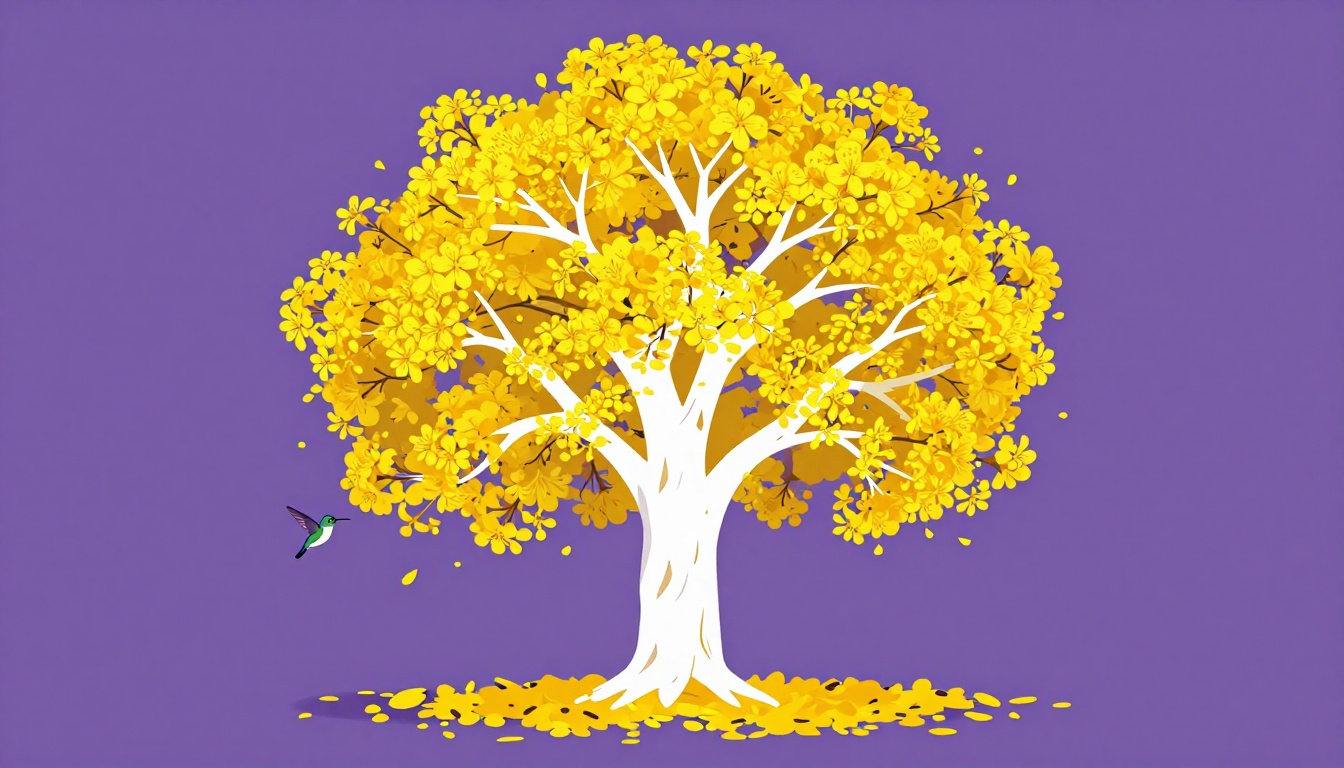
Brazil's national flower is the "ipê-amarelo," the yellow ipê. It was declared the national flower in 1961 by president Jânio Quadros, as the Brazilian national symbols article and The Guide's piece on the ipê both note. The tree is famous for a simple trick. It drops its leaves first, then covers itself in bright yellow flowers, roughly in August, September, and October. Whole streets in Brazilian cities turn gold for a few weeks.
If you want the botany, the Handroanthus genus page covers the family, and there are separate pages for two yellow-flowering species, Handroanthus serratifolius and Handroanthus chrysotrichus. The month when they bloom lines up with the vocabulary in October in Portuguese, and it's a lovely sentence to practice: "Em outubro, os ipês estão em flor."
| Portuguese | English |
|---|---|
| O ipê-amarelo é a flor nacional do Brasil. | The yellow ipê is Brazil's national flower. |
| O ipê perde as folhas antes de florescer. | The ipê drops its leaves before it blooms. |
| A rua ficou toda amarela de flores. | The street turned all yellow with flowers. |
Mother's Day and the biggest flower date
In Brazil, Dia das Mães, Mother's Day, is the biggest flower date of the year. The general history of Mother's Day shows how the holiday varies around the world, but in Brazil it lands on a Sunday in May and florists get ready well ahead. Brazilian press coverage, like this RCW TV column on the flower sector and this Terra guide to the meanings of Mother's Day flowers, points to roses as the top pick, followed by orchids, hydrangeas, sunflowers, gerberas, and lilies.
That gives you a shopping list in Portuguese: "rosas," "orquídeas," "hortênsias," "girassóis," "gérberas," and "lírios." And it gives you a way to talk about family. If you're buying for your dad instead, the vocabulary in father in Portuguese has the right words, and Brazil's "Dia dos Namorados," a Valentine-style day, is a big one too. The Dia dos Namorados article explains that celebration. For love talk, pair it with I love you in Portuguese and girlfriend in Portuguese.
The carnation and the Carnation Revolution
In Portugal, the flower with the most history is the "cravo," the carnation. On April 25, 1974, a military coup ended a long dictatorship, and it became known as the Carnation Revolution, or "Revolução dos Cravos." The Carnation Revolution article tells the story. Carnations became the symbol of it, and the day is now a national holiday, "o Vinte e Cinco de Abril."
So when a Portuguese person shows you a red carnation in April, it isn't a random flower. It's a memory. Learn "cravo" well, because it also shows up as "o cravo" in the cooking sense, meaning cloves, and only context tells you which one someone means.
Beija-Flor, the samba school
"Beija-Flor" is also the name of a famous samba school in Rio de Janeiro, one of the groups that parade at Carnival. The Beija-Flor article gives the background. It's a nice reminder that "hummingbird" and "kiss-flower" are the same word here, and you'll hear it a lot around Carnival season.
Flor as a name, and a poet
"Flor" is also a given name. The Flor given name page covers where it's used. And in Portuguese literature, one of the best-known poets is Florbela Espanca, whose first name has "flor" tucked inside. When you meet a "Flor" or a "Florbela," now you know why.
Real sentences with "flor" (say them out loud)
Reading a word won't make it yours. Saying it will. These sentences are grouped by situation. Say each one twice, once slowly, once at normal speed. If you need greetings before you start, how do you say hello in Portuguese and how are you in Portuguese get you through the first ten seconds of any chat.
Garden and home
| Portuguese | English | When to use |
|---|---|---|
| Minha mãe adora flores. | My mom loves flowers. | Talking about family |
| Eu tenho uma flor na janela. | I have a flower in my window. | Describing your home |
| As flores precisam de sol e água. | Flowers need sun and water. | Explaining plant care |
| Você pode regar as flores hoje? | Can you water the flowers today? | Asking a roommate |
| A floreira está cheia de petúnias. | The planter is full of petunias. | Describing a balcony |
| Essa flor não gosta de sombra. | This flower doesn't like shade. | Advice at a garden shop |
| Vamos plantar flores no jardim. | Let's plant flowers in the garden. | Weekend plans |
Gifts and romance
| Portuguese | English | When to use |
|---|---|---|
| Trouxe flores para você. | I brought you flowers. | Arriving at someone's home |
| Ele me deu um buquê de rosas. | He gave me a bouquet of roses. | Telling a story |
| Posso te mandar flores? | Can I send you flowers? | Being sweet |
| Quero flores para o aniversário dela. | I want flowers for her birthday. | Shopping |
| Obrigada pelas flores, são lindas! | Thanks for the flowers, they're beautiful! | Receiving a gift |
| Nunca me esqueço da flor que você me deu. | I never forget the flower you gave me. | Sentimental moment |
| As flores chegaram hoje de manhã. | The flowers arrived this morning. | Telling a friend |
Gift moments call for more than "flor." If it's a birthday, the guide on how do you say happy birthday in Portuguese gives you the Brazilian line, and the version for happy birthday in Portugal Portuguese has the European one. For a promotion or a new baby, try congratulations in Portuguese. And in December, merry Christmas in Portuguese covers the holiday cards that often come with a bouquet.
Describing flowers and colors
| Portuguese | English | When to use |
|---|---|---|
| Que flor linda! | What a lovely flower! | Seeing something pretty |
| Essa flor cheira a lavanda. | This flower smells like lavender. | Describing a smell |
| As flores amarelas são as minhas favoritas. | Yellow flowers are my favorites. | Sharing a preference |
| A rosa vermelha está começando a murchar. | The red rose is starting to wilt. | Noticing a problem |
| As flores do jardim estão desabrochando. | The garden's flowers are blooming. | Springtime |
| Todas as flores têm cores diferentes. | All the flowers have different colors. | Comparing |
Compliments and feelings
| Portuguese | English | When to use |
|---|---|---|
| Você é uma flor de pessoa. | You are a lovely person. | Complimenting a friend |
| Minha amiga é uma florzinha. | My friend is a little flower. | Affectionate, playful |
| Estou à flor da pele hoje. | I'm on edge today. | Admitting a mood |
| Ela está na flor da idade. | She is in her prime. | Describing someone |
| Meu avô cuida das flores com carinho. | My grandfather cares for the flowers with love. | Telling a family story |
| Amizade é como uma flor: precisa de cuidado. | Friendship is like a flower: it needs care. | A friendly proverb-style line |
For that last table, our guides on friendship in Portuguese and friend in Portuguese give you the words to build on, and the post on grandpa in Portuguese covers the family side.
Common mistakes English speakers make with "flor"
Most of these come from thinking in English while speaking Portuguese. They're all easy to fix once you spot them.
| Mistake | Fix | Why |
|---|---|---|
| Saying "o flor" | Say "a flor" | "Flor" is feminine, and doesn't end in "a," so the ending misleads you |
| Saying "floor" with the English vowel | Say "FLOH" with round lips and a pure vowel | English "or" glides, Portuguese "o" stays still |
| Writing or saying "flors" | Use "flores" | Nouns ending in "r" add "-es" |
| Stress on the wrong syllable: "flo-RES" | Say "FLOH-rees" | The stress is on the first syllable |
| Rolling the R like Spanish | Use a soft "h" (Brazil) or a light tap (Portugal) | A hard trill sounds unnatural for a final R in most accents |
| Using "flor" to mean the floor of a room | Use "chão" for the floor surface, "andar" for a storey | "Flor" only means flower |
| Saying "os beija-flor" | Say "os beija-flores" | Only the noun part takes the plural |
| Saying "a beija-flor" | Say "o beija-flor" | It's masculine, unlike "flor" |
The "floor" mix-up is so common it deserves its own note. English speakers hear "floor" and "flor" as twins, so they translate one for the other. They aren't twins. "Floor" in Portuguese is "chão" when you mean the surface you walk on, and you can read about it in the Wiktionary entry for chão. When you mean a floor of a building, say "andar," and the Wiktionary page for andar shows its many meanings, including "to walk." For the English side of the mix-up, the floor entry shows how many senses that one word has.
Ask yourself: is it a plant? Then it's "flor." Is it something you stand on? Then it's "chão" or "andar." Two seconds, and you skip the mistake.
If you want to know how hard it really is to fix these habits, our post on whether Portuguese is hard to learn is honest about it, and the basic building blocks live in basic words in Portuguese.
How to actually remember flower words
Lists don't stick. You've probably seen this: you study 40 words, and by Friday you remember six. Here's what works better.
Say them out loud, not in your head. Your mouth has to learn the shape of "flor," "flores," and "beija-flor," and silent reading trains only your eyes. Group them by color, too. Put "girassol," "margarida," and "amarelo" together, then "rosa," "cravo," and "vermelho." Anchor each word to a real object: walk through a garden or a shop and name what you see, out loud, even if it's only your windowsill. And come back tomorrow. A few minutes a day beats an hour on Sunday, because spaced repeats are how words move from "I recognize it" to "I can say it."
That's exactly the loop Comigo is built around. It's a speak-first language app: Capy the capybara plays your coach, you answer out loud, and you see which words you got right, word by word, so you can repeat the ones that slipped. It teaches Brazilian Portuguese too, so you can practice "flor," "flores," and everything around them the way you'd say them at a real stall. No one hears you but Capy, which makes the first try much less scary.
If you'd like a bigger plan, the guide on how to learn Portuguese for free lays out zero-cost options, and the roundup of language learning apps for Portuguese compares approaches. Want the real-world route? Read learn Brazilian Portuguese in Brazil, and if you're curious how a learner got there, how I learned Portuguese tells one story. For numbers in a shop, numbers in Portuguese is a must, especially when the seller says the price.
Mini quiz: test yourself
Cover the right column and answer out loud. Then check.
| Question | Answer |
|---|---|
| How do you say "flower" in Portuguese? | flor |
| Is it "o flor" or "a flor"? | a flor, it's feminine |
| What's the plural of "flor"? | flores |
| What's a hummingbird called? | beija-flor, literally "kiss-flower" |
| What does "à flor da pele" mean? | on edge, with emotions at the surface |
| Which flower is Brazil's national flower? | the ipê-amarelo |
| What's a bouquet in Brazil? | buquê |
| What's the shop called in Brazil? | floricultura |
| What's "sunflower"? | girassol, masculine: o girassol |
| What word means "floor" of a room? | chão |
Got nine or ten? You're ready for a real chat at the market. Got fewer? Go back to the sections above and say the words out loud once more. That is how it works.
FAQ
How do you say flowers in Portuguese?
"Flores." It's the plural of "flor," and it sounds like "FLOH-rees" in Brazil. Remember the "-es" ending, since nouns that end in "r" add it.
Is "flor" the same in Brazil and Portugal?
The word and spelling are the same. The sound differs, mostly in the final R, which is soft and breathy in much of Brazil and a light tap in Portugal. The shop and bouquet words also differ: "floricultura" and "buquê" in Brazil, while Portugal often says "florista" and "ramo."
How do you say "beautiful flower"?
"Flor bonita" or "linda flor." With an article, "uma flor bonita." The adjective takes the feminine ending, so it's "bonita," not "bonito." For many flowers, "flores bonitas."
What is the national flower of Brazil?
The ipê-amarelo, the yellow ipê. It was declared the national flower in 1961 and blooms yellow around September and October after dropping its leaves.
How do you say "bouquet" in Portuguese?
In Brazil, "buquê." In Portugal, people often say "ramo" or "ramo de flores," and "bouquet" is also used.
What does "à flor da pele" mean?
It means emotions are near the surface, or "on edge." If someone is "à flor da pele," they feel everything strongly and react fast.
How do you say "flower" in Spanish vs Portuguese?
Both languages spell it "flor," but they don't sound the same. The vowel and the R are different, so a Spanish "flor" in a Portuguese sentence will stand out, and the same goes the other way.
How do you say "sunflower" in Portuguese?
"Girassol," masculine: "o girassol." The plural is "girassóis." It comes from "gira" (turns) and "sol" (sun).
Say it out loud today
You now have the word, the sound, the gender, 40 flowers, a shop script, and a handful of idioms that native speakers actually use. What's left is the part no article can do for you. Open your mouth. Say "a flor" ten times. Say "as flores" ten times. Then say one sentence from the tables above to a real person or a real listener, and watch how quickly it stops feeling foreign.
If you want a friendly place to do that, start speaking with Comigo and let Capy hear your "flor." A good next read is colors in Portuguese, so you can describe every petal you just learned to name.
Related guides
- BoldVoice vs ELSA SpeakBoldVoice vs ELSA Speak: accent coaching, feedback quality, price and which to pick.
- Rosetta Stone vs BabbelRosetta Stone vs Babbel: price, method and which one to pick.
- Rosetta Stone vs DuolingoRosetta Stone vs Duolingo: free vs paid, method and results.
- italki vs Preplyitalki vs Preply: pricing models, tutors and which is better.