

Your partner's cousin just introduced himself, and it wasn't John. It was João, said with a soft "zh" sound and a nasal ending you didn't quite catch, and you smiled and nodded like you'd understood everything. Or maybe you filled out a form for a Brazilian visa, or a hotel booking, or a family tree on some genealogy site, and the software quietly swapped "John" for "João" without asking you first. Either way, you're here because you want the real answer, not a guess. John in Portuguese is João, and it isn't a nickname, a loose translation, or a coincidence. It's the actual Portuguese descendant of the same ancient name, carried down a completely different branch of history than the English one.
That single fact opens up more questions than it answers, and that's normal. Is João really the same name as John, or just something that sounds close? What about Jonathan, does that turn into João too (it doesn't, and that mix-up trips up more people than you'd think)? How do you actually say "João" out loud without sounding like you're clearing your throat? And why does half of Brazil seem to know a João, from soccer rosters to samba records to a king who once packed up an entire royal court and sailed it across the Atlantic? This post answers all of it, in order, starting with the short version and working down into the parts that make the name interesting rather than just correct.
One more thing before we get into the history and the grammar: the fastest way to make "João" feel natural isn't reading about it, it's saying it out loud, more than once. If you want to hear yourself try it while you read, app.usecomigo.com is a quick, no-pressure way to test your own pronunciation before you use it on an actual person named João.
Quick answer: John in Portuguese at a glance
If you're in a hurry, here's the short version. Read past the table for the "why" behind each row, because the why is what makes the sound and the history actually stick.
| Word | Pronunciation | Meaning / notes |
|---|---|---|
| João | zhoo-AWNG (nasal) | "John," the direct Portuguese equivalent |
| Joana | zhoo-ANN-uh | "Joan" or "Joanna," the feminine form |
| Joãozinho | zhoo-awng-ZEE-nyoo | "Little John," an affectionate diminutive, also a stock joke-character name |
| Jônatas | ZHO-na-tass | "Jonathan," a different name entirely, don't confuse it with João |
Dictionaries agree on the core translation: Lingopolo lists "João" as the Portuguese word for John, the Collins English-Portuguese dictionary gives the same answer, and neither treats it as a loose approximation. It's the standard, direct equivalent, the same way "Juan" is the standard Spanish one.
Notice that "John" doesn't map onto just one Portuguese word fixed in stone forever. It has a formal, name-only form, a feminine cousin, an affectionate shrunk-down version, and a look-alike name that isn't actually related despite what a quick glance suggests. If you've read this blog's guide to how do you say hello in Portuguese or how are you in Portuguese, you already know Portuguese cares about more than just the dictionary word, it cares about who's listening and how close you are to them. Names work the same way.
How to pronounce João
Say "João" out loud right now, the way an English speaker naturally would, and you'll probably land on something like "jo-AN-oh," with a hard English J. That's a completely reasonable guess. It's also not how a Brazilian says it. Two things make this name genuinely tricky for an English mouth, and both are worth slowing down for.
The first is the J. In Portuguese, "j" is never the hard sound you hear at the start of the English word "jump." Instead it's soft, closer to the "s" in "measure" or the "g" in the French name "Jacques." Linguists write it as /ʒ/. So the start of "João" sounds more like "zh" than "j," the same soft sound that opens words like "já" (already) and "janela" (window).
The second, and the harder one, is the ending: "ão." This is a nasal diphthong, which means the vowel sound gets pushed partly through your nose instead of only out through your mouth, the same way French does with words like "bon" or "pain." According to Wiktionary's phonetic transcription of João, Brazilian Portuguese renders the name as /ʒoˈɐ̃w̃/ or /ʒuˈɐ̃w̃/, and in fast, casual speech it often collapses further into something closer to /ˈʒwɐ̃w̃/, almost a single syllable. English simply doesn't have this sound built into its vowel system. The closest rough comparison is the vowel in "cow," but nasalized, hummed through your nose while your mouth still shapes the "ow." It's not a perfect match, and honestly, no written comparison ever fully closes the gap. This is a sound you learn by ear, by hearing a real voice enough times that your own mouth eventually finds it without you consciously steering it.
Put the two pieces together and you get something close to "zhoo-AWNG," said fast, with the "AWNG" nasalized rather than pronounced like a hard English "ong." If that description feels a little frustrating to read, that's honestly the correct reaction. Some parts of Portuguese are hard for English speakers in a specific, nameable way, and this is one of them. Is Portuguese hard to learn goes deeper into exactly which sounds trip up English speakers and why, and nasal vowels show up near the top of that list every time.
A practical way to practice: say "ah" and slowly let the sound drift into your nose without changing your mouth shape much, almost like you're about to say "hmm" but keep the vowel open the whole time. Do that a few times on its own, then attach it to "zhoo" in front. It will feel strange before it feels natural, which is true of nearly every new sound in a new language, and it stops feeling strange faster than you'd expect once you've said it out loud a couple dozen times.

Don't drop the tilde: why that squiggle over the a matters
There's one more detail worth flagging before you start typing this name into forms, messages, and captions: that squiggle over the "a" in "João" is not decorative. It's called a tilde, and in Portuguese it marks nasalization, telling you to push the vowel sound through your nose rather than saying it as a plain, clean vowel. Drop it, and you get "Joao," which most Brazilians will still read correctly from context, the same way an English speaker would still understand "cafe" without the accent on "café." But it's technically missing a piece of information the spelling is supposed to carry.
This matters more than it might seem, because English keyboards don't always make typing "ã" easy, and autocorrect loves to strip it out entirely. If you're texting a Brazilian friend or filling out a form, take the extra couple of seconds to type it properly when you can, "João" rather than "Joao." It's a small courtesy, similar to spelling someone's name correctly in any language, and it quietly signals you're paying attention rather than just guessing your way through. This blog's guide on how to spell in Portuguese goes much deeper into accent marks generally, the tilde, the acute accent, the circumflex, and how each one changes a word's sound, if this kind of detail interests you beyond just this one name.
Where the name João comes from
João didn't appear out of nowhere, and neither did John. Both names trace back to the same source, just through different branches of the same very old family tree of languages.
The root is Hebrew: "Yochanan," or more fully "Yehochanan" (יוֹחָנָן), meaning roughly "Yahweh is gracious" or "God is gracious." Wikipedia's entry on Yohanan traces this Hebrew root back through the Old Testament. From there, Biblical Greek adapted it into "Ioannes" (Ἰωάννης), the name carried by two of the New Testament's most famous figures, John the Baptist and John the Apostle. Latin picked it up next as "Iohannes," later written "Johannes," and it spread across Europe from there, carried by centuries of Christian naming tradition, each language reshaping the sounds to fit its own mouth.
In the part of the Iberian Peninsula that would become Portugal, "Johannes" slowly wore down into Old Galician-Portuguese "Joham," and eventually settled into the modern spelling and sound: "João." Wikipedia's entry on the given name John and its related entry on Johann both walk through this same Latin-to-vernacular drift, just landing in different countries with different final sounds. Wikipedia's own page on the name João confirms it's remained one of the most enduring given names in the Portuguese-speaking world ever since.
That's really the whole story of why João and John look so different on the page but mean exactly the same thing: they're not translations of each other so much as two different descendants of the same Latin ancestor, shaped by two different languages over roughly a thousand years. English kept its version close to the Latin. Portuguese pushed its version through the sound changes that also gave the language its nasal vowels. A dozen other European languages did their own version of the same drift, each landing somewhere slightly different.
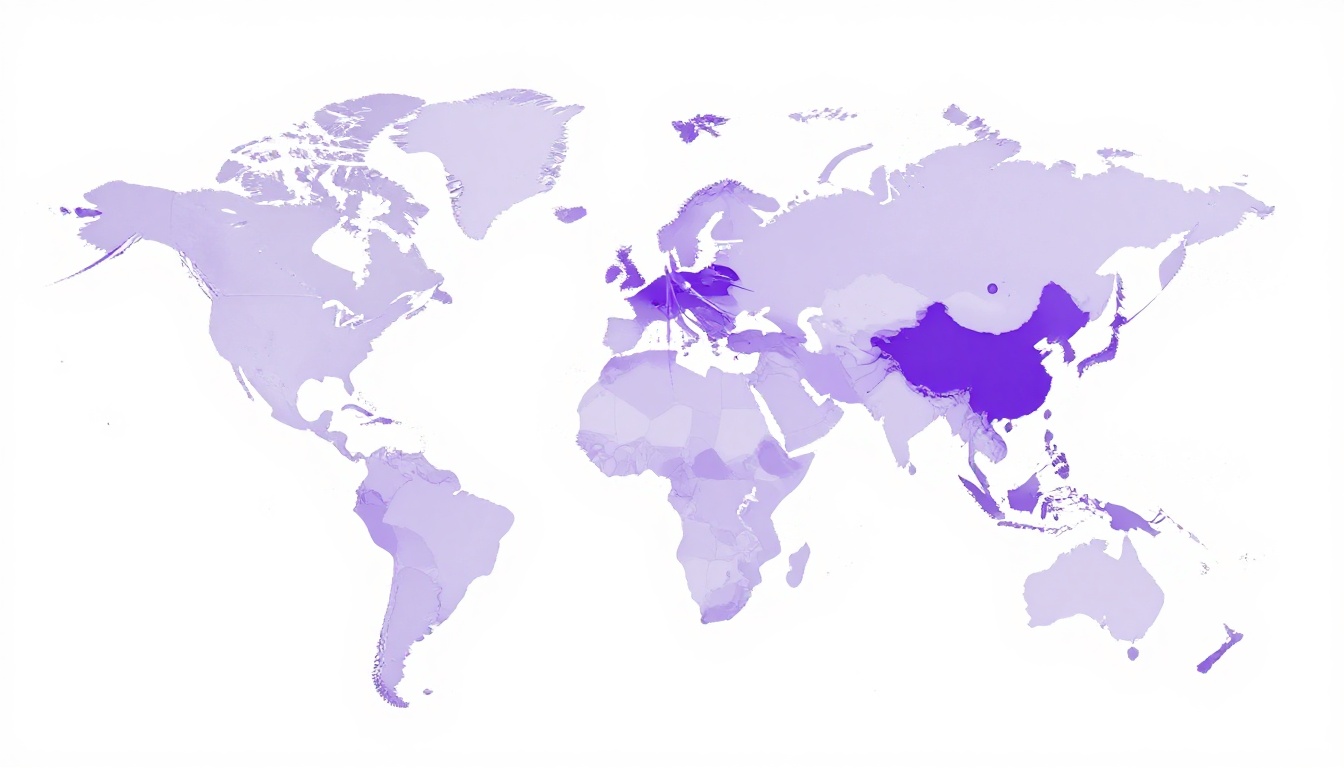
Cousin names: Juan, Giovanni, Jean, and the rest of João's family tree
Once you see the pattern, you start noticing João's relatives everywhere.
| Language | Name | Notes |
|---|---|---|
| English | John | Direct descendant of Latin "Iohannes" |
| Portuguese | João | Same Latin root, shaped by nasal sound changes |
| Spanish | Juan | Close cousin, same Latin ancestor |
| Italian | Giovanni | Often shortened to Gianni or Gian |
| French | Jean | Also appears as Yann in Breton |
| German | Johann or Johannes | Often shortened to Hans |
| Russian | Ivan | Same root, filtered through Church Slavic |
| Irish | Seán | Historically borrowed from John, now its own name |
| Scottish | Iain or Ian | Related through Scottish Gaelic |
| Dutch | Jan | Short, direct cousin of Johannes |
| Greek | Ioannis | Closest living relative of the original Greek form |
A quick caution on Seán, Ian, and Eoin: these aren't loose modern translations of John so much as names that were historically borrowed from John into Irish and Scottish Gaelic centuries ago, and then took on lives of their own. Wikipedia's page on the given name John and its entry on Juan both cover this wider family in more detail if you want to keep pulling the thread. Practically speaking, it means that if you meet a Seán in Dublin and a João in São Paulo, you're looking at two branches of the exact same family tree of names, even though neither one would guess it just from hearing the other's name out loud.
Bonus: what's the plural of João?
Here's a small, fun grammatical wrinkle for anyone who likes this sort of thing. Portuguese words ending in "-ão" don't pluralize in one predictable way, they split into three different patterns depending on the word, and there's no rule that tells you which pattern a given word follows just by looking at it. "Pão" (bread) becomes "pães." "Mão" (hand) becomes "mãos." And "João," when you genuinely need to talk about more than one of him, becomes "Joões," rhyming distantly with "canoes" if you squint.
In practice you'll rarely need the plural of a person's name. But if you ever find yourself at a party with three different Joões and need to talk about all of them at once, now you know the word exists, and you know Portuguese has been quietly complicated about "-ão" plurals long before this particular name showed up.
"Jonathan" is not the same name
Here's a mix-up worth catching early, because it's an easy one to make. "Jonathan" looks like it should just be a longer version of "John," maybe John with a couple of extra syllables tacked on. It isn't. Jonathan comes from a completely different Hebrew name, "Yehonatan," meaning "gift of God" or "Yahweh has given," a different root and a different meaning from "Yochanan," even though the two names share some overlapping sounds and both come from the Hebrew Bible.
In Portuguese, this distinction stays intact. Jonathan becomes "Jônatas" (sometimes written "Jonatas"), not "João." Wikipedia's entry on Jônatas confirms the name traces back to the biblical Jonathan, the close friend of King David, a completely separate figure from either John the Baptist or John the Apostle.
Why does this trip people up? Mostly because English speakers meeting a Brazilian named Jonathan sometimes assume they can casually call him "João," some kind of nickname or shortcut, the way you might informally shorten "Jonathan" to "John" in English on a lazy day. Don't do this. It's the equivalent of meeting someone named Jonathan in the United States and calling him John because the names happen to share four letters. Use Jônatas for the name he was actually given, and save João for the people who were actually named that.
Joana: the feminine form
João's feminine counterpart is "Joana," the Portuguese equivalent of "Joan" or "Joanna," built from the same Hebrew root, just carried through the feminine branch of the name across the same centuries of Latin and Greek adaptation. Say it "zhoo-ANN-uh," with the stress landing on the middle syllable and none of the nasal complexity that makes João hard, which honestly makes Joana one of the easier Portuguese names for an English speaker to say correctly on the first try.
You'll meet plenty of real Joanas in Brazil. The name has stayed steadily popular for generations, and it pairs with João the same clean way "John and Joan" pair in English: same root, same era, no confusion about which one is masculine and which is feminine. If you're curious how gendered language works more broadly in Portuguese, she in Portuguese is a useful companion read, since Portuguese marks gender constantly, in names, in articles, and in adjectives, far more consistently than English does.
Joãozinho: the diminutive, and Brazil's favorite joke character
Add "-zinho" to João and you get "Joãozinho," meaning "little John," the same affectionate diminutive pattern this blog's grandpa in Portuguese post covers with words like "vozinho." Portuguese does this constantly: shrink a name or a noun down with "-inho" or "-zinho," and it instantly sounds warmer, smaller, more personal. Parents call a young son "Joãozinho" the way an English-speaking parent might say "little Johnny," and Wiktionary's entry for Joãozinho confirms it's exactly that: the standard diminutive form, not slang, not baby talk adults grow out of.
But "Joãozinho" carries a second job in Brazilian culture that has nothing to do with any specific real child. He's a stock character, the naughty, quick-witted schoolboy at the center of an entire genre of short jokes, told and retold across generations. If you grew up with "Little Johnny" jokes in English, or "Toto" jokes in French, you already understand exactly what Joãozinho jokes are: a kid says something too literal, too clever, or too inappropriate in front of a teacher or a parent, and the joke lands on the gap between what the adult meant and what the kid heard. Wikipedia's entry on Little Johnny traces this joke archetype across several languages, and Brazil's own Joãozinho entry documents the character as a genuine fixture of Brazilian humor, not a one-off gag.
A typical structure: the teacher asks the class a question expecting a textbook answer, Joãozinho answers with blunt, literal honesty instead, and the class laughs at what the teacher clearly didn't see coming. The jokes are short, told at recess or around a dinner table, and they're one of the first things a lot of Brazilian kids memorize and trade with each other, similar to how English-speaking kids trade knock-knock jokes. If your partner's family has young kids or younger siblings, don't be surprised if you hear a "Joãozinho" joke within the first few visits. Ask what it means. It's a fast, fun way into the culture, even if the punchline needs a little translating.
How common is the name João in Brazil
João isn't a rare or old-fashioned name in Brazil, it's one of the most common names there is. According to name-frequency data aggregated by Forebears, João ranks among the most common given names globally, with an estimated 4.6 million or more bearers worldwide, the overwhelming majority of them in Brazil and Portugal. A closer look at GenderAPI's naming data backs up the same picture: João has ranked as the most common male name registered in Brazil for stretches of the 2000s, sitting consistently near the very top of Brazilian civil registry counts. Treat these as directional numbers rather than an exact census, since name-popularity data varies by source and by year, but the pattern is consistent everywhere it's measured: João is genuinely everywhere in Brazil, not a name you'll meet once and never again.
Part of that staying power is historical. Portugal crowned multiple kings named João, and two of them left a mark worth knowing if you're curious about where the name sits in Portuguese and Brazilian history. João I founded the Aviz dynasty after winning the throne in 1385, ruling until 1433, and stabilized Portugal at a moment when its independence was genuinely in question. Centuries later, João VI did something almost nobody else in European royal history did: in 1808, fleeing Napoleon's invasion of Portugal, he moved the entire Portuguese royal court, thousands of people, across the Atlantic Ocean to Rio de Janeiro, making Brazil the seat of a European empire for over a decade. That single decision, tied to a single year in Portuguese history books still return to, reshaped Brazilian history in ways still visible today, from Rio's old royal library to its museums, and it's a genuinely good piece of trivia if you ever want to sound like you did your homework on Brazilian history, not just its language.
Beyond royalty, João shows up constantly among Brazilians who've made names for themselves well past the palace. João Gilberto is one of the founding figures of bossa nova, the guitar style and vocal sound that quietly reshaped Brazilian music in the late 1950s and still gets covered and sampled today. João Havelange, a very different kind of public figure, ran world soccer's governing body as FIFA's president from 1974 to 1998, the first person from outside Europe to hold the role, and reshaped how the World Cup itself was run and funded. And if you follow Brazilian soccer at all, you've almost certainly rooted for, argued about, or watched a João on the pitch at some point, since it's one of the most common names among Brazilian footballers at every level of the sport, from local clubs to national team rosters across generations.

Is the name João the same in Portugal as in Brazil?
Everything in this post leans toward Brazilian Portuguese, since that's where the name shows up most and where most learners studying this pairing are headed. But João isn't a Brazilian-only name, it's shared across the entire Portuguese-speaking world, Portugal included, and it's been a staple there even longer, going all the way back to the medieval kings who first carried it.
The core pronunciation stays close between the two countries, since the nasal "ão" sound is a defining feature of Portuguese generally, not a regional quirk unique to Brazil. What shifts more is the surrounding accent and rhythm: European Portuguese tends to clip vowels shorter and swallow unstressed syllables more aggressively than Brazilian Portuguese does, so a European "João" can sound slightly more compressed to an ear trained on Brazilian speech, even though the name itself and its spelling never change.
You'll also see João paired with a saint's name in some traditional contexts, most often "João Baptista" (John the Baptist), used as a full given name rather than just a reference to the biblical figure, particularly among families with strong Catholic roots. It's less common as a first-name choice today than it once was, but you'll still run into it, especially among older generations or on formal documents.
If your own connection to Portuguese runs through Portugal rather than Brazil, the name itself needs no adjustment. João is João on either side of the Atlantic. What changes is everything around it, the accent, some vocabulary, a few grammar habits, which is worth knowing since most of what you'll read online, including a good chunk of this post, defaults to the Brazilian version without always flagging it.
Festa de São João: Brazil's biggest party for a John
If you want to see just how deep this name runs in Brazilian culture, look at June. Brazil throws one of its biggest annual celebrations in honor of a João: Saint John the Baptist, whose feast day falls on June 24th. Festivities cluster around Saint John alongside two other Catholic feast days close on the calendar, Saint Anthony on June 13th and Saint Peter on June 29th, and together they anchor what Brazilians call "Festa Junina," or June festival season, with the peak of it, "Festa de São João," landing right in the middle around June 23rd through 29th, June 24th itself being the biggest single night.
Wikipedia's entry on Festa Junina traces the celebration's roots back to European Midsummer traditions, brought over during the Portuguese colonial era and reshaped over centuries by Indigenous and Afro-Brazilian influences into something distinctly Brazilian. What started as a religious observance grew into a harvest celebration too, since June sits right in the middle of the corn harvest across much of Brazil, and corn shows up constantly in the food: pamonha, canjica, curau, and roasted corn on the cob sold hot off street carts. If corn-based food talk makes you hungry, this blog's guide to food in Portuguese is a good companion read before your next festa.
The celebration itself is loud and warm in the specific way only a bonfire-lit street party can be. Bonfires burn in town squares and backyards alike, a nod to Saint John's own feast-day bonfire traditions across Europe. Couples and whole crowds dance "quadrilha," a lively square dance with a caller shouting out steps, often performed in deliberately exaggerated "country" costumes that poke fun at rural Brazilian life with real affection rather than mockery. Forró music, all accordion, triangle, and zabumba drum, plays late into the night. Colorful triangular flags called "bandeirinhas" string overhead between buildings, and in Brazil's Northeast especially, cities like Campina Grande and Caruaru host some of the largest public Festa Junina celebrations in the country, drawing enormous crowds every year. Visit Brasil's guide to São João's season of festivities and Aventura do Brasil's writeup on São João in the Northeast both capture the scale of it if you want the fuller picture.
Since the festival's peak dates fall on a different weekday every year, it's worth brushing up on the days of the week in Portuguese if you're planning to be in Brazil for it, since knowing whether the big street party lands on a Friday or a Tuesday changes how a trip gets planned around it. Either way, it's a genuinely good time to be somewhere in Brazil. And it's not a small irony that one of the country's biggest, warmest public celebrations of the year is built entirely around the feast day of the same John whose name you're reading this whole post to understand.

Common mistakes English speakers make
A handful of patterns come up again and again once English speakers start using this name for real. Knowing them ahead of time saves you the awkward correction later.
The first, and the one this whole post has already spent real time on: confusing João with Jonathan, or assuming "Jônatas" is just a fancier spelling of João. They're different names with different Hebrew roots. Use the one the person was actually given.
The second: calling a João "Zé" or "Zeca" as some kind of casual nickname. Those nicknames belong to a completely different name, "José" (Joseph), not João. It's an easy mix-up if you've skimmed a list of Portuguese nicknames without paying close attention to which full name each one actually shortens, but mixing them up in front of a real João will get you a confused look, if not a gentle correction.
The third: skipping the nasal sound entirely and saying something closer to "jo-AN-oh" with a flat English vowel at the end. It's readable, everyone will understand who you mean, but it's a noticeably foreign pronunciation, the kind that marks you instantly as someone still learning rather than someone comfortable in the language. The fix isn't complicated, it's just repetition: say the nasal "ão" sound on its own a dozen times before you ever attach it to the rest of the name.
The fourth: using a hard English "J" sound instead of the soft Portuguese "zh." This one's sneaky, because your brain sees the letter "J" and defaults to the English sound automatically, even right after you've read the correct pronunciation explained clearly. It usually takes a few rounds of speaking it out loud, ideally with feedback from an actual Portuguese speaker, before the habit fully breaks.
The fifth: assuming "João" always translates "John" one for one in every single context. It's the standard equivalent for the given name, but it isn't used for the slang senses of "john" in English, the bathroom, or the client of a sex worker, both American English idioms with nothing to do with the name itself. More on that in a moment.
The sixth: dropping the article Portuguese often expects in front of a name in casual speech. Brazilian Portuguese frequently says "o João" (literally "the John") rather than just "João" on its own, especially mid-sentence: "O João chegou" ("John arrived") sounds more natural to a Brazilian ear than the bare name alone in that same slot. It's a small detail, easy to miss, and genuinely useful once you notice how often it shows up.
The seventh: assuming a diminutive like "Joãozinho" is somehow diminishing or babyish to use with an adult. It isn't, not by default. Plenty of grown men keep a childhood "-zinho" nickname among family and old friends for life, the same way an adult in English might still get called "Bobby" by his mother without anyone reading it as an insult. Context decides the tone, not the suffix itself. Using it with someone you've just met, on the other hand, can come across as presumptuous, so save it for people who've actually earned the familiarity.
Phrases to use when you meet a João
Vocabulary sticks better in full sentences than in isolated words. Here's a set of natural, real phrases built around João and Joana, worth saying out loud rather than just reading silently.
| Portuguese | English | Notes |
|---|---|---|
| Meu nome é João. | My name is John. | Standard self-introduction |
| Este é o João. | This is John. | Notice the article "o" before the name, common in Brazilian speech |
| Esta é a Joana. | This is Joana. | Feminine article "a" before the name |
| Prazer em conhecer você, João. | Nice to meet you, John. | Pairs well with this blog's how do you say hello in Portuguese guide |
| Como vai, João? | How's it going, John? | Casual greeting, see how are you in Portuguese |
| Bom dia, João! | Good morning, John! | Common daily greeting, covered in how do you say good morning in Portuguese |
| Boa tarde, João. | Good afternoon, John. | See good afternoon in Portuguese for the full breakdown |
| Obrigado, João. | Thank you, John. | Full guide at how to say thank you in Portuguese |
| Tchau, João, até amanhã! | Bye, John, see you tomorrow! | See goodbye in Portuguese for more farewells |
| Eu te amo, João. | I love you, John. | Covered in full in i love you in Portuguese |
| Sim, esse é o João. | Yes, that's John. | See yes in Portuguese for more on affirmations |
| Por favor, João, me ajuda? | Please, John, can you help me? | Full guide at please in Portuguese |
| Que horas são, João? | What time is it, John? | Handy phrase, see what time is it in Portuguese |
Notice how often "o" or "a" shows up right before the name in these examples. That's not a typo, and it's not optional flourish. Brazilian Portuguese genuinely does this constantly in casual speech, treating a person's name almost like it needs its own little article the way an ordinary noun does. It sounds strange to an English ear at first, since English never says "the John" this way, but it's one of the small grammatical habits that makes spoken Brazilian Portuguese sound natural once you pick it up.
What about "john" as English slang?
If part of why you searched this was a half-formed memory of "john" meaning something else entirely in English, you're not imagining it. American English slang uses "john" as an informal word for a bathroom, and separately, in a much less flattering sense, as a term for a prostitute's customer. Both usages are documented slang terms, unrelated to the given name's history, and Wiktionary's entry for "john" lists both senses plainly. If you're curious where the bathroom sense actually came from, World Wide Words has a solid rundown of the various competing theories, none of which are fully settled.
None of that carries over into Portuguese. "João" doesn't function as slang for either of those things, and Brazilians hearing the name "João" think of exactly one thing: a person's name, warm, extremely common, and completely unrelated to any bathroom joke an English speaker might have half-remembered on the way to this page. If that's genuinely why you ended up here, consider this the pivot back to the actual, more interesting answer: John in Portuguese is João, a name with real history behind it, not a euphemism.
How to actually get comfortable saying "João"
Everything above explains João. None of it, on its own, will make the name come out of your mouth correctly the first time you actually need it, in front of an actual person, at an actual family dinner or an actual meeting. That gap, between understanding a rule and being able to use it without thinking, only closes one way: saying it, out loud, more than once, ideally with something or someone correcting you when you're off.
This is the exact idea Comigo is built around. If you're curious what the app's own name means, Comigo in English explains it (short version: it means "with me," which is the whole design philosophy in three words), but the relevant part here is simpler: every lesson is spoken out loud, not tapped silently on a screen, because a nasal vowel like the one in "João" only becomes automatic through real repetition, not by re-reading an explanation of where your tongue goes. You can try saying tricky Portuguese sounds like this one yourself at app.usecomigo.com, and get a quick, honest sense of whether "João" is actually coming out right, rather than just feeling right in your head.
If you want a longer, more personal account of what that repetition actually looks like over weeks and months rather than a single afternoon, this blog's how I learned Portuguese post walks through the real, occasionally clumsy process, rather than pretending fluency shows up from reading alone. Names are actually a great low-stakes place to start that kind of practice, since you'll use them constantly, they carry real emotional weight (nobody minds correcting you gently on a name, and everybody notices when you get it right), and getting comfortable with this one hard sound tends to make every other Portuguese sound you tackle after it a little less intimidating.
There's also a simple, almost boring trick that helps more than people expect: practice the name inside a real sentence you'll actually use, not just alone in isolation. "Oi, João, tudo bem?" said out loud a few times a day sticks a lot faster than repeating "João" by itself ten times in a row. Full context gives your mouth and your memory more to hold onto, which is exactly why this post kept pairing the name with real phrases instead of listing it bare.

Frequently asked questions
What does "João" mean? "João" comes from Hebrew "Yochanan," meaning "God is gracious" or "Yahweh is gracious," the same root behind the English name "John."
Is João always the correct translation of John? For the given name, yes. João is the standard Portuguese equivalent of John, used the same way across Brazil and Portugal. It doesn't carry over to English slang uses of "john," like the bathroom or customer senses, which have nothing to do with the name itself.
How do you pronounce João? Roughly "zhoo-AWNG," with a soft "zh" sound at the start (not a hard English J) and a nasal "ão" at the end that has no exact English equivalent. It's best learned by listening to a native speaker and repeating it out loud.
What's the feminine form of João? "Joana," the Portuguese equivalent of "Joan" or "Joanna," pronounced "zhoo-ANN-uh."
What is Joãozinho? "Little John," the standard affectionate diminutive of João, used for children or as a term of endearment. It's also the name of a classic stock character in Brazilian jokes, similar to "Little Johnny" jokes in English.
Is Jonathan the same name as João? No. Jonathan comes from a different Hebrew name, "Yehonatan," meaning "gift of God," and its Portuguese form is "Jônatas," not João. They look similar but come from separate biblical figures and separate roots.
How common is the name João in Brazil? Very common. It's ranked as one of the most frequently registered male names in Brazil for stretches of recent decades and remains one of the most common given names in the country today.
What is Festa de São João? Brazil's June festival season honoring Saint John the Baptist, whose feast day falls on June 24th. It includes bonfires, forró music, quadrilha dancing, and corn-based food, and it's one of Brazil's biggest annual public celebrations.
Are Zé and Zeca nicknames for João? No. Those are nicknames for José (Joseph), a different name entirely. Don't use them for a João.
Which other languages have a version of the name João? Many. Spanish has Juan, Italian has Giovanni, French has Jean, German has Johann, Russian has Ivan, Dutch has Jan, and Irish and Scottish Gaelic have Seán and Iain, all ultimately descended from the same Hebrew and Greek roots as John and João.
Is João a saint's name? Yes, indirectly. It traces back to John the Baptist and John the Apostle, both major figures in Christian tradition, and some Portuguese speakers use the fuller form "João Baptista" specifically to honor the Baptist.
Does Portugal use the name João the same way Brazil does? Mostly, yes. The name and its spelling don't change between the two countries, though European Portuguese pronunciation tends to compress vowels more than Brazilian Portuguese does, so the name can sound a touch different depending on which accent you're hearing it in.
Why do some forms and translations automatically change "John" to "João"? Because many name-localization systems, used by some visa forms, shipping platforms, or translation tools, treat certain historically linked names as direct equivalents across languages, the same way "Charles" might auto-render as "Carlos." It's usually harmless, but if your legal name is genuinely "John," it's worth double-checking that any official document keeps your name as written, since a translated version isn't always what a government or bank actually wants on file.
Wrapping up
So: John in Portuguese is João, a name with a real history running from an ancient Hebrew blessing through Greek, Latin, and centuries of Portuguese sound changes, all the way to a king who moved a royal court across an ocean and a bonfire-lit street party every June. Joana is the feminine form, Joãozinho is the affectionate little-kid version and the country's favorite joke character, and Jônatas, despite the resemblance, is a completely different name for a completely different Jonathan.
None of that history will make the nasal "ão" come out of your mouth correctly on the first try, though. Only saying it will, a few times, out loud, ideally with someone or something around to tell you if you're close. If you want to keep building real, spoken Portuguese rather than just facts about it, this blog's guides on congratulations in Portuguese and numbers in Portuguese are good next stops, and when you're ready to actually practice out loud instead of just reading about it, app.usecomigo.com is where to go next.
Related guides
- Busuu vs DuolingoBusuu vs Duolingo: which app actually teaches more.
- How much does italki cost?What italki really costs per lesson, how tutor pricing works and how to spend less.
- italki reviewAn honest italki review: how lessons work, tutor quality, pricing and the downsides.
- Is Rosetta Stone worth it?Is Rosetta Stone worth the money in 2026? What it does well, and where it falls short.


