

You saw an ad, probably on Instagram or TikTok, for something called GoMigo. Maybe a friend mentioned it. Maybe you typed "gomigo" into a search bar half asleep and just want to know what you found. Here is the short answer: GoMigo is an AI language tutor app made by GoStudent, the Vienna-based online tutoring company, and it lets you talk to an animated AI tutor that appears on screen and responds to your voice in real time.
That is the whole idea in one sentence. The rest of this page fills in the details you actually came for: what GoMigo does feature by feature, what GoStudent is and why a tutoring company built an AI app, what it costs and how the trial works, an honest verdict on whether it is any good, who it is genuinely the right pick for, and how it stacks up against Comigo, a different speak-first app with its own take on the same problem. There is also a Finnish carpooling app that shares the name, in case that is actually what brought you here, and a short section untangling GoMigo from Comigo, Conmigo, and Khanmigo, since all four names come from the same root and the confusion is completely understandable.
None of this needed to be complicated, and honestly, most of what confuses people about GoMigo has nothing to do with the app itself. It is the name. Several unrelated products, built by several unrelated companies, all landed on some version of "with me" as their brand, and an ad algorithm showing you one of them on a Tuesday night does not exactly pause to clarify which. This page sorts that out too, but the short version up front: if the ad mentioned languages, tutors, or GoStudent, you are almost certainly thinking about the app covered here.
| Detail | GoMigo |
|---|---|
| Maker | GoStudent GmbH |
| Launched | Late 2025 |
| Languages taught | 5: English, Spanish, French, Italian, German |
| Platforms | iOS, Android, and the web at ai.gostudent.org |
| Price model | 14-day free trial, then a monthly, 6-month, or annual subscription |
| Standout feature | Live avatar video lessons with a talking AI tutor |
What GoMigo actually does
Open the app and GoMigo puts an AI tutor in front of you, available any hour of the day, with nothing to book and nobody to wait for. That "no booking" part is the whole pitch. A human tutor needs a calendar. GoMigo just needs you to open the app.
A first session typically starts with a short setup: pick your target language, say roughly what level you are, and tell the app what you want out of it, whether that is casual travel phrases, workplace English, or a specific exam. From there you land on a home screen offering a mix of conversation, role-play, and quiz options rather than one fixed "next lesson" button, which is a meaningfully different feel from a linear course. You choose what to practice each time you open the app, and the AI adjusts what it throws at you next based on how that session went.
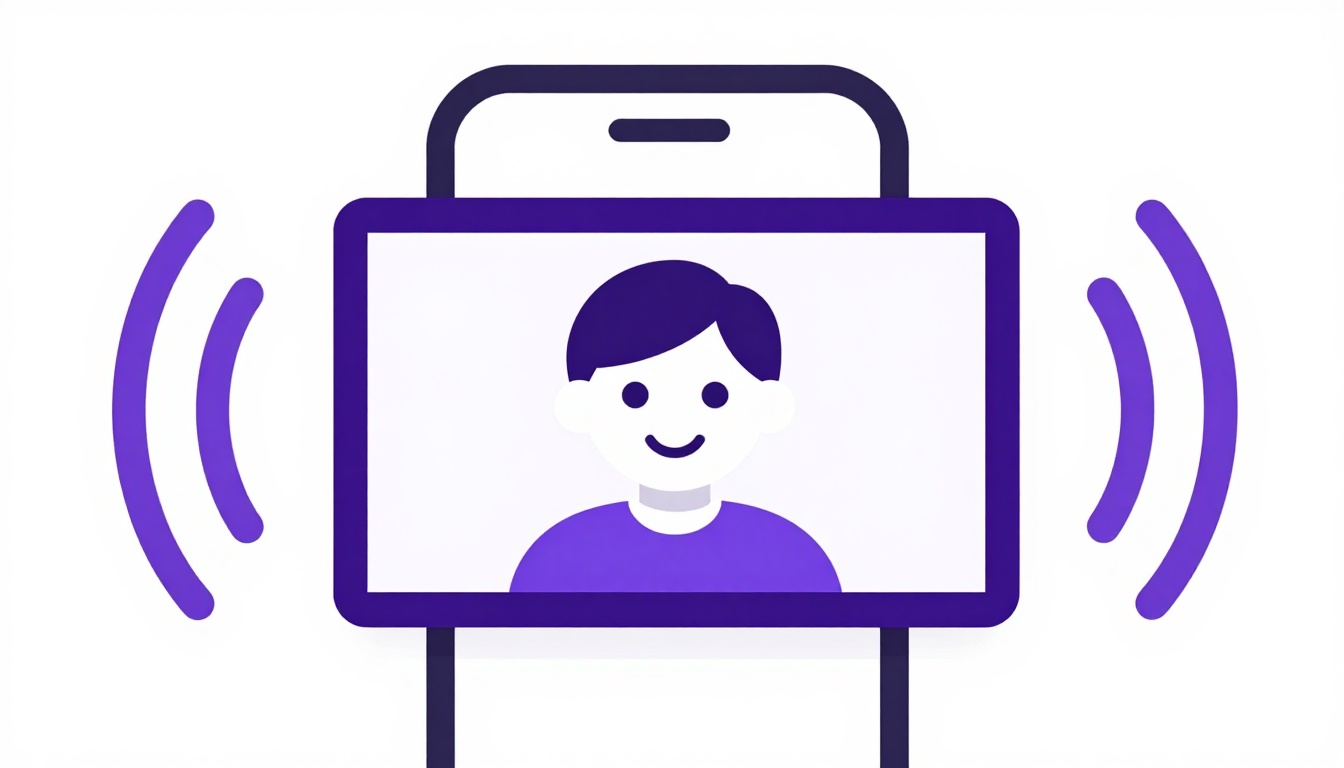
The feature that actually sets GoMigo apart from most of the language app market is its live avatar lessons. Instead of typing into a chat box or listening to a disembodied voice, you see an animated tutor on screen who talks back to you in something close to real time, the way a video call works. It is a genuinely different feel from a normal app screen, closer to a video chat with a person than a language exercise. If you prefer not to look at a face while you practice, there is also an audio-only voice-call mode that strips the avatar out and keeps the conversation, which matters on a crowded train or when your data connection is patchy.
Beyond the two conversation modes, GoMigo layers on a role-play mode where you pick the scenario yourself (a job interview, a restaurant order, a hotel check-in) and the AI plays the other side. There is dedicated exam and interview prep for people practicing toward something specific rather than general fluency. Every spoken or written exercise gets instant feedback, and the app tracks pronunciation specifically, listening for how close your accent lands to a native target. Listening drills use audio recorded in different accents rather than one flattened "textbook" voice, quizzes and challenges turn recall into short games, and an image-association mode teaches new words by pairing them with pictures instead of translations. The whole thing sits inside what GoStudent calls a personalised learning path, meaning the app is supposed to reorder what you practice based on your level and how you are doing.
| Feature | What it does |
|---|---|
| Live avatar lessons | Real-time, video-style conversation with an animated AI tutor you see and talk to |
| Audio-only voice call | The same conversation practice, without the avatar on screen |
| Role-play mode | You choose a scenario and act it out with the AI playing the other role |
| Exam and interview prep | Practice built around a specific test or job interview instead of general fluency |
| Instant feedback | Corrections on speech and writing as you go |
| Pronunciation feedback | Notes on how close your accent lands to a native target |
| Listening practice | Audio recorded in different accents, not one single voice |
| Image association | New words taught by pairing them with pictures |
| Quizzes and challenges | Short knowledge checks that build your stats over time |
| Personalised learning path | Lesson order adapts to your level and performance |
| Daily reminders | Push notifications that nudge you to practice |
Read that list next to a course-based app like the one covered in our Busuu review and the gap is obvious: Busuu builds a fixed CEFR course written by linguists, while GoMigo builds a loose, adaptive conversation loop around an AI tutor with no fixed syllabus you scroll through. Neither approach is wrong. They are just different bets on what actually makes a lesson work, and it is worth knowing which bet you are making before you commit two weeks to a free trial.
What using GoMigo actually feels like
Strip away the marketing language and GoMigo is, technically, a chatbot wearing a face. The underlying idea is not new: chatbots have existed for decades, and generative artificial intelligence is what lets this particular one hold a flowing, unscripted conversation instead of picking from a list of canned replies. What GoMigo adds on top is the avatar, a visual layer synced to speech synthesis so the character's mouth and expression move roughly in time with what it says back to you. None of that requires you to understand the engineering, but it explains why the app feels closer to a video call than a normal AI chat window, and why it needs a decent connection to feel smooth rather than laggy.
GoStudent's own App Store listing for GoMigo describes the pitch simply: "Practise conversation with AI," available around the clock, across five languages. The company also runs a dedicated YouTube channel for GoMigo showing the avatar in action and a Facebook page for the product, both signs of a real, ongoing content push rather than a side project nobody is marketing. If you want to see the avatar move before you install anything, those video clips are the fastest way to judge whether the format appeals to you at all, since a screenshot cannot show you what a talking, listening AI tutor actually looks like in motion.
Who is GoStudent, and why did a tutoring company build an AI tutor
GoMigo did not appear out of nowhere. It comes from GoStudent, an online tutoring marketplace founded in Vienna, Austria, in 2016 by Felix Ohswald and Gregor Müller. The company connects students, mostly school-age kids, with human tutors for one-on-one lessons across dozens of subjects, and it grew fast enough to become one of Europe's better-known edtech companies. CNBC reported GoStudent hit unicorn status, a private valuation over a billion dollars, in 2021, and TechCrunch covered the funding round that got it there, a $244 million raise pushing the company to a $1.7 billion valuation at the time. Forbes lists GoStudent in its company profile database as part of the wider record of a startup that grew quickly during the pandemic-era boom in online education.
That background matters because it explains what GoMigo is not. GoMigo is not a startup betting the whole company on one AI app. It is a well-funded tutoring business, with real infrastructure for matching human tutors and students, adding an AI product on top of a business it already understood. GoStudent's own comparison content, like its roundup of the best AI language tutors, positions AI tools as the next layer after human tutoring rather than a replacement for it: something you use for daily reps between actual lessons, or when a human tutor is not available, or simply because a human tutor for casual daily practice does not make financial sense for most people. Third-party trackers of the tutoring space, including EdTech Impact's GoStudent listing and SourceForge's GoStudent product page, still describe the core company as a human tutoring marketplace first, with GoMigo as a newer, separate product line.
The practical read is this: GoMigo is not an indie app you should worry will disappear next year. It sits inside a company with real capital and an existing customer base of language and school learners who might naturally hear about the AI version. Whether that makes the product itself good is a separate question, and one this page answers honestly in a few sections.
Scale gives some sense of why a subscription this cheap can exist at all. Tracxn's company profile of GoStudent puts the core tutoring business at more than 2,000 employees working with over 20,000 self-employed tutors across 23 countries, a genuinely large operation for what started as a Vienna-based startup in 2016. EdTech Impact's listing describes the core service as one-to-one tutoring across 30-plus K-12 subjects, with every tutor vetted before they can teach. That tutoring, unlike GoMigo, is not cheap: one independent comparison of tutoring platforms puts GoStudent's UK lesson prices at roughly £21.99 to £30.49 per session, billed as a recurring monthly package rather than pay-per-lesson, with the same source citing aggregate ratings around 4.53 out of 5 on Trustami and 4.4 on Trustpilot for the tutoring side of the business. GoMigo, at a few dollars a month, is clearly positioned as the low-cost, high-frequency counterpart to that far more expensive human offering, not a replacement for it.
What GoMigo costs, and how the trial works
GoMigo's pricing page is built around a 14-day free trial with no payment required upfront. You sign up, use the app for two weeks, and only get charged if you do not cancel before the trial ends. The signup page confirms the same flow: create an account, start using the app, and billing kicks in automatically once the 14 days run out, based on whichever plan you picked at signup.
Here is the tricky part. GoMigo's own pricing page does not display a static price table in plain view. Apple's App Store listing for the app, however, does publish the exact in-app subscription prices, and that is the clearest number we could verify directly.
| Plan | Price (per Apple's App Store listing) | Roughly per month |
|---|---|---|
| Monthly | $8.99 per month | $8.99 |
| 6-month | $19.99 billed every 6 months | about $3.33 |
| Annual | $34.99 billed every year | about $2.92 |
Those are U.S. App Store prices, and app subscription pricing commonly varies by country, currency, and whatever promotion happens to be running when you sign up. GoStudent's own blog post comparing AI tutors describes GoMigo's plans as "starting around £5 a month" for UK buyers, which lines up loosely with the annual plan's monthly-equivalent price once converted, though GoStudent does not publish a full breakdown of every regional tier in that post. If you want the number that will actually appear on your card statement, check the price shown inside the app at your specific location before the trial converts, since that is the only figure guaranteed to match what you get charged.
One more detail worth knowing before you start a trial: cancellation runs through wherever you signed up, meaning the App Store's subscription settings if you subscribed on iPhone, or Google Play's subscription settings if you subscribed on Android, the same pattern most subscription apps use. Set a reminder a day or two before day 14 if you are trying the app just to look around, since a forgotten trial is the single most common way anyone ends up paying for an app they meant to cancel.
Before you start the trial, a short checklist tends to save people from the most common regret with any subscription app: forgetting it exists until the charge lands.
| Ask yourself | Why it matters |
|---|---|
| Which plan did I actually select at signup? | The trial converts into that exact plan automatically |
| What is today's date plus 14 days? | That is your real cancellation deadline, not a rough guess |
| Did I sign up through Apple, Google, or the website? | Cancellation happens wherever you paid, not inside GoMigo's own settings |
| Do I actually want one of the five languages? | English, Spanish, French, Italian, or German only |
| Would I rather see the price before I start? | GoMigo's flow shows it after signup, not before |
Put GoMigo's price next to other language apps and it lands on the cheap end. Our review of Busuu's pricing lists Busuu's Premium plan at around $13.95 a month, dropping to roughly $4.87 to $5.80 a month on an annual plan, which is a similar shape to GoMigo's pricing but not identical numbers. What none of these apps show you upfront, GoMigo included, is a fixed price before you have already handed over an email address and started a countdown clock. Comigo takes a different approach on the web: the two-minute quiz builds your plan first and shows it to you before any payment screen, so you know what you are looking at before you commit to anything, rather than discovering the real number two weeks into a trial you might have forgotten about.
Is GoMigo good? An honest verdict
Judge GoMigo on what it actually does well first. The live avatar lessons are a real technical achievement and a genuinely different experience from typing into a chatbot or listening to a static voice line. Seeing a face respond to you, even an animated one, adds a kind of presence that most language apps do not attempt. The role-play mode is thoughtfully built too: letting you pick your own scenario means you can rehearse the exact conversation you are actually nervous about, whether that is a job interview or ordering food in a language you barely speak. Availability around the clock, with nothing to schedule, solves a real problem that human tutoring never fully solves: tutors sleep, get booked up, and live in different time zones than you do.
Now the honest part. An AI tutor, however patient, cannot surprise you the way a person can. Human conversation is full of interruptions, half-finished sentences, regional slang, and the small unpredictable turns that make real speech hard to practice for. An AI tutor optimized to be endlessly patient and always understand you eventually starts to feel a little too smooth, a little too forgiving, compared to the actual mess of talking to a stranger. That is not a flaw unique to GoMigo. It is a structural limit of every AI tutor on the market right now, and it is worth knowing going in rather than discovering it after two weeks of practice that never once felt uncomfortable.
Then there is the marketing claim sitting right on GoMigo's homepage: "master a language in 3 months" at 15 minutes a day. Read that as a marketing promise, not a research finding, because it is GoStudent's own copy, not a controlled study result, and language mastery timelines depend heavily on your starting level, your target language, and how "mastery" gets defined. GoStudent's site also displays "over 2,000 users" and a 4.9-star rating, and those are worth the same caveat: they are the company's own published numbers, not independently audited figures, and at the time of this review the app's actual App Store listing showed no public rating yet, since it had not collected enough reviews to display one.
Avatar video is also, in a strange way, a small source of friction as well as presence. Looking at an animated face while you form a sentence adds a visual layer that some learners find engaging and others find distracting, especially if you would rather close your eyes and focus purely on sound the way you might with a phone call. The audio-only mode solves this if you know to switch to it, but the avatar is clearly the product's headline feature, so expect it to be the default experience most new users land in first.
Worth naming plainly too: any app built around live voice conversation is, by design, listening to you talk and often recording it to give you feedback. That is not unique to GoMigo, and it is not a reason to avoid it, but it is worth reading whatever privacy policy sits behind the signup form before you start narrating your day into your phone, the same habit worth building with any AI voice app rather than just this one.
There is a real research question hiding under that friction, too. Multimedia learning theory has long argued that pairing the right visual with audio can help memory, but it also warns about cognitive load: pile on too many things to track at once, a moving face, spoken words, your own answer forming in your head, and a learner can end up spending mental effort on the wrong part of the task. Whether an AI avatar helps or distracts probably depends on the individual learner more than on the technology itself. Some people process a face as useful social context, in line with ideas from embodied cognition about how much of thinking is tied to physical and social cues. Others find a face one more thing competing for attention while they are already working hard just to find the right word. Trying both the avatar and audio-only modes in the first few days of the trial is the fastest way to find out which camp you fall into.
Finally, the trial-then-subscribe pricing model means your real cost stays a little fuzzy until you are already inside the funnel. You start for free, you do not see a fixed price table on the main pricing page, and the number you actually pay depends on your region, your plan choice, and whatever promotion happens to be live that week. None of that is unusual for a subscription app in 2026, but it is worth naming plainly rather than pretending the sticker price is obvious from the outside.
Put it together and the fair verdict is this: GoMigo is a genuinely well-built AI conversation tool with one standout feature, the avatar, wrapped in fairly standard AI-tutor marketing claims that deserve a skeptical read rather than blind trust. It is not a scam, and it is not a miracle. It is a solid, well-funded product making the same kind of bold promises every language app in this category makes.
What early reviews and outside coverage say
Because GoMigo is such a recent app, having appeared in app store listings only in late 2025, independent, large-sample reviews are still thin on the ground. Early search coverage of the app describes a handful of user testimonials, including one learner who said their accent was improving every day, the kind of small, specific, plausible comment that reads as more real than a generic five-star blurb. GoStudent's own roundup of AI tutors positions GoMigo as best for "students who want an AI companion that offers a 360-degree learning experience," which is fair as far as self-description goes, but it is still the company describing its own product, not a neutral third party. Independent software trackers like SourceForge's product page list GoStudent generally without yet carrying a meaningful volume of GoMigo-specific reviews, since the AI app is new enough that review volume simply has not caught up to it. Treat any specific star rating you see right now, on any platform, as a small and early sample rather than a settled verdict, and expect that number to firm up over the next year as more people finish a full trial and leave a review either way.
Who GoMigo is genuinely the right pick for
Some readers should stop here and just go try GoMigo, because it solves their specific problem better than most alternatives on the market. If you want to learn French, Italian, or German, GoMigo is worth a look immediately, since Comigo currently teaches English and Brazilian Portuguese only and simply does not cover those three languages at all. If seeing a face while you practice genuinely helps you focus, the way a video call feels more real than a phone call, the avatar lessons are a real advantage nothing else on this list quite matches. And if you are prepping for something specific and time-bound, a job interview next week, an exam next month, a work trip where you need survival phrases fast, the dedicated exam and interview prep mode gives you a narrower, more targeted kind of practice than a general conversation app usually offers.
GoMigo also fits people who already like GoStudent's human tutoring and want a cheaper, always-available option for daily reps between actual lessons, since the company built the two products with that relationship in mind. It also suits learners who have tried a gamified, drill-style app like Duolingo and found the tap-the-right-answer format too passive, since GoMigo forces you to actually produce sentences out loud rather than recognize them among multiple choices. If any of those describe you, the 14-day trial costs nothing but a little time, and it is a reasonable way to find out whether the avatar format clicks for you personally before you commit to a subscription.
| You are... | GoMigo fits because |
|---|---|
| Learning French, Italian, or German | Comigo does not teach any of these three yet |
| Someone who focuses better with a face on screen | The avatar is GoMigo's core, unmatched feature |
| Prepping for a specific exam or interview | The app has a dedicated mode built for exactly that |
| Already a GoStudent tutoring customer | The two products are designed to work together |
| Someone who found Duolingo too passive | Every conversation mode requires actual speech, not taps |
The other Gomigo: a Finnish carpooling app
Before going further, a quick detour for anyone who landed here by accident. If you searched "gomigo" hoping to find a ride-sharing app, you are probably thinking of Gomigo, kimppakyyti, a Finnish carpool app whose name literally means "carpool" in Finnish. It has nothing to do with language learning, nothing to do with GoStudent, and nothing to do with Comigo either. The two apps share a name by coincidence, not by design, the same way plenty of unrelated products end up with similar-sounding brand names once you have enough apps competing for short, catchy words.
The confusion is easy to understand once you think about how these names get picked. "Go" plus a short, friendly suffix is a pattern app developers reach for constantly, in completely unrelated categories, on both the App Store (iOS) and Google Play. Nothing links the Finnish carpool app to the Austrian AI tutor beyond a shared taste in naming conventions. If ride-sharing in Finland is genuinely what brought you to this page, that Play Store link is the one you want. Everyone else, read on, because the rest of this page stays focused on the AI language tutor.

GoMigo vs Comigo: a real side-by-side
Both apps sit on the same "-migo" root, both put an AI voice in front of you, and both promise you will actually speak the language you are learning instead of just recognizing it on a screen. Past that, they are built on genuinely different bets about what makes practice stick. Here is the comparison laid out plainly, feature by feature, so you can judge for yourself rather than take either company's word for it.
| GoMigo | Comigo | |
|---|---|---|
| Languages taught | English, Spanish, French, Italian, German (5) | English and Brazilian Portuguese, guided from pt, en, es, fr, or de |
| Do you speak out loud | Yes, in the conversation and role-play modes | Yes, every single lesson; you cannot use it silently |
| Avatar vs audio | Live video-style avatar, or an audio-only call mode | Audio only: Capy talks, you answer, live word-by-word feedback |
| Free-form voice chat | Conversation and role-play modes, AI-led | Free Speak: real-time, full-duplex voice chat, 5 minutes a session, 60 minutes a week |
| Structure | Adaptive, AI-generated learning path | 66 fixed modules across 6 units: Basics, Traveling, Study, Make Friends, Live Abroad, Work & Career |
| Games | Quizzes and challenges | An arcade: Capy Crossing, Word Duel, Card Match, Trap Words, Create a Word |
| Friends and streaks | Not part of the product | Friend codes, a weekly coin podium, nudges, streak badges |
| Habit tools | Daily practice reminders | A language alarm clock and an app blocker that gates other apps behind a question |
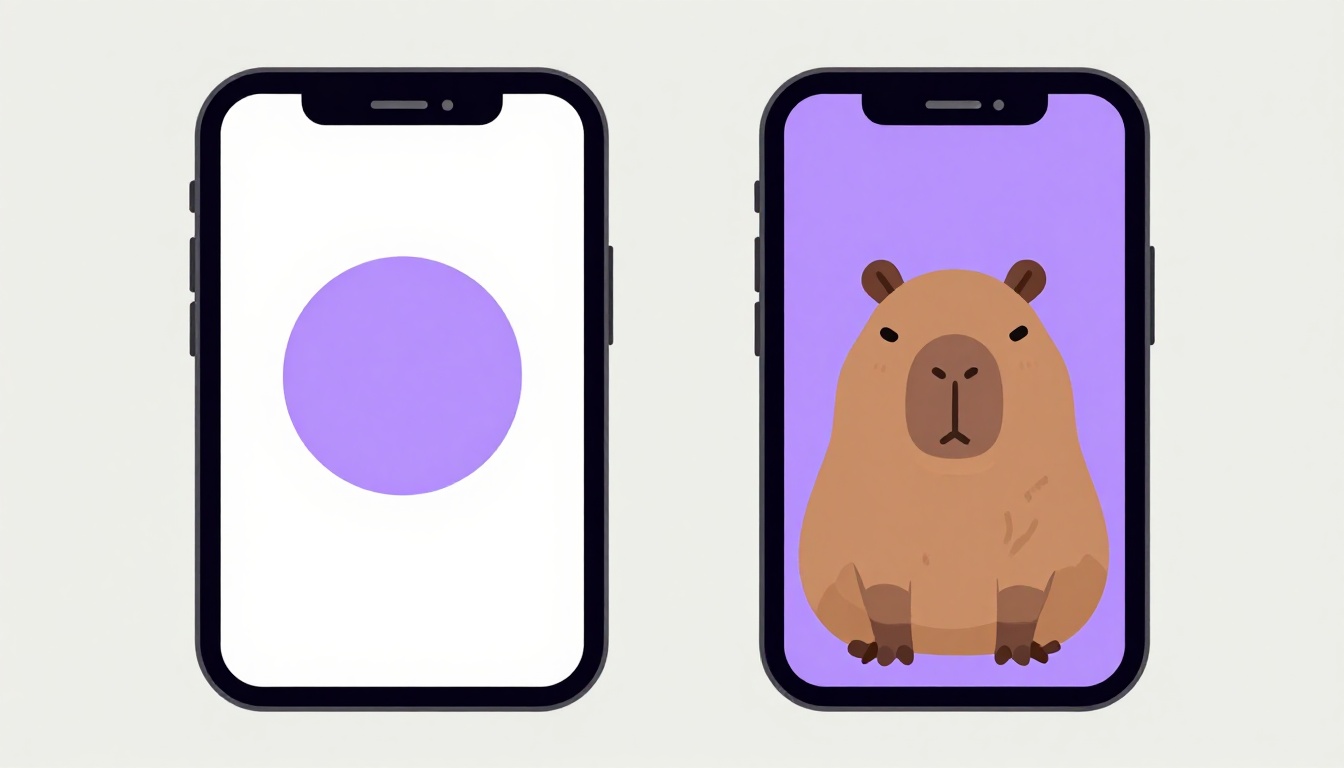
| Companion character | An AI tutor persona, no fixed character | Capy, a capybara with about 180 customizable wardrobe items |
| Exam and interview prep | Yes, a dedicated mode | Not a dedicated feature |
| Price model | 14-day free trial, then $8.99/month, $19.99/6 months, or $34.99/year (App Store, U.S.) | 2-minute quiz builds a plan first, then signup |
A few things jump out once the table is in front of you instead of buried in two separate marketing pages. GoMigo simply covers more ground on languages, five to Comigo's two, and if French, Italian, German, or Spanish is your actual goal, that gap alone probably settles the question in GoMigo's favor. The avatar is also a real, unmatched differentiator. Nothing about Comigo puts a moving face on screen, and if that visual presence is what makes practice feel real to you, GoMigo has it and Comigo does not.
Where Comigo pulls ahead is everything built around the habit of showing up, not just the single session in front of you. GoMigo's daily reminder is a push notification; Comigo wraps the same idea in a language alarm clock that will not stop ringing until you answer a question, and an app blocker that makes you answer one before it lets you open Instagram. GoMigo has no equivalent to friend codes, a weekly coin podium, or a nudge system that pings a friend who skipped practice today, and those social mechanics exist specifically because quitting alone is much easier than quitting in front of people who can see your streak. Comigo also never lets you finish a lesson in silence: every single exercise is spoken, checked word by word, with nowhere to hide behind multiple choice, while GoMigo's conversation and role-play modes are the speaking-heavy parts of a broader toolkit that also includes quizzes and image matching.
The role-play mode deserves a specific mention here too, because it is the closest thing GoMigo has to Comigo's Free Speak. Both let you talk about something unscripted rather than reading fixed lines, but they solve it differently: GoMigo's role-playing mode drops you into a scenario you pick in advance, while Comigo's Free Speak is a genuinely open, full-duplex conversation with no set topic at all, capped by session and weekly time limits rather than a scenario menu. Neither is strictly better. A learner who wants a rehearsal for one specific, known situation will prefer GoMigo's structure. A learner who wants to just talk, about whatever is actually on their mind that day, will prefer Comigo's open format.
Neither read is a knockout. A learner chasing German fluency with a love of video calls should lean GoMigo. A learner chasing English or Brazilian Portuguese who has quit three apps already because nothing made them show up on day 12 has a real reason to lean Comigo instead. If you want the fuller etymology and positioning story behind why these two apps ended up with such similar names in the first place, that is covered in more depth in our full comparison of Comigo, GoMigo, and Conmigo.
If speaking out loud from the very first lesson, with games and friends built around keeping you honest, sounds closer to what you actually need, Comigo's two-minute quiz builds a short plan before you commit to anything.
Other alternatives, fairly
None of the apps in this section, GoMigo and Comigo included, are the only two options, and pretending otherwise would not serve you well. If a structured, CEFR-graded course with human correction sounds more like what you want, our look at Busuu's course structure covers a genuinely different kind of app: 14 languages, a fixed A1-to-C1 course path, and a community feature where native speakers correct your writing and speech directly. It is a slower, more classroom-like approach, and it suits learners who like knowing exactly where they sit on a recognized scale.
If your budget can stretch to an actual human tutor, our Preply review and our italki vs Preply comparison both dig into the live-tutor marketplace model, which trades GoMigo's 24/7 availability for the unpredictability and warmth of talking to an actual person who might surprise you mid-sentence in a way no AI currently can. For learners weighing two of the biggest course-based apps against each other, our Busuu vs Duolingo piece and our Rosetta Stone vs Duolingo breakdown both look at how gamified, drill-heavy apps compare to more structured courses. If picture-based immersion versus a grammar-forward course is the actual decision in front of you, Rosetta Stone vs Babbel covers that head to head directly. And if what you actually want is a language exchange with a real stranger rather than any kind of AI or paid tutor, Tandem vs HelloTalk covers the two biggest apps built around exactly that trade. For the full spread of comparisons in one place, our language apps hub rounds up every review and head-to-head we have published.
The honest way to use all of this is to treat every review, ours included, as one data point rather than a verdict. Try the free tier or trial of two or three apps that match your actual situation, whether that means your target language, your budget, or how much structure you personally need to stay consistent, and pay attention to which one you still open on day ten. That single behavior, not the marketing copy on any landing page, is the only metric that has ever predicted whether someone actually learns a language.
Why so many "-migo" apps: GoMigo, Comigo, Conmigo, Khanmigo
If you have noticed the pattern by now, you are not imagining it. GoMigo, Comigo, Conmigo, and Khanmigo, Khan Academy's own AI tutor, all sit on the same root: "migo," borrowed from "with me." Comigo is Portuguese for "with me." Conmigo is the nearly identical Spanish word for the same phrase. Both descend from the Latin "mecum," and the word "com" or "con" simply means "with" in each language. GoMigo takes the English word "go" and welds it to that same "-migo" ending, building a new brand word rather than borrowing an existing one outright. Khan Academy did something similar on purpose: reporting on Khanmigo's launch has traced the name back to founder Sal Khan's surname fused with "conmigo," the Spanish "with me," chosen specifically because the product is meant to feel like a companion working beside the student rather than a tool the student operates.
None of this is coincidence dressed up as branding genius. "With me" is a near-perfect concept for an AI tutor to be named after, since the entire pitch of every one of these products is presence: something that sits with you while you learn, rather than a course you work through alone. If you want the fuller word history, including the two-thousand-year-old Latin accident that put an extra "with" inside the word without anyone noticing for centuries, that whole story lives in our piece on what comigo means in English. Spanish speakers searching this whole family of names have their own tangle to untangle too, since at least five different products answer to some spelling of conmigo, and the deeper breakdown of every one of these names, including GoMigo and Comigo side by side, sits in our full GoMigo, Comigo, and Conmigo comparison. There is even a same-named but totally unrelated ADHD productivity tool at comigo.ai, which our Comigo AI disambiguation page sorts out from this language app in case that is the one an ad actually pointed you toward.
How to speak more, whichever app you pick
Whichever app you land on after reading this, the single biggest lever for actually getting better at speaking is the same across every single one of them: open your mouth more, and do it in ways that give you real feedback instead of a vague sense that you practiced today.
Start with shadowing, a technique where you play a native speaker's audio and repeat what they say almost simultaneously, chasing their rhythm, stress, and pronunciation instead of just their words. It sounds strange the first time you try it and it works precisely because it forces your mouth to move at conversational speed instead of the slower, word-by-word pace most beginners default to. A few minutes a day, on a short clip you can replay easily, beats an hour once a week by a wide margin, because the muscle memory behind fluent speech builds through frequent repetition, not long, occasional sessions.
Self-talk is the second lever, and it is embarrassingly simple: narrate your own day, out loud, in the language you are learning. Describe what you are cooking, what you are annoyed about, what you are planning for the weekend. Nobody is listening, which is exactly the point, since it strips away the social pressure that usually makes people freeze the first time a real person expects an answer back. This is the same insight behind foreign language anxiety research: the fear most learners carry is not really about the language itself, it is about being watched while they get it wrong, and practicing alone first is a legitimate way to lower that fear before you ever need it lowered in public.
Recording yourself is the third lever, and the one most learners skip because it feels awkward. Recording your own voice and listening back exposes mistakes your ear glosses over in the moment, the way a photo catches a facial expression you never knew you made. Compare your recording to a native clip saying the same phrase, focus on where the rhythm or a specific vowel diverges, and do it in small daily doses rather than one long session, since a few minutes each day builds the habit faster than an occasional deep dive.
Minimal pairs round out the toolkit: words that differ by exactly one sound, like "ship" and "sheep," or "bit" and "beat." Minimal pair drills train your ear and your mouth on the specific sound distinctions that do not exist in your native language, the ones that quietly make you sound foreign even when your grammar is perfect. Sites built specifically around minimal pair practice are worth bookmarking if a particular sound keeps tripping you up, since drilling the exact pair that confuses you beats generic pronunciation practice every time.
Timing matters as much as the techniques themselves. Spaced repetition, reviewing a word or phrase right before you would naturally forget it rather than cramming it once and moving on, is one of the most consistently replicated findings in memory research, and it applies just as well to spoken phrases as it does to flashcards. Pair that with the testing effect: actually trying to say a phrase from memory, out loud, before you check whether you got it right, builds a stronger memory than simply reading the correct version again. A five-minute daily habit that forces recall and repeats it a day or two later beats an hour-long weekend cram session almost every time, for the same reason spreading out any kind of practice usually beats bunching it up.
Strung together, these five techniques make a realistic weekly plan rather than a wish list: shadow a short clip for five minutes most mornings, narrate part of your day out loud once you have a spare minute, record yourself once or twice a week and actually listen back, drill whichever minimal pair keeps tripping you up, and revisit last week's phrases before you add new ones instead of only ever moving forward. None of it needs to be long. It needs to happen often, and it needs to involve your actual voice, not just your eyes scanning a page.
None of these five techniques require a subscription to anything. They work with a phone, a recording app, and a native-speaker audio clip you can find for free. What an app like GoMigo or Comigo actually adds on top is structure and accountability: something that tells you what to say next, listens back, and gives you a reason to come back tomorrow instead of letting the habit quietly die the way most solo study plans do. That is the real argument for a speaking-first method over silent studying, whichever brand name ends up on your home screen: understanding a language passively and producing it out loud are two different skills, backed by second-language acquisition research going back decades, and only one of those two skills gets trained by tapping multiple-choice answers on a screen.
Comigo was built specifically around that gap. Every lesson is a spoken conversation from the first minute, guided by Capy, a capybara companion who never once makes you feel silly for stumbling over a new word, with per-word green and red feedback so you know exactly which sounds landed. Free Speak adds an open, real-time voice conversation on top, mini games turn repetition into something closer to play, and friends, streaks, and nudges make quitting the actual hard part instead of speaking. If any of the techniques above sound like something you would rather do inside a structured plan than alone with a stopwatch, Comigo's quiz builds one around your goal before you commit to anything.
GoMigo: quick answers
Is GoMigo the same as Comigo?
No. GoMigo is made by GoStudent, an Austrian tutoring company, and it teaches English, Spanish, French, Italian, and German through AI avatar and audio conversations. Comigo is a separate app that teaches English and Brazilian Portuguese through spoken lessons, games, and social features like friends and streaks. The names sound alike because both build on the same "with me" root, not because the two products are related.
Is GoMigo free?
GoMigo offers a 14-day free trial with no payment required upfront, but it is not free after that. Once the trial ends, the app charges automatically for whichever plan you selected at signup, so you need to cancel before day 14 if you only wanted to try it out.
What languages does GoMigo teach?
GoMigo teaches five languages: English, Spanish, French, Italian, and German. It does not currently cover Portuguese, and it does not cover languages outside that set of five, based on the languages listed on its product page and App Store listing.
Is GoMigo by GoStudent?
Yes. GoMigo is built and published by GoStudent GmbH, the same Vienna-based company known for its human tutoring marketplace. GoMigo is a newer, separate AI product line rather than a rebrand of GoStudent's existing tutoring service.
Is GoMigo worth it?
It depends on what you are comparing it to. The live avatar lessons and always-on availability are genuinely strong, and the price, at roughly $3 to $9 a month depending on the plan, is reasonable next to hiring a human tutor. Whether it is worth it for you specifically comes down to whether you want one of its five languages and whether an AI avatar, rather than a real person or a different kind of app, is the format that actually gets you to open your mouth and practice. If you finish the 14-day trial and notice you kept opening the app without being reminded, that is a better signal than any star rating on whether it is worth paying for.
What is the difference between GoMigo and Khanmigo?
GoMigo is a language learning app from GoStudent. Khanmigo is an AI tutor from Khan Academy covering math, science, humanities, and coding, not specifically language learning. Both names build on the "with me" concept, but they come from unrelated companies and serve different subjects entirely.
How much does GoMigo cost?
Apple's App Store listing shows a monthly plan at $8.99, a 6-month plan at $19.99, and an annual plan at $34.99, all in U.S. dollars. Prices can vary by country and by whatever promotion is running at signup, so the number shown inside the app at your location is the one that actually applies to you.
Does GoMigo have a live person, or is it all AI?
It is all AI. The "live" in "live avatar lessons" refers to the real-time, video-style responsiveness of the animated tutor, not an actual human on the other end. If you specifically want a human tutor, GoStudent's main tutoring marketplace offers that separately from GoMigo, at a substantially higher price point than the AI app.
Can GoMigo help with a job interview in another language?
Yes, that is one of its more specific, useful features. The dedicated exam and interview prep mode lets you rehearse a targeted scenario rather than practicing general conversation, which suits anyone prepping for something with a fixed date rather than open-ended fluency.
Is there a GoMigo app for carpooling?
Not from GoStudent. The Finnish carpool app sharing a similar name is a completely unrelated rideshare product. GoStudent's GoMigo is a language learning app, not a transportation app.
Does GoMigo work without downloading the app?
Yes, at least in part. GoStudent runs a browser version of GoMigo alongside the iOS and Android apps, so you can try the web app before installing anything on your phone.
What does GoMigo's rating actually show right now?
At the time of this review, GoMigo's own site displayed a 4.9-star rating and mentions of "over 2,000 users," which are the company's own published figures rather than independently verified numbers. The app's listing on the App Store showed no public star rating yet, since it had not collected enough reviews to display one.
Is GoMigo good for complete beginners?
It can work for beginners, since the AI adjusts to your stated level and the conversation modes do not require you to already know much. That said, a total beginner with zero vocabulary may find an open-ended AI conversation harder to start than a more scaffolded, course-based app like the one covered in our Busuu writeup, so consider your comfort with ambiguity before committing to a trial. The audio-only mode and role-play scenarios tend to be gentler starting points than a fully open conversation, since a scenario gives you a rough idea of what to say before the AI responds.
Whatever brought you here, an ad, a friend, a stray search for a carpooling app that turned out to be a language tutor instead, the actual decision comes down to one question: what gets you to open your mouth and practice today, not just recognize a word on a screen. GoMigo answers that with a face and a voice on the other end of an AI conversation. Comigo answers it with a capybara, a streak you do not want to lose, and a lesson you cannot finish without speaking. Pick whichever one you will actually open tomorrow.

Related guides
- How much does italki cost?What italki really costs per lesson, how tutor pricing works and how to spend less.
- italki reviewAn honest italki review: how lessons work, tutor quality, pricing and the downsides.
- Is Rosetta Stone worth it?Is Rosetta Stone worth the money in 2026? What it does well, and where it falls short.
- How much does Rosetta Stone cost?Rosetta Stone pricing explained: plans, lifetime deals and what you actually get.


